MES Operations Engineer Career Paths in Smart Manufacturing
On the shop floor, an MES operations engineer makes sure that the system for running the manufacturing process is correct, available, and useful. In smart manufacturing, the first part of this job is usually to keep an eye on systems, help users, and do SQL work. As engineers get more expertise they may provide upgrades, integrations and support for a lot more sites. Going upward on the senior tracks, you may find positions such as the system architect, smart factory program manager and manufacturing IT manager. The expansion of digital plants leads to increasing demands on consistent MES performance by the requirement of traceability, equipment data and order tracking. This book tells you about the task, the talents necessary and the professional path ahead and the different paths of training to become this remarkable person.
What an MES Operations Engineer Does?
Role and Place in the Plant
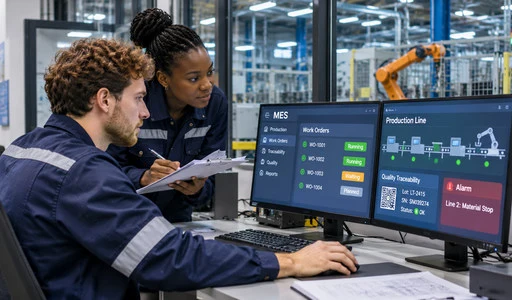
The MES operations engineer is responsible for making sure a manufacturing execution system is working and set properly. MES is level 3 in the ISA-95 standard, between the business systems (ERP) and the control systems (PLC, SCADA). These positions explain the job. The engineer is the gatekeeper, making sure that quality data, production orders and the records of materials are delivered correctly from one layer to the next. The demands of Industry 4.0 efforts are higher, since they need MES data to monitor and guarantee that workers are observing standards, utilizing the correct equipment and deliveries are completed on time. I also separate this function from implementation engineering. The implementation teams devise the concepts and then carry them out. Operations engineers make it reliable and keep enhancing it for years after it is live.
Daily Responsibilities
Most shifts begin with dashboards and alarms supplied around midnight. The engineer’s initial step is to prioritize the problems by their effect on service level agreements and on production. Then he or she looks for the reason. It might be a user's task, a database, a network, an ERP interface or a piece of hardware that is causing the problem. And then on a day-to-day basis, people are doing things like as user management, checking master data, helping with reporting, asking questions about traceability and making sure changes are made in a controlled way. You’ll be engaged in testing the system before it goes live, maintenance once live, migration to a new system and eventually decommissioning. “I think that complete documentation and root-cause investigation are two key strategies to minimize recurring downtime.” Engineers also collaborate with operators, quality teams, maintenance staff and external vendors.
How the Role Differs from Related Jobs
There are some jobs that are like this one, so it's important to know the differences when you're hiring or planning your career. The main jobs of an MES consultant are to look at things, make plans, and give advice. What they make, how well the lines run, and how things work are all things that a manufacturing or production engineer cares about. Most of the time, a systems engineer is in charge of larger business or infrastructure settings. An MES operations engineer is in charge of digital production, making sure data is correct, and keeping track of things. They need to know a lot about how the shop works too. That can't be fixed with just IT staff help, because an engineer can mess up the control logic and stop a physical line with a software change. The roles are still mixed. Most of the time, operational KPIs, work instructions, quality controls, and routings are all things that MES and manufacturing engineers work on together.
Skills, Qualifications, and Platforms
Technical Skills
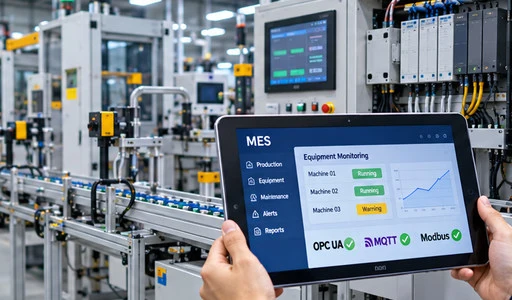
Start with technical depth. There are numerous critical skills such as SQL, scripting, operating systems, understanding the foundations of cloud and networks, monitoring tools, structured testing and knowing about cybersecurity concerns. These protocols, such OPC UA, MQTT and Modbus, are especially significant because they enable data to be shared between software and machines. Availability offers these talents a verifiable purpose. If you want 99.9% uptime, you may have roughly 8.76 hours of down time a year, thus even little ones count. There is a NIST publication (SP 800-82) that deals with the security of plant systems and their connections to IT networks. Engineers watch that line to ensure uptime and data secure.
Manufacturing Knowledge and Education
Just having IT skills isn't enough. There are many things that a good MES operations engineer knows, such as how to handle nonconformances, quality controls, recipes, routings, bills of materials, and production orders. One of the manufacturing KPIs in ISO 22400-2 is OEE, which checks quality, performance, and availability all at the same time. Usually, they have worked in manufacturing or technical support, or they have studied engineering, automation, computer science, or information systems. Every day, engineers talk to managers, operators, IT teams, and suppliers. It's very important for them to be able to talk to each other. In some fields, like the drug business, they have to deal with electronic batch records, FDA 21 CFR Part 11 rules, and GAMP 5 validation.
Platform Experience
The market is worth more when people have used the platform before. Some well-known brands of these systems are GE Proficy, Tulip, Ignition, Dassault DELMIA, Siemens Opcenter, and Rockwell FactoryTalk. Setting up workflows, keeping an eye on production, managing master data, keeping electronic batch records, researching family history, and keeping an eye on integration are some of the tasks that may need to be done. Plants need different amounts of depth. Validation and being ready for an audit are the most important things in regulated industries. For discrete manufacturers, it's all about production orders and connecting lines. I think that teaching skills that can be used in different situations should come before brand details. You can use the same skills to fix problems, integrate, manage data, and understand how things work with any other product. This keeps a plant safe when it changes systems or hires people from a wider pool.
MES Operations Engineer Career Path in Smart Manufacturing
From Junior Engineer to Senior Specialist
The steps to get to a certain job are clear. Junior engineers' main jobs are to keep an eye on things, manage users, fix problems, do SQL, test, and write documentation. Engineers in the middle level are in charge of big problems, projects, upgrades, and connections that happen on more than one site. Senior engineers are in charge of things like migrations, upgrades, cybersecurity programs, disaster recovery, validation, and global support models. Each step not only makes you more senior, but it also gives you more responsibility. Third-level engineers get rid of the cause of the problem, fourth-level engineers fix the problem, and fifth-level engineers change how things are done so the problem doesn't happen again. Trainers can use these three levels to help them choose the best course for their teams.
Career Opportunities Beyond the Engineer Title
There are many paths that professional engineers can take. You could be a manufacturing IT manager or an MES operations manager. You could be a systems architect if you are in charge of programs for a smart factory. You could be the director of manufacturing technology as a manager. If you're a leader, your pay depends on where you work, how much experience you have with the platform, the shifts you cover, how far you have to travel, and how much you get paid. People who finish our course are qualified for jobs like MES development engineer, MES operations and maintenance engineer, and MES implementation engineer. When a factory goes digital, it needs workers who know how to make things and how the system works.
Certification and Professional Development
When you consider about being certified you should think about the platform, the industry and the professional path that you want to follow. Certifications may help in fields like cloud, database, industrial networking, cybersecurity and project management. So too can ISA-95 training. So can ITIL for service management, Lean Six Sigma, and vendor MES or automation credentials. But in reality, the first is how things are made, then basic MES, SQL and support tasks that must be done manually. Finally, platform, architecture, validation or leadership knowledge. I look at my picks and I think about how much they cost all together and how well they serve the area and whether they need lab work and how to refresh them. “You have to be able to show that you’ve reduced downtime, solved issues faster, done transactions more precisely to be really beneficial.”
E.C.R Academy MES Operations Engineer Course
Course Design and Learning Model
Since 2010, E.C.R. Academy has taught and tested more than 500,000 people in China and 28 other countries. We also work with more than 500 shops. Our MES operations engineer course was created for smart manufacturing MES maintenance and operations. Because business mentors and college teachers worked together to make it, the information is based on real production job needs. There are three parts to learning: theory, practice in the real world, and practice in a computer simulation. On top of that, learners check, back up, restore, and fix issues with MES systems 24 hours a day, seven days a week. People who take the course learn how to run a manufacturing business and how to do operations, development, and database management. It also talks about new technologies, smart manufacturing, the industrial internet, and digital twins.
What Learners Practice
These are the three most important skills you will learn.
- MES fundamentals and architecture: learners study MES definitions and references such as MESA and ISA-95, then work through the core modules for work orders, production reporting, material traceability, quality control, equipment management, process parameters, and dashboards. They practice MES business workflows for discrete manufacturing, process manufacturing, and order-to-delivery scenarios, including cross-department collaboration.
- Database management and SQL development: learners write queries, joins, subqueries, views, stored procedures, and functions, then use them for work order queries, material traceability chains, quality reports, and custom reports. They also practice database backup and recovery, index and query tuning, permission management, data archiving, cleanup, and log analysis in SQL Server and MySQL.
- System operations, fault handling, and integration: learners monitor servers, databases, application services, and logs, prepare inspection reports, set up exception alerts, and handle faults and emergency response. They also connect MES with ERP, WMS, PLC, SCADA, AGV, and equipment systems, study OPC UA/DA, SECS/GEM, MQTT, and Modbus, and practice interface debugging and exception handling.
You can use these skills to connect what you learn in school to what plants do every day.
Learning Environment
The course uses a training environment to teach how to use the system, work with databases, make interfaces, and deal with errors. One type of MES products that can be used for teaching is the MES teaching system. It helps with production workflows and core functions. In the database lab, you can use both SQL Server and MySQL. On the other hand, an interface development simulator acts like calls from ERP, WMS, and other nearby systems. So that students can get used to fixing problems, dealing with emergencies, and doing maintenance work before they touch a real plant, a fault injection system makes common faults and strange situations happen. This set-up makes it safe for the person in charge of training to get better at their job without putting it at risk.
Support Models, Evaluation, and Future Skills
Choosing an MES Operations Support Model
Companies that make things can have MES work done by them, by someone else on contract, or by hiring staff. Engineers who work for the company know the plant well and feel like they own it for a long time. Hiring contract specialists gives you more options when you need to do upgrades, migrations, or grow. Outside companies can keep an eye on things, handle incidents, do integration checks, manage releases, write documentation, and help with more than one site. Pick based on the size of the plant, the lack of skills, the number of hours of help, and the risk. When someone buys something for more than one site, they should also think about things like security, service level agreements, ways to report problems, knowledge transfer, and time zone coverage. Check out more than just the hourly rates; see what the whole cost of ownership is as well. When there are a lot of tasks, a plant can combine a small core team of employees with experts from outside the plant.
Evaluating an Engineer or Service Provider
A structured review keeps the choice from being too personal. Make a list of the sites, shifts, products, MES versions, integrations, and automation systems that will be used in the production environment. Next, come up with KPIs that can be tracked, such as MES-related downtime, incidents that happen again and again, response time, mean time to resolve, and availability. Next, use tests, references, case studies, and support procedures to make sure the person is a good fit for the job and the industry. Finally, take a look at the delivery capacity and the risk to the business. Things like staffing coverage, escalation, planning for transitions, data protection, privacy, and confidentiality are all part of this. The FDA says that plants should have an audit trail and checks for electronic signatures. This is because 21 CFR Part 11 says that electronic signatures and records must meet certain rules.
Common Challenges and Future Direction
There are patterns to problems that keep happening. It needs to be governed, checked, and approved when there is bad master data, such as wrong routings, recipes, or bills of materials. To figure out what went wrong when MES and ERP, SCADA, PLC, WMS, or QMS don't work together, you need to log messages, keep an eye on the interface, and make sure that someone is responsible. You can get more people to use your product if you make it easier to do things and give better instructions. Plans for cloud, edge, and hybrid MES will need people who are better at distributed systems, identity management, and security in the future. Even though AI can help with monitoring and find strange things and rank incidents, results still need to be checked by people and data needs to be managed. Digital twins and simulations will also use the MES data.
Conclusion
This person works as an MES operations engineer and makes sure that the manufacturing execution system is correct, available, and linked to other systems in the plant, such as ERP, SCADA, PLC, and more. After running checks and helping with SQL, the job includes upgrades, putting everything together, and being in charge. It's important for people who are good at their job to know about databases, protocols, security, OEE, and their ability to track and manage items. It is helpful to have certifications that are specific to the platform and industry. It is also important to be able to measure results, such as having less downtime. Manufacturers can either hire people to work for them or add contract and outside help. There are a lot of things they can look at to help them decide which choice is best for them. Getting ready for this daily work can be done by taking a class that combines theory with business practice and virtual simulations.
FAQ
1. What background helps before taking the course?
Learners should know how databases work and how manufacturing is becoming more digital. They should also have some experience with computers and basic IT skills.
2. Which job roles can learners prepare for?
You can learn what you need to know to become a manufacturing data analyst, an MES implementation engineer, or an MES development engineer. These jobs will require you to support systems every day, do deployment work, build interfaces and databases, and look at production data.
3. What are the career prospects for MES operations and maintenance engineers?
Manufacturers use technologies like smart manufacturing and digital transformation, but MES is still an important system for keeping track of data, managing production, and making sure everyone on the shop floor knows what they need to do. More and more people want to hire people who know how to run a manufacturing business and MES technology.
4. What does the learning environment include?
It has a system for teaching MES, SQL Server and MySQL database labs, a simulator for building interfaces, and a system for adding bugs. They can work on operations, databases, debugging interfaces, and learning what to do in an emergency with these tools.
Build Your MES Operations Engineer Career Path Training with E.C.R Academy
Are you going to teach MES to your plant staff or a college class? E.C.R. The MES operations engineer course that Academy made with the help of business mentors and teachers can be talked about. We work with corporations, schools, and trade groups, among other places. If you want to compare MES operations engineer suppliers, let us know what you want to learn and where the MES will be used. Start by going to enteredu.com or sending an email to ecr2008@enteredu.com.
References
1. ISA-95.00.01, Enterprise-Control System Integration, Part 1: Models and Terminology, 2010
2. ISO 22400-2, Automation Systems and Integration: Key Performance Indicators for Manufacturing Operations Management, Part 2, 2014
3. U.S. Food and Drug Administration, Part 11, Electronic Records; Electronic Signatures: Scope and Application, 2003
4. ISPE, GAMP 5 Guide: Compliant GxP Computerized Systems, Second Edition, 2022
5. National Institute of Standards and Technology, Guide to Operational Technology (OT) Security, SP 800-82 Revision 3, 2023
6. MESA International, MES Explained: A High Level Vision, White Paper Number 6, 1997