Mechanical Design, Manufacturing & Automation
Training Model: Standardized project-based learning
Faculty: Teachers + engineers + master mentors
Platform: CNC turning, CNC milling, machining center, and digital manufacturing training labs
Outcome: CNC turning and milling training certificates for high-quality employment
Target Partners: Enterprises, educational institutions, industry associations, and other organizations
Mechanical Design, Manufacturing & Automation
Course Overview
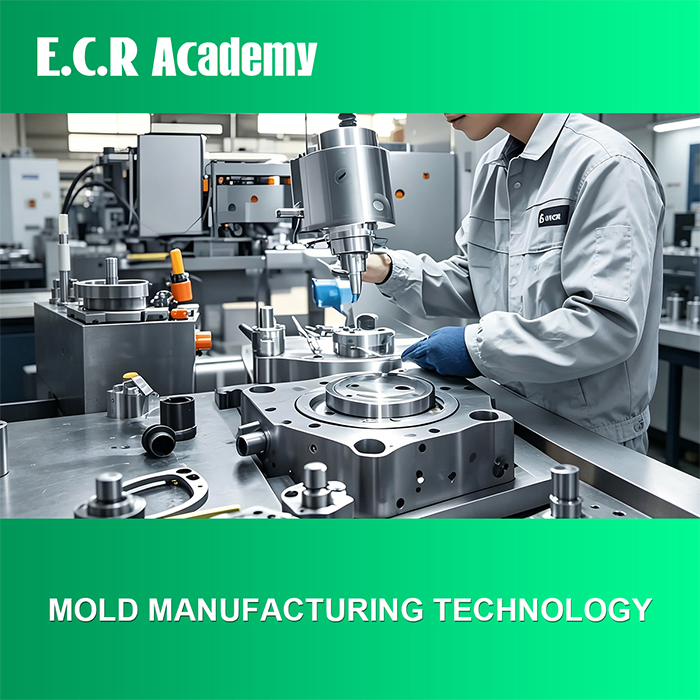
This course is designed for roles in Mechanical Design, Manufacturing & Automation, including CNC programming, process planning, CNC machining operation, and quality inspection. It develops skilled technical personnel who can complete CNC machining process design, CNC program preparation, simulation verification, and machine tool operation tasks.
Built on solid process knowledge and practical CNC programming skills, the course focuses on solving real part-machining problems. It aims to develop versatile CNC technicians who understand process planning, write machining programs, verify toolpaths through simulation, and complete practical machining operations.
Workplace health and safety are emphasized throughout the course. Learners develop the awareness and ability to follow safety regulations in production settings. Green and low-carbon manufacturing concepts are also introduced, helping learners understand energy-efficient machining, cleaner production, and responsible workshop practice.
Why This Course?
1. Curriculum
Builds a full-process training pathway covering part drawing analysis, process programming, simulation verification, and practical machining, helping learners connect process theory with CNC machining skills.
2. Organization
Uses a standardized training process and project-based delivery model. Integrated theory-and-practice teaching helps keep training quality clear, structured, and manageable.
3. Faculty
Delivered by a dual-instructor team of college teachers and enterprise engineers, with guidance from skilled master trainers for technical coaching and career development advice.
4. Platform
Supported by four professional training labs for CNC turning, CNC milling, machining centers, and digital manufacturing, together with virtual-physical simulation platforms for full-process practice.
5. Outcomes
Qualified learners may receive training certificates related to CNC turning and milling, supporting further study and technical career development in manufacturing roles.
What You Will Be Able to Do?
Part Process Analysis and Process Plan Design
- Read technical requirements from part drawings accurately, analyze material machinability, and identify key machining surfaces and tolerance requirements.
- Determine positioning and clamping solutions for CNC machining.
- Select suitable machine tools and fixtures, and plan machining operation sequences in a logical way.
Programming Fundamentals
- Use common preparatory function commands (G codes) and auxiliary function commands (M codes).
- Apply coordinate system setting and coordinate calculation methods.
- Write turning programs for external cylindrical surfaces and internal holes.
- Write milling programs for planes and cavities, as well as drilling, boring, and tapping programs.
- Use macro variables and operation commands to prepare parametric machining programs for complex surface machining.
Simulation Software Application
- Build virtual machine tool models, set workpiece coordinate systems correctly, and import machining programs for verification.
- Use simulation tools to check toolpaths before practical machining.
CNC System Operation
- Operate a CNC system correctly, transfer programs, and manage input and output operations.
- Set coordinate systems and adjust machining parameters according to task requirements.
What You Will Learn?
|
Training Module
|
Content Description
|
|
Process Fundamentals
|
Part drawing reading, material machinability analysis, accuracy requirement analysis, surface quality analysis, and manufacturability review.
Turning, milling, drilling, boring, and the process ranges of common machining methods.
Positioning principles and datum selection, clamping force determination, typical fixture structures, and key points in special fixture design.
Toolpath design principles, tool entry and exit methods, idle path optimization, and cutting parameter selection.
|
|
Programming Fundamentals
|
CNC program structure, word address format, block format, and common code systems.
G00, G01, G02, and G03 rapid movement and interpolation commands; coordinate system setting commands; tool compensation commands; dimension system commands.
M00, M01, M02, and M03 program stop and spindle control; coolant control; tool change commands; program end commands.
|
|
Turning Programming
|
External cylindrical and facing cycles, stepped shaft and groove machining, formed surface machining, threading commands, and programming methods.
Drilling and boring cycles, reaming and countersinking programming, internal hole and stepped hole turning, and mating-part programming.
Macro programming fundamentals and variables, thin-walled part programming, eccentric part programming, and process planning for mating parts.
|
|
Milling Programming
|
Face milling cycles, cavity milling, contour machining and compensation, and slot milling programming.
Fixed cycles and programming applications for spotting, drilling, reaming, boring, and tapping.
Helical milling, taper and chamfer milling, helical ramping and inclined entry, and basic curved-surface programming methods.
|
|
Simulation Verification
|
Simulation software interface, machine tool model setup, tool library creation, and toolpath simulation.
Collision and interference checking, overcut and undercut analysis, cutting parameter optimization, and machining time estimation.
|
|
Machine Tool Operation
|
Program editing and input, program simulation run, manual and automatic machining modes, and program debugging methods.
Workpiece coordinate system setting, tool length compensation, tool radius compensation, and zero offset setup.
Measuring tool use, dimensional inspection, dimensional error analysis, factors affecting machining accuracy, and quality improvement methods.
|
Learning Platform
The course is supported by four professional training labs and a complete online learning platform. The training equipment is comprehensive and supports the full workflow of CNC machining technology and process programming.
The CNC Turning Training Lab is equipped with CNC lathes and CNC turning simulation software, supporting turning programming and simulation verification practice.
The CNC Milling Training Lab is equipped with CNC milling machines, fixtures, measuring tools, and CNC milling simulation software, supporting milling programming and simulation verification practice.
The CNC Machining Center Training Lab is equipped with three-axis machining centers, multi-axis simulation software, and offline programming workstations, supporting multi-process part machining and automatic tool-change programming practice.
The Digital Manufacturing Technology Training Lab is equipped with licensed CAM software and simulation verification systems, together with high-performance computers and a network-based teaching system. It supports computer-aided process planning and digital manufacturing technology practice.
Company Strength
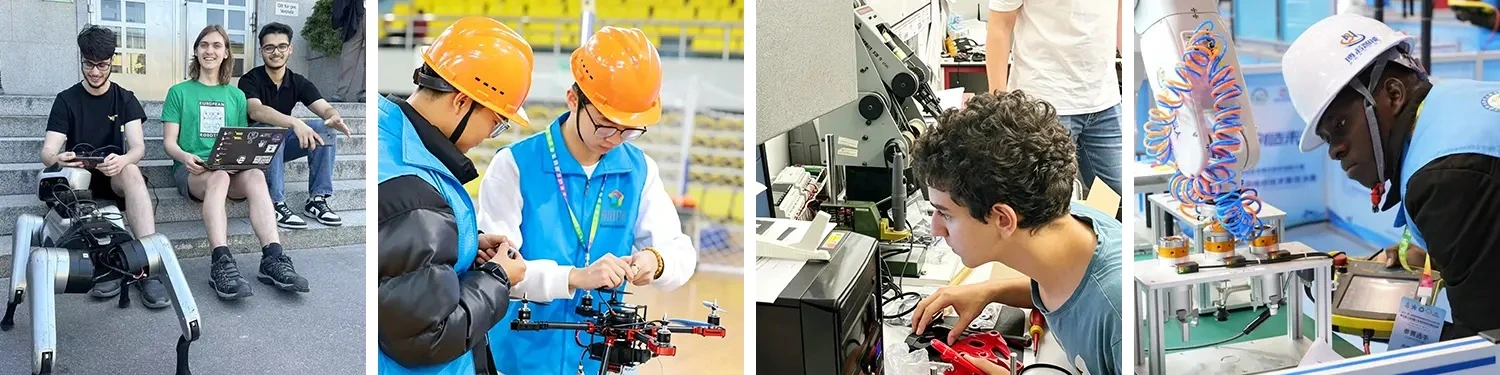
- ECR Academy brings 16 years of professional expertise in Mechanical Design, Manufacturing & Automation training, delivering comprehensive curriculum covering CNC turning, CNC milling, machining centers, and digital manufacturing processes
- We've successfully trained nearly 500,000 participants across China and 28 countries, with over 300,000 learners earning recognized skills certifications in advanced manufacturing technologies
- Our program is supported by more than 3,300 industry and academic experts who bring real-world insights into precision machining, automation systems, and modern production workflows
- We maintain partnerships with over 500 enterprises, ensuring your training aligns with current industry standards and actual workplace demands in the product
- Our extensive resource library includes over 60,000 educational materials—from process programming guides to simulation verification tools—designed specifically for hands-on manufacturing skills development

FAQ
Q: What foundation is recommended before joining this course?
A: This course is designed for learners in mechanical or related fields. A basic understanding of mechanical drawing, the ability to read part drawings, basic knowledge of metal materials and machining processes, and basic computer operation skills are recommended. For learners with a weaker foundation, introductory support can be provided to help them move into the core modules.
Q: What career directions does the course support?
A: The course supports career development in
- General Equipment Manufacturing (including CNC programming and process planning)
- Special-Purpose Equipment Manufacturing (including precision machining and mold manufacturing)
- Automotive Manufacturing (including component machining and quality inspection)
- Aerospace Manufacturing (including high-end part machining)
- CNC Equipment or Cutting Tool Companies (including technical service and sales support)
Q: Can learners without CNC programming experience study this course?
A: Yes. The course is designed with beginners in mind. The theory modules progress from basic to advanced topics and use diagrams and animated demonstrations. Programming is taught through a step-by-step model of command explanation, case demonstration, and practice. Learners receive hands-on training time, small-group instruction, and instructor guidance. Teaching-oriented equipment and simulation software support practice before practical machining.

Contact Us
Ready to build your team's expertise in Mechanical Design, Manufacturing & Automation? Reach out to us at ecr2008@enteredu.com to discuss customized training solutions for your organization.





_1781601799781.webp)