How Agricultural UAV Applications Are Reshaping Modern Farming
Agricultural UAV applications have quietly become one of the most significant shifts in how we manage crops, monitor field health, and deploy plant protection resources. From precision spraying over rice paddies to multispectral imaging above cornfields, drone-based farming tools are replacing slow, labor-intensive methods with data-driven precision. As someone who works closely with agricultural training and workforce development, I've seen how this technology is not just changing what farmers do — it's changing what skills the entire agricultural workforce needs to succeed.
The Evolution of Agricultural UAV Applications
From Manual Scouting to Autonomous Flight
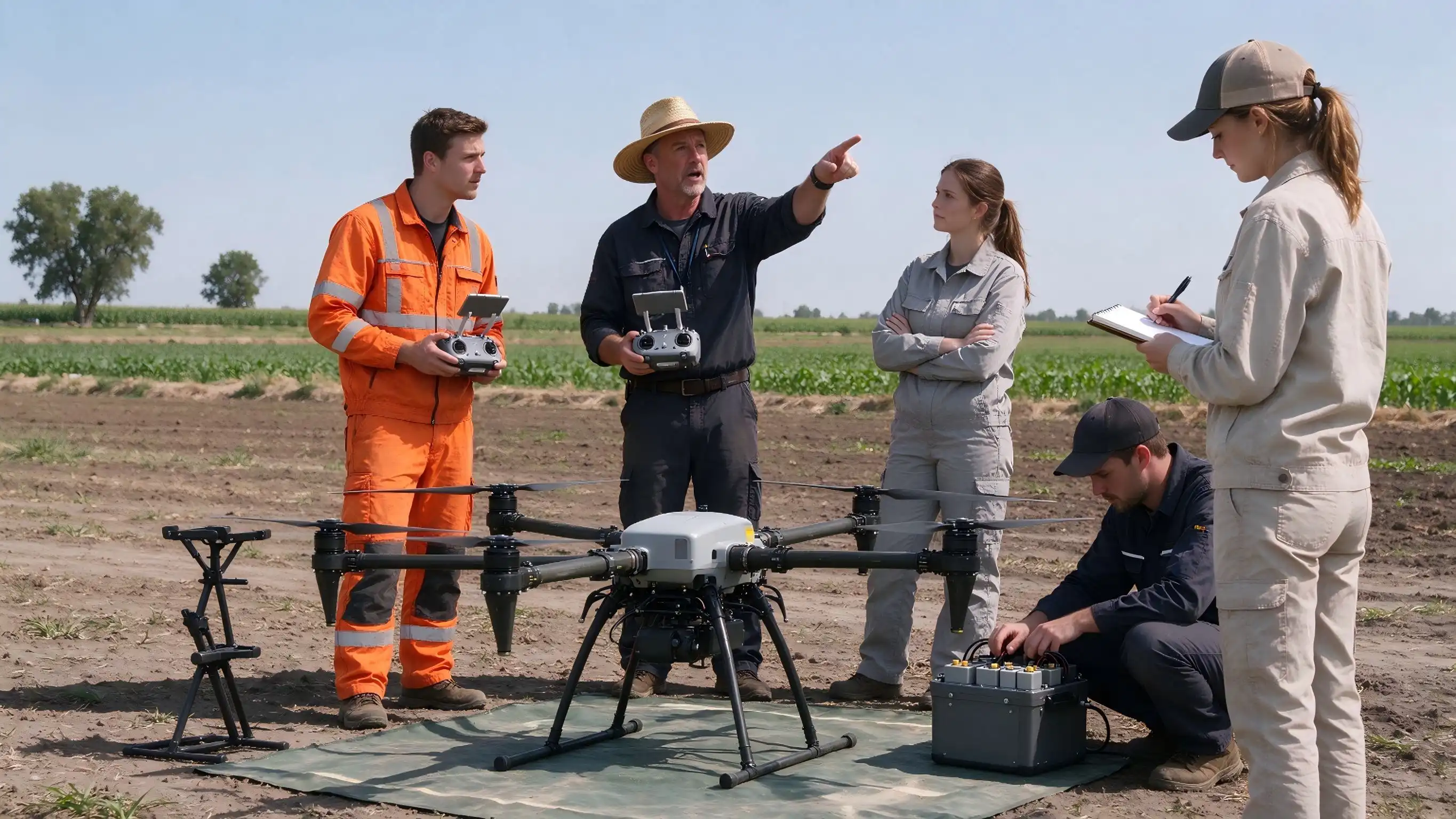
In the past, crop monitoring was done by scouting on the ground, using satellites, and paying for expensive manned aircraft flyovers. Each of these methods had real problems. For example, satellite images often had too low of a resolution to find pests quickly, manned aircraft were pricey to use, and people could not quickly scout thousands of acres by hand.
These gaps were immediately handled by agricultural UAV applications. Today's agricultural drones can do field surveys much faster than ever before thanks to their high-resolution multispectral cameras, RTK positioning modules that provide centimeter-level accuracy, and autonomous flight control systems. The Food and Agriculture Organization of the United Nations (FAO) says that precise agriculture technologies, such as systems based on drones, can cut the use of pesticides by up to 30% while keeping or even improving the efficiency of crop protection. This change in operations is not a small one; it completely changes how farm inputs are managed.
Key Agricultural UAV Applications Transforming Farm Productivity
Precision Spraying, Crop Monitoring, and Data Collection
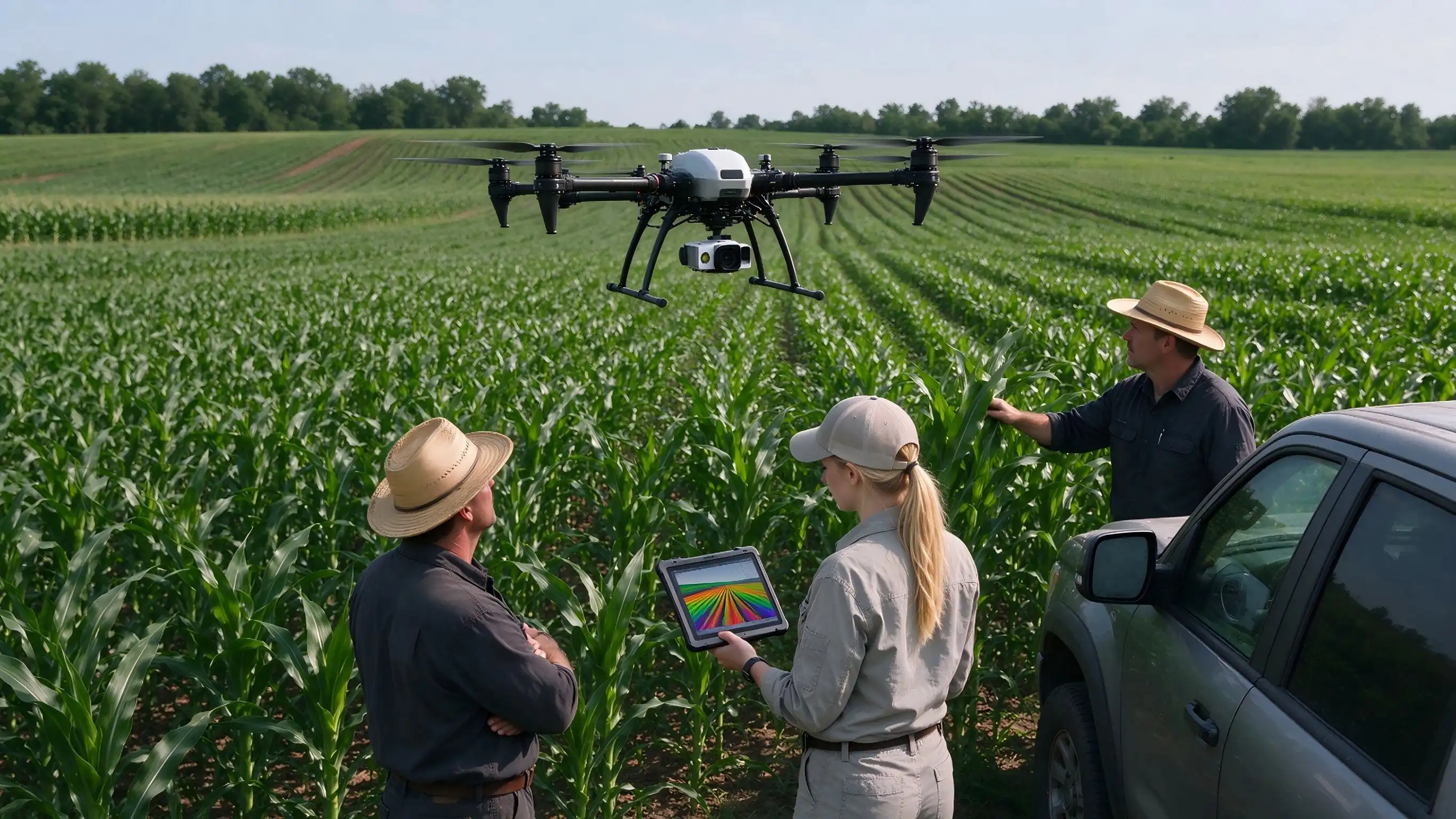
Drone-based plant security has real-world effects that can be measured. Variable-rate application (VRA) technology lets operators spray only where pests are present or where nutrients are lacking. This gets rid of the need to spray everyplace, which wastes chemicals and hurts the environment. Multispectral cameras create NDVI (Normalized Difference Vegetation Index) maps that show signs of crop stress up to 10 days before humans can see them. This makes early action less reactive and more proactive.
Here are the core capabilities driving productivity gains across agricultural UAV applications:
- Precision Spraying Systems: These days, agricultural unmanned aerial vehicles (UAVs) can carry up to 70 liters of cargo. Centrifugal atomization technology makes droplets that can be adjusted in size from 50 to 500 micrometers. This amount of control makes sure that areas of wheat, rice, and corn are properly covered while reducing chemical drift and runoff as much as possible.
- Multispectral Crop Health Mapping: GPS, IMU, and camera systems on board record real-time data about the field environment. This lets you track crop growth, find pests, and estimate yields with an accurate rate of over 95% in jobs like fertilization and seeding.
- Autonomous Route Planning: Software on the ground station lets operators plan flight paths ahead of time based on the shape of the field, the type of terrain, and the types of crops that are grown there. The system completes missions with little to no human input, which keeps operators from getting tired and making mistakes during long operations in the field.
When these features are used together, they let a single trained operator cover hundreds of acres every day, which used to need big ground teams or expensive hired planes. The ROI gain is real; industrial growers usually get their money back in one to two growing seasons.
Comparative Insights: Choosing the Right Agricultural UAV Solutions
Evaluating UAV Performance Against Traditional Methods
A lot of the time, when procurement professionals compare drone-based plant protection to satellite services or manned crop dusters, agricultural UAV applications come out on top. One of the biggest benefits is that UAVs can be used more often. For example, a farm team can launch a UAV the same afternoon that a scout report shows a new infestation, while satellite revisit windows can last for days or weeks.
When making a choice, the hardware setup is very important. UAVs made for farming usually have heavy-duty carbon fiber airframes that absorb engine shaking, intelligent battery management systems that allow for fast high-rate charging, and IP67-rated ingress protection to keep chemicals out. Models with digital radar that can avoid obstacles from all directions are especially useful in orchards or hilly areas where it is dangerous to navigate by hand.
It's easier for county agricultural bureaus and plant protection service companies that want to quickly hire more licensed operators to buy UAVs thanks to leasing options and government subsidy programs, especially those that help revitalize rural areas and support high-quality farmer development programs.
Procurement Guide: Acquiring Agricultural UAVs for Your Farm or Business
Building a Qualified Workforce Alongside the Hardware
Buying hardware is only one part of a good plan for integrating UAVs. Worker readiness is the real problem that most buying managers run into. If you don't train the people who use the equipment, it won't make you more efficient. At this point, investing in organized training that leads to certification is a must.
ECR Academy's agricultural UAV applications program addresses this need directly. The program is based on project-based learning that is connected to real tasks in the field, not on theory that isn't connected to what happens on the farm. What makes this training path unique is this:
- Standards-Aligned Curriculum: Created by looking at current UAV operation workflows and agricultural plant protection practices to make sure that students graduate with the skills that employers and certification bodies really need.
- Expert Faculty: UAV technical specialists and plant protection experts teach, and they have real-world experience as well as academic credentials.
- Full-Process Training Platform: The learning environment includes choosing and integrating UAVs, virtual simulations, live flight operations, fault finding, and maintenance checks. It supports three frame configurations, five motor specifications, and a number of different ESC and propeller options.
- Verified Outcomes: Graduates are ready for jobs like Agricultural UAV Plant Protection Pilot, UAV Assembly and Maintenance Technician, System Integration Engineer, Agricultural Data Analyst, and Plant Protection Solution Designer.
These training results directly help county farm offices, vocational schools, plant protection service companies, and industry groups meet their procurement goals. To do this, they need qualified operators, not just tools. After going through this organized training route, companies get licensed pilots as well as workers who can plan operations, find problems, and improve spraying performance in the field.
Future Trends and Impact of UAVs on Global Agriculture
AI Integration and the UAV-as-a-Service Model
The next step in growing with drones is already starting to take shape. Agricultural UAV applications data streams are being added to AI-powered farm management systems to make models that can predict crop health, set off automatic intervention protocols, and send yield estimates to platforms that plan the supply chain. According to study by MarketsandMarkets, the global market for farming drones will reach $5.19 billion by 2025. This shows how quickly businesses and institutions are adopting these drones.
Plant security companies and county-level agricultural service organizations are particularly interested in the UAV-as-a-Service (UaaS) concept. Instead of buying and maintaining a whole fleet, operators sign service agreements that include hardware, software updates, and field support. This works well with the way government projects are budgeted and audited.
If procurement managers are thinking about the long term, they should know that investing in training infrastructure now, instead of waiting until hardware adoption peaks, will help their companies get both the operational benefits and the competitive edge that come from having a skilled, certified workforce ready to go.
Conclusion
Agricultural UAV applications have progressed beyond the pilot phase. They are now important parts of competitive and long-term farm management. The technology improves the accuracy of watering, the frequency of crop tracking, and the cost of inputs. But the companies that regularly get these benefits are the ones that put in qualified human capital along with hardware. Structured training that meets certification standards and is taught by qualified teachers on professional platforms is what turns buying equipment into long-term operational capability. Building a licensed, field-ready UAV workforce is the strategic investment that makes all other procurement decisions work, no matter if you work for a county agricultural bureau, a vocational school, or a plant protection service company.
FAQ
1. Can someone with no prior drone experience join this course?
Yes. Beginners are welcome in the ECR Academy's agricultural UAV applications course. It starts with the basics of the UAV platform, including hardware and software architecture, safe operation procedures, and basic development environments. Next, it moves on to field missions and putting the whole system together. The road to learning is clear and made up of steps.
2. What certifications can learners work toward after completing the training?
The course helps students get credentials that are recognized by the industry and are in line with AOPA, UTC, and other similar agricultural UAV operator certification frameworks. Graduates can work as licensed plant protection pilots, repair workers, system integration engineers, or people who make operation plans.
3. How does this training support government project compliance?
The lessons are based on skills that can be checked, structured practical tests, and paperwork that fits the standards for audits and acceptance that are common to government-funded farming training programs. This means that county-level bureaus can use it to run high-quality farmer development and rural revitalization programs.
4. What technical setup does the virtual simulation platform require?
The computer must have at least Windows 10, an Intel Core i5 processor, at least 8 GB of RAM, 256 GB of storage, and a graphics card with 2 GB VRAM. Software and simulation tools for tuning UAV flight control parameters can be used in this context.
Connect with ECR Academy for Agricultural UAV Applications Training Solutions
Every program that ECR Academy runs is backed by our 16 years of experience teaching career skills and our relationships with more than 500 businesses in 28 countries. Our training for agricultural UAV applications covers the whole process, from learning the basics of the platform to becoming a qualified field operator. It is backed by an industry-standard program and expert teachers. You can email us at ecr2008@enteredu.com or go to enteredu.com to ask for a consultation, whether you are looking for agricultural UAV applications supplier agreements or building an in-house training program.
References
1. Food and Agriculture Organization of the United Nations (FAO). The Future of Food and Agriculture: Trends and Challenges. FAO, 2017.
2. MarketsandMarkets. Agricultural Drones Market by Type, Application, and Geography — Global Forecast to 2025. MarketsandMarkets Research, 2020.
3. Zhang, C., & Kovacs, J. M. "The Application of Small Unmanned Aerial Systems for Precision Agriculture: A Review." Precision Agriculture, 2012.
4. Mogili, U. R., & Deepak, B. B. V. L. "Review on Application of Drone Systems in Precision Agriculture." Procedia Computer Science, 2018.
5. Hunt, E. R., & Rondon, S. I. "Detection of Potato Beetle Damage Using Remote Sensing from Small Unmanned Aircraft Systems." Journal of Applied Remote Sensing, 2017.
6. Radoglou-Grammatikis, P., Sarigiannidis, P., Lagkas, T., & Moscholios, I. "A Compilation of UAV Applications for Precision Agriculture." Computer Networks, 2020.