How Automotive Electronic Technology Applications Are Shaping EVs
Automotive electronic technology applications are fundamentally redefining how electric vehicles operate, perform, and communicate. From Battery Management Systems (BMS) and electronic control units (ECUs) to CAN bus networks and intelligent sensor arrays, these integrated systems form the technological backbone of every modern EV. As the automotive industry accelerates toward electrification and software-defined mobility, understanding how these electronics function — and how to train technicians to work with them — has become one of the most urgent priorities for fleet operators, vocational institutions, and automotive service chains alike.
Understanding the Core Automotive Electronic Technologies in EVs
From Mechanical to Electronic: What Changed in EVs
Mechanical systems are very important to traditional burning cars. EVs, on the other hand, are controlled by technology at almost every level. Power battery pack, drive motor, thermal management system, and regenerative braking unit are all controlled by electronic systems that are finely tuned. Today, a single EV can have more than 100 ECUs that control everything from the torque output to the temperature inside the car. No one who works in car electronics today can do their job without understanding this design.

The Role of Communication Networks and Sensors
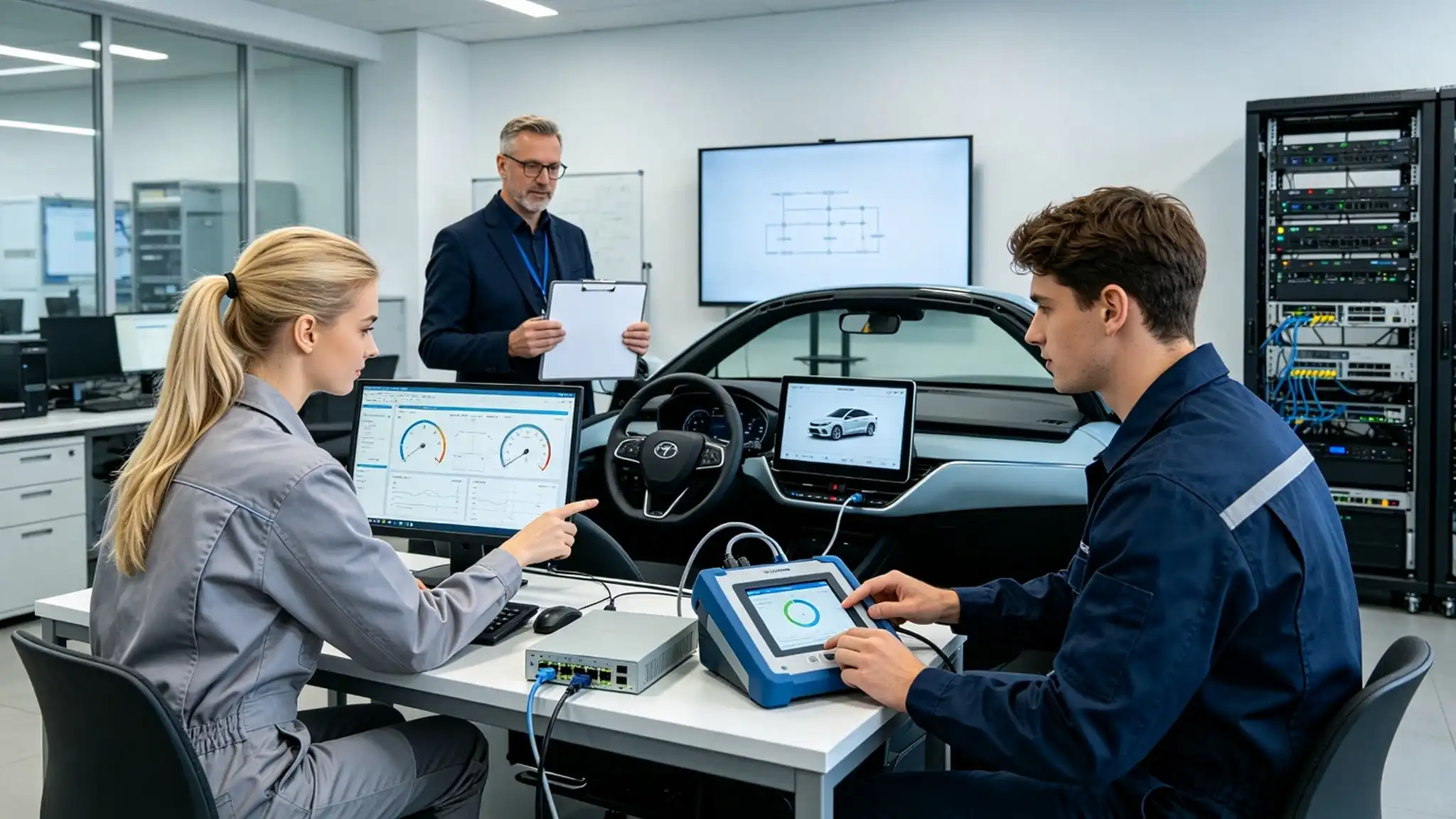
CAN (Controller Area Network) and LIN (Local Interconnect Network) are the bus technologies that make an EV work. High-priority, real-time data like motor speed and battery voltage are handled by the CAN bus. Lower-speed elements like window regulators and seat adjustments are handled by the LIN bus. In real time, intelligent sensor networks check the voltage, temperature differences, and current flow in cells and send this information to the BMS so that decisions can be made. Even the most powerful EV platform can't be trusted if the sensors can't talk to the ECU reliably. These skills are exactly what trained car electronics techs need to be able to do.
Latest Trends and Innovations Driving the Future of EV Electronics
AI, OTA Updates, and Predictive Diagnostics
More and more vehicles are switching from hardware-defined to software-defined vehicles (SDVs). With over-the-air (OTA) firmware changes, automakers can now improve the speed of vehicles and fix safety holes without having to send them to a workshop. AI-powered diagnostic platforms can find strange data patterns, like cells in a battery pack not balancing properly, before a fault code even goes off. McKinsey & Company says that software-related features will make up 30% of a vehicle's value by 2030, up from about 10% in 2020. Because of this change, technicians need to know how to not only put together hardware, but also how embedded software works and how networks talk to each other.
The Rise of 800V Architectures and Wide Bandgap Semiconductors
800V high-voltage EV systems are becoming more common in both the premium and industrial markets. Silicon Carbide (SiC) semiconductors are needed for these designs because they are better at handling heat and have lower switching losses than regular silicon. When purchasing managers and training directors look for content for EV electronics, this means that both technician skill and component compatibility must change at the same time.
Comparing Key Automotive Electronic Systems for EV Procurement
ECUs, Stability Control, and Traction Systems
Buying choices for ECUs depend on how they will be used. A powertrain electronic control unit (ECU) controls motor output and energy recovery, while a body control module (BCM) controls the lighting and entry systems. EVs' stability control systems are very different from those in cars that use gasoline or diesel because they use software to integrate torque vectoring instead of mechanical differentials. Procurement teams should look for automotive electronic technology applications providers that have at least AEC-Q100 certification, ASIL (Automotive Safety Integrity Level) compliance scores, and the ability to work in temperatures ranging from -40°C to +125°C.
CAN vs. LIN: Choosing the Right Network Architecture
You don't have to choose between CAN and LIN networks—most electric vehicles use both. CAN deals with high-speed, mission-critical data with little delay. LIN is cheaper for parts that aren't very important. It's also becoming clear that automotive Ethernet can be used as a fast connection for ADAS and entertainment data. Understanding these differences helps training schools and business procurement teams make decisions about where to get parts and how to create courses to help technicians improve their skills.
When putting in place standardized training systems across service chains with multiple locations, these differences are very important. One of the main reasons why mistakes happen in EV service settings is that people don't always know how networks work.
How to Select and Procure Automotive Electronics for Your EV Fleet?
Defining Specifications and Evaluating Suppliers
Getting parts that meet the needs of real-world applications is hard for procurement teams in the OEM, distributor, and aftermarket segments. Important criteria for evaluation are:
- Certification alignment: Parts should meet AEC-Q100 (for integrated circuits) and AEC-Q101 (for discrete electronics), as well as any applicable ASIL safety grades. For safety-critical systems, ISO 26262 functional safety compliance is a must.
- Environmental stress resilience: Check that the product meets the requirements of ISO 16750-3 for vibration and shock testing, and make sure that it meets the requirements of CISPR 25 for EMI/EMC validation.
- Supplier support infrastructure: Check the quality of the technical documents, the terms of the warranty, and the availability of application engineering help for resolving integration issues.
- Lifecycle cost analysis: Over the course of a 10–15-year car lifecycle, the total cost of ownership will be higher for a part that has a cheaper unit price but a shorter MTBF (mean time between failures).
Clear criteria for buying things lower the risk in the supply chain and make vehicles more reliable over time. The technical parts of any EV electronics training program should be based on the same criteria. Professionals who understand procurement logic are much better at checking for quality issues and figuring out what's wrong.
Case Studies: Successful Automotive Electronic Integration in Leading EV Models
ECU Integration and Fleet Safety Outcomes
After standardizing its ECU diagnosis methods and retraining techs on how to read CAN bus fault codes, a North American company that runs a business EV fleet said that unexpected maintenance events dropped by 22%. Structured, scenario-based training that mimicked real fault situations was the most important intervention. Instead of working on real cars, technicians trained on special electronic control system training benches, which reduced risk and sped up skill transfer.
Sensor Networks and BMS Performance in Urban Delivery Fleets
An urban last-mile delivery service upgraded its battery packs with smart sensors that let them watch cells in real time and control temperatures dynamically. Technicians who were trained in BMS testing found patterns of early cell breakdown that were not seen before the cells failed. Battery replacement cycles were increased by about 18%, which saved money that could be seen. The lesson is that investment in both technology and people who know how to use it will pay off in the long run.
These cases reinforce a consistent pattern — the value of advanced EV electronics is only fully realized when the technicians servicing those systems carry verified, structured competency in automotive electronic systems.
ECR Academy's Automotive Electronic Technology Applications Program
If you are in charge of a training program for car technicians or a training head for a multi-site service chain, the lack of skills in EV electronics is probably your biggest operational problem right now. This is directly covered in ECR Academy's Automotive Electronic Technology Applications course.
The course is built around four main areas of competency: assembly, fixing, testing, and inspection. These are similar to real-life job duties in the production of auto parts and smart equipment for cars. The program trains people through project- and scenario-based modules made by working together with businesses. This makes sure that what students practice matches what the industry actually needs.
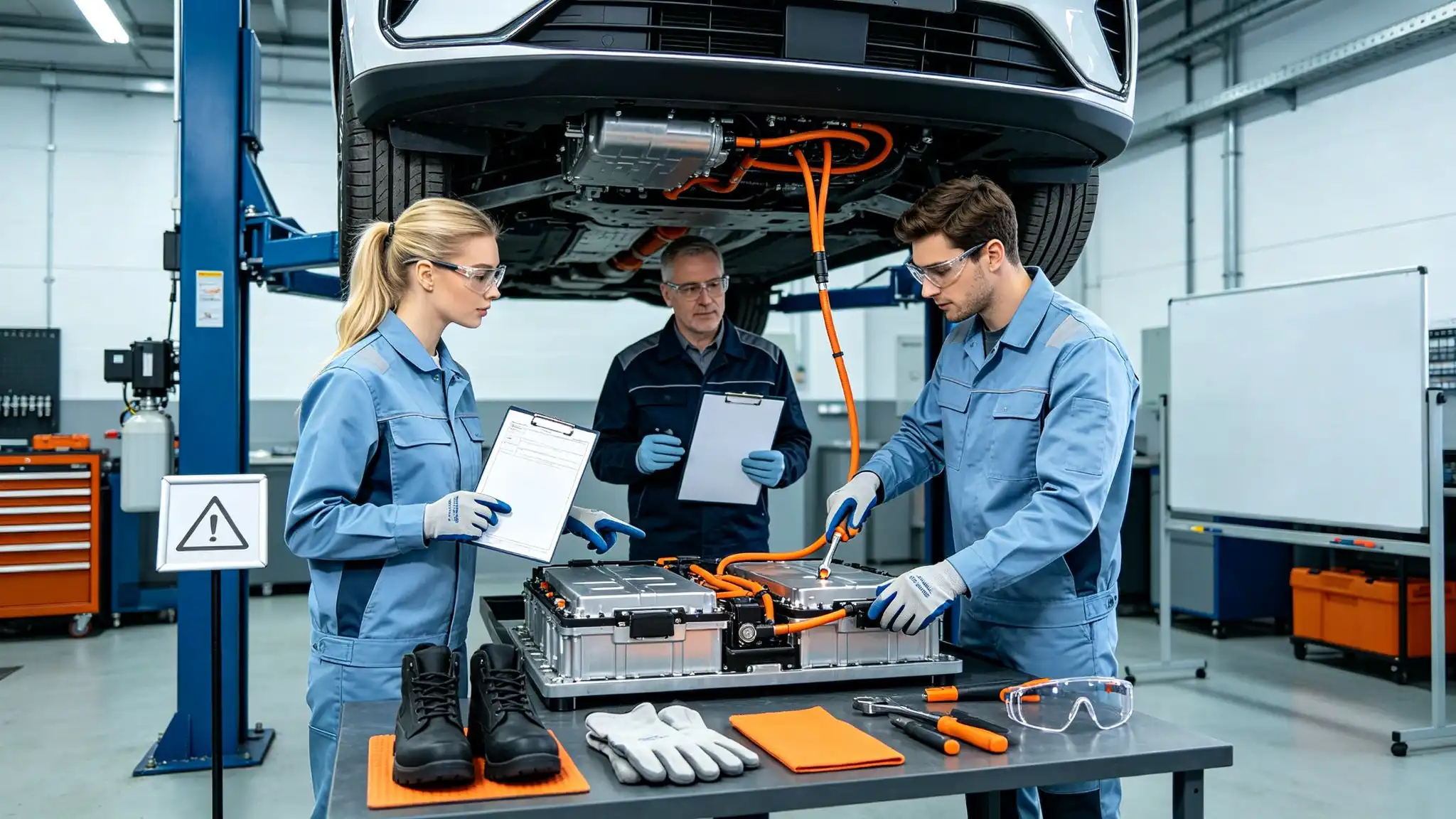
The faculty is made up of teachers with two degrees and real-world business experience. There are also five training labs with power battery management benches, car network training systems, intelligent sensor arrays, and platforms for diagnosing electronic control systems. This system makes it possible to learn by doing in every module, from PCB soldering and finding components to CAN bus signal analysis and BMS fault diagnosis.
Importantly, the program directly links to practical certification paths, such as certifications in NEV assembly and adjustment and intelligent connected vehicle tests. This creates the "standardized, replicable, and certified" structure that systems that train people in more than one place need.
Since 2010, ECR Academy has helped over 300,000 students earn recognized skills certifications and has worked with over 500,000 people in 28 countries. The institution has been teaching global skills for 16 years, which makes it a reliable source for automotive electronic technology applications for business and institutional partners looking for scalable training solutions that lead to certification.
Conclusion
Transporting things by electricity is not a future idea; it is happening now and changing every part of the car service business. Automotive electronic technology applications now determine how safe, fast, and easy to fix a car is. It is very important for people in charge of training, purchasing, and technical education to get organized, verifiable skills in EV electronics as soon as possible, before the skills gap gets even bigger. The program at ECR Academy provides a tried-and-true, scalable way to meet that need.
FAQ
1. What core competencies does this course develop?
The course improves skills in four areas: testing and assembling automotive electronics, quality control, system testing, and vehicle network diagnostics. Learners get good at BMS bench testing, CAN bus signal analysis, fault code detection, and PCB assembly. These are all skills that can be used in creating NEVs and making clever in-vehicle equipment.
2. Does the program align with industry certification requirements?
Yes. The lessons are linked to approval paths for NEV building and adjustment as well as testing requirements for intelligent connected vehicles. This combination lets students finish their training and prepare for licensing at the same time, which shortens the time it takes to become competent and helps standardize operations across multiple sites.
3. What types of organizations does ECR Academy partner with?
Businesses, training schools, industry groups, and government-affiliated skills licensing bodies all work with ECR Academy. The program can be used in more than one place, which makes it ideal for automotive service chains and 4S group training academies that want to provide consistent, scalable skill development.
4. Is this program suitable for technicians transitioning from combustion vehicle service?
Of course. The curriculum combines traditional electrical knowledge for cars with new energy vehicle and intelligent connected vehicle technologies. This helps experienced technicians who want to work as EV service techs make the move smoothly.
Partner With ECR Academy to Build Your EV Electronics Training System
ECR Academy is ready to help your company switch to standardized EV electronics training that is aligned with certification requirements. Our team can make a program that fits your needs, whether you need training in car electronic technology uses for a single school or for a national service chain. You can ask for an automotive electronic technology applications consultation or set up a program demonstration by emailing ecr2008@enteredu.com or going to enteredu.com.
References
1. McKinsey & Company. The future of mobility: Software-defined vehicles and the rise of automotive electronics. McKinsey Center for Future Mobility, 2022.
2. SAE International. Automotive Electronics Reliability and the AEC-Q Component Qualification Standards. SAE Technical Paper Series, 2021.
3. ISO. ISO 26262: Road vehicles — Functional safety. International Organization for Standardization, 2018.
4. IEA (International Energy Agency). Global EV Outlook 2023: Catching up with climate ambitions. IEA Publications, 2023.
5. Bosch Automotive Handbook. Automotive Electrics and Automotive Electronics, 6th Edition. Robert Bosch GmbH, 2021.
6. IEEE Transactions on Vehicular Technology. CAN and LIN Bus Integration in Modern Electric Vehicle Architectures. IEEE, 2022.


_1781601799781.webp)