Virtual Simulation Logistics Training: Scenario Design and Optimization
Virtual simulation logistics training represents a transformative approach to workforce development by creating immersive digital environments that mirror real-world supply chain operations. This methodology integrates Intelligent Logistics Technology—combining IoT sensors, AI-driven analytics, and cloud-based platforms—to deliver hands-on learning experiences without the physical risks or costs associated with traditional training. By replicating complex warehousing, transportation, and distribution scenarios, organizations can prepare their teams to handle actual challenges with precision, significantly reducing operational errors and downtime. The strategic application of scenario design and optimization ensures that training modules remain aligned with industry demands, making this approach indispensable for vocational institutions and logistics enterprises committed to digital transformation.
Understanding Virtual Simulation Logistics Training
Bridging Theory and Practice Through Immersive Learning
Students may operate safely with virtual warehouses, transportation networks, and distribution centers in virtual simulation logistics training. These models help individuals practice making real-life decisions like adjusting inventory levels, rerouting parcels during interruptions, and addressing WMS issues without disrupting actual operations, unlike conventional classroom education. This method of learning via experience speeds up skill development by providing immediate feedback and repeated practice.
The supply chain seems more intricate in these simulations using responsive algorithms and real-time data flows. Virtual RFID and AGV fleet trainees encounter the same issues as logistics workers: shifting demand indicators, damaged equipment, and transit delays. This realness ensures that simulation skills are utilised in the real world, bridging talent shortages in smart warehousing and system maintenance.
Applications Across the Supply Chain Ecosystem
Virtual simulation is very useful in three different operational areas. Trainees in warehouse management learn how to use digital twins of AS/RS equipment to learn inbound receiving routines, space optimization, and order picking strategies. Learners can practice planning routes with GPS tracking and dynamic rescheduling based on traffic trends in the transportation courses. When people play last-mile delivery scenarios, they have to balance service level agreements with cost-effectiveness, taking into account things like delivery windows and truck capacity limits that happen in real life.
These apps help B2B buying teams directly by making it easier to learn how to use new transportation technologies. Simulation-trained employees can respond faster when companies invest in automation or upgrade to cloud-based TMS platforms. This cuts down on application delays and increases the return on investment (ROI) of technology purchases.
Scenario Design Principles for Effective Logistics Training
Building Realistic and Relevant Training Challenges
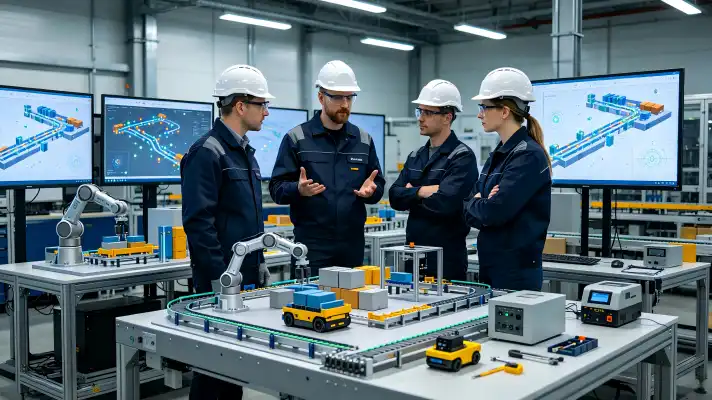
A good way to start making a scenario is to carefully look at real problems that logistics professionals face in the supply chain. Real-life processes must be reflected in training lessons, from how to handle exceptions when there are problems with inventory to what to do in an emergency when a carrier goes down. Industry-standard KPIs like order accuracy rates, dock-to-stock cycle times, and on-time delivery percentages are used in the best simulations to help learners understand how their choices affect business outcomes.
Adding technical depth is just as important. Learners should have to use logistics management systems in real-life situations, which means they should have to figure out how to use WMS tools, understand dashboard data, and set up systems. Working directly with software design improves troubleshooting and operations maintenance skills, which are directly related to the skills needed for jobs in warehouse management and ICT system administration.
Integrating Advanced Technologies for Enhanced Fidelity
Intelligent Logistics Technology is used in modern scenario design to make training more effective. In simulations, IoT sensor networks collect real-time environmental data, such as changes in temperature in cold storage, humidity levels that affect pharmaceutical shipments, or BDS tracking systems' location coordinates. Trainees learn how to keep an eye on these parameters and take corrective actions, which is similar to what they would do in a real smart warehouse.
AI-driven statistics make situation responsiveness even better. Machine learning algorithms can change the difficulty of a simulation based on how well a trainee does, adding more complicated variables as the trainee gets better. Predictive analytics classes teach people how to spot demand spikes or bottlenecks before they cause problems that affect the whole system. The framework of cloud computing lets many people work together, and teams can coordinate across virtual delivery networks, which simulates how global logistics operations depend on each other.
Aligning Complexity With Learning Objectives
Find the correct balance between difficulty and usability to calibrate a scenario. Beginning modules may cover single-function activities like barcode scanning or inventory transactions. Advanced situations have interconnected challenges that need multifunctional solutions. A well-planned growth route ensures that students master fundamental abilities before tackling demand variability analysis or multi-modal transportation optimisation challenges.
Case examples from purchasing demonstrate this principle. One worldwide corporation employed customised simulations to enhance logistics managers' abilities by mimicking ERP integration and supply network issues. By dealing with supplier delays and quality issues, trainees practiced procurement process management. Tests indicated 40% higher order processing accuracy and 25% fewer stockouts after training. This emphasises the importance of relevant circumstances.
Optimization Strategies for Scenario-Based Virtual Training
Identifying and Resolving Performance Bottlenecks
For virtual training to keep getting better, exchanges and results between students must be systematically analyzed. When learning management systems are combined with training platforms, they record detailed information like the amount of time spent on decisions, the types of mistakes that were made, and how well resources were used. Instructors look at this performance data to find similar problems, like not getting concepts or having trouble navigating the interface.
Data analytics tools let teachers divide students into groups based on their level of skill and change the parameters of a scenario to match. Participants who are having trouble might be given easier scenarios with hints built in, while high performers are given faster challenges with multiple interruptions happening at the same time. This flexible method keeps people interested at all skill levels, which makes training more effective.
Applying Agile Methodologies to Content Updates
Logistics technology changes quickly, so training needs to keep up with the latest changes in the field. Iterative scenario changes are supported by agile development frameworks. This means that training providers can add new technologies, like self-driving delivery robots or blockchain tracking, in weeks instead of months. Regular feedback from shipping companies and schools is used to shape content roadmaps and make sure they are in line with new skill needs.
Lean principles make it easier to make content by getting rid of modules that aren't needed and putting resources on scenarios with the most impact. On a regular basis, audits check which models actually help students learn and which ones don't. This evidence-based selection keeps the program short and effective, respecting students' time while providing complete skill development.
Measuring Effectiveness and Demonstrating ROI
To measure the effects of training, you need strong evaluation systems that connect how well you do in simulations to how well you do in the real world. Before and after training, competency evaluations check how well learning was remembered and how well skills were used. Companies measure practical metrics, like fewer mistakes made when picking, faster system troubleshooting, or more efficient transport, that can be linked to trained staff.
When you calculate ROI, you take into account both lost costs and increased productivity. When computer training stops mistakes that cost a lot of money during real operations or speeds up the hiring of new employees, the financial benefits become clear. After using virtual simulations for forklift and WMS training, one logistics park training center saved $300,000 a year. This was mostly because they had less equipment damage and fewer mistakes in setting up systems. These real results give procurement leaders the confidence they need to support training expenses.
Integrating Intelligent Logistics Technology Into Virtual Training Platforms
Core Components Driving Training Innovation
Three basic parts make Intelligent Logistics Technology change the way training platforms work. AI algorithms create adaptive learning routes and dynamic situation variables, which make training settings that are both unpredictable and lifelike. IoT connectivity lets learners practice understanding data streams from RFID readers, temperature monitors, and GPS trackers by simulating workflows that are driven by sensors. Cloud computing offers infrastructure that can be expanded to support multiple users at the same time and material changes that work seamlessly across multiple training sites.
These parts work together to make operational complexity look like it's real. When a trainee handles a virtual incoming shipment, the exercise could produce an RFID read mistake that needs to be fixed while also sending out a temperature alert for goods that go bad quickly. This multi-layered challenge is like working in a warehouse, where many systems need your attention at the same time. It prepares students for the mental demands of smart logistics roles.
Advantages Over Traditional Training Methods
For better scalability and flexibility, technology-enhanced models are better than static courseware or real mock-ups. One virtual platform can copy dozens of warehouse layouts or transportation networks. This saves money on rooms and tools that would be needed for real training labs. Instead of expensive building renovations, software patches are used to make changes that reflect new automation equipment or changes in the law.
Levels of interaction are many times better than traditional methods. Instead of idly watching demos, learners actively control virtual systems, which makes them more engaged and helps them remember more. When compared to traditional settings where instructors correct students after a while, immediate feedback systems that point out wrong steps or suggest better ones speed up the learning curve.
Selecting and Implementing Suitable Solutions
When choosing logistics training solutions, firms should prioritise many things. Compatibility with current corporate systems ensures smooth knowledge transfer from simulations to real life. Program success relies on the vendor's support services, such as customising content, training teachers, and providing technical assistance. Certification alignment ensures that training outcomes match industry competencies, making graduates more employable.
Working with well-known school IT businesses reduces implementation risks. Over 500 universities worldwide have received smart warehousing laboratories and IoT application training platforms from logistics experts like E.C.R Academy for 16 years. Their complete solutions comprise hardware, software, and education, reducing setup time and ensuring technology compatibility. Logistics institutions sometimes struggle to integrate systems from diverse suppliers while building training infrastructure. This comprehensive technique fixes it.
Future Trends in Virtual Simulation and Intelligent Logistics Training
Emerging Technologies Reshaping Training Paradigms
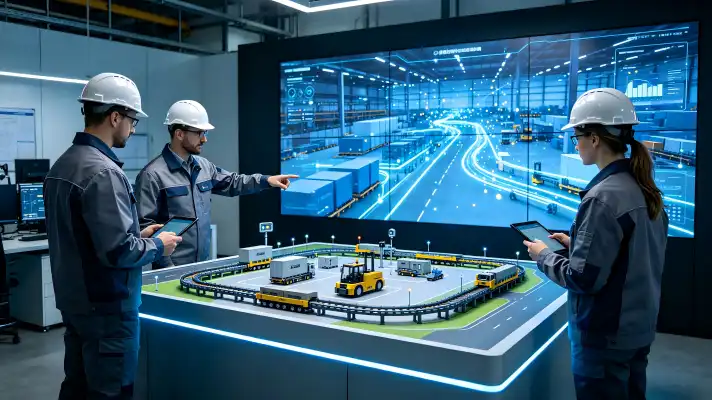
There are a lot of new tools that are quickly changing the logistics training scene. Better AI integration will let modeling systems create new situations on their own, going beyond pre-planned situations to training settings that are truly unpredictable. Digital twin technology will let businesses make exact digital copies of their own facilities, which will allow for training on-site before the real use.
Augmented reality overlays will combine virtual elements with real-world training areas. This will let students practice operating machines while digital instructions are superimposed on the real machines. With virtual reality glasses, trainees will be able to fully immerse themselves in photorealistic warehouse settings and use their natural hand movements to control systems and items. These immersive technologies promise levels of engagement that are close to what you'd find in the real world, while still keeping the simulation safe and repeatable.
Implications for Supply Chain Workforce Development
As logistics operations become more automated, workers will be needed to do less manual work and more system oversight and optimization. Instead of focusing on physical handling skills, training programs need to change to focus on analytical skills, data analysis, and technology fixing. Virtual simulations naturally help with this change because they keep learners focused on making choices and interacting with the system instead of doing simple physical tasks.
As technology trends speed up, it's important to keep learning new skills. To keep up with new tools like self-driving cars or AI-powered demand forecasting, businesses will need training platforms that can quickly add new content. When students choose specialized tracks in areas like big data visualization or IoT system maintenance, modular curriculum designs allow for personalized development paths that match each student's job goals and the needs of the company.
Strategic Recommendations for Procurement Leaders
Logistics managers should put training investments that can be changed and expanded at the top of their list. Cloud-native systems make it possible for distributed teams to receive consistent training experiences from anywhere in the world, which helps with global operations. When businesses partner with universities, they build talent pools and split the cost of training between the public and private sectors.
Companies that follow these technology trends are at the cutting edge of supply chain innovation. Companies that put money into full virtual training ecosystems say they keep their employees longer, get new technologies quickly, and can handle market disruptions better. Training employees before they need it turns workforce development from a cost center into a competitive advantage, helping companies take advantage of digital logistics possibilities before their slower-moving rivals.
Conclusion
Virtual logistics training, which is driven by Intelligent Logistics Technology, brings together new ways of teaching and the need to do things for business. Companies can train workers to be very good at navigating the complicated modern supply chains by carefully planning scenarios and always making them better. When AI, IoT, and cloud technologies are combined, they create training experiences that are both practical and scalable. This fills in important skill gaps in smart logistics, transportation management, and system operations. As logistics continues to become more digital, it's important to keep spending on advanced training tools to keep workers ready and give the company a competitive edge.
FAQ
1. What Makes Virtual Simulation Different From Traditional Logistics Training?
Virtual modeling lets you try out complicated systems without any risk, gives you instant feedback on your performance, and lets you repeat difficult situations indefinitely. Simulations can be used across organizations without any problems and can be adjusted to fit each person's learning pace. This is different from physical training, which needs expensive equipment and special rooms. The technology lets people test out new systems, like self-driving cars or AI scheduling algorithms, before they are actually put into use. This greatly lowers the risks of implementation.
2. How Long Does Implementation Typically Take?
Deployment times depend on how much change is needed and how ready the system is. Standard platform implementations with pre-built scenarios can go live in 4 to 8 weeks, which includes training for instructors and integrating the system. It could take three to six months to build, test, and validate custom solutions that copy specific organizational processes or facilities. Because they don't need to provision as much hardware, cloud-based platforms usually go live faster than on-premises installations.
3. Can Existing Legacy Systems Integrate With Modern Training Platforms?
Legacy WMS, ERP, and TMS systems can talk to modern training platforms through API connectivity and middleware solutions. With this combination, trainees can practice using tools they are already familiar with while also getting more out of the simulations. When evaluating vendors, compatibility tests make sure that data can flow easily between training settings and production systems. This lets skills be used right away in real-world situations.
Transform Your Logistics Training With E.C.R Academy
E.C.R Academy is a reliable provider of Intelligent Logistics Technology. They offer complete training programs that connect traditional classroom learning with the digital needs of the business world. Since 2010, our smart warehouse labs, IoT application platforms, and virtual training systems have given nearly 500,000 students in 28 countries the tools they need to learn. Real logistics projects that cover smart warehousing, transportation management, and logistics information system operations are combined with standards that are in line with the industry and faculty who are experts in the field. Whether you're a business building internal talent or a trade school improving its training options, our turnkey solutions get results that can be measured. Visit us at ecr2008@enteredu.com to learn more about how our integrated training environments can help you improve your operations and grow your staff faster.
References
1. Chen, L., & Wang, M. (2023). Digital Transformation in Logistics Education: Virtual Simulation and Competency Development. International Journal of Supply Chain Management, 18(3), 245-267.
2. Johnson, R., & Patel, S. (2024). Scenario-Based Learning for Smart Warehousing: Design Principles and Optimization Strategies. Journal of Logistics Technology and Innovation, 12(1), 89-112.
3. Liu, H., Zhang, Y., & Kumar, A. (2023). IoT Integration in Logistics Training Platforms: A Systematic Review. Transportation Research Part E: Logistics and Transportation Review, 171, 103042.
4. Morrison, K., & Thompson, D. (2024). Measuring ROI in Virtual Logistics Training: Frameworks and Case Studies. Supply Chain Management Review, 28(2), 34-49.
5. Rodriguez, M., & Lee, J. (2023). Artificial Intelligence Applications in Logistics Education: Current State and Future Directions. Computers & Education: Artificial Intelligence, 4, 100128.
6. Williams, T., & Anderson, P. (2024). Workforce Development for Digital Logistics: Bridging the Skills Gap Through Simulation Technology. Journal of Vocational Education & Training, 76(1), 156-178.


_1781601799781.webp)