New Energy Vehicle Fault Diagnosis & Troubleshooting: Complete Training Guide
If you work in NEV education or technical training, you already know how fast this industry moves. New energy vehicle fault diagnosis & troubleshooting is no longer a niche skill — it is a core competency that every automotive technician and engineering student needs today. This guide walks through what modern NEV fault diagnosis training looks like, what skills it builds, and how structured programs like those offered by ECR Academy prepare learners for real roles in battery systems, drive motor maintenance, and electronic control diagnostics.
Understanding New Energy Vehicle Faults: A Comprehensive Overview
A technician has to be able to see the problem before they can fix it. NEV fault patterns are very different from those in traditional combustion cars, and misunderstanding early signs can cost a lot of money in lost time.
Common Fault Categories in NEV Systems
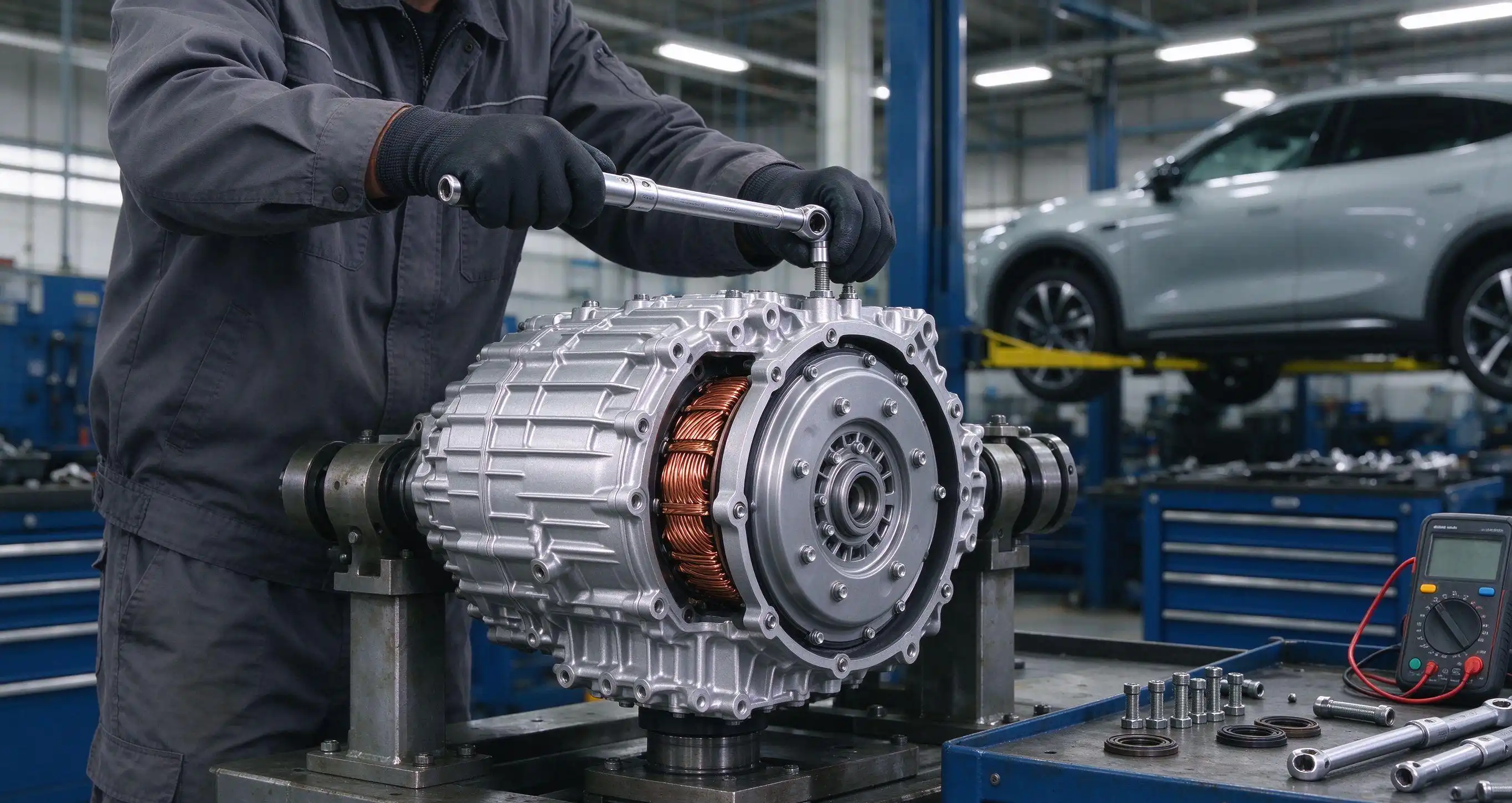
The power battery, the drive motor, and the computer control unit are the three main parts of an electric car that can go wrong. Together, they are called the "three electrics." A lot of the time, battery faults show up as strange State of Charge (SOC) readings, cell voltage imbalances, or thermal warnings. Phase current imbalance and resolver signal loss are two types of motor faults. CAN-FD bus transmission failures or software reasoning conflicts after over-the-air (OTA) updates are common causes of electronic control faults.
The Role of BMS and OBD in Early Detection
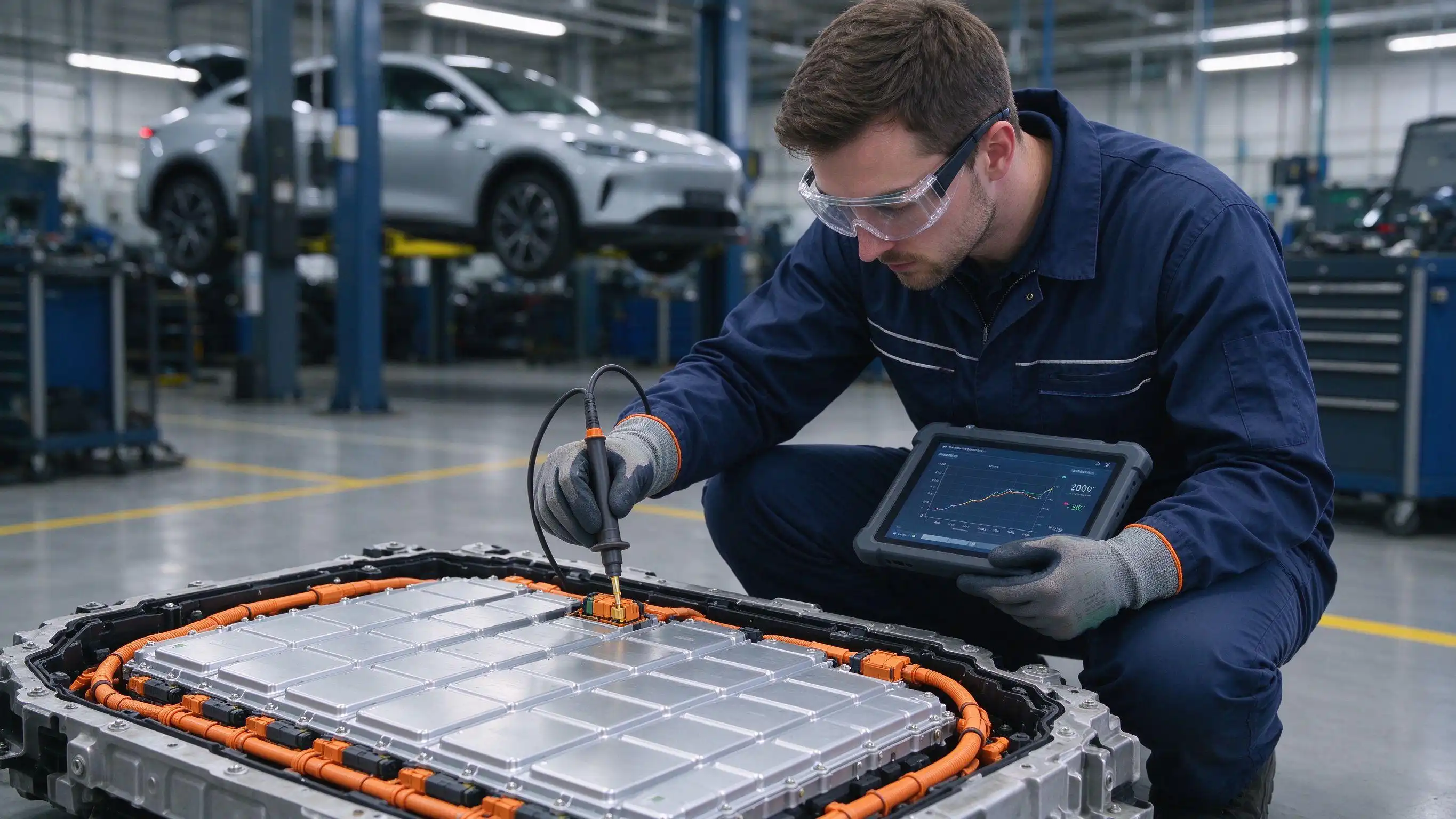
A Battery Management System (BMS) keeps an eye on the voltages, temperatures, and insulation resistance of each cell all the time. The BMS sets off a fault flag when the isolation resistance falls below 500 Ω/V, which is the standard level set by GB/T 18384. On-board diagnostic methods that have been changed to work with NEV architectures let techs access unique BMS parameter IDs that regular OBD-II readers can't read. This means that you have to have special diagnostic tools.
High-Voltage Safety as a Non-Negotiable Starting Point
High-voltage systems that work above 60V DC pose a serious risk of electrocution. Technicians must check the consistency of the High-Voltage Interlock Loop (HVIL), the state of the 12V backup battery, and the use of CAT III 1000V-rated insulated tools before they can do any hands-on analysis. Skipping these steps in training doesn't meet safety standards in the industry and puts both institutions and employers at risk.
Step-by-Step Troubleshooting Methods for NEV Fault Diagnosis
Fixed-cost, structured troubleshooting cuts down on repair time and avoids wrong diagnoses. Because software and hardware problems can show up as the same symptoms, a systematic approach is more important for maintaining NEVs than for fixing regular cars.
Symptom Identification and Initial Data Logging
Read all active and stored fault codes from all ECUs on the vehicle network, not just the powertrain module. This is the first step. Technicians can see what was going on at the time of the fault by streaming real-time data from the BMS, motor driver, and temperature management system. During a test drive, data logging often shows occasional problems that don't show up on a static check.
Root Cause Analysis: Hardware vs. Software Distinction
Figuring out the difference between a software bug and a hardware failure is one of the most difficult parts of new energy vehicle fault diagnosis & troubleshooting. A good way to check the PWM signal from the Motor Control Unit (MCU) is to use an oscilloscope. If the logic signals look fine but the three-phase output is still unbalanced, the problem is most likely with the hardware, usually the IGBT or SiC switching modules, not the firmware.
Thermal Management and Electrical Fault Isolation
Insulation faults happen more often when there is a lot of moisture in the air. Connector sealants that have worn down or micro-cracks in high-voltage wires let water in, which lowers the isolation resistance below the BMS cutoff. Systematic thermal imaging and insulation resistance testing under 1000V stress conditions, which are in line with UN ECE R100 standards, can find these problems and fix them before they become safety incidents.
Comparative Analysis of Diagnostic Tools and Solutions for NEVs
Picking the right diagnostic tools has a direct effect on how quickly and correctly problems are fixed. The market for NEVs needs tools that are very different from the old car scan technology.
Professional-Grade NEV Diagnostic Platforms vs. Standard OBD Tools
Standard OBD-II scanners can read generic powertrain codes, but they can't read proprietary BMS PIDs, individual cell voltage logs, or the history of balancing. Professional systems from companies like Autel and Bosch come with NEV-specific units that can talk to each other over CAN-FD and Ethernet, allowing multiple ECUs to be scanned at the same time. Delphi DS adds more support for charging system protocols, such as IEC 61851 and CHAdeMO handshaking proof.
Specialized Equipment for Battery and Motor Testing
In addition to scan tools, the three-electric systems need special instruments to be diagnosed correctly. Analyzers for batteries check the full pack's capacity, internal resistance, and cell balance. Devices that test inverters look at gate motor signals and phase output patterns. When techs use OBDLink devices that support high-speed CAN, they can record data without causing electromagnetic interference, which is very important because of ECE R10 EMI/EMC compliance rules.
Cost-Benefit Considerations for Institutional Procurement
When vocational schools and training centers choose between a fully integrated platform and separate instrument sets, it's not just about price. An all-in-one NEV training platform that includes electrical assembly, battery system testing, and motor diagnosis cuts down on the size of the lab, makes upkeep easier, and fits with government buying categories for "double high" trade programs. When you add up the costs of replacing consumables, calibrating the system, and training faculty over the course of a five-year program cycle, integrated solutions usually come out on top.
Best Practices and Recommendations for NEV Fault Diagnosis Procurement
Procurement decisions in this space have long-term consequences. Buying the wrong platform in year one means replacing it when the next generation of 800V high-voltage architectures or CTP/CTC battery configurations enters the service market.
Alignment with Technical Standards and Curriculum Requirements
Any diagnostic platform selected for institutional use should align with ISO 26262 functional safety requirements, SAE J1979 diagnostic communication standards, and the Ministry of Human Resources and Social Security skill certification criteria for NEV maintenance technicians. Platforms that map directly to these standards reduce the gap between classroom training and workplace expectation.
Here are the key selection criteria worth verifying before any procurement decision:
- Three-electric system coverage: Confirm that the platform addresses battery, motor, and electronic control systems as integrated — not isolated — training modules.
- High-voltage safety hardware: Look for built-in insulation monitoring, overcurrent protection, and emergency stop interlocking as hardware-level features, not software-only safeguards for new energy vehicle fault diagnosis & troubleshooting.
- Curriculum update protocol: Given how rapidly NEV technology changes, ask suppliers how often course content is refreshed and whether updates are included in the contract.
- Confidentiality handling: For programs tied to OEM order-based classes, confirm that training content has been cleared of proprietary manufacturer data.
These criteria directly address the real concerns that department heads and academic directors face when justifying procurement to institutional leadership and OEM partners.
Supplier Reliability and Long-Term Support
A platform is only as good as the support behind it. Institutions should evaluate suppliers on after-sales responsiveness, the availability of replacement components for specialized test benches, and the supplier's history of updating content to reflect new vehicle architectures. ECR Academy, with over 16 years of experience delivering skills training across 28 countries and partnerships with more than 500 enterprises, brings the operational depth that long-term program delivery requires.
Conclusion
Structured training in electric vehicle diagnostics, especially new energy vehicle fault diagnosis & troubleshooting, is no longer an option for schools that prepare students for jobs in the automotive industry. As the number of NEVs on the road speeds up—China's new energy vehicle parc grows by more than 50% every year in key urban markets—there will be a greater need for technicians who can correctly identify problems with batteries, motors, and control systems. This need is met by the NEV Fault Diagnosis & Troubleshooting program at ECR Academy. It uses project-based learning, hardware-safe training platforms, and a curriculum that is in line with both international standards and OEM technical requirements.
FAQ
1. Can students with no prior automotive background take this course?
Yes. The program starts with basic NEV architecture and low-voltage electrical fundamentals before progressing to high-voltage systems and fault diagnosis procedures. Learners with foundational knowledge of electrical circuits and computer operation can follow the curriculum at a steady pace.
2. What safety measures are built into the training platform?
The platform includes hardware-level insulation monitoring, overcurrent protection, and emergency stop interlocking. Learners also practice using Class 0 high-voltage gloves and CAT III 1000V-rated insulated tools as part of standardized operating procedures.
3. What career paths does this training support?
Graduates qualify for roles including power battery system testing engineer, drive motor fault diagnosis engineer, NEV maintenance technician, and after-sales service technician at OEM-authorized service centers.
Partner with ECR Academy for Professional NEV Training Solutions
In 28 countries, vocational schools, OEM service networks, and enterprise training centers all rely on ECR Academy's tried-and-true new energy vehicle fault diagnosis & troubleshooting training program. We have been a supplier of NEV training curriculum for 16 years and have a library with over 60,000 learning resources. We also work directly with over 500 industry partners. Get in touch with us right away to set up a program meeting or platform trial. Email us at ecr2008@enteredu.com or go to enteredu.com to get in touch with us.
References
1. GB/T 18384 — Safety Requirements for Electric Vehicles. Standardization Administration of China, 2020.
2. ISO 26262: Road Vehicles — Functional Safety. International Organization for Standardization, 2018.
3. SAE J1979: E/E Diagnostic Test Modes. SAE International, 2020.
4. UN ECE Regulation No. 100 — Battery Electric Vehicle Safety. United Nations Economic Commission for Europe, 2021.
5. Gao, Y., & Mi, C. Modern Electric Vehicle Technology. Oxford University Press, 2017.
6. China New Energy Vehicle Industry Development Report. China Association of Automobile Manufacturers (CAAM), 2023.