How Industrial Production Virtual Simulation & Development Advances Smart Manufacturing
Industrial production virtual simulation & development is becoming one of the most practical tools that manufacturers and technical institutions rely upon. Digital twins of real production environments allow organizations to test equipment sequences, train workers and enhance processes without touching any physical assets. The approach reduces prototype costs, trims commissioning time frames and prepares people to take on roles that need both technical depth and digital fluency. For vocational schools and business training departments that are building smart manufacturing programs, it offers a direct path from classroom theory to job-ready capability.
Understanding Industrial Production Virtual Simulation
It is helpful to know what virtual simulation means in the real world and how it is different from traditional training methods before picking a platform or course.
What a Digital Twin Actually Does
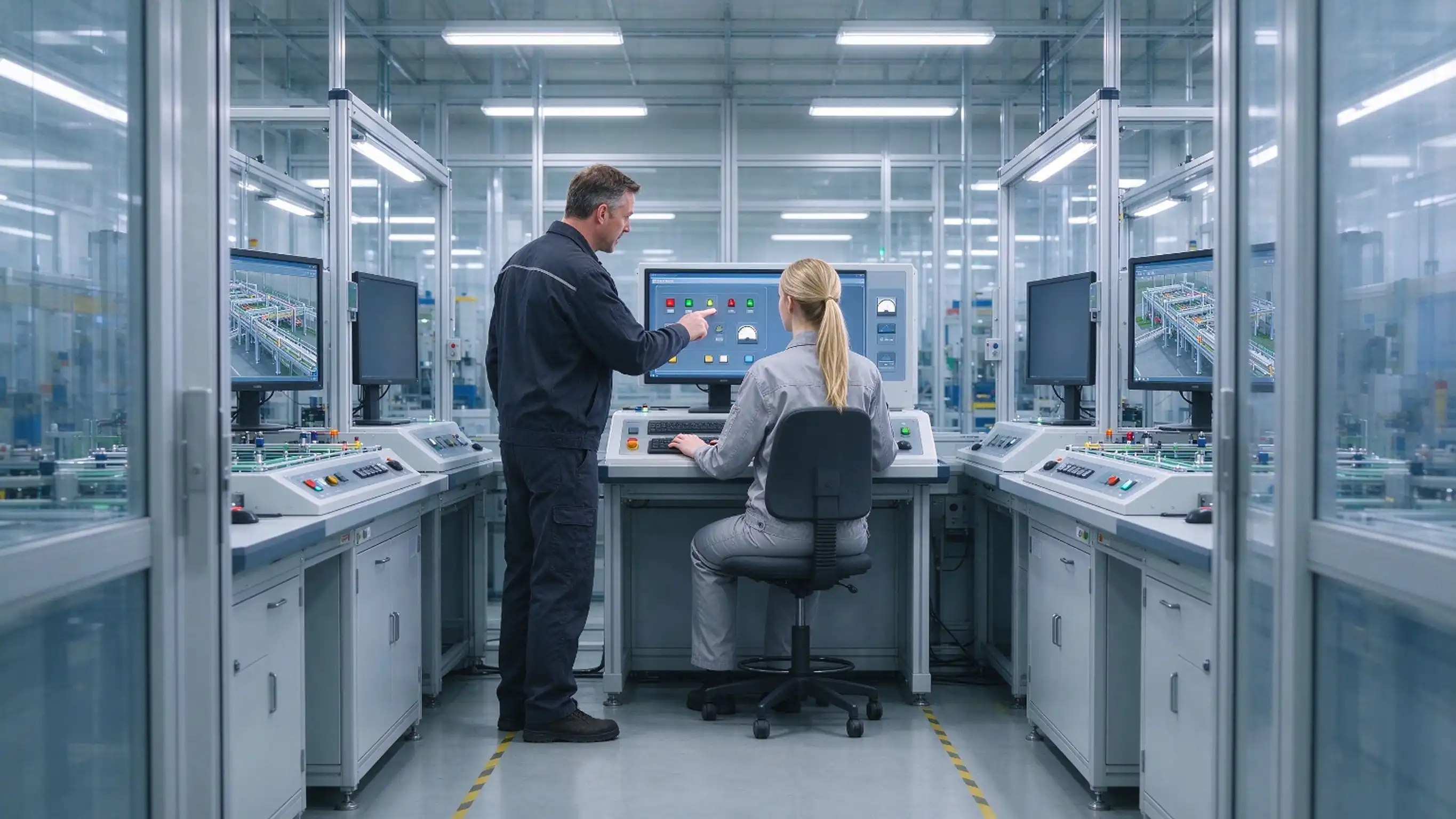
A digital twin is a real-time computer copy of a real thing, like a robot arm, a production line, or a whole building. Engineers put real working data into it and watch how changes affect the whole system without having to touch the hardware. A report from 2023 by Deloitte says that manufacturers who used digital twin technology saw a 25% drop in unplanned downtime. This is the only reason why acceptance has sped up in the electronics, aircraft, and automobile industries.
Virtual Training vs. Physical Prototyping
Physical prototyping is slow, expensive, and sometimes dangerous. For example, taking apart a reducer mechanism or testing a UAV control sequence on real equipment is very risky. Instead of those meetings, virtual simulations use browser-based 3D worlds where students can interact with the same object logic without having to worry about safety or pay for materials. In the morning, a student can disassemble a gear fifty times, which is impossible to do on real hardware.
Core Technologies Behind the Platform
The VeryEngine Virtual Simulation Platform, which is used in ECR Academy's course, only works on a B/S computer and uses HTML5 and WebGL. Learners can access real-time 3D scenes and changing tools right from a web browser, so they don't have to run any software. The platform lets you control the movement of objects, handle multimedia assets, and make changes to the production process. This means that it can be used by both new developers who are working on recognition features and experienced engineers who are writing scripts for complex interaction logic.
How Virtual Simulation Drives Smart Manufacturing Development
Smart manufacturing is not just about automated machines. It requires people who can read, build, and maintain simulation environments that connect physical equipment to digital control systems.
Bridging the Skills Gap in Manufacturing
According to the Manufacturing Institute, the U.S. faces a projected shortfall of 2.1 million skilled manufacturing workers by 2030. Virtual simulation training directly addresses this by giving learners structured exposure to industrial scenarios — UAV systems, traffic light logic, production line sequencing — that mirror what they will encounter on the job. The gap between academic knowledge and factory-floor readiness narrows significantly when training includes genuine simulation development work.
Connecting IIoT and Simulation Workflows
Industrial IoT systems generate continuous data from sensors, conveyors, and robotic cells, supporting industrial production virtual simulation & development. Virtual simulation environments can ingest that data to model how a line will behave under variable conditions. Learners who understand how to build these simulations are better positioned to work alongside IIoT infrastructure, interpret system outputs, and suggest process adjustments based on what the model predicts.
Supporting Institutional Accreditation Goals
For vocational institutions applying for national or provincial virtual simulation training base status, the quality of the platform and course package matters as much as the physical facility. ECR Academy's Industrial Production Virtual Simulation & Development course provides a complete framework — from equipment recognition function development through JavaScript/TypeScript scripting and final product publishing — that supports both pedagogical standards and documentation requirements for institutional accreditation.
Choosing the Right Industrial Virtual Simulation Solution
Procurement decisions in this space involve more stakeholders than a typical software purchase. Faculty, IT teams, department heads, and administrators each weigh different factors.
Platform Architecture and Accessibility
A browser-based deployment model removes one of the most common adoption barriers: installation complexity. When faculty and students can open a simulation scene from any device with a modern browser, usage rates climb. The B/S architecture also simplifies IT integration with existing academic management systems, which matters when data synchronization between the simulation platform and a school's LMS is a requirement.
Curriculum Depth and Standard Alignment
Here are the core skill areas covered in ECR Academy's course:
- Equipment recognition function development — information recognition, structure recognition, knowledge display in VR scenes
- Multimedia interaction design — image, text, video, and voice-driven interactive functions
- Object motion function development — rotation, transmission, and movement simulation commands
- Production process design — virtual production line planning and workflow simulation
- Plug-in development and scripting — JavaScript and TypeScript for custom interaction logic
- Full industrial case projects — UAV systems, reducer mechanisms, and traffic light systems from requirement analysis to product publishing
These skill areas align with international technical skills standards and prepare learners for roles in digital twin development, smart manufacturing simulation, and industrial automation integration.
Institutions evaluating virtual simulation suppliers should confirm whether the course package includes instructor training, project documentation support, and post-deployment guidance — all of which ECR Academy provides through its faculty of enterprise engineers and academic experts.
Total Cost and Long-Term Fit
Beyond licensing, consider whether the platform supports self-directed scene expansion by faculty. ECR Academy's course teaches teachers to build and modify simulation scenarios independently using scripting tools, which reduces long-term dependency on external developers and keeps the platform active and relevant over time.
Overcoming Challenges and Maximizing ROI
There are real problems with adoption. Many schools buy tools that aren't used much after 18 months because teachers don't have the time or confidence to make their own material.
Building Faculty Confidence First
ECR Academy directly addresses this issue. The first part of the course covers basic recognition and visual editing. The next part moves on to code-based scripting. If a faculty member finishes the whole program, they can make and share their own browser-based simulation goods. What makes platforms useful and platforms that people don't use is the ability to change from idle user to active creator.
Measuring Training Impact
Institutions can keep track of students' progress in industrial production virtual simulation & development by looking at how many simulations are finished, how well projects are turned in, and the quality of tests that are linked to each skill module. These measures are directly used in the evaluation reports needed for national virtual simulation base reviews. This gives platform managers real proof of how the platform has changed things.
Phased Rollout Reduces Risk
An institution can test the platform with two or three industrial case projects, like the reducer mechanism and traffic light system, before adding all of its courses. This phased plan also gives teachers a chance to get used to scripting tools before they move on to more difficult scene creation.
Future Trends in Industrial Virtual Simulation
Scene generation with AI's help, digital twins that change based on sensor feeds in real time, and cloud-based collaborative development environments are all moving from the research stage to the real world. When institutions build training programs today, they should choose platforms that are based on open web standards like HTML5, WebGL, and JavaScript. This way, they can easily adapt to these changes without having to start from scratch. The subscription and project-based service models that suppliers like ECR Academy support also make it easy for schools to change their courses as technology and business needs change.
Conclusion
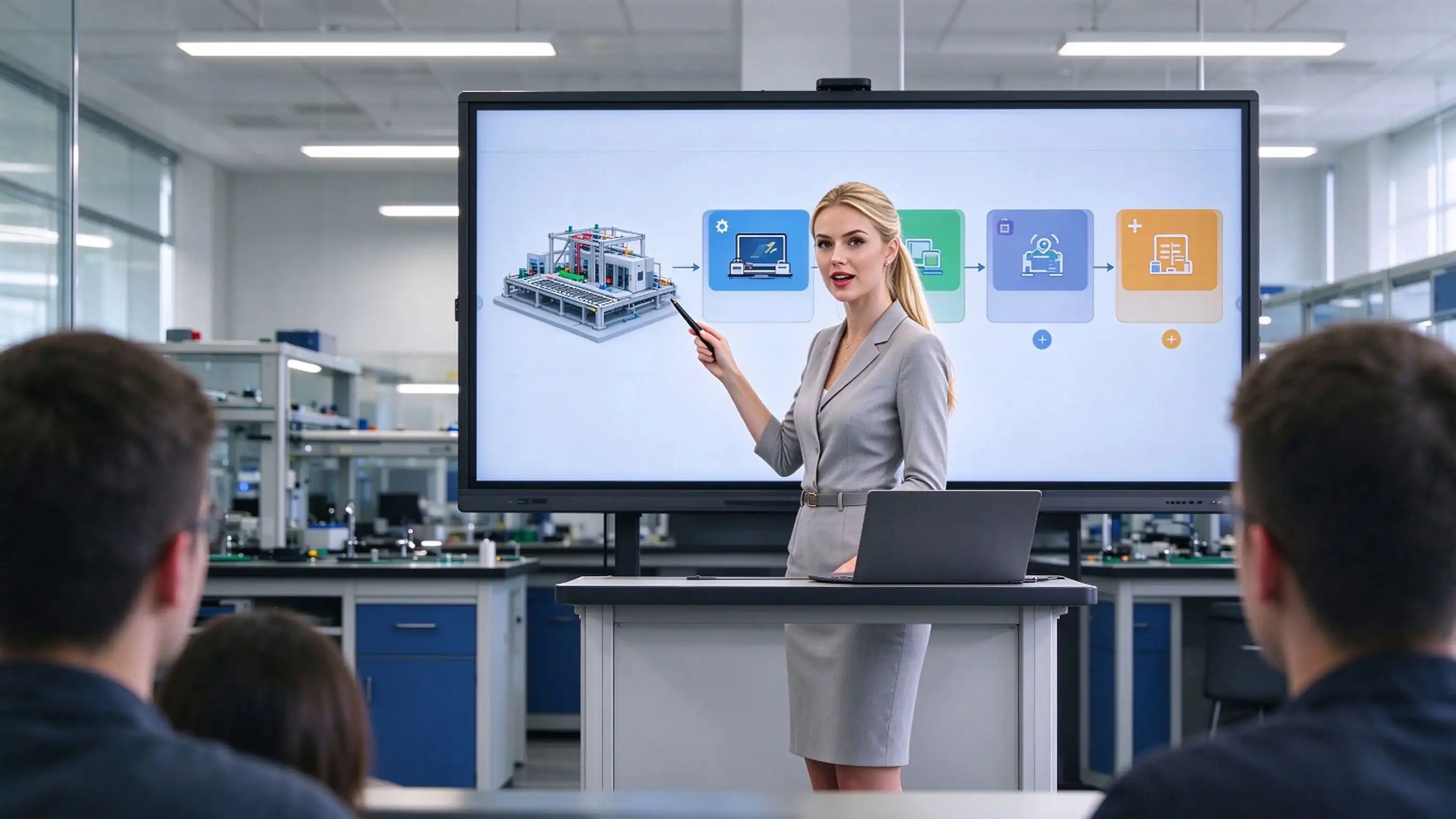
Virtual simulations used to be extra tools for teachers, but now they are an important part of teaching smart manufacturing through industrial production virtual simulation & development. Businesses and institutions that put money into structured, standards-based programs that cover everything from recognizing equipment to simulating a whole production line set up their students and teachers to be useful in a future-focused industry that is driven by technology. The Industrial production virtual simulation & development course from ECR Academy is a tried-and-true, browser-based way to build those skills. It is based on 16 years of professional training experience in 28 countries.
FAQ
1. Can someone with no programming background take this course?
Yes. The first part of the training covers basic device recognition and editing images. Gradually, students learn how to write scripts in JavaScript and TypeScript with the help of project-based tasks instead of basic coding exercises. The browser-based interface of the VeryEngine platform is made so that people who have never built anything before can use it.
2. What job roles does this training prepare learners for?
Industrial VR Product Designer, Virtual Simulation Engineer, Smart Manufacturing Simulation Engineer, Industrial Digital Twin Development Engineer, and Industrial Training Courseware Designer are some of the jobs that graduates are ready for.
3. How does this course support institutional accreditation applications?
The course package comes with a full curriculum structure, case study documents, and competency result records. These are the kinds of things that can help you apply to be a national or provincial virtual simulation training base.
Partner with ECR Academy for Industrial Virtual Simulation & Development
ECR Academy has been teaching professional skills for 16 years and has a network of more than 500 business partners and a staff of working engineers who teach each class. Our industrial production virtual simulation & development course is a structured, browser-based way for businesses and institutions to learn how to really do digital manufacturing well. We are ready to talk about your specific needs, whether you are looking for a supplier of industrial production virtual simulation & development for your school or are planning an enterprise upskilling program. To ask for a course consultation today, email us at ecr2008@enteredu.com or go to enteredu.com.
References
1. Deloitte Insights. The Digital Twin: Bridging the Physical and Digital. 2023.
2. Manufacturing Institute & Deloitte. The Skills Gap in U.S. Manufacturing 2015–2025. 2015.
3. Grieves, M. Digital Twin: Manufacturing Excellence Through Virtual Factory Replication. White Paper, 2014.
4. International Federation of Robotics. World Robotics Report: Industrial Robots. 2023.
5. Journal of Manufacturing Systems. Virtual Commissioning and Digital Twin Integration in Smart Manufacturing. Elsevier, 2022.
6. UNESCO-UNEVOC. Vocational Education and Training in the Age of Digital Transformation. 2022.