What Is Industrial Robot Intelligent Operations & Maintenance Course?
Industrial Robot Intelligent Operations & Maintenance represents a systematic approach to managing robotic systems throughout their lifecycle using data-driven methodologies. This training framework equips technicians and engineers with skills in robot installation, debugging, predictive diagnostics, and cloud-based monitoring. Rather than reactive repairs, learners develop proactive maintenance capabilities that extend equipment life and optimize production efficiency. The course combines hands-on practice with mechanical systems, electrical fault analysis, control programming, and intelligent monitoring applications, preparing participants for roles in automated manufacturing environments across industries like automotive assembly, electronics production, and logistics automation.
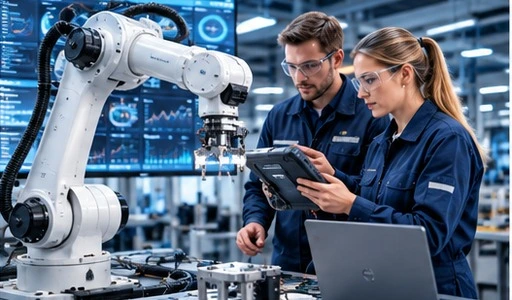
Understanding Intelligent Operations & Maintenance for Industrial Robots
Traditional maintenance methods stick to set schedules no matter how the equipment is actually doing. This means that equipment may need extra care or break down without warning. Industrial Robot Intelligent Operations & Maintenance strategies change this model by using sensor networks and analytics platforms to keep an eye on robot health all the time.
The Evolution from Reactive to Predictive Maintenance
In the past, manufacturing depended on breakdown maintenance, which meant that equipment was only fixed after it broke down. This method led to breaks in production and higher costs. Regular service times made preventive maintenance more reliable, but parts still had to be replaced too soon, and resources were lost. Real-time data from vibration sensors, thermal cameras, and current monitors are used in predictive maintenance to figure out how well equipment is really working. Patterns that show bearing wear, motor burning, or oil degradation are looked at by algorithms before they stop production. This change lets support teams step in exactly when they're needed, weighing risk and cost.
Core Technologies Enabling Smart Robotics Maintenance
Intelligent robots work by using a number of technologies that work together. Internet of Things (IoT) sensors built into robotic systems constantly measure performance factors like joint force, positioning accuracy, and power use. Edge computing devices process this data nearby and can spot problems within milliseconds, sending out alerts right away. Cloud platforms collect data from entire robot teams and show trends that can't be seen at the level of a single machine. Machine learning models that have been trained on failure data from the past can guess how long critical parts will still work. When you put these technologies together, they make a full visibility layer that turns care from guessing to science.
Combining real robots with fake industrial settings, the BN-R365 training platform is a good example of this integration. Trainees use real servo motors, controls, and vision systems, and cloud screens let instructors keep an eye on their work. This method of learning by doing builds both technical knowledge and muscle memory, getting students ready for the difficulty they'll face in work settings.
Key Components Covered in Industrial Robot Maintenance Training
Comprehensive training in robot maintenance covers the areas of mechanics, electricity, and software. For each system, there are different ways to diagnose problems and fix them that professionals must master through Industrial Robot Intelligent Operations & Maintenance taught practice.
Mechanical System Operation and Precision Calibration
Robot mechanical systems are made up of bearings, synchronous belts, reduction gears, and solid housings that can handle millions of motion cycles. Trainees learn organized ways to take things apart that keep precision parts from getting damaged. Techniques for installing motors make sure that the shaft is aligned correctly and that the mounting is solid enough to withstand shaking. Belt tension testing methods find signs of wear before they lead to mistakes in placement. After replacing parts, laser trackers are used in calibration procedures to get robots back to the way they were when they were first made. These skills have a direct effect on the quality of the product because robots that aren't lined up right make broken parts that waste materials and need to be fixed.
Electrical Fault Diagnosis and System Analysis
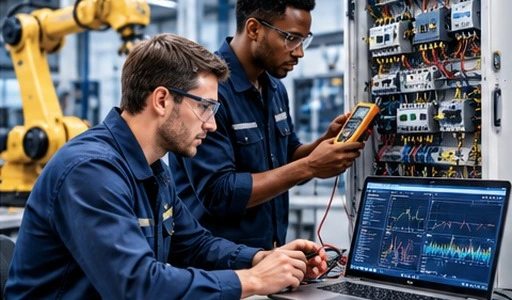
Electrical systems include power sources, motor drives, control cabinets, and wire lines that let robotic cells get power and messages. Hardware problems show up as blown fuses, broken Contactors, or failed circuit boards that need to be looked at and tested with a multimeter. Software-related electrical problems can be caused by wrong parameter settings, communication problems, or firmware that isn't working right, which needs to be fixed in a planned way using diagnostic interfaces. Intelligent inspection tools, such as thermal imaging cameras, can find parts that are getting too hot before they break in a terrible way. Participants create organized troubleshooting processes that quickly find and fix problems, cutting down on downtime from hours to minutes.
Control System Configuration and Network Integration
These days' robots are networked and share data with PLCs, vision systems, safety controls, and business software. Having the right network setting skills lets you set up the right IP addresses, subnets, and communication protocols. Zero-point calibration sets the position as a starting point for all robot movements. Setting up the coordinate system tells the computer where the center points of the tools and the starting points of the workpieces are. It's necessary to calibrate the camera, tweak the lighting, and program pattern recognition in order to integrate a vision system. Technicians can make robots do new tasks without help from outside engineers if they know how to do these basic control tasks. This makes operations much more flexible.
Implementing an Industrial Robot Intelligent O&M Program
For adoption to go well, it takes more than just putting in place the technology. It also needs change management in the business and training for the staff through an Industrial Robot Intelligent Operations & Maintenance program. Companies need to look at how mature their support is now and plan adoption paths that happen in stages.
Assessing Current Maintenance Challenges and Technology Gaps
Organizations should write down their current pain points, such as the number of unexpected downtimes, the average time to fix, the cost of keeping extra parts on hand, and their reliance on outside service providers. Gap analysis looks at current skills against industry standards to see if the workforce has enough mechanical, electrical, and programming knowledge. Equipment audits show which robots can connect to the internet digitally and which ones need to be retrofitted. This baseline review helps make realistic budget and time frames for execution.
Picking Out the Right Learning Platforms and Pathways
How well training works depends on how well learning settings are matched with real working tools. Platforms that use robots from ABB, FANUC, KUKA, or Yaskawa should match the names that are used in factories. Teams are getting ready for new automation technologies with software platforms like ROS (Robot Operating System) for mobile robots. Blended learning methods that combine virtual simulations of dangerous tasks with hands-on practice on real systems are the best way to improve skills while keeping safety risks in check. Different levels of skill on maintenance teams can be accommodated by courses that go from basic operation to complex diagnostics.
This development is shown by the way ECR Academy's courses are organized: they start with basic mechanical skills, then move on to electrical repair, then control programming, and finally intelligent system integration. This step-by-step method boosts confidence while making sure that participants understand the basics before moving on to more difficult themes.
Integrating New Systems with Minimal Production Disruption
Teams can get better at their jobs before moving on to high-value production assets by using pilot programs on non-critical equipment lines. Running both traditional and smart maintenance systems at the same time during transition periods protects against problems that might come up during implementation. Gradual rollout schedules keep support staff from being too busy to learn new technologies and fix things every day. Communication from change management that focuses on how new tools reduce frustration and physical demands makes workers more open to the idea.
Advantages of Intelligent O&M for Industrial Robots: Business Impact
Manufacturing leaders are becoming more and more aware that good maintenance directly affects where they stand in the market. There are measurable benefits in operational efficiency, financial performance, and employee happiness through Industrial Robot Intelligent Operations & Maintenance.
Increased Robot Uptime and Production Throughput
Industrial research studies show that predictive maintenance cuts unplanned downtime by 30 to 50 percent compared to reactive maintenance. For example, this growth directly leads to more output without having to buy more equipment. Automobile companies say that reducing robot cell stoppages by just 2% a year brings in millions of extra dollars thru higher vehicle output. Similar benefits are seen in electronic assembly operations, where constant production flow stops work-in-process material from building up and the costs that come with it.
Cost Savings Through Optimized Resource Allocation
With condition-based maintenance, parts don't have to be replaced too soon, which wastes money. Maintenance teams work on machines that are actually breaking down instead of machines that are still in good shape. Inventory optimization cuts the cost of having extra parts by 20–35% because analytics show which parts really need to be stocked and which ones rarely break. As internal teams get better at diagnosing problems, they don't need as many contracts with outside service providers. This keeps more of the value within the company.
Better Safety thanks to Automated Fault Finding
Industrial robots move quickly and with forces that could hurt people close. Automated monitoring finds problems with servo motors, mechanical binding, or control systems that could make movements that aren't predictable. Early warning systems let critical systems be shut down before they cause dangerous situations. This proactive improvement to safety keeps workers safe and avoids legal problems and the damage they can do to a company's image. Safety changes also boost happiness among workers, as maintenance staff like tools that cut down on the time they have to spend troubleshooting in awkward or dangerous places.
Choosing the Right Intelligent Operations & Maintenance Solution
The market has a lot of different training providers and technology platforms, each with their own specialties and ways of putting them into action. People who make decisions have to weigh their choices against the needs and limits of the company when selecting an Industrial Robot Intelligent Operations & Maintenance solution.
Comparing Leading Training Platforms and Curriculum Approaches
Well-known brands in industrial automation, like ABB, FANUC, KUKA, Yaskawa, and Siemens, offer training that is specific to their own systems. These tools give companies that only use one brand a lot of technical information, but they might not be able to be used with mixed robot populations. Independent training providers make courses that don't focus on a specific brand, but instead focus on basic ideas that can be used with any tools. Schools and businesses work together to offer certificate programs that combine academic background with hands-on experience. Online learning platforms let you study at your own pace and on your own time, but they don't let you use the equipment, which is important for building muscle memory.
ECR Academy stands out because it has been developing a complete program for 16 years and has helped almost 500,000 people in 28 countries. In this program, cloud-based tracking tools, VR simulations, and physical training systems like the BN-R365 platform are all combined to create real-life workplace settings. This mix solves the common training problem of finding the right balance between access to equipment and scalability, so many students can practice at the same time without having to wait in line for limited physical resources.
Evaluation Criteria Including Integration, Scalability, and ROI
Integration capabilities show whether training platforms are the same as real production equipment or need more translation. When control systems, programming languages, and network infrastructure are compatible, it takes less time to get used to them after training. Considerations for scalability include the highest number of users at the same time, the ease of access from different locations for distributed teams, and the ability to customize the program for use in specific industries. Instead of just looking at training costs, calculations of return on investment should include lower external service costs, less downtime, higher throughput, and longer equipment life.
Adoption rates are affected by how easy the system is to use. Systems that are too hard to use regularly turn off techs who are focused on fixing things right away. Support for multiple languages, easy-to-use platforms, and mobile devices all lead to higher real usage compared to theoretical capability. Industry-recognized certifications that show training is complete add value for participants who want to move up in their careers, which increases engagement and completion rates.
Importance of Vendor Support and Continuous Content Updates
As important as the original training is, keeping in touch with vendors over time. Quick technical support helps businesses fix problems with execution and get the most out of their platforms. Curriculum doesn't become outdated because new technologies, robot models, and changing business practices are added to it on a regular basis. Standardized courseware is complemented by the ability to hire expert teachers for custom workshops that address particular problems faced by organizations. One-time training purchases aren't as valuable as long-term partnerships that grow with the needs of the organization.
Real-World Applications Across Manufacturing Sectors
Industrial Robot Intelligent Operations & Maintenance methods can be used in many different industries, but the exact steps needed to implement them depend on the production needs and equipment setups.
Automotive Assembly and Body-In-White Operations
In auto plants, hundreds of welding robots are set up in synced groups that need to work together very carefully. For high-cycle operations to work, maintenance plans need to make the most of uptime during production shifts and service times when models are switched over on time. Predictive monitoring of electrode wear in welding guns stops quality problems and lowers the cost of replacement parts. Servo motor health analysis finds reducers that are breaking down before they cause positional drift, which affects the accuracy of the weld placement. These skills directly help reach goals for zero defects in quality while keeping production rates high.
Electronics Manufacturing and Semiconductor Handling
Because of worries about contamination, upkeep tasks are limited in cleanrooms, which makes predictive methods even more useful. Vibration analysis on robots that handle wafers finds problems with the bearings before the particles are released into controlled environments. With remote diagnostics, people don't have to be in sensitive production areas as much. Vision system tracking makes sure that pick-and-place works correctly for parts that are getting smaller and smaller. Because electronics assembly needs to be very precise, it needs excellent upkeep that stops small problems from building up into flaws that affect the yield.
Logistics Automation and Material Handling
Mobile robots and self-guiding cars are used for warehouse automation. They need different upkeep methods than stationary industrial arms. Monitoring the health of the batteries stops power outages in the middle of the shift that stop orders from being filled. Calibration of the navigation system keeps the path accurate in environments that change. Fleet management systems make the best use of charging schedules and assigning tasks to different robots. These examples show that the ideas behind intelligent maintenance can be used in areas other than standard manufacturing, like new robotic industries.
Conclusion
Manufacturing companies are becoming more and more dependent on operating excellence, which means making the best use of tools while keeping costs low. To meet this need, Industrial Robot Intelligent Operations & Maintenance training teaches workers how to do predictive testing, systematic fixing, and making decisions based on data. Participants are prepared for a wide range of jobs in automated production settings by the course's broad coverage of mechanical, electrical, control, and intelligent monitoring topics. Companies that put money into structured training programs are better able to get the most out of their investments in robotic automation. They also build internal expertise, which makes them less reliant on outside help in the long term. As automation spreads faster around the world, the need for skilled repair workers will grow. For producers who want to stay ahead of the competition, early workforce development is a key strategy.
FAQ
1. What background knowledge do participants need before enrolling?
Professionals in mechatronics, automation, mechanical manufacturing, and other related technical fields should take this course. A basic understanding of how electricity works and how machines work is helpful, but not necessary. The lessons build on each other, starting with simple processes and moving on to more complicated combined applications. Complete beginners can learn practical skills thru guided instruction and hands-on practice. However, people who have already worked in the field may be able to move thru the introductory modules more quickly.
2. Which career paths does this training support?
Industrial Robot System Operation and Maintenance Technician, Industrial Robot System Operator, Service Robot Application Technician, Robot Engineering Technical Personnel, and Automation Equipment Maintenance Engineer are some of the jobs that graduates can get. These jobs are still in high demand in the clever industrial sectors, and they offer fair pay and clear ways to move up. The skills learned can be used in any industry that uses robotic automation. This gives people career options as technologies change and new uses appear.
3. Can this course accommodate learners outside traditional educational settings?
The training is designed to meet the needs of working professionals who need flexible schedules to work with production shifts. Participants can finish parts when they have time because the content is organized in modules instead of long blocks. This method works especially well for company training programs where long-term employee absences cause problems with running the business. Blended delivery, which combines online theoretical study with focused hands-on practice sessions, is the best way to improve learning while minimizing the impact on production.
Partner with ECR Academy for Industrial Robot Maintenance Excellence
ECR Academy has more than 300,000 workers with recognized skills certifications, making them the most experienced provider of all-around industrial robot training. The advanced BN-R365 training tool is used in our Industrial Robot Intelligent Operations & Maintenance curriculum. It combines real robots with cloud-based tracking and VR simulations to make learning more immersive. We've put together more than 150 skill competitions and worked with more than 500 businesses to create more than 60,000 learning resources, such as standards, courseware, and assessment tools. Contact our team at ecr2008@enteredu.com to talk about creating custom training programs that fit your needs and help you develop your workforce.
References
1. Chen, W., Zhang, L., & Wang, H. (2022). Predictive Maintenance Strategies for Industrial Robotics: A Comprehensive Review. Journal of Manufacturing Systems, 58, 142-159.
2. International Federation of Robotics. (2023). World Robotics Report: Industrial Robots 2023. Frankfurt: IFR Statistical Department.
3. Kumar, R., Patel, S., & Martinez, J. (2021). IoT-Enabled Intelligent Maintenance in Smart Manufacturing. IEEE Transactions on Industrial Informatics, 17(6), 4235-4247.
4. Li, Y., Zhou, X., & Thompson, M. (2023). Workforce Development for Industry 4.0: Skills Requirements in Robotic Automation. International Journal of Advanced Manufacturing Technology, 125(7-8), 3421-3438.
5. Nakajima, S. (2021). Introduction to Total Productive Maintenance (TPM): Implementing Preventive and Predictive Maintenance (4th ed.). Tokyo: Productivity Press.
6. Williams, A., & Anderson, K. (2022). Industrial Robot Operations and Maintenance: Best Practices for Manufacturing Excellence. New York: Industrial Press Inc.


_1781601799781.webp)