How Digital Media Technology Supports Virtual Production Workflows
Modern virtual production is centred on digital media technology. It links real-time render engines, cloud-based asset pipelines, post-production software and interactive design tools into one functional system. It's the same kind of network of tools that an animation company uses to render character rigs across remote servers, or that a film production uses to replace a green screen with an LED volume powered by Unreal Engine. For educators and procurement teams developing training programs, the first step to prepare students for actual creative industry employment is understanding how these technologies function together.
Understanding Digital Media Technology in Virtual Production
Making things virtually is no longer a small area of work. PwC's world Entertainment & Media Outlook says that the world market for virtual creation was worth more than $4 billion in 2023. Till 2028, it's going to grow at a rate of more than 17% per year. For that growth to happen, the technology needs to be able to render graphics faster, composite images in real time, and work together in the cloud. In the business world, these are all important parts of the "digital media workflow."
What the Technical Foundation Looks Like
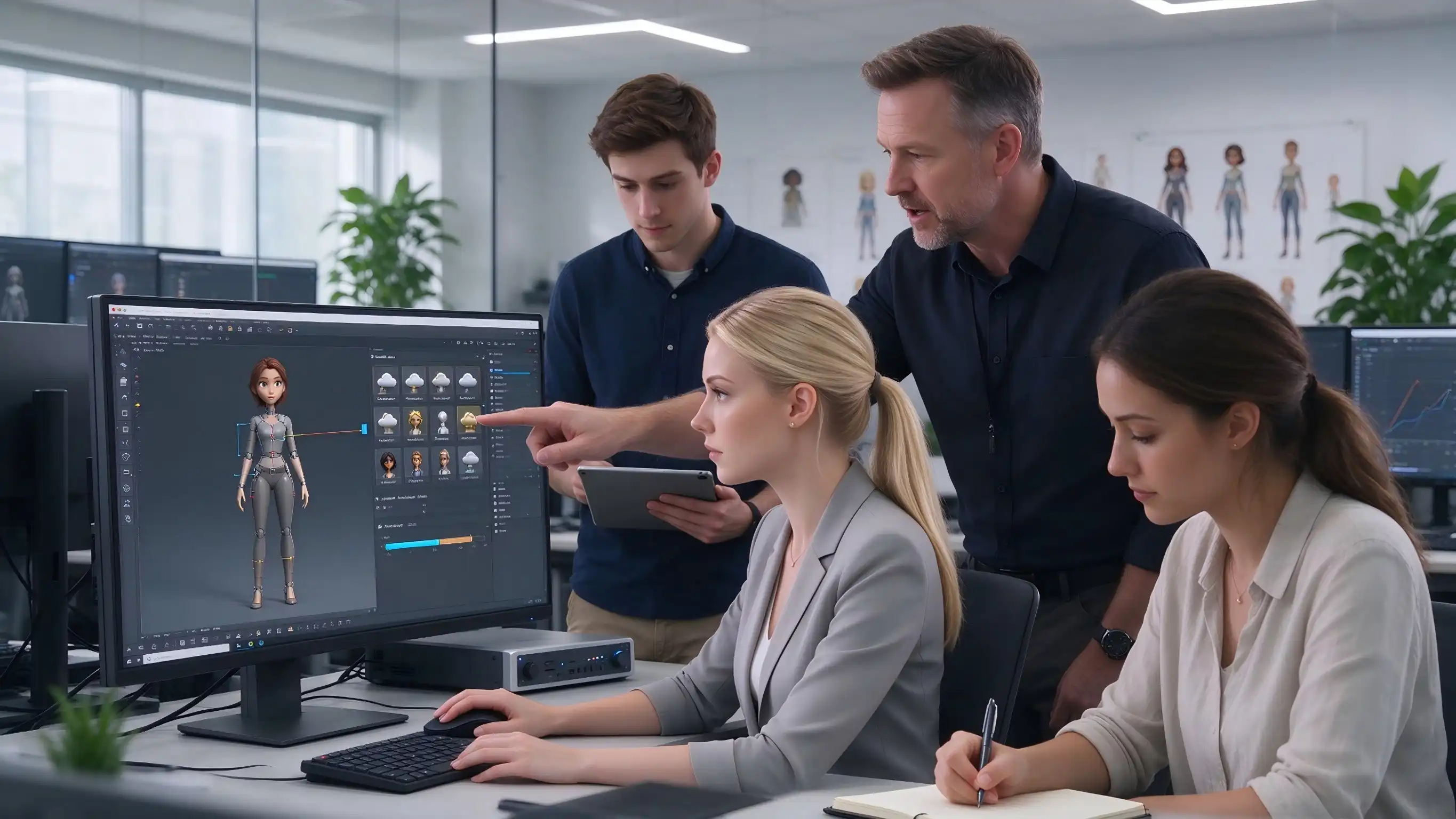
With GPU-accelerated rendering, teams don't have to wait hours for offline renders to see complicated 3D scenes. Instead, they can see them right away. There is a direct link between the modeling systems and programs like Maya, 3ds Max, and Cinema 4D. This means that artists can always change the light and the materials they use. Just this alone makes it a lot faster to make changes to big shows.
Cloud Collaboration and Asset Management
These days, assets are kept in the cloud so that editors, directors, and VFX artists can all get to the same files at the same time. Version control problems that happen with normal work are taken care of by this. Because of Adobe Creative Cloud, both Premiere Pro and After Effects can link to shared project files. In other words, the editor and the motion graphics artist can both work from the same version of the truth.
Modular Platform Architecture
Today, companies don't just use one set of tools. They instead make methods that can be changed easily. FFor example Photoshop and Illustrator to create 2D assets, After Effects for motion graphics and compositing, and 3D tools to work on characters and environments. These tools can also speak to each other via common exchange formats as Alembic, OpenEXR and USD. This affects how well a supply chain works.
Evolution from Traditional to Digital Media Technology in Production
Before digital pipelines were the norm, productions were tied to physical sets, constrained by location and finance. Post-production was linear and each change may mean recreating weeks of labour. Many of those limitations began to disappear as digital processes took hold.
From Physical Sets to Virtual Environments
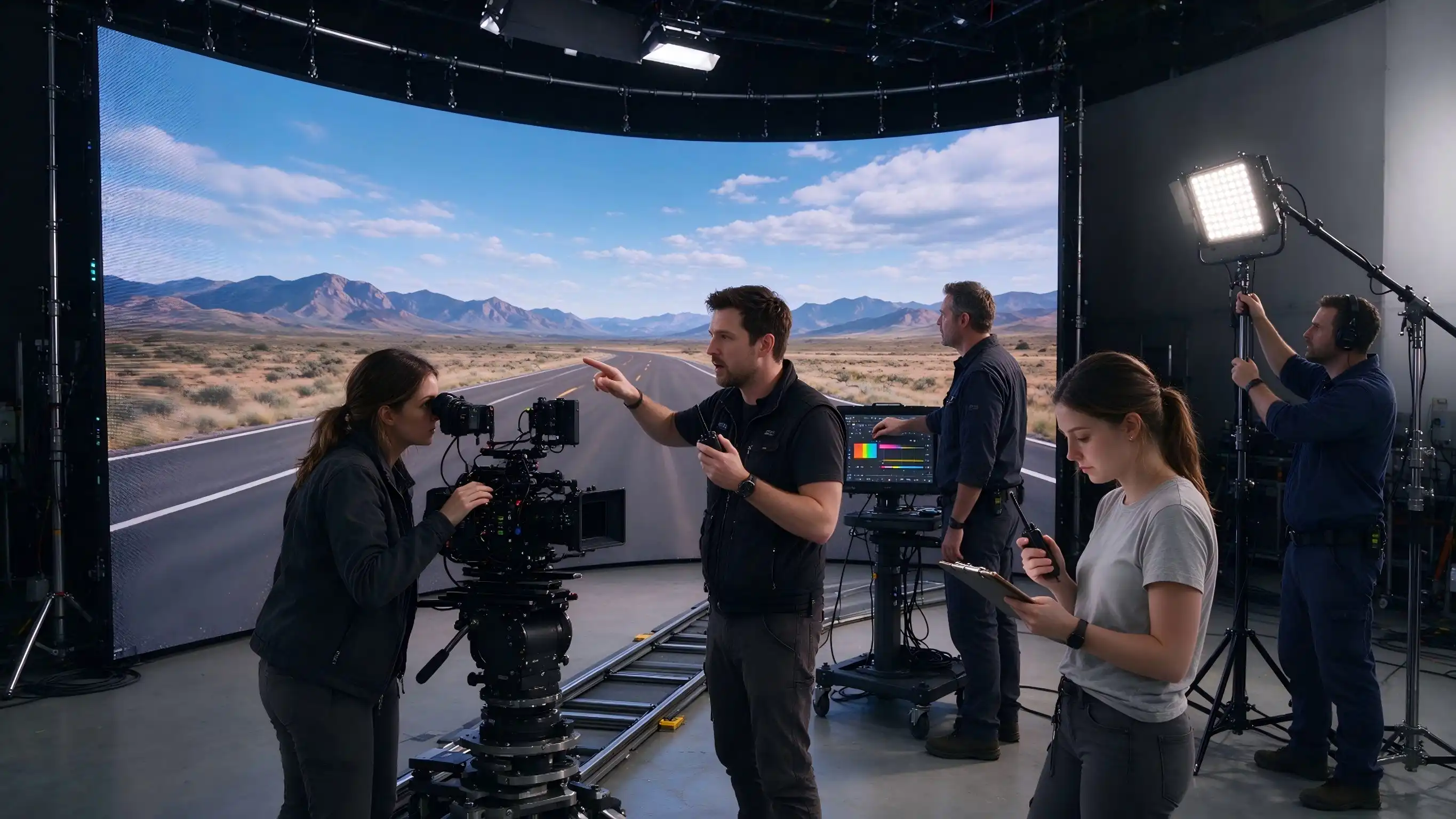
LED volume stages — popularized by productions like The Mandalorian — let directors shoot actors against photo-real virtual backgrounds rendered in real time. The background reacts to camera movement, removing the need for location shoots or traditional green-screen compositing in many cases. The BBC and ILM have both published internal reports documenting 30–40% reductions in on-set production time using these methods.
AI and Automation in the Production Chain
Today, AI-assisted technologies in digital media technology can do work that used to take hours to do manually. Automatic rotoscoping, scene identification in Premiere Pro and AI-driven noise reduction in post-production tools all help speed things up. This implies that training programs being looked at by procurement teams have to include not only how to use the software, but also how the automation fits into the bigger production stream.
Staff Training as a Transition Requirement
Technology adoption works only if the team behind it is ready. Organisations that combine platform improvements with investment in organised training claim greater ROI. A program that begins students with the basics of visual processing and ends with complete 3D animation production provides institutions with a tangible route from foundational competence to job-ready ability.
Comparing Leading Digital Media Technology Solutions for Virtual Production
The software and platform community that was picked affects every choice that is made later in a production program. In this market, there are a few big names, and each has its own strengths.
Adobe Creative Cloud
Adobe is remains the most-used tool for generating movies, advertisements and training materials. Both Photoshop and Illustrator are tools for editing images and creating 2D drawings. You may use Premiere Pro to edit your films and After Effects to create visual effects and motion graphics. Adobe's tools may function together in a manner that makes it easy to transfer files from one project to another, and Adobe's education license makes it easier for schools to acquire its products.
Autodesk (3ds Max and Maya)
Automobile tools are the best when it comes to 3D models, layout, and animation. A lot of big companies use Maya to animate characters and make visual effects. 3ds Max is often used to make products and show how buildings will look. Because they can connect to game engines and work with real-time graphics apps, these are two of the most important tools for showing people how to make movies and games.
Real-Time Engines: Unreal Engine and Unity
The Epic Games Unreal Engine is now used for all virtual and LED production processes around the world. Unity is used to make games and designs that you can interact with. Students need to know the basics of 3D before they can do well in either one. This is another reason why animation and modeling foundation courses are still useful.
Implementing Digital Media Technology to Optimize Virtual Production Workflow
To set up a new industrial technology system, you need to do more than just buy the software rights. It needs a well-thought-out plan for how to carry it out that takes into account the hardware's capabilities, the lessons' order, and how to track progress.
When putting something together, schools and production teams follow these major steps:
- Workflow audit first: Before selecting tools, map existing bottlenecks. Identify where projects stall — whether in asset creation, editing, compositing, or rendering — and match tools to those specific gaps rather than purchasing broad suites without clear purpose.
- Hardware baseline check: 3D rendering and video effects software in digital media technology require dedicated graphics cards and a minimum of 16 GB RAM. Institutions that skip this step find that software performance degrades and student learning suffers. A computer lab audit should precede any software procurement decision.
- Phased curriculum integration: Introduce tools in sequence — from graphic and image processing with Photoshop and Illustrator, through video editing with Premiere, into After Effects for compositing, and finally into 3D production with Maya or 3ds Max. This sequencing mirrors real production workflows and builds transferable competency.
- KPI tracking from the start: Measure student output quality, software proficiency rates, and employment alignment after program completion. These metrics justify institutional investment and support grant or accreditation applications.
This is a step-by-step plan for rolling out something that institutions can defend and use again and again. When a program is based on real software tools and real production jobs, there is less of a gap between what is taught in school and what is expected at work.
Future Trends Shaping Digital Media Technology in Virtual Production
The tools used in virtual production today will look different within five years. Several technical shifts are already changing procurement priorities for institutions and studios alike.
AI-Generated Content Tools
Generative AI technologies are moving into professional creative processes. Now AI picture creation is built into Photoshop itself, using Adobe Firefly. For training programs, this means including AI-assisted design courses without sacrificing core software skills – since the generative tools need a strong visual literacy to be successful.
5G and Edge Computing in Remote Production
The lower latency of 5G connection in distant production environments enables live capture and render data to move between site sets and studio infrastructure in near real time. This allows transportable virtual production rigs and opens up new processes for broadcast and advertising teams working outside of the typical studio environment.”
Subscription and As-a-Service Models
Vendors increasingly price enterprise software on subscription terms rather than perpetual licenses. For institutional procurement teams, this changes budget planning — annual software costs become operational rather than capital expenses. Evaluating total cost of ownership across a three-to-five-year training program cycle is now a standard part of responsible procurement.
Conclusion
A group of tools that work together make up digital media technology virtual production workflows. These tools are used for 2D design, video production, 3D animation and VFX. Students study all of these things at schools that employ tools like Photoshop, Premiere, After Effects, Maya, and 3ds Max. This provides graduates with the practical skills media, advertising, gaming and film businesses want. Students and the firms that educate them may both see benefits when they have organised training, the correct tools, and a curriculum that is based on how things are done in the field.
FAQ
1. Can someone with no design background start this program?
Yes. The ECR Academy Digital Media Technology program starts with foundational courses: Introduction to Digital Media Technology, Graphic and Image Processing, and Fundamentals of 3D Software. No prior design or programming background is required. The learning path progresses step by step, building both conceptual understanding and hands-on software skills before moving into advanced production modules.
2. What software will learners work with?
The program covers Photoshop and Illustrator for image processing and visual design, Premiere and After Effects for video editing and effects, and 3ds Max, Maya, and Cinema 4D for 3D modeling and animation. These are the same tools used in professional advertising, film, and game development pipelines.
3. What hardware do learners need?
A computer with a dedicated graphics card and at least 16 GB of RAM is strongly recommended. Learners without access to high-specification personal machines can use institutional computer labs equipped to support the full software suite.
Build Your Virtual Production Training Program with ECR Academy
Over 300,000 people in 28 countries have used ECR Academy to get qualified since 2010. Our Digital media technology program shows schools how to work with a digital media technology provider in a way that has been shown to work. The lessons are based on projects, the teachers are from business and academia, and there are six training platforms that cover the whole production process. We can help your school reach its goals. You can talk to us about it at enteredu.com or ecr2008@enteredu.com.
References
1. PwC. Global Entertainment & Media Outlook 2023–2027. PricewaterhouseCoopers, 2023.
2. Adobe Systems. Adobe Creative Cloud for Education: Workflow Integration Report. Adobe Inc., 2022.
3. Autodesk. State of Media & Entertainment Report. Autodesk Inc., 2023.
4. Epic Games. Virtual Production Field Guide, Volume 2. Epic Games, Inc., 2022.
5. British Broadcasting Corporation (BBC). Virtual Production Technology Review: LED Volume Workflows. BBC Research & Development, 2022.
6. Society of Motion Picture and Television Engineers (SMPTE). SMPTE Standards for Virtual Production Workflows. SMPTE Journal, 2023.