Building AI Solutions Through Artificial Intelligence (AI) Applications Development
Across higher education, enterprise training, and government-sponsored digital economy programs, one question keeps surfacing: how do you turn AI theory into real, deployable capability? Building practical AI solutions requires more than algorithm knowledge. It demands hands-on system deployment, project engineering, and structured learning tied to genuine industry outcomes. This is exactly where artificial intelligence (AI) applications training becomes critical. Programs that bridge cloud platform setup, deep learning deployment, and end-to-end project development give learners the concrete skills that employers actually need.
Understanding AI Applications: Scope, Types, and Business Impact
It's helpful to know what AI apps are actually used for in the workplace before choosing a training program or buying path.
What AI Applications Include in Practice
AI can be used for more than just researching algorithms. They include pipelines for training models, preprocessing data, setting up intelligent computing platforms, and deploying at the production level. In real life, engineers work on the whole process, from gathering and cleaning data to moving models and calling them. McKinsey's 2023 State of AI study says that 55% of organizations have used AI in at least one business function. However, the biggest problem with scaling is still a lack of skills in operations and distribution.
Industries Where AI Deployment Matters Most
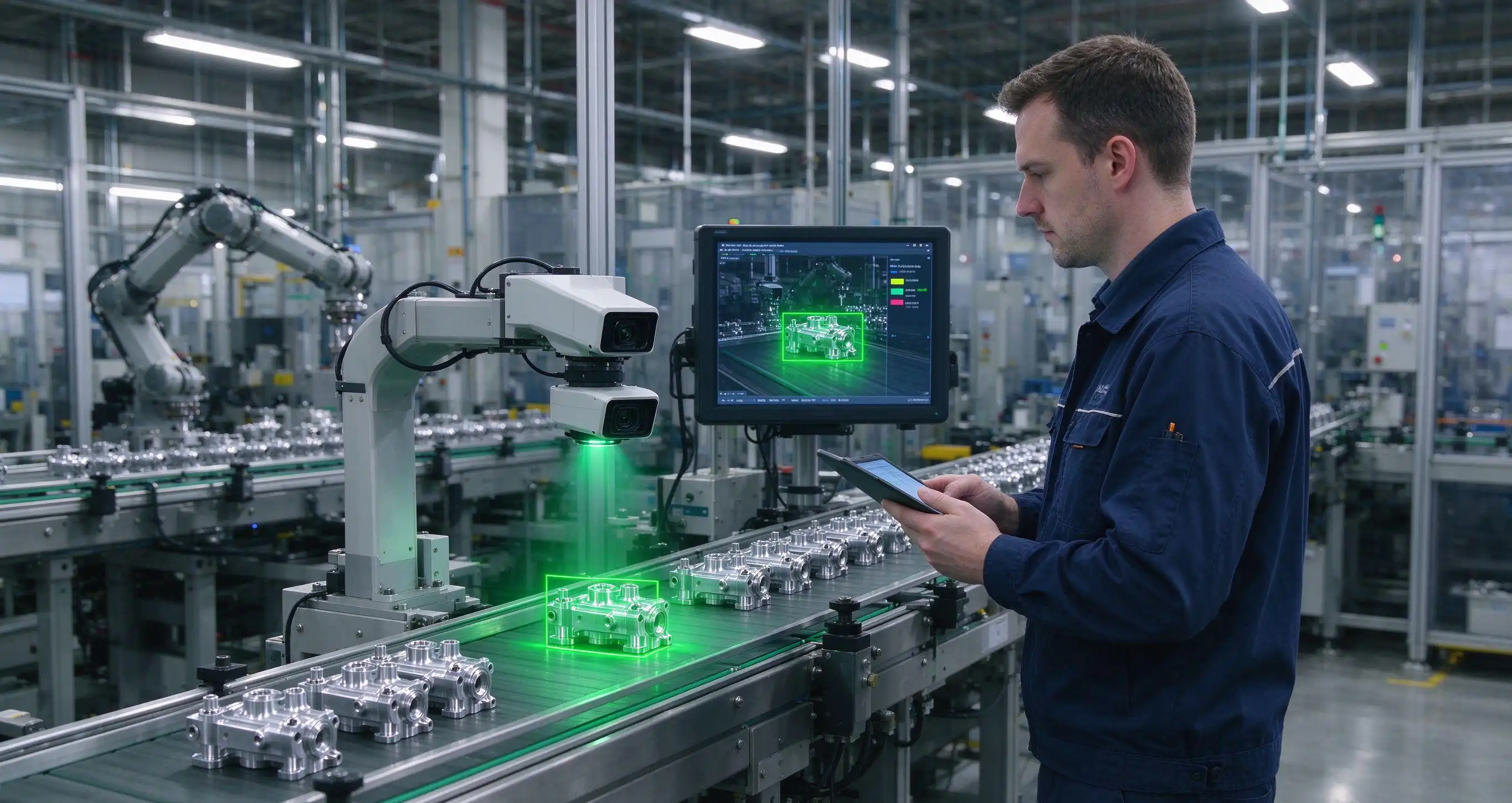
Smart manufacturing, smart healthcare, self-driving cars, and making digital content are some of the industries that are growing the fastest. Each needs engineers who can do more than just write model code. They need to be able to set up cloud platforms that support AI algorithms, install GPU drivers, and connect application systems. Businesses and institutions that spend money on formal AI training get projects done faster and make fewer mistakes in production settings.
Why Deployment Skills Are as Important as Modeling Skills
An early-stage AI team will often have a model that works in a notebook but not in production. This gap is filled by training in system deployment and automated operation and maintenance (O&M). A real-world skill that many school courses don't teach is how to use Python and Shell scripting to make automated O&M programs. This kind of content in programs gets students ready for the whole technical stack.
Developing AI Solutions: A Systematic Project-Based Approach
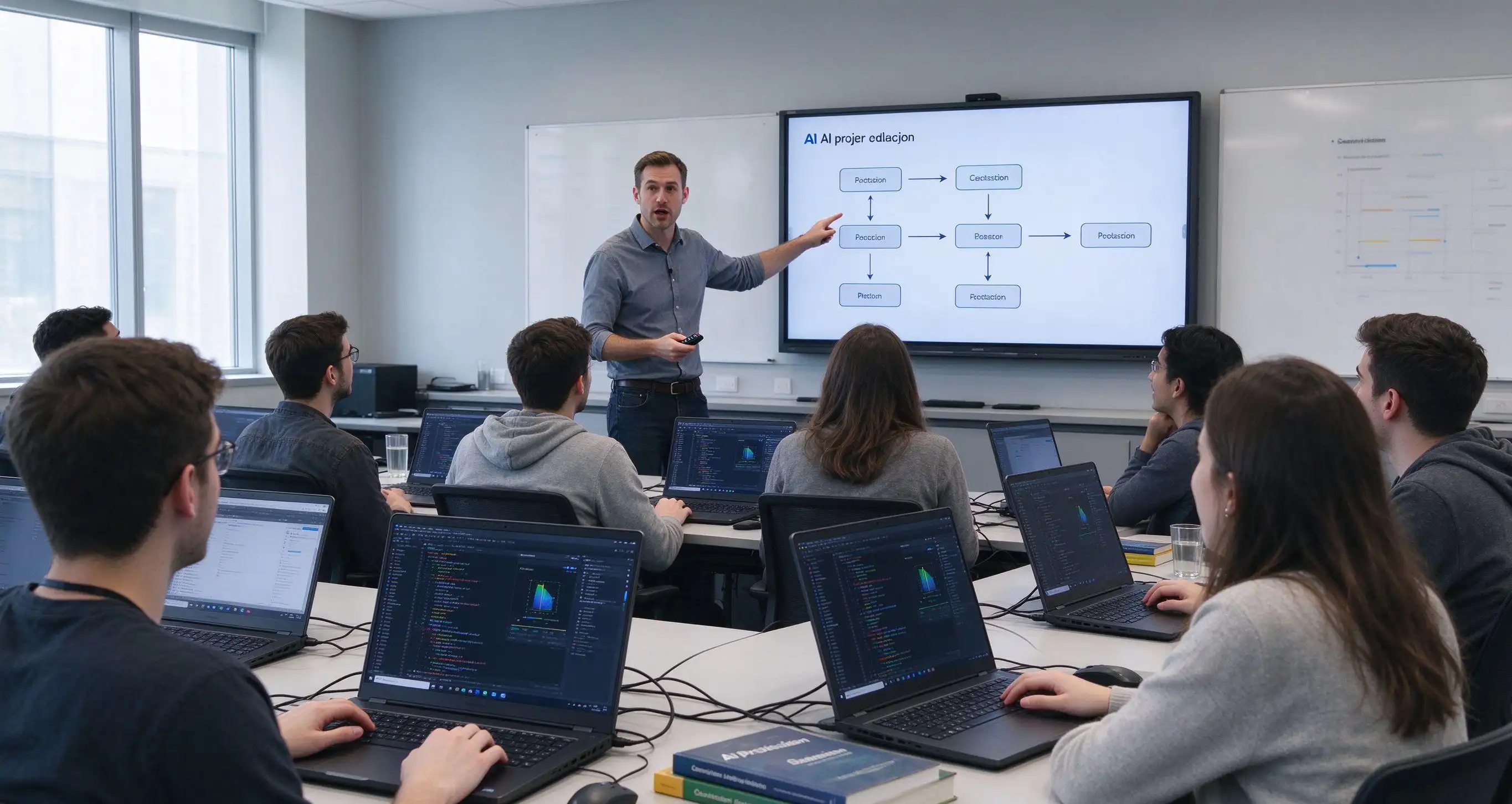
Real-world project workflows are a good way to train AI. The most useful programs don't separate theory from practice. Structured, project-based steps help them get better at what they do.
Phase One: Environment and Platform Setup
The setting has to be right before any model can run. This includes setting up the operating system, the graphics driver, and the clever computer platform. It is important for institutions with limited hardware budgets to know how to set up deep learning acceleration platforms, especially on cloud infrastructure backed by GPUs. Cloud-based environments lower the cost of buying A100 or H100 servers and give students access to setups that are the same as those used in production.
Phase Two: Data Pipeline and Model Development
Using deep learning framework APIs like PyTorch or TensorFlow to collect, clean, and preprocess data is part of the middle step of developing artificial intelligence (AI) applications. The next steps for learners are model training, testing, migration, and invocation. In a real company, this process is exactly how an AI project development engineer works. After finishing this part, students will be ready to write reports on requirement analyzes, create designs for solutions, and oversee the delivery and review of project paperwork.
Phase Three: Integration, Testing, and O&M
Integration of AI models into application software, running integration tests, and deployment with automated O&M workflows make up the last phase, which is where everything comes together. This is where a lot of students see the clearest link to jobs in the industry. LinkedIn's 2024 Jobs on the Rise report says that in the US, tasks for AI engineers that need to know how to deploy and run systems grew by 40% since last year.
Comparing AI Training Programs: How to Choose the Right Fit
AI training apps aren't all made the same. Before committing funds, people in charge of buying things at universities, businesses, and government agencies need clear criteria.
Curriculum Structure and Depth
A good program includes both deploying AI systems and developing combined projects. The content of the theories alone is not enough. The course should cover setting up a GPU platform, using a deep learning framework, and writing automatic scripts, all in a way that builds from the basics to more advanced uses. Beginners can easily follow programs that start with "Programming Fundamentals" and "Introduction to AI Applications" and then move on to "Deployment." These programs don't skip any technical details.
Faculty Model and Platform Infrastructure
It works better when enterprise engineers and academic experts work together to teach than when only one source of faculty teaches. Enterprise engineers know how to use the latest toolchains, and academic teachers help students understand how things work. Platform-wise, programs should have both a platform for setting up systems and a platform for building projects. Together, these two platforms support the whole technical process, from setting up the cloud for the first time to testing and delivering the models. Virtual simulation environments also let you access them from afar and at your own pace, which is useful for programs with more than one cohort.
Alignment with Industry Certification and Employment Outcomes
There should be clear job roles for the training results, such as AI System Deployment Engineer, AI Project Development Engineer, AI Algorithm Engineer, Data Collection and Processing Engineer, and AI Application Development Engineer. People who finish programs that are directly related to these jobs and that work with top AI companies get qualifications that employers value. This is especially important for institutions that are building new AI programs as part of national efforts to improve education.
Procuring AI Training: A Practical Guide for Institutions and Enterprises
Getting structured AI education is not the same thing as buying software. Here are the things that matter in real life.
Evaluating Platform Flexibility and Cloud Access
For universities with AI labs and industrial colleges, the platform needs to be able to handle large groups of students without needing GPU servers for each workstation on-site. Infrastructure prices go down a lot in cloud-based deployment settings. Deep learning frameworks like PyTorch and TensorFlow put out new versions every three to six months, so the platform should also be able to handle constant content updates. There is a skills gap before grads even start working because of old curriculum material.
Structuring the Procurement and Onboarding Timeline
A typical procurement process for colleges and universities takes nine to fifteen months, starting with figuring out if the program will work and getting it approved, then moving on to public bidding, putting the platform into use, and training faculty. Buyers of enterprise artificial intelligence (AI) applications training work on a shorter cycle, usually between six and twelve months, and often start with a pilot group before going large. In either case, the time it takes to get the first group of workers up and running is cut down by choosing a supplier with documented implementation experience and dedicated onboarding support.
Total Cost and Long-Term Partnership Value
Look at the relationship's total value, not just the license or subscription fees: Does the provider regularly change the course material? Do they offer certification paths that work with big AI companies? When the rollout starts, will there be a help team available? A more expensive program that delivers up-to-date, industry-specific content year after year is a better investment than a cheaper one that stops being useful after a training cycle.
Future Directions in AI Applications Training
Trainee schools need to keep up with how quickly things change in the field. AI that can be explained, edge distribution, and multi-modal models are already being used in real life. For hires in 2025, training that only includes CNN-based image recognition or basic NLP is already not enough. Over the next five years, the most important programs will be the ones that keep their practical modules up to date, keep working with AI industry leaders, and let students work on real projects instead of computer-generated ones.
Conclusion
To really be good at deploying artificial intelligence (AI) applications and working on combined projects, you need training that goes beyond just learning about theory. The real work is the whole process, from setting up the cloud platform to checking the models and automating operations and maintenance. When businesses and institutions spend money on structured, project-based AI training, they get a more confident engineering team, faster project delivery, and lower error rates. Learners can get the skills the job market needs right now from programs with good teachers, real platform access, and up-to-date courses.
FAQ
1. Can someone with no prior AI experience join this program?
Yes. At the start of the program, there are modules like "Introduction to AI Applications" and "Basic Programming." Before moving on to system deployment and project development, these early sections lay the groundwork. It's best to start by learning how to use a computer and think logically.
2. What job roles does this training prepare learners for?
AI System Deployment Engineer, AI Project Development Engineer, AI Algorithm Engineer, Data Collection and Processing Engineer, and AI Application Development Engineer are some of the jobs that graduates can get.
3. How does the learning platform work for remote or distributed teams?
There is both a system deployment environment and a project development environment on the platform. Virtual simulation tools let students do hands-on tasks from afar, which works for free times and groups that are spread out physically. This means that the program can be used by business teams that can't completely disconnect engineers.
Ready to Build Real AI Capability? Connect with E.C.R Academy
Since 2010, E.C.R. Academy has helped over 300,000 students get certified and taught nearly 500,000 people in 28 countries. Our artificial intelligence (AI) applications program provider model brings together business engineers, academic faculty, cloud-based distribution platforms, and project material that is constantly being updated into a single organized training solution. We have the experience and resources to help you reach your goals, whether you work for a university creating a new AI program, a business growing its own talent pool, or the government running a training program. Get in touch with our team at ecr2008@enteredu.com or go to enteredu.com to ask for a program review right away.
References
1. McKinsey & Company. The State of AI in 2023. McKinsey Global Institute, 2023.
2. LinkedIn. Jobs on the Rise 2024: United States. LinkedIn Economic Graph, 2024.
3. National Institute of Standards and Technology. AI Risk Management Framework (AI RMF 1.0). NIST, 2023.
4. Stanford University Human-Centered AI Institute. AI Index Report 2024. Stanford HAI, 2024.
5. International Organization for Standardization. ISO/IEC 42001: Artificial Intelligence Management Systems. ISO, 2023.
6. World Economic Forum. Future of Jobs Report 2023. WEF, 2023.