Industrial Robot Maintenance Training Course for O&M Skills
In an O&M course for industrial robots, technicians learn how to check, diagnose, fix, and keep an eye on robot cells while they are safe. Strong programs teach students about mechanical, electrical, controller, and safety issues because industrial robotics technology doesn't work like a single arm. Structured troubleshooting, data-based condition monitoring, and preventive maintenance are some of the skills that students learn. After learning, they use what they've learned to fix real problems in production. How to pick a provider and how the E.C.R. work are some of the things I'll talk about. The Academy's virtual simulation course helps with both intelligent maintenance and operation and with putting everything together.
Why Robot Maintenance Training Matters for Manufacturers?
Uptime, Quality, and Cost Protection
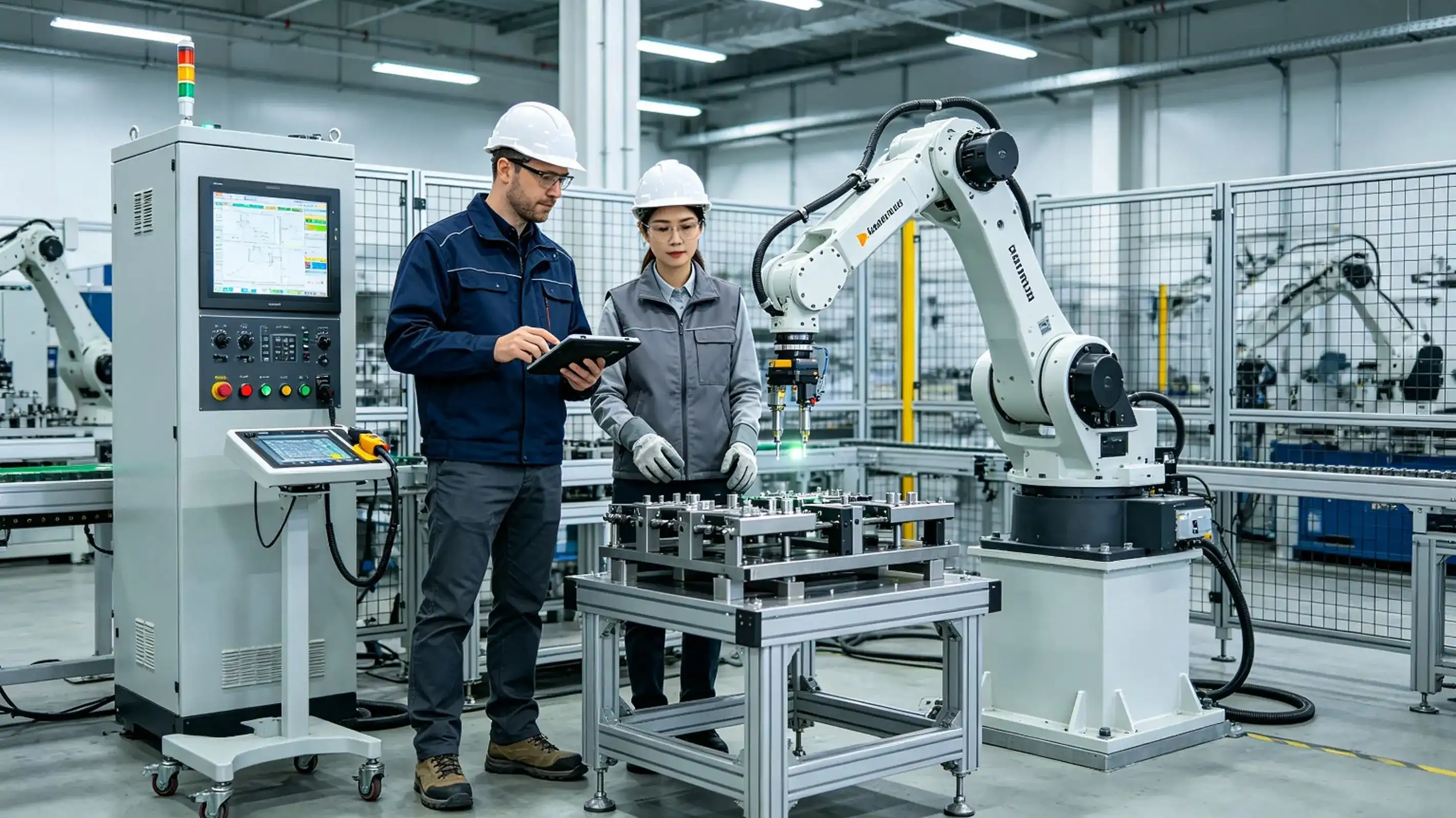
Robots are now used to make electronics, weld, put things together, package them, and move things. By 2023, the International Federation of Robotics said that 541,000 new industrial robots would have been put to work around the world. In other words, more plants depend on these machines every year. The line usually ends when one cell does. Then, issues with the drive alarms, encoders, cables, lubrication, or programming can all cause the machine to stop working. Technicians learn how to deal with them in the same way through structured training. The first-time fix rate, the mean time to repair (MTTR), and the mean time between failures (MTBF) are some of the results that can be tracked. That number tells us if skills get better at school and in real life.
What Industrial Robotics Technology Includes?
You need to have a good picture of the whole system before you can start maintenance. Industrial robotics technology includes things like the robot arm, the controller, the teach pendant, the servo motors, the drives, the encoders, the tooling, the sensors, the vision systems, the PLCs, the networks, and the HMIs. It often sets off an alarm in another part when something goes wrong in the first. Like, if you can't talk to both a PLC and a robot controller, it might look like the robot is broken. Techs need to know how these signals affect production and how different parts send and receive signals. This system view should come first in any O&M course, then steps for fixing things and replacing parts.
Robot Types and Their Maintenance Priorities
Taking care of different types of robots is not the same. Armored, SCARA, Cartesian, delta, cylindrical, and gantry robots all wear out in different places. Gearboxes, motors, and cable harnesses are important parts of articulated arms in many ways. Many times, delta robots are used for fast packaging. It is important to check their arms, joints, and ability to repeat motion. There are belts and linear guides that are used in both gantry and cartesian systems. Controlling risks and making sure robots are safe are also different for collaborative robots compared to other robots. But both types of robots need to be inspected by a qualified person, have written instructions, and have qualified technical support. These types should be able to be compared so that trainees know what to check first on each one.
Core O&M Skills Every Course Should Teach
Mechanical, Electrical, and Controller Modules
The robot is handled like a prisoner on a hard course. In the core modules, you may lubricate the axis and gearbox, check the connections and tools, diagnose the servo and encoder, back up the controller, and manage the program. There includes software and electrical troubleshooting for sensors and vision, communicating to PLCs, and testing industrial networks. Technicians are trained how to undertake preventive, predictive and remedial maintenance. They use checklists to guide them every day. Every week. Every month. Every year. They may use what they learn in the classroom by working on actual or simulated robot cells, and this gives them an idea of how to detect faults and repair regulated equipment. You cannot use a list without iterating over it.
A Repeatable Troubleshooting Method
If you want to repair an industrial robot, you must do it again and again and again. The initial steps are to write down the alarm, the axis concerned, the operating circumstances, the kind of product and the time of the incident. Then, using measurement data, I/O monitoring, visual inspections and event logs, I investigate the mechanical, electrical, software, process and environmental reasons. Trained personnel should be able to manage collisions, servo alarms, encoder faults, gripper failure, welding interruptions, vision mistakes, loss of PLC connectivity, inconsistent placement. I appreciate the notion of a rule like "verify before replace" and supported by 5 Whys or fault-tree analysis. Makes sure the repair is fixing the cause of the issue and not simply the symptoms. This means you save money on components you don’t need.
Safety Standards and Lockout/Tagout
Maintenance means people could be wandering around without being informed, getting shocked with electricity, and cutting themselves with tools. The OSHA lockout/tagout standard (29 CFR 1910.147) in the US requires an energy control program including procedures, training for personnel and inspections at least once a year. ISO 10218 is a standard for industrial robots. ISO/TS 15066 is a collaborative robot standard. The text for robot safety in the United States is ANSI/RIA R15.06. You should also be familiar with light curtains, scanners, interlocks, low speed teach mode, emergency stops and safe restart verification. Risk assessments and safety validation should only be done by specialists since the requirements varies depending on the jurisdiction and use case.
How to Design, Choose, and Roll Out a Training Program
Match Course Depth to Each Role
Not all require the same course. Operators need the ability to see alerts, bring things back to safety, and check things every day.” Technicians who fix items need to know more about how things function, electricity and controls. Managers need to know about KPIs, risk and return on investment. Control engineers are more concerned with programming, PLC connectivity and networks. The training should be at the correct level of detail for the profession, whether you want to be a welder in an auto body shop, assemble electronics, produce food, build metal items or package things. There are basic, advanced or specialized programs that buyers may choose to be taught in-person, online, in a classroom setting or a combination of these. Well-defined jobs prevent both over-training and skill gaps.
Questions to Ask a Training Provider
The course pricing doesn't necessarily give you the whole story. And, if they have experience with your robot brands, controllers, tools, PLCs, safety systems and production applications, I believe you should ask them. A competent supplier will provide skilled trainers, clear instructions, hands-on troubleshooting, and support for stand-alone robots and robots that are part of bigger cells. The purchasing groups should also look at plans for replacement parts, remote monitoring, provisioning support, warranties, service level agreements and post training support. The quotation should include the details of the project’s objectives, deliverables, dates of start and completion, terminology and desired results. In normal classes, you may learn fundamentals properly. In on-site programs, you can address issues with individual pieces of equipment.
Implementation and Measurement
For a good rollout you need to first look at the present skills, maintenance records, safety performance and downtime statistics. Then determine what skills are needed, choose individuals to work with, get manuals and history of alerts, and make measurable objectives. A staged approach includes classroom lessons, individual exercises, practical examinations, standard processes, and post-training evaluations. During the installation of new equipment or after an accident, you may utilize genuine failure scenarios, escalation rules, competence records and refresher sessions to apply what you learned in the classroom to your everyday job. It is important to examine the MTTR, recurrent failures, preventative maintenance and downtime every month or three months. They verify that the training is working for the plants and the service teams.
E.C.R Academy's Industrial Robotics Technology Course
Project-Driven Curriculum and Joint Faculty
This industrial robotics technology class from E.C.R. Academy uses project-based learning, which is a mix of learning theory and doing things. The most important skills are being able to intelligently put together robot systems and run and maintain them. Business engineers and college professors teach together, so students learn about both the classroom and the real world. Some of the things that are covered in the program are programming robots on-site, programmable control technology, offline programming and simulation, machine vision, digital twin and virtual commissioning, application system integration, and smart O&M. Lessons cover everything from the basics of robots and how they work to programming, PLC control, and simulation design. This way, even people who have never done this before can start. It's best to know the basics of how computers, electronics, and cars work.
Seven Virtual Simulation Platforms
For the virtual simulations in the course, computer-based training terminals are used. Over seven connected platforms, you can use and program robots, train with simulations, PLCs, vision technology, digital twins, system integration, intelligent operation and maintenance, and control and program robots. Before they use real tools, students learn how to teach programming, 3D modeling, collision detection, vision calibration, virtual production lines, and joint debugging in a virtual setting. The smart O&M platform lets you inspect your gear, find out what's wrong, and keep it in good shape from afar. The PCs should have at least 8 GB of memory, Windows 10, and a graphics card that is only used for games.
O&M Skills That Map to Job Roles
The smart O&M module teaches ways to monitor the condition of equipment, study vibrations and temperatures, control energy use, operate and fix equipment from afar, plan preventative maintenance, guess and fix problems, and keep track of spare parts. Kids also learn by doing things like loading and unloading, welding, spraying, and putting things together. As long as they have these skills, they can work as a robot system maintenance engineer, a smart manufacturing technical support engineer, a sales and technical service engineer, or an application system integration engineer. The course can be used by people from businesses, schools, industry groups, and other places. E.C.R. has trained almost half a million people from China and 28 other countries. Academy ever since 2010.
Trends That Shape Future O&M Skills
Condition Monitoring and Digital Twins
Techs of the future will know how to work with data as well as mechanics and electricity. The vibration, temperature, current, alarm history, and controller data are all checked by condition monitoring to find early signs of failure. ISO 17359 gives general rules for checking machines' conditions and figuring out what's wrong with them. Digital twins and AI may be able to help with fault classification, simulation, and programming that doesn't need to be connected to the internet. People who are qualified must still check the automated advice before changing the production equipment. For extra safety, teams can test robot and PLC programs on a fake line before putting them to use on a real one. This makes the startup less risky.
Connected Factories and Cybersecurity
MES, SCADA, cloud, and industrial IoT interfaces have been added to robot cells in factories that are linked together. O&M teams now do both mechanical work and networking and cybersecurity work. This is because each interface needs secure access control and network segmentation. Vision-guided systems, mobile robots, flexible cells, and quick-change tools make routine maintenance more fun. A technician who knows how to fix issues in many areas can usually do so faster than one who only knows how to fix issues in one area. The fact that people work across functions should be reflected in courses, and I'm looking for classes that teach these links directly.
What Buyers Should Confirm Before Investing
The teams that buy and engineer should check the technical coverage, safety alignment, service support, and the ability to teach more sites. In addition to hands-on activities, look for teachers who are qualified and who will be there to help you even after the course is over. This type of training is most helpful for plants that have a lot of different brands of robots, problems that keep happening, integrated cells that are hard to understand, or plans to automate more sites. Before you sign off on the budget, make sure that the total cost of training is worth the money you will save on downtime and outside services. You can better defend your choice if you have a written plan with clear goals.
Conclusion
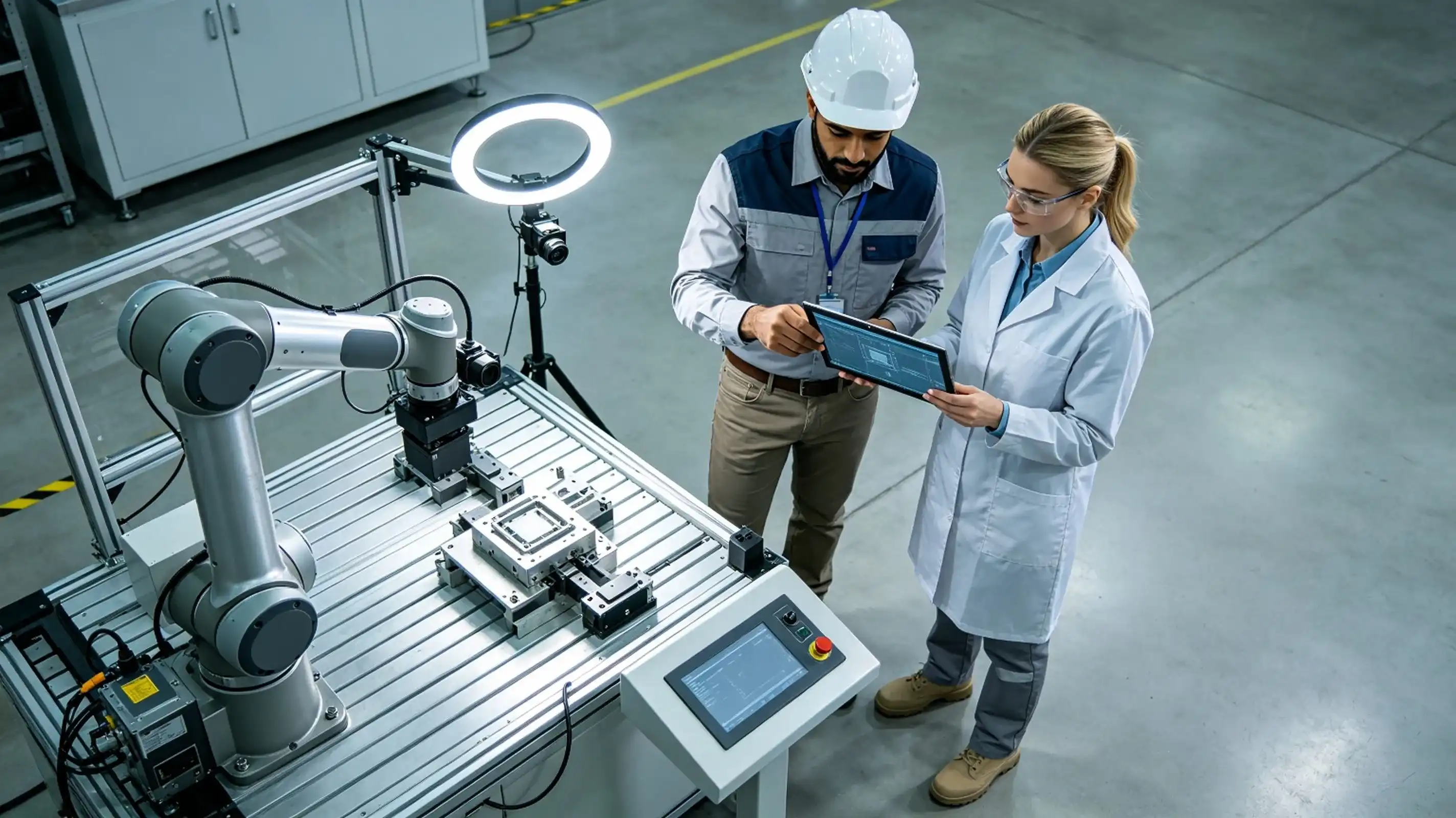
Technicians learn how to view industrial robotics technology as a system made up of robots, controllers, sensors, networks, and safety devices in a good industrial robot maintenance course. It was shown in the article that good O&M training includes lessons on how to fix problems in a way that can be used again and again, as well as safety rules based on lockout/tagout and robot standards. It showed that buyers should judge providers based on their experience, documentation, and customer service, and that MTTR, repeat failures, and downtime should be used to keep track of results. There should be the right amount of detail in a course for each role. Students can practice programming, integration, and intelligent maintenance in a virtual setting before they use real equipment. Because digital twins, connected factories, and condition monitoring change the work, trainees should learn both basic repair skills and data skills.
FAQ
1. Can beginners study this program?
Yes. It teaches you in a step-by-step way. First, the lessons go over how industrial robots are put together and how they work in general. After that, they talk about programming, PLC control, and design simulations. You should know how to use a computer, do basic math, and understand electrical and electronic engineering.
2. What roles can learners pursue after the course?
People can learn how to become an operation and programming engineer, an installation and commissioning engineer, a system maintenance engineer, a technical support engineer for smart manufacturing, or a sales and technical service engineer, among other jobs.
3. How does E.C.R Academy deploy the platform?
A virtual simulation and computer-based training stations are used in the platform. To practice using the software, students use computers with Windows 10, at least 8 GB of memory, and a graphics card that is only used for graphics.
Build Stronger O&M Skills with E.C.R Academy's Industrial Robotics Technology Course
Do you want to learn how to use industrial robotics technology from a company? The E.C.R. Academy has been teaching skills for 16 years and has a course that is based on projects and uses virtual reality. A mix of business engineers and college experts teach the course. Someone from our team will look over your goals with you after you send them to ecr2008@enteredu.com. Go to enteredu.com and ask for a quote on industrial robot maintenance training right now to learn more.
References
1. International Federation of Robotics, World Robotics 2024
2. International Organization for Standardization, ISO 10218-1 Robots and Robotic Devices – Safety Requirements for Industrial Robots – Part 1: Robots, 2011
3. Robotic Industries Association (A3), ANSI/RIA R15.06 Industrial Robots and Robot Systems – Safety Requirements, 2012
4. Occupational Safety and Health Administration, Control of Hazardous Energy (Lockout/Tagout), OSHA 3120, 2002
5. International Organization for Standardization, ISO 17359 Condition Monitoring and Diagnostics of Machines – General Guidelines, 2018
6. International Organization for Standardization, ISO/TS 15066 Robots and Robotic Devices – Collaborative Robots, 2016