Industrial Robotics Technology
Core Skills: Robot system integration and intelligent operation & maintenance
Faculty: Joint instruction by enterprise engineers and college experts
Platform: Virtual simulation platform for robot programming, simulation, system integration, and intelligent O&M
Employment: Skills aligned with intelligent manufacturing industry needs
Target Partners: Enterprises, educational institutions, industry associations, and other organizations
Industrial Robotics Technology
Course Overview
This program focuses on Industrial Robotics Technology and covers core areas such as on-site robot programming, programmable control technology, offline robot programming and simulation, machine vision applications, digital twin and virtual commissioning, industrial robot application system integration, and intelligent operation and maintenance.
Using virtual simulation as a practical learning environment, the program connects theory with hands-on tasks. Learners study industrial robot operation and programming, PLC control systems, simulation design, machine vision, digital twin technology, system integration, and intelligent maintenance. Through project-based learning, learners build full-process capabilities from programming and debugging to system integration, preparing for roles in industrial robot application system integration, operation and maintenance, automation control system installation and commissioning, sales, and technical support.
Why This Course?
1. Curriculum
Combines theory with hands-on practice and project-based learning to support practical application.
2. Skills
Aligned with core skill needs in the industrial robot sector, with a focus on system integration and intelligent operation and maintenance.
3. Faculty
Delivered jointly by enterprise engineers and academic instructors.
4. Platform
Supported by an integrated virtual simulation platform for industrial robot programming, simulation, system integration, and intelligent operation and maintenance.
5. Career Pathways
Aligned with practical needs in smart manufacturing and related technical roles.
What You Will Be Able to Do?
This program is aligned with core skill requirements in the industrial robot industry and covers the full workflow from programming and debugging to system operation and maintenance.
1. Industrial Robot On-Site Programming
- Operate industrial robots and complete teach programming tasks.
- Use teach pendants for point teaching, path planning, and program debugging.
- Apply safe robot operation procedures and routine maintenance methods.
2. Programmable Control Technology Application
- Understand PLC principles and programming methods.
- Complete PLC control system design and debugging tasks.
- Build electrical control circuits and troubleshoot common faults.
3. Industrial Robot Offline Programming and Simulation
- Use offline programming software for robot simulation and program generation.
- Complete 3D modeling, workpiece calibration, and path optimization.
- Connect virtual commissioning results with practical production tasks.
4. Machine Vision Technology Application
- Understand the components and operating principles of machine vision systems.
- Complete vision calibration, image acquisition, and image processing tasks.
- Build vision-guided robot positioning and inspection systems.
5. Digital Twin and Virtual Commissioning
- Apply digital twin modeling methods and virtual commissioning techniques.
- Build virtual production lines and debug PLC programs in a virtual environment.
- Support digital delivery and virtual-physical mapping verification.
6. Industrial Robot Application System Integration
- Apply industrial robot system integration methods and process workflows.
- Configure communication between robots and peripheral equipment and complete joint debugging.
- Integrate and optimize automated production line systems.
7. Intelligent Operation and Maintenance of Industrial Robot Systems
- Apply routine maintenance and predictive maintenance methods for industrial robots.
- Complete equipment status monitoring, fault diagnosis, and remote operation and maintenance tasks.
- Use intelligent maintenance management systems and analyze operational data.
What You Will Learn?
|
Training Skill
|
Content Description
|
|
1. Basic Operation and On-Site Programming of Industrial Robots
|
Learn industrial robot safety procedures, teach pendant operation, coordinate system setup, zero calibration, and program management.
Practice point teaching, path teaching, program editing, and debugging for typical tasks such as handling, palletizing, and welding.
|
|
2. Programmable Controller Application
|
Study PLC hardware and software operation.
Learn common instructions such as logic, timer, counter, and data processing instructions.
Complete motor start-stop control, conveyor control, pneumatic component control, and related automation control projects.
|
|
3. Industrial Robot Offline Programming and Simulation
|
Learn offline programming software operation, 3D modeling, workpiece calibration, path planning, collision detection, and simulation optimization.
Complete complex path programming, vision-guided programming, and multi-robot collaborative simulation.
|
|
4. Machine Vision Technology Application
|
Study machine vision system components and principles.
Practice camera calibration, image acquisition, edge detection, feature matching, dimensional measurement, and related image processing tasks.
Complete vision-guided robot picking, workpiece sorting, and defect inspection applications.
|
|
5. Digital Twin and Virtual Commissioning Technology
|
Learn digital twin modeling methods, virtual production line construction, virtual PLC debugging, and virtual robot program verification.
Complete digital production line modeling, process parameter optimization, and virtual-physical mapping verification.
|
|
6. Industrial Robot Application System Integration
|
Study robot system integration methods, peripheral equipment selection, communication configuration including fieldbus and network communication, process planning, and joint debugging.
Complete integration tasks for loading and unloading, welding, spraying, and assembly systems.
|
|
7. Intelligent Operation and Maintenance of Industrial Robot Systems
|
Study equipment status monitoring and fault diagnosis methods.
Practice vibration analysis, temperature monitoring, energy management, remote operation and maintenance, preventive maintenance planning, fault prediction and diagnosis, and spare parts management.
|
Learning Platform
The platform builds a complete technical workflow from industrial robot programming and debugging to system integration and operation and maintenance.
The robot operation and programming platform focuses on teach programming, path planning, and program debugging.
The simulation training platform supports 3D modeling, offline programming, and collision detection for virtual program development and verification.
The PLC control platform covers hardware configuration, program development, and joint debugging.
The vision technology platform supports image acquisition, processing, calibration, and vision-guided robot applications.
The digital twin platform supports virtual production line construction and virtual-physical mapping verification.
The system integration platform supports communication configuration and joint debugging between robots and peripheral equipment.
The intelligent operation and maintenance platform supports equipment status monitoring, fault diagnosis, and remote maintenance.
Together, the seven platforms form an integrated technical system covering programming and debugging, simulation verification, system integration, and intelligent operation and maintenance. The platform uses virtual simulation technology with computer-based training terminals, allowing learners to practice in highly simulated environments before working with physical equipment.
Company Strength
ECR Academy brings proven expertise in Industrial Robotics Technology education, backed by substantial real-world impact. Our strengths include:
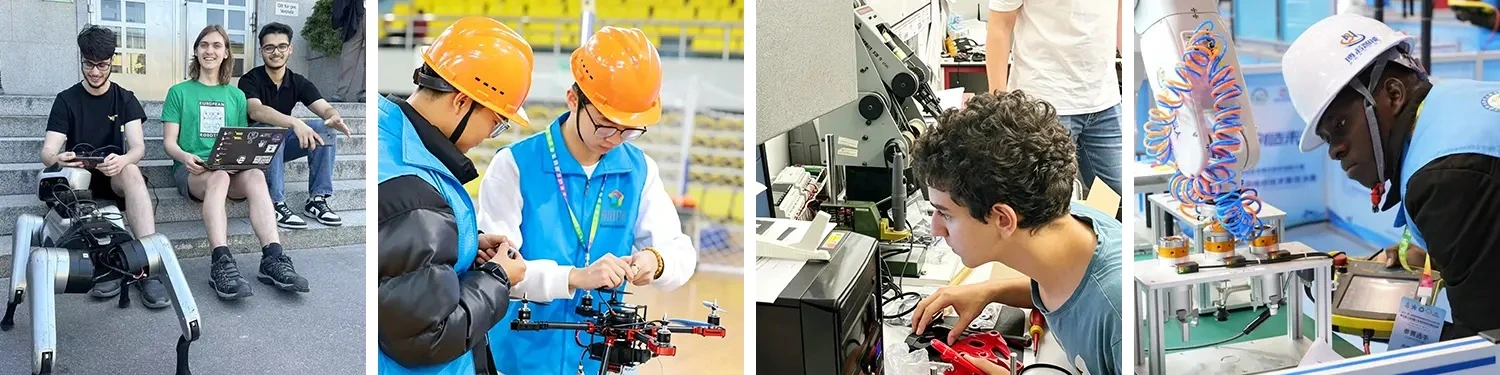
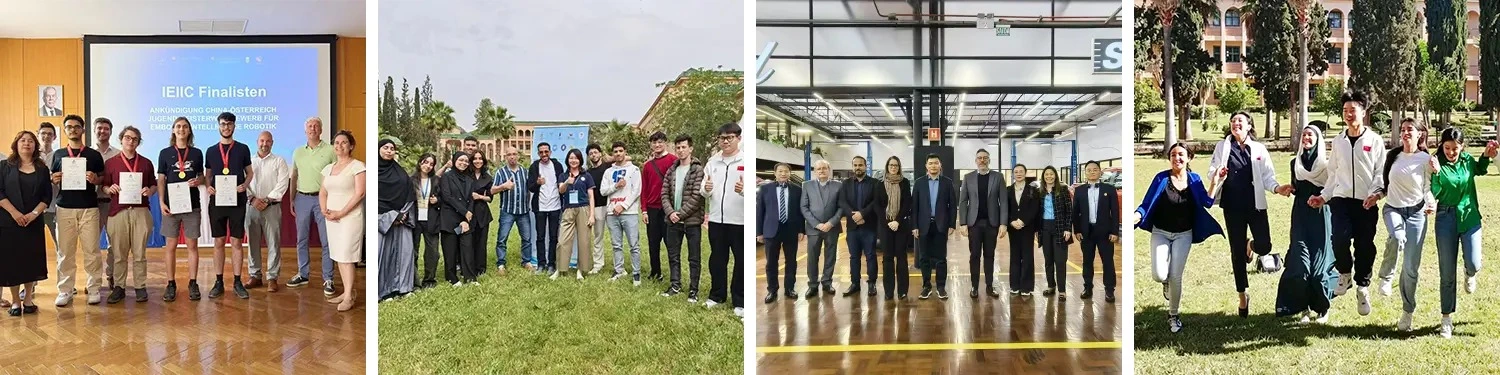
- Global training reach: Since 2010, we've delivered professional robotics and automation training to nearly 500,000 participants across China and 28 countries, with over 300,000 learners earning recognized skills certifications
- Competition-tested curriculum: Successfully organized 150+ domestic and international skills competitions, helping 30,000+ learners master robot system integration, programming simulation, and intelligent operation through hands-on challenges
- Comprehensive resource ecosystem: Access to 3,300+ industry and academic experts, partnerships with 500+ enterprises, and 60,000+ educational resources including skill standards, courseware, case studies, and assessment systems tailored to robotics technology
- Industry-aligned training approach: Project-driven learning model that integrates virtual simulation platforms with real-world industrial robotics applications in intelligent manufacturing environments
FAQ
Q: Can beginners study this program?
A: Yes. The program uses a step-by-step teaching model, starting with the basic structure and principles of industrial robots, then moving into programming, PLC control, and simulation design. Basic electrical and electronic knowledge, mechanical fundamentals, and computer operation skills are recommended.
Q: What roles can learners pursue after completing the program?
A: Learners can prepare for roles such as:
- Industrial Robot Application System Integration Engineer
- Industrial Robot Operation and Programming Engineer
- Automation Control System Installation and Commissioning Engineer
- Industrial Robot System Maintenance Engineer
- Smart Manufacturing Technical Support Engineer
- Industrial Robot Sales and Technical Service Engineer
Q: How is the platform deployed?
A: The platform uses virtual simulation technology with computer-based training terminals. Learners need computer equipment that meets the configuration requirements, such as Windows 10, 8 GB or more memory, and a dedicated graphics card, to complete virtual simulation practice through the software.

Contact Us
Ready to empower your team with cutting-edge Industrial Robotics Technology skills? Reach out to ECR Academy at ecr2008@enteredu.com to explore customized training solutions.




_1781601799781.webp)