How Mold Manufacturing Technology Training Prepares Future Mold Engineers
Mold manufacturing technology training prepares future mold engineers by connecting drawings, machines, and measurement in one learning path. Trainees read mold structures, plan machining routes, program CNC and EDM work, assemble tooling, run trial molds, and inspect parts against tight tolerances, which often sit between ±0.005 mm and ±0.01 mm. This hands-on sequence shows them how one design choice affects cost, cycle time, and part quality. I wrote this guide for procurement managers, engineers, distributors, and OEM clients who need to judge training value before they sign a partnership or a sourcing deal.
Understanding Mold Manufacturing Technology and Its Industry Applications
What Mold Manufacturing Technology Covers
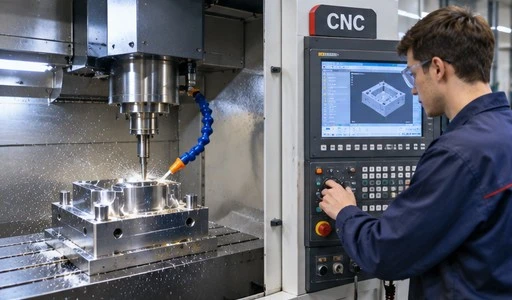
Making molds and dies, as well as planning, cutting, and assembling them, are all part of mold manufacturing technology. A lot of parts for injection molding, die casting, and pressing are made in workshops with these tools. Electric discharge machining (EDM), metal 3D printing, and high-speed CNC machining are some of the tools that are used for the job. A mold is made up of many parts. It has holes, cores, cooling lines, gates, and ejection systems that are only a few microns across and need to fit together. There is one small mistake that shows up in all of them because they are all copies of the mold. That's why businesses need programmers who can build more than one machine.
Plastic Molds, Stamping Dies, and Casting Tools
Different types of tools teach various things. For injection molds, the gates, cooling, and demolding must be well thought out so that the melted plastic can fill the mold, cool evenly, and come out clean. Rolling dies are used to cut or shape metal. They have die punches, dies, and unloading devices. H13 tool steel is often used to keep die casting tools from getting too hot. A lot of people use mold steels like H13, S136, and P20. S136 is best for things like PVC molding that need to be resistant to corrosion. Heat and cool many cast steels until they reach 48–52 HRC. Where the surface is smooth, Ra, can be as low as 0.05 μm for work that has a mirror finish. If engineers learn how to use all three types of tools, they can get more job opportunities.
Where Industries Put Molds to Work
Molds are used in car plants to make structural parts and interior trim. These parts need to be stable at high temperatures and not easily broken when they hit something. Molds with a lot of air bubbles are used to make medical devices like syringes and diagnostic cartridges in ISO Class 7 cleanrooms. The goal is for these products to have no flaws at all. Molds are used by companies that make consumer gadgets to make very thin-wall cases for phones and smart tech. High-speed grinding and careful vents are used to make these. People with these skills are also hired by companies that make accurate molds and work in aerospace. One well-trained engineer can work in more than one area, and a well-built mold can save money over a long production run by cutting down on the cost of scrap and repairs.
Core Components of Mold Manufacturing Technology Training
Structure Reading and Process Design
The first thing that students learn is how to read mold drawings and structures. Students learn about the basics of plastic molding, as well as injection mold layouts, gating systems, cooling channels, and mechanisms for taking molds out of the mold. The next step is to make cold stamping dies with punches, dies, and ejecting tools. After that, they plan how to make each part. These people choose the method, how to set up the process, how to cut the part, and how to heat treat it. They also learn how to write down process steps and select appropriate metals for mold parts. For this step to work, the machining order has to be right, even if the drawing is good. Careful process planning helps engineers reduce machining problems and avoid unnecessary rework.
CAD/CAM and Simulation Skills
Students next develop technical CAD/CAM and simulation skills. Drawing in two dimensions is something that students learn in CAD classes. They also make solid models of mold parts in three dimensions, put parts together, and follow the rules for drawing when they make engineering drawings. This is where they work with 3D models, pick operations and cutting tools, make settings, make toolpaths, and send CNC machines programs that have already been processed. There are also simulation tests in the CAD/CAM/CAE training room so that students can check that software works before they use it. Real-life and virtual training systems offer safer ways to practice full-process jobs in mold manufacturing technology. Making tests on the screen first helps avoid mistakes that cost a lot on the shop floor.
Machining, Assembly, and Commissioning Practice
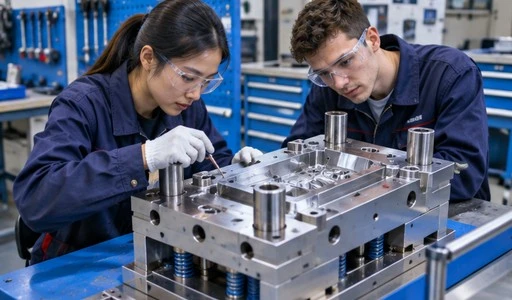
At five training sites, you can do real work with CAD/CAM, CNC cutting, EDM, testing, and putting together molds. Learning how to use CNC machines can help you program them, clamp and align workpieces, set tools, and keep them in good shape. They use turning, milling, grinding, wire cutting, and EDM to make plastic parts. When putting things together, they read process cards, make sure the parts are put together right, change the mold, and make test models with injection molding tools or presses. You can see how a choice you made during machining comes up again during testing and putting the parts together. This is because each step builds on the one before it.
How Training Addresses Key Industry Challenges and Builds Competence
Solving Real Production Problems
The class is about how to fix problems that shops really have. One good example is flash, the thin extra plastic that comes loose along the line where the pieces separate. Most of the time, it's because of too much injection pressure, not enough closing force, or a bad breaking line fitting. Someone who has been trained to do this checks each cause in turn, and then either fixes it during the fitting process or changes the process settings. Flexible, project-based jobs help people learn how to find and fix common mold problems during test runs. They learn how to check goods for flaws and make changes based on what they find. It's more dangerous and costs more to experience your first fault on a live production line than to practice on faults.
Shorter Cycle Times and Fewer Defects
For students to learn how to set process parameters and understand how cooling systems work, they learn about how cooling systems are built. Companies that make customized cooling tubes say that they can cut cycle times by 20 to 40 percent. Most of the time, metal 3D printing is used to make these lines that fit the shape of the part. That outcome isn't guaranteed by training, but engineers learn how to evaluate designs that use cooling layouts. When someone is learning the trade, they look for sink marks, warpage, and short shots. These are all signs of bad settings. Someone who wants to become an engineer can use these links to cut down on waste and make sure that parts are within their limits.
Quality Inspection and Safety Habits
The first thing you need to do to make good work is measure it. The first thing they learn is how to use rulers and measuring tools. After that, they use coordinate measuring machines, projectors to take measurements, checks to see how rough the surface is, and geometric error measures. They write down checks, keep track of data, and look into why things don't meet standards. Every unit is about safety, and in mold shops, students get to practice following health and safety rules. Virtual simulations and teaching tools help make the first time you practice safer, which is important for EDM and CNC work. Green and low-carbon ideas, such as cleaner output and machines that use less energy, round out good work habits.
Comparison Between Traditional vs Modern Mold Manufacturing Technologies in Training
How Traditional Training Works and Where It Falls Short
There is a lot of difference between the ways that subjects are taught in regular schools. For instance, drawing is taught one term, cutting is taught another, and checking is done at the end. There are people who learn how to use a lathe or mill but never see how their part fits into a mold that is already made. Feedback that comes after the part is done makes it take a long time to get better. Tools that are driven by CAM and coordinate measuring inspection may not be up to date with the tools that shops use now. These tools are still useful for teaching the basics, but the weakness is that the design, process, machining, assembly, and inspection are often taught separately.
What Modern Modular Training Adds
These days, training is split up into modules that are linked by projects. That's how the course at E.C.R. Academy is organized: you learn, copy, practice, and work on your own. Students have time to work on their own because they are taught in small groups and get help from a guide. There is a team of teachers who are also business experts who teach the material, and skills mentors who help with technical and job questions. Students can get better at using tools before they use real ones with virtual-physical modeling in mold manufacturing technology. The course is open to everyone, and students who need it can get help with the basics. Your skills will get better over time as you work on a project, not all at once.
Precision, Sustainability, and New Methods
We need to keep a close eye on the forms we have now. Tolerances are usually between ±0.005 mm and ±0.01 mm, and mirror finishes can be as smooth as Ra 0.05 μm. For quality control, a seller will often list ISO 9001 and VDI 3400. For surface texture, they will list the same. Conformal cooling is one of the more options you have when you 3D print in metal. Green and low-carbon methods use less energy and make less waste. Engineers can read supplier proposals with more confidence if they learn about these things. Still, people who want to buy should make sure that any course they are thinking about meets the standards for the business in their area.
Supporting Procurement Decisions Through Training Knowledge
Judging Supplier Capability with Training Knowledge
People who buy things and know how they work ask better questions. People can ask a supplier how they plan the process route, what tools are used to check the geometry of the core and cavity, and how the shop does T1 trials. Many times, materials are checked, measurements are taken with a CMM or an optical device, hardness tests are done after heat treatment, mold flow analysis is done, and trials are looked at. It can take anywhere from 4 to 12 weeks to get a high-precision mold, depending on how hard it is to make. People who have bought things before know what to ask first when they get a quote that is way off.
Criteria for Choosing a Training Provider
Someone you train with should not only say things, but also do things to back them up. You should look for five things:
- a full-process curriculum that covers everything from reading the structure to checking the quality;
- practice areas for CAD/CAM, CNC, EDM, and commissioning;
- teachers who work with business experts;
- a clear direction for the certificate;
- and honest answers about the standards in your area.
Make a written copy of the list of tools and modules. These should be similar to the tasks learners may perform at work, such as designing molds, operating machines, fitting components, and checking finished parts. Also, find out if the material meets the standards for the business in your area. This is important for both hiring people and checking our work.
Why E.C.R Academy Fits These Criteria
Nearly 500,000 people in China and 28 other countries have been taught and tested by E.C.R. Academy since 2010. It is known that more than 300,000 of these people have achieved skills certifications. Our clients have been more than 500, and we've hired more than 3,300 experts and made more than 60,000 learning tools. Our mold course has five training bases, a staff of teachers, business experts, and skill mentors, and a full-process program that is broken up into modules. Learners can receive a vocational skills training certificate if they meet the requirements. We work with businesses, schools, and industry groups, among other groups.
Conclusion
Mold manufacturing technology is taught to people who want to become mold engineers. This includes reading the structure, planning the process, writing CAD/CAM, putting together the mold, starting it up, and checking the quality. People use molds to make things that need to be within ±0.005 mm to ±0.01 mm of accuracy for work in aerospace, medicine, electronics, and the auto industry. You are skilled enough for a job when you use what you have learned with faults like flash, cooling layout choices, and written inspection reports. These subjects fit together better when they are taught as a whole through project-based, modular training led by teachers, business experts, and skill coaches. The same information can help buyers write better reviews of sellers and figure out how good a training provider is by looking at its lessons, how well they follow local rules, and how well they teach.
FAQ
1. What skills do learners gain from mold manufacturing technology training?
Students learn how to read structures, plan processes, draw in CAD, program CAM, run a CNC, put together molds, make test molds, and check their work. Plus, they work on writing inspection reports, keeping track of measuring data, and finding out why goods don't meet standards so they can help with following up on fixing things.
2. How does modern training affect production efficiency?
In modern modular training, design, machining, and testing are all related. This makes it easier for engineers to find problems more quickly. Students learn about the structure of cooling, how to set up the process, and why mistakes happen. This makes it possible for production to have shorter cycles and fewer mistakes. All of these habits help you waste less and work less. They can also practice tasks with virtual tools before they use real ones.
3. How can trained teams choose a mold supplier?
Trained teams can evaluate a supplier by asking about its process planning, inspection tools, testing methods, and T1 trial procedures. They can ask whether the supplier uses a CMM or optical equipment to measure critical dimensions, how materials and hardness are checked, and how trial results are recorded. High-precision molds often take between 4 and 12 weeks, depending on their complexity, so buyers should also compare lead times and confirm how the supplier manages material specifications, hardness, dimensional accuracy, and quality control.
Build Job-Ready Mold Engineers with E.C.R Academy Mold Manufacturing Technology Courses
Are you ready to take on work as a mold engineer? The E.C.R. Academy has been teaching mold manufacturing technology for 16 years. It has five training sites, a team of teachers, business experts, and skills coaches, and projects that can be changed to fit the needs of the students. Send an email to ecr2008@enteredu.com if your business, school, or group wants a provider of mold manufacturing technology. Visit enteredu.com to learn more about the course.
References
1. How to Make Injection Molds (Hanser Publishers), 2001
2. Injection Molding Handbook (Springer), 2000
3. Injection Mold Design Engineering (Hanser Publications), 2016
4. Manufacturing Engineering and Technology (Pearson), 2014
5. Additive Manufacturing Technologies (Springer), 2015
6. ISO 9001:2015 Quality Management Systems – Requirements (International Organization for Standardization), 2015