AI-Driven Digital Design & Application: A Step-by-Step Animation Workflow
AI-Driven Digital Design & Application represents a transformative approach to animation production, blending generative AI technologies with traditional creative workflows. This methodology empowers designers and educational institutions to streamline the entire animation lifecycle—from conceptual planning and visual asset generation to final video delivery—while maintaining creative control and high-quality standards. By integrating AIGC (AI-Generated Content) tools with industry-standard software like Photoshop and Blender, this approach addresses the growing demand for speed, scalability, and innovation in digital media production.
Understanding AI-Powered Animation Workflows
Animating has always been a very hard job that takes a lot of time and effort to bring to life. Scriptwriting, storyboarding, character design, modeling, keyframe animation, and post-production are all parts of traditional processes. They all require specific skills and a lot of time. With the addition of artificial intelligence, however, these methods have begun to change how creative professionals and schools handle animation projects.
The best thing about animation driven by AI is that it can do boring jobs automatically without losing its artistic vision. Machine learning algorithms can now look at the framework of stories, come up with visual ideas based on text prompts, and even make the basic animation patterns that designers can then improve. This change doesn't take away from human innovation; instead, it boosts it by taking care of boring technical tasks, leaving artists free to focus on telling stories and directing art.
How AI Enhances Creative Efficiency
AI-powered tools greatly shorten the time it takes to make something. Things that used to take days, like making different versions of a character's design or background scenes, can now be done in hours. Generative models that have been trained on huge amounts of visual data can make IP characters, props, and scene elements that fit a certain style, like realistic, comical, or culturally-specific styles such as ink-wash painting.
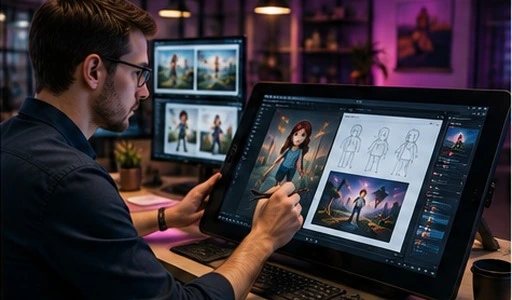
In addition to speed, these tools allow for a level of experimentation that wasn't possible in business settings before. Designers can quickly try out dozens of different visual directions and make changes to their ideas without having to worry about the high costs of traditional production. This feature is especially useful for training schools because it lets students practice making creative decisions in the real world without having to spend expensive resources.
The Technical Foundation
Several technologies work together to make modern AI animation workflows possible. Prompt engineering uses natural language processing to make images and videos based on detailed text inputs. Algorithms for computer vision help check for quality and style consistency. Neural networks that have been trained on animation principles can suggest motion paths and changes to timing that are in line with what professionals do.
These features are made possible by high-performance computer systems. Workstations with strong GPUs that can handle real-time graphics and AI model inference are common in professional training settings. Designers can use digital screens for detailed work because they have a tactile interface. This bridges the gap between AI-generated roots and human artistic polish.
Step-by-Step Animation Production Using AIGC Tools
Using AI to make professional animation content requires a structured workflow that is similar to traditional production pipelines but includes smart automation at key stages. Students are prepared for the real world of making digital material with the help of educational programs that use this method.
Conceptual Planning and Scriptwriting
The first step in making an animation is planning it out. This is where ideas are turned into structured stories. AI text-generation tools now help with this step by using creative briefs to come up with themes, story arcs, and dialog. Learners work on prompt engineering, which is the skill of writing clear directions that help AI-Driven Digital Design & Application models do what you want them to do.
During this process, teams come up with rules for the visual style and make rough storyboards. AI tools can quickly make many versions of a script, which helps directors see how scenes will be put together and how the cameras will be positioned before they start full-scale production. This method greatly lowers the chance of having to make expensive changes later on in the process.
Visual Asset Generation and Refinement
Once the structure of the story is set, production goes on to making the assets. Generative AI systems use thorough descriptions and style guides to make IP characters, backgrounds, props, and other visual elements. The first result from AI usually needs to be improved by a person, which is a key skill that training programs stress.
Professional designers check AI-generated assets against the needs of the project, looking at things like how well they fit the brand and whether they can be animated technically. After being chosen, software like Photoshop for 2D elements or Blender for 3D modeling is used to improve the assets. This mixed method blends the speed with which AI can come up with ideas with the complex thinking and technical accuracy of skilled artists.
Color grading, adding textures, and improving details turn AI results into images that are ready for production. Learners get better at quality control by figuring out which AI suggestions to go with, which ones to change, and when to do things by hand. As AI tools become more common in the industry, this judgment becomes more valuable.
Animation Production and Post-Processing
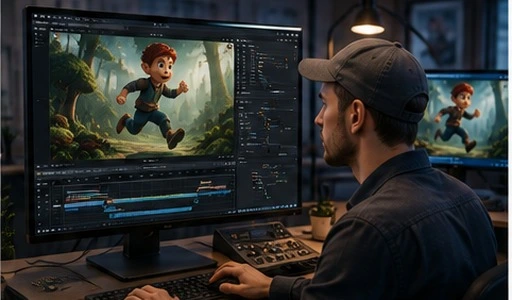
Once the assets are ready, the production moves on to the animation phase. AI-assisted animation tools can make simple motion sequences, interpolate between keyframes, and even suggest changes to the timing based on what they've learned about animation. These features take care of the mechanical parts of making static designs come to life.
Designers keep creative control at all times, making changes to images made by AI to fit their artistic vision. They add extra motion, tweak the timing for comedic or dramatic effect, and make sure that the moves of the characters show the right feeling and personality. The technology takes care of the technical details, and people decide what the artistic intent is.
During post-production, all the parts are put together to make the end result. Software for editing videos puts together animations, transitions, effects, and color correction. An AI-generated voice-over reads the script and adds speech. Background music and sound effects were created by an algorithm to improve the viewing experience. The production process ends with making the subtitles, the title sequences, and the final rendering.
Selecting the Right AI Design Tools for Training Programs
When putting AI-powered animation lessons into schools and training centers, they have to make important choices. New tools and features are added all the time, and technology is always changing. To make smart decisions, you need to know what you can do now and where you want to go in the future.
Evaluation Criteria for Educational Settings
A lot of different priorities need to be balanced in training programs. Tools should be strong enough to represent professional processes but easy enough for users of all skill levels to use. Integration is very important. Systems that work well with standard industry software like Adobe Creative Suite and Blender make learning easier and better prepare students for the real world of work.
Another thing to think about is licensing methods. Most of the time, schools need bulk licensing plans that can handle multiple classes and up to hundreds of users at the same time. Cloud-based platforms are good for expanding, but they raise concerns about data privacy and who owns the content. This is especially important for students who are making portfolios to use for job applications.
Platform Infrastructure Requirements
For execution to go well, the right hardware framework is needed. Design tools that use AI need a lot of computing power, especially for rendering in real time and training models. Most training centers buy high-performance computers with fast storage systems, specialized GPUs, and a lot of RAM. These rules have a direct effect on how hard projects students can work on and how quickly they can change their plans.
Professional-grade digital screens go well with this setup because they give artists the exact input control they need to do fine work. When you combine powerful computers with easy-to-use interfaces, you get a place where technical limitations don't stop you from being creative.
Addressing Common Implementation Concerns
A lot of the time, program directors worry that technology will become useless soon.AI-Driven Digital Design & applications change quickly, so lessons must also change to stay useful. To deal with this, forward-thinking training programs use flexible course designs that can adapt to new versions of tools and stress basic ideas that work across all software versions.
A lot of the time, people also worry about intellectual property. Clear rules about who owns student work, how to properly credit AI-generated elements, and commercial usage rights help schools deal with the changing legal landscape. Graduates know what their work duties are because they have had a lot of training on property ethics and compliance.
Real-World Applications Across Creative Industries
Industry applications show how useful animation skills powered by AI are in real life. These features are now used by businesses in many different fields to meet content needs that standard processes can't meet cost-effectively.
Digital Marketing and Brand Content
There is constant pressure on marketing teams to come up with new visual material for social media, ads, and telling the story of the brand. AI-assisted animation makes it easy to make short, interesting videos quickly that work best on apps like TikTok and Instagram. Using audience data to improve message and visual style almost in real time, brands can quickly try out a number of creative approaches.
AI's ability to create localized versions of content is especially useful in the cultural and creative industries. A single campaign idea can lead to dozens of regional versions, each one adapted to fit the tastes and language needs of a specific group of people. This ability to scale changes how global brands use content strategies that are tailored to each market.
E-Learning and Educational Content
AI animation is used by people who make educational content to make interesting learning materials on a large scale. Animations that explain difficult ideas make them easier to understand, and figures and situations created by AI make learning more real. AI-assisted production keeps costs low enough that high-quality educational material can be made for topics and audiences that traditional production economics couldn't support.
Emerging Opportunities in Virtual Environments
In the future, AI-driven animation will work with virtual technologies more and more. Augmented reality marketing experiences, virtual reality training simulations, and making content for the metaverse all need animation skills that are improved by AI. When professionals learn how to use these hybrid processes, they put themselves at the head of new media landscapes.
Building Practical Skills Through Structured Training
To be good at AI-powered animation, you need to know more than just how to use each tool. You also need to be able to create integrated processes and use your professional sense. Effective training programs know this and build their courses around whole project lifecycles instead of just teaching a few professional skills.
Our method at E.C.R Academy blends AIGC technologies with full digital artistic creation processes. From creative planning to final output, learners build skills that directly meet the needs of the industry. The course covers quick engineering for idea development, making visual assets with AI's help, professional refinement methods using standard tools in the industry, and full animation production, including post-processing and delivery.
Our integrated training environment is like a real production site. Students use AIGC platforms along with Photoshop and Blender. Professional digital tablets and high-performance computing infrastructure help them. By setting things up this way, learners will get used to the whole set of tools they'll use at work.
The way the lessons are taught combines academic rigor with a view of the business world. Teachers in schools set up structured ways for students to learn and be tested on their knowledge, while professionals in the field share the latest best practices and strategies for solving problems in the real world. This two-teacher approach makes sure that training stays both professionally useful and good for teaching.
Project-based learning is at the heart of the method. Instead of doing separate tasks, students work on real creative projects where they come up with ideas for animations, make and improve visual assets, create animation sequences, and present finished videos that can be used for professional portfolios. This hands-on method not only improves technical skills, but it also boosts creative confidence and the kind of professional judgment that employers value.
Conclusion
An opportunity and a necessity for today's creative professionals is the use of artificial intelligence in animation workflows. As the need for content grows across industries and platforms, it becomes more valuable to be able to use AI-Driven Digital Design & Application while still staying true to your artistic vision. Schools that properly prepare students for this mixed-media, artistic setting give them real benefits in job markets that are changing quickly.
From AI-assisted conceptual planning to refined visual asset creation to full animation production, this step-by-step process shows how technology and human imagination can work together to make things that neither could do on their own. Structured training methods that balance technical proficiency with creative development and professional judgment are helpful for organizations that want to build these skills, whether for their own teams or for student groups.
FAQ
1. What industries benefit most from AI-driven animation training?
AI-assisted animation is in high demand in the digital media, cultural creative industries, advertising companies, game development teams, and e-learning content providers. More and more, marketing teams across all industries need these skills to make content for social media. MCN agencies and digital content platforms are also actively looking for professionals who can use modern AI-enhanced workflows to quickly and effectively create interesting visual stories.
2. How does AI impact creative employment in animation?
AI tools don't replace creative professionals; instead, they focus on making more important creative decisions and less on doing the same technical tasks over and over again. People who know how to direct AI tools, make sure outputs meet artistic standards, and make complex creative decisions are still in high demand. The technology increases what individual creators can do, often letting smaller teams work on projects that used to need big studios.
3. What hardware investments do training programs require?
For AI animation training to work well, you need high-performance computers with dedicated GPUs that usually have at least 16GB of VRAM, 32GB of system RAM, and fast SSD storage. Professional digital tools make the process better for refinement. Cloud-based solutions can help with some hardware problems, but they may also cause problems with latency and have ongoing costs that institutions need to think about when they are planning.
Transform Your Institution's Creative Capabilities with E.C.R Academy
To make world-class AI-Driven Digital Design & Application, you need to do more than just buy software licenses. You also need to plan a complete syllabus, make sure you have the right equipment, and keep your teachers learning. The E.C.R. Academy specializes in working with schools, training centers, and business groups to provide effective AIGC-integrated digital creative design training that has measured results.
Our training system meets international standards and blends cutting-edge technology with tried-and-true methods of teaching. We work with schools to create integrated learning spaces that get students ready for creative production challenges they will face in the real world. Our team is here to help you every step of the way, whether you're looking into AI-driven digital design solutions for bulk licensing across multiple departments or looking for custom curriculum development for specialized programs.
We encourage leaders at digital media schools, cultural and artistic training centers, and industry groups to look into how our all-around approach to AI-assisted animation training can help you stay ahead of the competition. Get in touch with our procurement experts at ecr2008@enteredu.com to talk about your unique needs and find out how E.C.R. Academy can help you create creative talent that is ready for the future.
References
1. Chen, L., & Martinez, R. (2023). Artificial Intelligence in Digital Animation: Workflows and Educational Implications. Journal of Digital Media Education, 15(3), 112-128.
2. Global Skills Development Alliance. (2024). Industry Demand for AI-Assisted Creative Professionals: 2024 Workforce Analysis. International Vocational Training Research Institute.
3. Henderson, K. (2023). Generative AI Tools in Professional Animation Production: A Comparative Study. Creative Technology Quarterly, 8(2), 45-67.
4. Lin, Y., & Patel, S. (2024). Integrating AIGC Technologies in Vocational Design Education: Best Practices from International Institutions. Educational Technology International, 19(1), 88-104.
5. Roberts, M. (2023). The Evolution of Digital Asset Creation: Machine Learning Applications in Visual Design. Animation Production Review, 12(4), 203-221.
6. Zhang, W., Kim, J., & Anderson, T. (2024). AI-Driven Animation Workflows: Technical Requirements and Implementation Strategies for Training Environments. Digital Creative Education Forum, 7(1), 34-56.


_1781601799781.webp)