How Electronic Product Testing Technology Supports Smart Electronics Manufacturing
Electronic product testing technology sits at the center of modern smart manufacturing. As consumer electronics, automotive systems, and 5G infrastructure grow more complex, the ability to verify performance, safety, and compliance at every production stage has become non-negotiable. From incoming component inspection to final certification audits, a well-structured testing workflow directly determines whether a product reaches global markets — or gets pulled back at the border. This guide breaks down how quality testing methods, international standards, and structured training programs work together to support the electronics industry's continued growth.
Understanding Electronic Product Testing in Smart Manufacturing
Data is important for smart manufacturing, and test data is one of the best types. A unit must go through a number of tests to make sure it works as planned, doesn't pose a safety risk, and meets the regulations of the market it's meant for.
What Testing Actually Covers
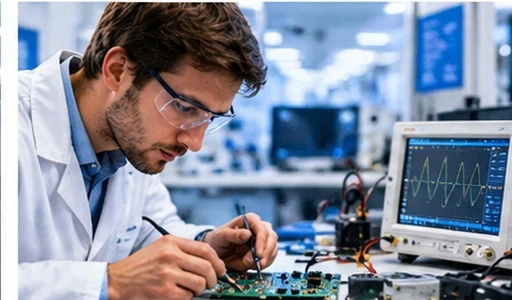
Testing electronic products is about much more than just whether or not a finished device works. Testing can be for component screening, incoming inspection, in-process checks, final inspection, performance verification and reliability testing in smart manufacturing. Engineers utilize devices like multimeters, oscilloscopes and signal generators to measure electrical characteristics and detect possible defects. Other important factors are safety and compliance tests, including temperature rise, dielectric withstand, leakage current, ground resistance and flame retardancy. The data are reviewed and documented to support quality decisions, certification, and continuous improvement throughout the production process.
Core Testing Methods in Use Today
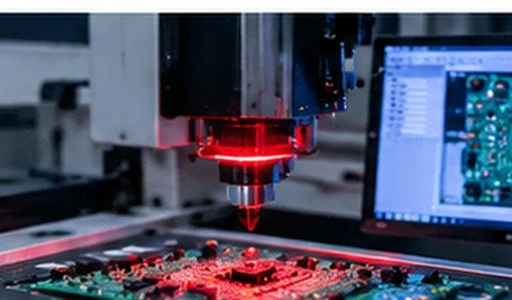
Manufacturers often use Functional Circuit Testing (FCT) to mimic real-world situations and In-Circuit Testing (ICT) to check the values and links of individual parts. Automated Optical Inspection (AOI) finds problems with the solder and parts that aren't lined up right, and X-ray inspection checks the stability of the BGA solder joint below the component packages, where eye checks can't go.
Why Standards Alignment Matters
When tests are done without a reference standard, the results are not always the same. When test methods are in line with IEC, IPC-A-610, ISO/IEC 17025, and MIL-STD-810, results can be repeated, checked, and accepted by users in global supply chains. Standard-aligned testing is legally required for products that want to get CE (Europe), UL (North America), or CCC (China) certification. It is not an option.
From Manual Checks to Automated Inspection Workflows
Moving from manual testing to automated systems in the electronics business is a real practical need. Inspection by hand works for small amounts of work, but not for large amounts. When people are tired, defects can get out, and when flow limits happen, work slows down.
The Limits of Manual Testing
A trained inspector who looks at solder joints with their eyes can probably check a few hundred joints in an hour. A new PCBA could have thousands of them. At that level, checking by hand alone stops being a quality assurance method and starts being a quality risk.
Where Automation Changes the Equation
Automatic test equipment in electronic product testing technology, such as flying probe testers, AOI systems, and HALT chambers, works the same way during all shifts, even when people are tired. Because it doesn't need a custom fixture, Flying Probe Testing (FPT) is great for validating prototypes because it cuts down on the time it takes to test during product development. Highly Accelerated Life Testing (HALT) and Highly Accelerated Stress Screen (HASS) use heat and force to find flaws in designs before large-scale production starts.
Practical Considerations for Procurement
Which of manual, semi-automated, and fully automated tests to use relies on the amount of work to be done, the difficulty of the product, and the budget. Dedicated automated fixtures work best for low-mix, high-volume lines. On the other hand, moving probe systems are often more cost-effective for engineering labs that do a lot of different trial work. Finding the right balance lowers the cost of each test without lowering the number of defects that can be found.
Key Testing Methods and Equipment in Modern Electronics Production
To choose the right testing tools, you need to know both the method and the data that will be used. The tools used to make electronics today are very different in terms of their physical and electrical features.
Instruments That Engineers Rely On Daily
A lot of the work that goes into signal integrity is done with oscilloscopes, signal generators, and network analyzers. Multimeters and LCR meters can check parameters at the component level. For safety compliance testing, special tools check for leakage current, dielectric hold voltage, ground bond resistance, and temperature rise. These are all things that IEC safety standards for consumer and industrial electronics say must be done.
Environmental and Reliability Testing
Environmental Stress Screening (ESS) puts things through changes in temperature, humidity, and vibration to find problems that only show up when they are under a lot of stress. Electronics for cars (AEC-Q standards) and parts for spacecraft (MIL-STD-810) must go through this kind of testing. MTBF (Mean Time Between Failures) calculations use this test data directly, which gives procurement engineers a number that they can use to compare the reliability of different suppliers.
Emerging Capabilities Worth Watching
Statistical Process Control (SPC) systems that log data in real time let quality teams spot trends in yield before the number of defects goes up. When test units and factory execution systems (MES) work together, less data entry is done by hand, and a quality record can be kept from the time a part is delivered until the finished product is shipped. These features directly meet the audit standards of ISO 9001 and IATF 16949.
How Testing Reduces Risk and Improves Manufacturing Performance
It costs a lot more to find a flaw during incoming screening than during final assembly. IPC data consistently shows that the cost of rework goes up as a defect moves further down the production line. Also, recalling a product has costs that go beyond the direct cost of repair, such as damage to the brand and lost customers.
Early Detection and Its Financial Impact
If a maker finds a batch failure in a component during arriving inspection, they can send the parts back and place a new order before production is affected. The same problem found during end-of-line testing means scrapping boards that are only partly put together, rescheduling production, and maybe even delaying shipment to a customer like Apple, Tesla, or Huawei, all of which have strict supplier performance measures.
Quality Consistency Across a Workforce
It is well known that high engineer turnover is a problem in the electronics manufacturing industry. When experienced staff are the only ones who remember how to do tests, quality goes down every time someone leaves. This problem can be fixed by structured, standard-based training programs that turn test knowledge into written procedures that any qualified technician can follow. This is exactly what the electronic product testing technology course at ECR Academy is based on. It goes over the whole process, from making a test plan to analyzing data and writing a report.
Supporting Supplier Audits
Customers who do IATF 16949 or VDA 6.3 supplier checks look for proof that test methods are written down, staff are trained on them, and test data is collected and analyzed. A training program that follows international standards is a clear answer for quality managers when auditors ask about the skills of their employees.
Choosing the Right Electronic Product Testing Training Partner
ECR Academy's Differentiators: Real Projects, Standards Alignment, and Accessible Learning
It takes more than looking through a course catalog for both manufacturing companies and educational institutions to choose a training provider in this field. Training results are affected by the quality of the teachers, the usefulness of the lessons, and the ease of access to the learning tool.
The Electronic product testing technology school at ECR Academy immediately meets these needs. These are the main things that make this program different from other technical training:
- Curriculum built on real testing projects: Theory and practice are taught together using actual industry test cases, ensuring graduates can apply knowledge from their first week on the job.
- Standards-aligned content: The course is benchmarked against IEC, IEEE, and MIL-STD requirements, covering CCC, UL, and CE certification systems — the three most frequently required by international customers.
- Dual-track faculty: Instruction is delivered jointly by senior enterprise testing engineers and academic specialists, combining practical job-site experience with structured educational methodology.
- Browser-based platform (B/S architecture): No software installation is required. The platform runs through a web browser, making it deployable across school computer labs or accessed remotely by factory shift workers.
- Virtual simulation laboratory: Learners practice oscilloscope operation, signal measurement, and safety compliance testing in a simulated environment before handling real equipment, reducing both hardware costs and safety risk.
These features directly deal with the two biggest problems that stop people from getting good testing training: expensive tools and rigid schedules. The program makes professional-level training available to businesses and institutions that can't keep up a full physical lab by combining virtual labs with content that meets standards.
Conclusion
Quality control is used to make smart gadgets in electronic product testing technology. At every stage of production, from checking the quality of the parts to making sure they meet safety standards, engineers are needed who know how to use the tools and what the results need to be. The gap between what you learn in school and how well you do on the job can be closed by training programs that link theory to practice, make sure the material is in line with IEC and ISO standards, and run on easy-to-use platforms. Institutions that are building testing proficiency programs and businesses that are standardizing test practices across a distributed staff can get the best results by picking the right training resource.
FAQ
1. Can someone with no electronics background take this course?
Yes. The program starts from electronics fundamentals — analog and digital circuits, basic measurement, and instrument operation — and builds progressively toward advanced topics. The virtual simulation platform allows repeated practice without equipment constraints, which makes entry accessible regardless of prior experience.
2. What roles do graduates typically move into?
Graduates are prepared for positions including quality inspector, test technician, incoming quality control engineer, safety compliance test engineer, and certification and accreditation engineer. These roles exist across consumer electronics manufacturers, automotive electronics suppliers, and third-party testing laboratories.
3. How does the course handle international certification systems?
The curriculum covers CCC, UL, and CE certification processes in detail, including documentation requirements, audit procedures, and the specific test items each system mandates. Content is updated in line with current standard versions to reflect actual certification practice.
Start Building Your Testing Competency Program with E.C.R Academy
E.C.R. Academy works with schools, companies that make testing technology for electronics, and businesses in the industry to provide training that meets the needs of the real job market. Our Electronic product testing technology course goes over the whole testing process, from setting up the instruments to getting foreign approval. It is all done on a browser-based platform that doesn't require any hardware to use. Please email us at ecr2008@enteredu.com or visit enteredu.com to talk about program choices for your school or group.
References
1. IPC. IPC-A-610: Acceptability of Electronic Assemblies. IPC International, 2020.
2. International Electrotechnical Commission. ISO/IEC 17025: General Requirements for the Competence of Testing and Calibration Laboratories. IEC, 2017.
3. U.S. Department of Defense. MIL-STD-810H: Environmental Engineering Considerations and Laboratory Tests. Department of Defense, 2019.
4. IATF. IATF 16949:2016 — Quality Management System Requirements for Automotive Production and Relevant Service Parts Organizations. International Automotive Task Force, 2016.
5. IPC. IPC-7711/7721: Rework, Modification and Repair of Electronic Assemblies. IPC International, 2017.
6. International Electrotechnical Commission. IEC 60068: Environmental Testing Standards for Electronic Equipment. IEC, 2021.