Why Learn Digital Manufacturing Technology for Modern Industry?
Modern industries face mounting pressure to deliver customized products faster, reduce waste, and stay competitive in global markets. Learning digital design & manufacturing technology equips professionals with the skills to harness CAD/CAM software, simulation platforms, and intelligent production systems that transform how products are conceptualized, tested, and produced. Mastering these capabilities enables institutions and enterprises to bridge the gap between design innovation and manufacturing efficiency, unlocking new levels of operational agility and market responsiveness.
Understanding Digital Manufacturing Technology: Definitions and Benefits
Digital design & manufacturing technology uses high-tech digital tools at all stages of a product's life. CAD systems let engineers make accurate 3D models, and CAM software turns plans into directions for machines. Digital twins are virtual versions of real production lines that let teams test and improve processes before they are put into action in real life. A study released in the Journal of Manufacturing Systems in 2021 says that businesses that use digital manufacturing report up to 30% shorter time-to-market and much more accurate designs.
What Makes This Technology Essential?
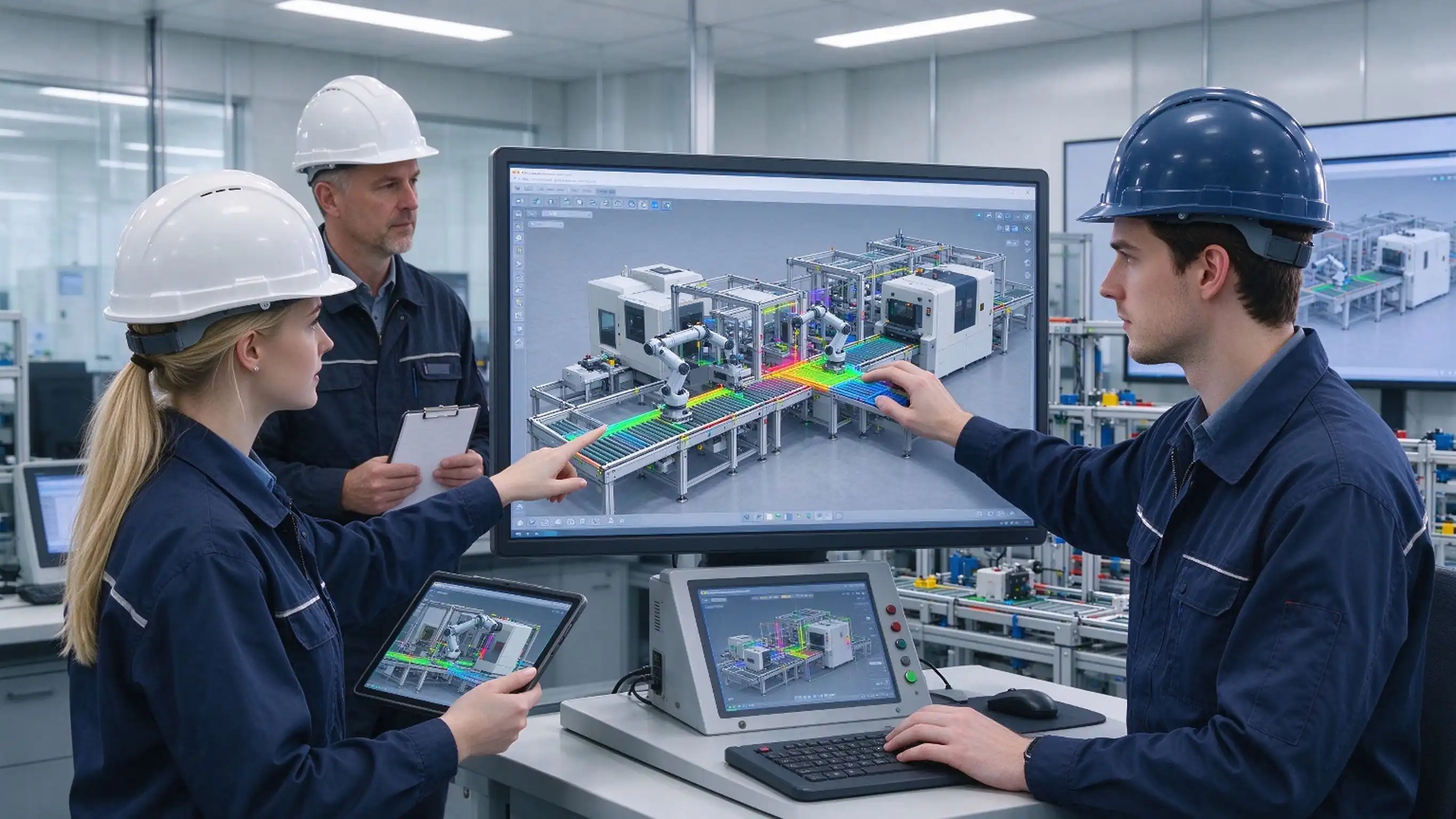
Many of the inefficiencies that come with traditional workflows can be fixed with digital tools. Drawing by hand and testing prototypes can take weeks or months. Digital prototyping and simulation, on the other hand, can cut these times down to days. With shared digital models, engineers can quickly make changes to designs, find bugs early on, and work together across teams that are in different places. Because of this, there are fewer physical prototypes, less waste, and faster validation cycles.
Core Benefits for Institutions and Enterprises
Digital design & manufacturing technology provides real value, which is known by procurement managers and training leaders. Finding mistakes in the design in simulation instead of on the shop floor saves money on rework. When engineering, quality control, and production teams all work from the same digital source, they can work together better. As digital models allow for mass customization without retooling, scalability gets better. These benefits directly help you stand out from the competition and save money.
Evolution from Traditional to Digital Manufacturing: Why the Shift Matters
Traditional production focuses on actual prototypes, process plans written on paper, and setting up machines by hand. This method has a lot of problems, including long lead times, limited flexibility, and a high error rate. According to the International Journal of Production Research (2020), processes that are done by hand can cause up to 15% more mistakes than routines that are led by computers. These problems are dealt with directly by the move toward digital design & manufacturing technology.
Key Drivers Behind the Transformation
Several things speed up the switch to digital ways. When customers want personalized products, production systems need to be able to change quickly. To work together across countries, global supply chains need to share info in real time. Environmental laws require businesses to use as little energy and waste as possible. These needs can be met by digital manufacturing, which allows for virtual setup, predictive maintenance, and flexible production schedules.
Practical Impact on Operations
Using digital design and virtual prototyping changes how quickly and easily things can be done. Digital changes can be made to production lines before the physical changes happen, which cuts down on downtime. IoT devices send real-time data to Manufacturing Execution Systems, which lets managers change plans and how resources are used on the fly. With machine vision and coordinate measuring machines, deviations are caught in real time, and quality control moves from reactive checking to proactive tracking. These features help make production more environmentally friendly by making the best use of materials and energy.
Comparing Digital Manufacturing Technologies: Choosing the Right Solutions
To choose the best digital design & manufacturing technology, you need to carefully look at all of your options. Additive manufacturing is great at making complicated shapes with little waste, but it might not work well for large production runs. CNC machining makes metal parts more precise, and digital process planning tools make it easier to keep track of work processes. According to a report from Manufacturing Engineering (2022), choosing the right technology must be based on specific production volumes, types of materials, and long-term goals.
Evaluation Criteria for Procurement Professionals
Think about scalability, integration difficulty, and provider assistance when looking at options. Platforms that work with existing CAD/CAM systems without any problems make implementation easier. How quickly teams get good at what they do depends on how much training is available. The total cost of ownership includes more than just software fees. It also includes gear purchases, repairs, and continuing to learn new skills. Case studies from the aerospace and car industries show that starting with pilot projects and going through stages of adoption lowers risk and boosts company trust.
Matching Technology to Organizational Needs
Vocational schools need strong modeling settings where students can get real-world experience without stopping the production line. For real-time production control, manufacturing companies look for tools that work with MES. Platforms that support multiple industry standards and licenses are helpful for public training sites. Understanding these different needs makes sure that efforts have the most impact possible. The flexibility of digital design & manufacturing technology is adaptable enough to be tailored to specific processes, whether they are used in training labs or high-stakes production floors.
Practical Applications and Case Studies in Digital Manufacturing
Digital design & manufacturing technology is used by businesses all over the world to solve hard problems. In aerospace, digital twins model how turbine blades work in harsh conditions. This lets engineers make designs better before they have to spend a lot of money trying them in real life. Robotics and Computer-Integrated Manufacturing (2021) says that automakers use virtual commissioning to check the accuracy of robotic assembly sequences, which cuts commissioning time by up to 40%. Electronics companies use automated CAD/CAM workflows to make circuit board layouts that are very detailed and accurate to the micron level.
Overcoming Common Implementation Challenges
Even though the benefits are clear, organizations face problems when they try to go digital. Skill gaps in the workforce are still a big problem; current employees may not know how to use CAD software or digital tools for planning processes. When secret plans are shared through cloud-based systems, data security is very important. When older CNC tools need to talk to newer MES systems, integration gets tricky. To deal with these problems, we need structured training programs, strong cybersecurity protocols, and gradual rollouts of new technologies that let teams get used to them.
Real-World Success Stories
A company that makes precision molds used digital process modeling to cut down on the number of prototype versions by 60%. This saved months of development time. Five training platforms for digital design & manufacturing technology were combined by a vocational college so that students could work on full-cycle projects that included everything from CAD modeling to CNC machining and quality control. These examples show that getting the right technology isn't enough to be successful; you also need to train your employees well and get your company on board with the new ways of doing things.
Future Trends and Strategic Recommendations for Procurement Managers
Digital design & manufacturing technology is changing because of new technologies. Generative design is improved by artificial intelligence, which suggests optimized geometries automatically that human engineers might miss. Lights-out manufacturing, in which work is done without lights, is possible thanks to advanced robots. Cloud-based Industry 4.0 tools make watching and controlling things from afar easier, which helps distributed production networks work. Advanced Manufacturing Technology (2023) says that companies that invest in these new technologies get big competitive benefits by being able to respond more quickly and having lower operating costs.
Building a Forward-Looking Procurement Strategy
People who work in procurement have to look at a technology partner's track record of trustworthiness, creativity, and ecosystem compatibility. As demand grows, licensing models that are flexible let you add more users. Strategic relationships with training companies make sure that the skills of the workers keep up with changes in technology. Protecting long-term investments means negotiating contracts that include ways to upgrade and ongoing support. In the next ten years, the leaders in the digital design & manufacturing technology field will be able to add AI-driven optimization, cloud connectivity, and advanced robotics to platforms that are already in use.
Preparing Teams for the Future
To stay competitive, you have to keep learning. The best skill development happens at schools that offer project-based training with dual-instructor models, which combine classroom knowledge with real-world experience. Simulation software, MES interfaces, and digital testing tools need to be practiced by employees in real life. Getting certified in 3D mechanical design and digital production line management shows that you know what you're doing and makes it easier to move up in your job. Companies that put staff development and technology adoption at the top of their list of priorities get better results and keep their best employees.
Conclusion
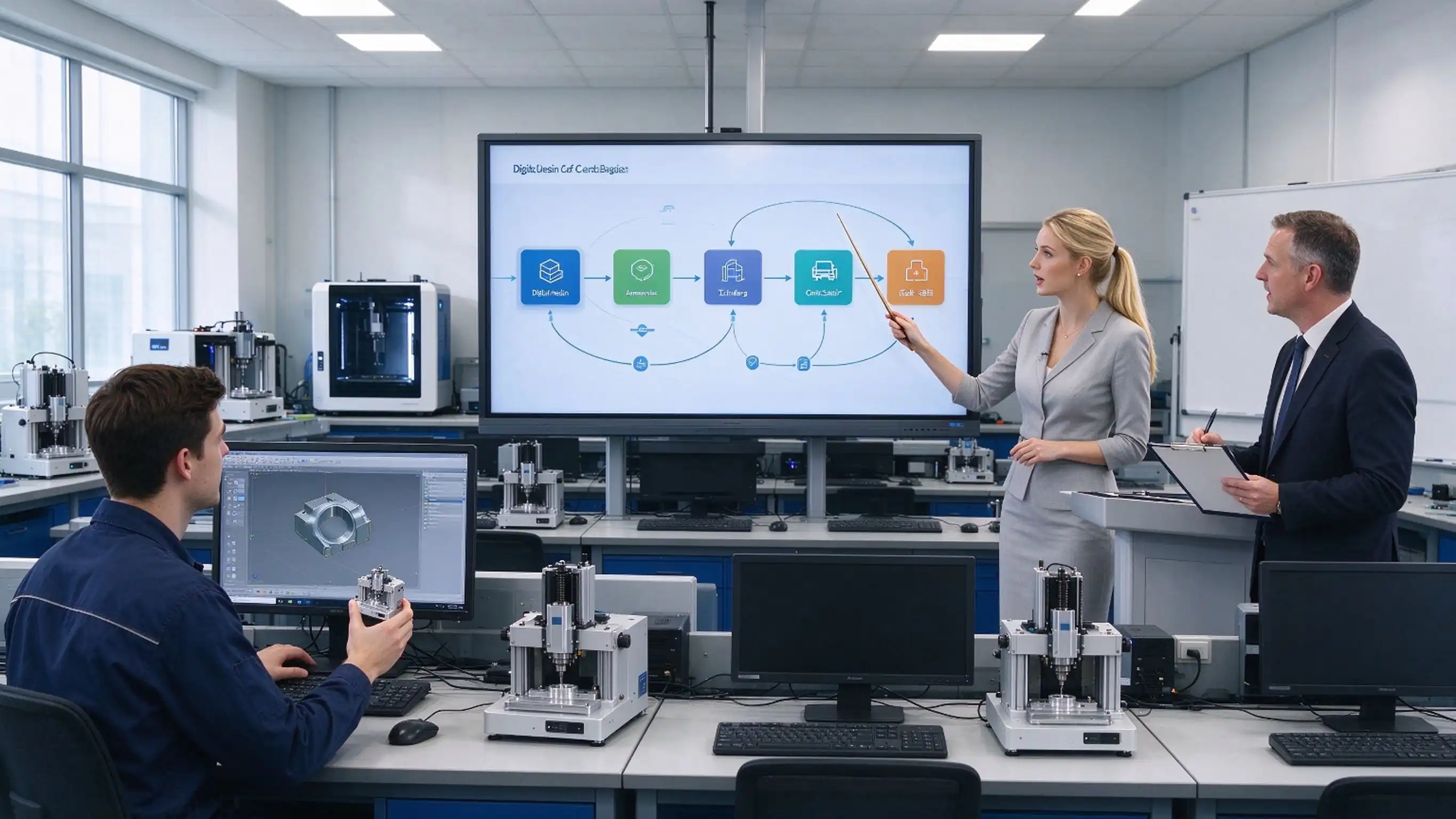
In today's business world, learning digital design & manufacturing technology is not an option; it's a strategic must. Because of this technology, schools can teach the whole process of making a product, from CAD modeling and process simulation to quality control and production control. Businesses are able to make goods more specific, cut down on waste, and speed up the time it takes to get products to market. Communities that make things can benefit from public training centers that help build trained workers who meet industry standards. When digital design, virtual prototyping, and intelligent manufacturing systems work together, they make it possible for new ideas and better operations that were unimaginable ten years ago.
FAQ
1. How does digital design & manufacturing technology address data security concerns?
When secret designs are shared on digital platforms, data security is very important. End-to-end encryption and role-based access controls are used by strong systems to make sure that only authorized users can see private CAD files. Compliance with ISO 27001 and tracking based on blockchain add extra layers of protection, giving procurement managers peace of mind that intellectual property stays safe from design to production.
2. Can legacy CNC equipment integrate with modern digital manufacturing systems?
Yes, IIoT gateways and MTConnect protocols make it possible for old machines to talk to new MES and CAD/CAM platforms. Adding sensors and connectivity units to old equipment protects capital investments and allows real-time data feedback that helps with planning production and planning for preventative repair.
3. What return on investment can organizations expect?
Most of the time, organizations see physical development costs drop by 50–70% and contracting times cut by up to 40%. ROI is increased even more by better material utilization and lower scrap rates. The exact effect on finances depends on the industry and the amount of goods made, but using digital manufacturing in its entirety always leads to measurable gains in quality and efficiency.
Transform Your Manufacturing Capabilities with Digital Excellence
E.C.R Academy stands ready to partner with vocational institutions, manufacturing enterprises, and training centers seeking to master digital design & manufacturing technology. Our curriculum spans the complete workflow: product digital design, process simulation, CNC programming, production line control, and digital inspection. Delivered through standardized project-based learning, our programs combine the expertise of academic instructors, industry engineers, and master mentors. Five integrated training platforms provide hands-on experience with CAD/CAM software, digital twins, MES systems, and coordinate measuring machines. Graduates earn certifications in 3D mechanical product design and digital factory line commissioning, directly supporting career advancement and organizational competitiveness. Whether you represent an educational institution upgrading training infrastructure or a manufacturing enterprise investing in workforce development, E.C.R Academy delivers proven results backed by 16 years of experience serving nearly 500,000 learners globally. Reach out to explore how our digital design & manufacturing technology programs can elevate your capabilities: ecr2008@enteredu.com or visit enteredu.com.
References
1. Journal of Manufacturing Systems. (2021). "Digital Manufacturing Adoption and Time-to-Market Reduction.
2. International Journal of Production Research. (2020). "Defect Rates in Manual vs. Digital Manufacturing Workflows.
3. Manufacturing Engineering. (2022). "Technology Selection Strategies for Digital Manufacturing.
4. Robotics and Computer-Integrated Manufacturing. (2021). "Virtual Commissioning Impact on Assembly Line Efficiency.
5. Advanced Manufacturing Technology. (2023). "AI and Industry 4.0 in Digital Manufacturing.
6. National Institute of Standards and Technology (NIST). (2022). "Digital Thread Standards for Manufacturing.


_1781601799781.webp)