Multi-Rotor Drone Applications and Flight Operations: Maintenance Skills Guide
Maintenance that is done regularly and written down is the most important habit for multi-rotor drone applications and flight operations. Each mission, I check the batteries, sensors, software, blades, and motors. I write down what I find and keep track of it. To keep flights safe, data quality high, and work like surveying, farming, inspections, and rescues moving along more quickly, this routine is used every day. In this guide, I'll teach you how to make a program that works with U.S. laws and give you the basic maintenance skills that techs need. I also talk about how these skills are taught at E.C.R. Academy through projects that students work on on their own.
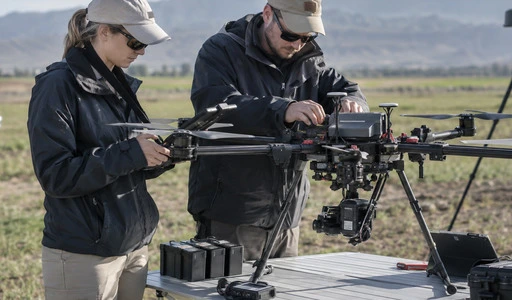
Why Maintenance Shapes Commercial Multi-Rotor Missions?
Where Multi-Rotor Platforms Work Hardest?
It is possible for multirotor planes to take off and rest vertically. They stay in the air and fly close to their targets. With these skills, someone can check power lines, scout crops, do surveys, keep an eye on construction sites, and do search and rescue. Inspection teams carry RGB, thermal, or zoom cameras that let them check solar farms, buildings, and bridges without sending people up high. To find crops that are stressed, farm workers use multispectral cameras and mapping tools. Helpers can quickly scan the area with thermal sensors. During each task, the plane has to climb, hover, and slow down many times. The motors, batteries, and speed controllers have to work harder than they normally would to keep the plane flying. It's easy to see the wear and tear after that much work.
How Flight Operations and Maintenance Connect?
Motors, propellers, electronic speed controllers, batteries, the flight controller, GNSS, the radio link, and the payload are just some of the parts that need to work together for a multi-rotor drone applications and flight operations to happen. It's bad for the whole mission if one part gets off track. In the US, 14 CFR Part 107 says that a remote pilot must do a preflight check that looks at the safety of the plane, the control link, and the power for the planned flight. At least I'll follow that rule. When you plan a task, you need an extra battery and a quick way to land in case something goes wrong. Get these records before I leave the shop. They tell me if the plane can do what I want it to do.
What Poor Maintenance Costs an Operator?
Broken repairs that were put off rarely make a lot of noise at first. When a blade is worn out, it makes movements that blur pictures and stress sensors. Making the same flight over and over again wastes time and power. In commercial work, it's common for communication to break down, GPS to stop working, and batteries or propulsion to stop working. If the maintenance record is clean, I can rule out that the equipment was the cause of an accident. As part of Part 107, you have 10 days to tell the FAA about an accident that seriously hurts someone or damages property worth more than $500 that is not the aircraft. Plus the rules, I add up the real costs of lost data, rescheduled client visits, and new parts.
Core Maintenance Skills Every Drone Technician Needs
Pre-Flight Inspection Routine
When I wake up in the morning, I do more than just check my phone. First, I check the blades for breaks, chips, and cracks. After that, I manually flip each motor over to look for dirt or rough wheels. After that, I make sure the landing gear, arms, fasteners, and payload mounts are clean and in the right place. It's charged and locked in place, and I check the battery to make sure it's not broken. As soon as I turn on the device, I check the time, GNSS or RTK status, firmware version, and return-to-home settings. I can listen for strange sounds and watch out for drift while I'm close to the ground. When I have to wait for a crew in the cold in the morning, I stick to my list.
Post-Flight Cleaning and Storage
When I land, I clean the plane of dust, dirt, water, and chemical residue. The battery circuits, motor vents, and gimbals get dirty and dusty as you work in the field. The dust and dirt either block sensors or keep heat inside. I don't make the motors dirtier when I clean them with a soft brush and a cloth that doesn't have lint on it. When I land hard, damage that was hidden before can show up as new cracks or screws coming loose in the frame of the plane. I write down the flight time and any strange behavior in the log. After that, I put the plane away in a dry case. It's simple to keep for a long time. To store it, I just take off the propellers, charge the batteries to the level the maker says is best, and keep everything away from heat and water.
Battery Care and Retirement
There should be strict rules about how to handle batteries more than any other part of an airplane. When I charge packs, I never leave them alone and only use the original charger. Also, I don't charge packs until they're cool again after a long trip. Also, I don't keep packs in hot cars or in bags that could catch fire. Writing down the number of cycles helps me keep track of when I check the amount of voltage between cells. These things on a pack tell me it's dead: growth, holes, heat at rest, or a sharp drop in voltage when the load is applied. I throw it away because that's the law in my area. Since it's hard to use power when it's cold, I warm up my packs before I fly and keep more on hand. Always follow the directions that came with the device for how to charge and store it.
Troubleshooting Propulsion, Sensors, and Communication Links
Motors, ESCs, and Propellers
Most of the time, problems with the propulsion show up as shaking, an uneven hover, or a drone that drifts to one side. I'll start with the simplest reason: a propeller that is broken or doesn't match. Then I look for rough motor bearings, discolored windings, or damage from heat, and make sure that each electronic speed controller works smoothly. Flight logs are useful in this case. I check that arm first if one motor gets hotter or needs more power than the others. I replace propellers in sets that match and balance them when the manufacturer tells me to. Many multi-rotor designs can crash if they lose one motor, which is why I never fly with a motor I don't trust.
Sensors, Compass, and IMU Calibration
The IMU, compass, barometer, and GNSS all need to agree with each other for positioning to work. When I go to a new site, when the firmware changes, or when the plane starts to behave strangely, I calibrate the compass. I stay away from power lines, steel buildings, and vehicles that can mess up magnetic readings. During calibration, I let the IMU warm up and made sure the plane stayed level on a flat surface. Sensors that pick up payload need their own checks. When I do mapping and LiDAR work, I make sure the alignment is correct before I start the job. If the calibration is off, the 3D point clouds and maps I deliver are less accurate in terms of space. The date, place, and result of each calibration are written in the log.
Communication Links and Failsafe Checks
The plane is safe if something goes wrong because it has a strong control link and tried-and-true failsafes. To begin, I check to see if the antennas, cables, and connectors are broken. Then I check the launch site's signal strength because places near high-voltage equipment or towns with lots of people can mess up signals. Before every job, I check the return-to-home altitude and behavior. I can say for sure that when everything is safe, the plane responds correctly to a fake signal loss. Having a remote ID is also important. The Remote ID rule was put into effect by the FAA in March 2024, so I can confirm that the broadcast feature works before takeoff. I test visual positioning sensors and make sure their lenses are clean so they can be used in places without GPS.
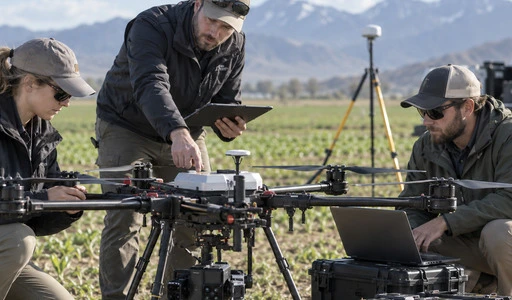
Building a Documented Maintenance Program
Setting a Maintenance Schedule
With a schedule, everyone can follow the same set of good habits. This is what I use:.
- Checks before and after the flight: The crew does these for every mission. They go over things like batteries, software, connections, cleaning, blades, and log entries. Small mistakes can be found early on, and the team only needs minutes to do them by following a printed list. Any strange events are written down in a short log note.
- Periodic inspections: Technicians plan these by flight hours, calendar time, or exposure, based on what the manufacturer tells them to do. They open the aircraft, check the bearings, wires, clamps, solder joints, and software. They also re-calibrate the instruments. Sites that are dirty, wet, or salty need less time between visits than ones that are dry and clean. Each result is written down in the plane's log.
- Maintenance based on events and storage: A full inspection is done after a hard landing, a motor fault, being exposed to water, or being stored for a long time. Before going back to work, the plane goes on a test flight, and the worker writes down every step, part number, and result in the repair log. Hidden damage gets to the next mission by skipping this step.
These layers work together to keep failures from coming as a surprise and give fleet managers a clear picture of the condition of the fleet.
Records and Regulatory Readiness
I take care of the things I fly because I keep good records. In a log, I write down the number of flight hours, battery cycles, fixes, part replacements, software versions, and calibration dates for each plane. Logs are useful for warranty claims and show customers and regulators that the business is run in a structured way. In Part 107, it says that people who work as remote pilots need to have a certificate and train again every 24 months. Every season, owners should check the most up-to-date FAA rules, since the rules change. Standards such as ISO 21384-3 for operational procedures and ASTM F3266 for training for remote pilots give teams useful examples that help them write procedures. Good records also help new workers understand what the fleet has been through in the past.
Tracking Uptime and Total Cost
What I measure can get better. There are many useful signs, such as the mission success rate, effective flight time, battery usage, repair regularity, downtime, and data-quality rate. Some of the most common bottlenecks are payloads that are too heavy, batteries that don't rotate properly, poor communication coverage, and maintenance that isn't done regularly. Standard flight plans, battery packs that are easy to find, a lot of spare parts and propellers, and a central database for the fleet all help to cut down on wait times. I don't just look at the price of purchase to figure out how much it costs to run. I also think about how much it costs to hire people, train them, get insurance, fix things, and follow the rules. If you want to compare planes and crews fairly, divide the price by the thing that was inspected or the area that was mapped.
How E.C.R Academy Trains Maintenance and Flight Skills?
Project-Based Curriculum and Faculty
In the multi-rotor drone applications and flight operations course at E.C.R. Academy, students work on hands-on projects that move from basic operation to more advanced UAV applications. The students build the platform, set up the flight controls, try the flight, make apps, and get data from devices. They also learn how to run the plane, how to keep people safe during trips, and how to do routine repair jobs that are used in the real world. Engineers who work in the UAV business and experts from universities both teach the course. It's up to par all over the world. Simple steps, the development environment, and designing hardware and software are taught in the first lessons. This way, anyone can start, even if they've never done it before. Putting things together, controlling flight, testing, inspecting, fixing issues, and putting apps into use are all useful things to do.
Full-Process Training Platforms
Four platforms that are linked together run the course. The Selection and Debugging Platform has three multi-rotor frame layouts, five motor specifications, three ESC types, and four propeller configurations. This lets students practice choosing parts, putting them together, setting up parameters, and testing the flight. The Virtual Simulation Platform can be used to inspect power lines, protect agricultural plants, and let drones fly themselves. The UAV Operation Platform can fly for a long time, carry heavy loads, and place itself very accurately. The Maintenance and Inspection Platform teaches how to find problems in communication systems, motors, flight control systems, power distribution systems, and power management modules. It does this by using diagnostic tools to check, analyze, fix, and recover. Learners use real hardware to practice the skills that are talked about in this guide.
Career Outcomes and Partners
You can get ready to be a UAV pilot, an industry application engineer, a payload system integration engineer, a flight control development engineer, or a training instructor after you graduate. Protecting farm plants, checking power lines, surveying, logistics, emergency rescue, and making movies are all things that need them. Organizations like businesses, schools, industry groups, and more can use the course. Since 2010, E.C.R. Academy has trained and tested almost 500,000 people in China and 28 other countries. It also works with over 500 businesses and over 3,300 experts. Even though the course teaches useful skills, the Part 107 remote pilot certificate is still a separate FAA requirement for commercial flights in the U.S.
Conclusion
Multi-rotor drone applications and flight operations are centered on maintenance. Motors, batteries, and sensors are put to a lot of stress during rescuing, farming, inspecting, and surveying. Problems of any size can put people at risk, cause data loss, and cost more than expected. Planes are always ready to fly because they are inspected before and after each flight, are given strict battery care, and have their propulsion, sensors, and communication links checked for problems. Putting those habits on paper, keeping good records, and keeping an eye on things like downtime and cost per asset can turn them into a program that meets FAA standards. During their training, techs do project work, simulations, and work to fix problems on real hardware. This helps them learn the same skills they will use on the job.
FAQ
1. How often should I inspect a multi-rotor drone?
Before and after every flight, I check. Deeper inspections should be done every so often based on flight hours, manufacturer instructions, and conditions like dust, moisture, or salt. A full check must be done right away after a hard landing or a motor fault.
2. When should I retire a drone battery?
When a pack gets swollen, punctured, hot at rest, or shows a sharp voltage drop under load, it should be thrown away. Check with the manufacturer and local rules for getting rid of it.
3. Can I learn drone maintenance with no experience?
Yes. For beginners, the E.C.R. Academy course starts with the basics of the UAV platform, including hardware and software architecture and basic operations. This makes it easy for them to follow a clear learning path.
4. Does the course replace FAA Part 107 certification?
No, the Part 107 remote pilot certificate is a separate rule set by the FAA. The course teaches useful skills for safe flying, like how to operate, maintain, and fix problems.
Talk With E.C.R Academy About Multi-Rotor Drone Applications and Flight Operations Training
If you're a school, business, or organization looking for a multi-rotor drone applications and flight operations training provider, we can help. The E.C.R. Academy has full-process UAV Training equipment, project-based courses, and instructors who are engineers who work in the field. Email us at ecr2008@enteredu.com with your training goals, class size, and target industry, and we'll get back to you with a course plan. You can learn more about our programs at enteredu.com as well.
References
1. Federal Aviation Administration, Title 14 CFR Part 107: Small Unmanned Aircraft Systems, 2016
2. Federal Aviation Administration, Remote Identification of Unmanned Aircraft (Final Rule), 2021
3. Federal Aviation Administration, Remote Pilot – Small Unmanned Aircraft Systems Study Guide (FAA-G-8082-22), 2016
4. International Organization for Standardization, ISO 21384-3 Unmanned Aircraft Systems – Part 3: Operational Procedures, 2019
5. ASTM International, ASTM F3266 Standard Guide for Training for Remote Pilot in Command of Unmanned Aircraft Systems (UAS) Endorsement, 2018
6. National Fire Protection Association, NFPA 2400 Standard for Small Unmanned Aircraft Systems (sUAS) Used for Public Safety Operations, 2019