E-Commerce Technology Training: Skills Employers Need Today
E-Commerce Technology has grown from basic internet shopfronts to complex digital ecosystems facilitating worldwide commerce. Today's businesses want experts who can manage complicated systems, analyse real-time data, optimise customer journeys, and incorporate AI-driven solutions to remain competitive. The need for qualified e-commerce professionals is increasing as companies recognise that digital transformation is not a choice but a must for existence. Today, industrial, retail and B2B procurement organisations all demand teams that can run omnichannel operations, install secure payment gateways and use predictive analytics for revenue growth and operational efficiency.
Understanding E-Commerce Technology and Its Role in Business
E-Commerce Technology is the set of digital platforms, software frameworks and data protocols that work together to enable online transactions easier. This ecosystem contains it everything from payment processors, to customer relationship management tools, to content management systems and inventory databases. Those aspects need to operate together and, for anybody looking to go into digital commerce, it is a must to understand how.
The Digital Commerce Ecosystem
Modern E-Commerce platforms work like one big control center where the catalogs of products, the price engines, and the checkout systems all work together in real time. These systems work with transportation networks, business resource planning software, and warehouse management software to make the whole supply chain visible from start to finish. Businesses that use combined E-Commerce systems say that their inventory is more accurate, orders are filled faster, and customers are happier than those that use scattered solutions.
B2B Procurement and Digital Transformation
B2B settings have their own challenges that E-Commerce Technology may aid with such as bulk ordering, contract pricing, various approval systems and complex shipping arrangements. Digital procurement solutions automate purchase requests, facilitate vendor comparison and retain records that improve compliance. Companies that digitise their procurement procedures often save 10 to 15 percent in expenses and reduce the time to purchase items by up to 40 percent.
Integration with Business Operations
For E-Commerce to succeed, the platforms that consumers view and the systems that process the transactions have to work together seamlessly. With the right configuration, inventory changes are promptly reflected from warehouse systems to online catalogues, shipment approvals generate shipping notifications, and unified interfaces provide customer care teams visibility into entire order histories. This kind of integration reduces errors in manual work, accelerates response times and ensures a consistent experience across all touchpoints.


Core E-Commerce Technology Skills Employers Demand Today
Employers in all kinds of fields agree that certain technical and logical skills are necessary for E-Commerce success. These skills include managing platforms, figuring out what data means, following security rules, and making the customer experience better.
Platform Technical Proficiency
Professionals are required to demonstrate familiarity with popular E-Commerce platforms like Shopify, Magento, and WooCommerce, as well as Enterprise choices like SAP Commerce Cloud. Platform comprehension is much more than how to move around, but how to alter templates, add plugins, set up APIs and increase performance. Companies seek to recruit individuals who can match the platform’s capabilities to the company’s demands, and can recommend the best solutions for various levels of operations.
Data Analysis and Business Intelligence
E-Commerce generates massive volumes of data on consumer behaviour, purchasing habits, shopping cart abandonment, and product performance. Professionals employ analytics tools to convert raw data into insights that may be applied to decisions on marketing strategy, suppliers and pricing adjustments. Those teams that know how to utilise Google Analytics, heat mapping tools and data visualisation platforms can see patterns, test ideas and precisely quantify the effectiveness of a campaign.
Payment Systems and Transaction Security
It is necessary for people working in E-Commerce Technology to understand how to integrate payment gateways, meet PCI-DSS standards, and spot scams. Professionals need to set up safe checkout processes, add support for multiple currencies for foreign transactions, and stay in line with GDPR and CCPA and other new data security laws. Both customer data and a business's reputation are safe when you know about tokenization, SSL certificates, and two-factor authentication.

Mobile and Omnichannel Integration
Mobile commerce makes up more than 70% of online sales in many markets, so knowing how to optimize for mobile devices is very important. This includes things like progressive web app creation, mobile payment integration, and responsive design concepts. For omnichannel capabilities—letting customers look online, buy on their phones, and pick up in-store—to work, complex inventory syncing and order management systems must be set up and maintained by trained professionals.
SEO and Digital Marketing Technical Skills
For E-Commerce to function, visibility is key. Technical SEO — Your site's design, how you optimise for page load, structured data markup, mobile-first indexing and a lot more all have a direct impact on your organic traffic. Professionals also need to know how to manage sponsored search campaigns, automate email marketing, integrate social commerce and enhance conversion rates to attract more quality visitors and earn more per visitor.
How to Implement Effective E-Commerce Technology Training Programs
Companies that want to improve their own E-Commerce or schools that want to prepare students for jobs in digital commerce need to make training programs that combine academic knowledge with real-world application.
Conducting Comprehensive Skills Gap Analysis
Honest assessment is good schooling. Matching the skill sets of existing teams with the skill sets needed by the company is a key HR issue and should take into account the size of the organization, the sector of industry and technological development. Surveys, skills tests and performance evaluations may help you spot specific requirements such as data analysis, platform administration or security measures. This research should also cover developing technologies that may affect future demand, such as AI-powered customisation and voice purchasing.
Curriculum Design Around Industry Standards
Training programs that are in line with well-known standards make sure that students learn skills that can be used in different companies and on different platforms. Our E-Commerce training at ECR Academy is based on the latest technology trends in the industry and follows international standards for professional teaching. The structure of the school covers the whole process, from running an online store to making products for the internet. This makes sure that students learn a wide range of skills rather than just a few that are good at one thing.
Our method for E-Commerce Technology includes eight main training courses that cover running an online store, using data to run a business, running a brick-and-mortar store, running a community, digital marketing, online sales, visual marketing design, and making online products. Each module includes both theoretical background and virtual simulation exercises that are based on real-life business situations that students will face in the real world.
Blending Learning Modalities for Maximum Impact
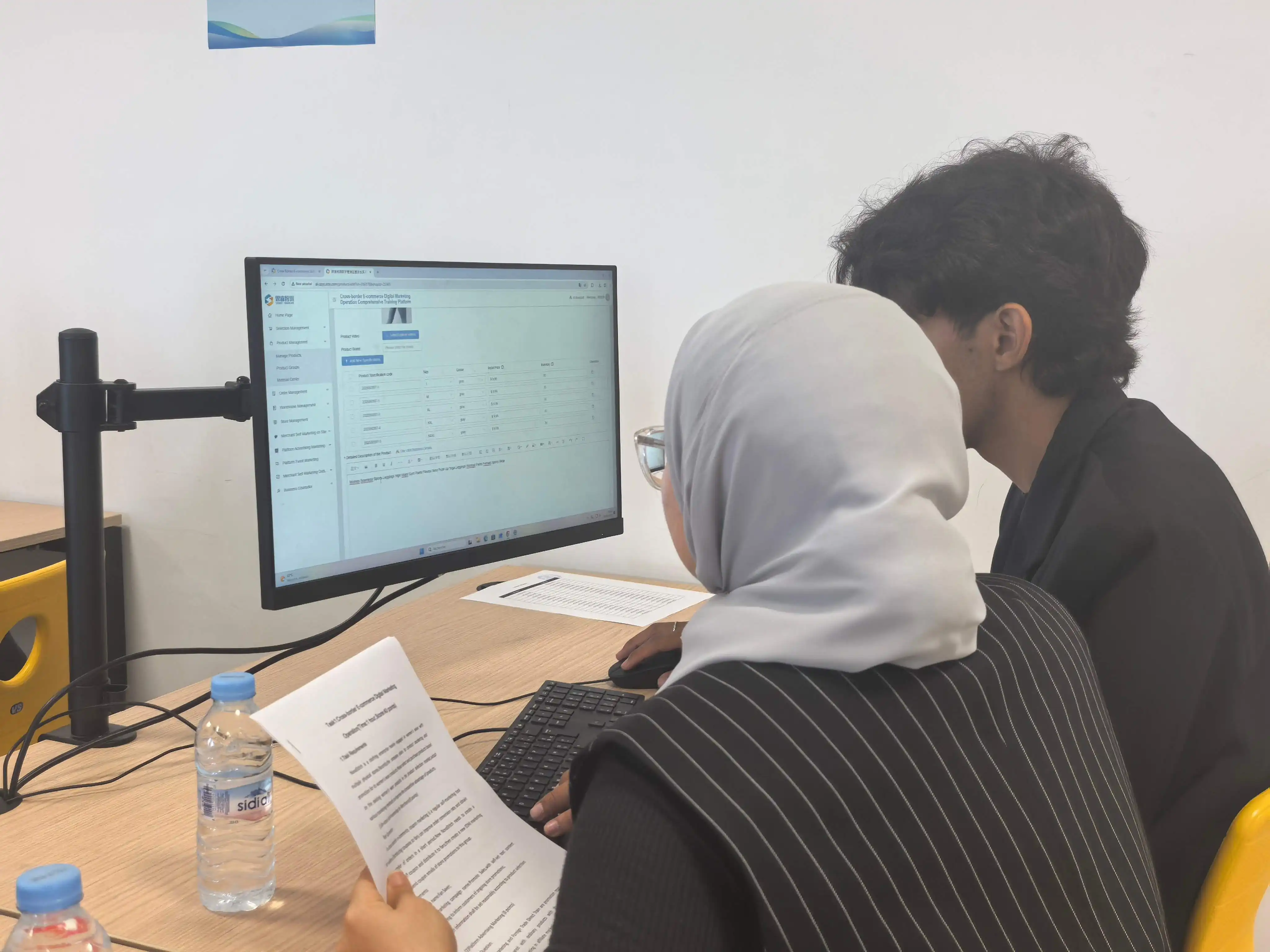
Multiple delivery methods are used in effective training to suit different learning styles and reinforce skill development. Our programs use a "theory learning → virtual simulation → hands-on verification" sequence that gradually boosts confidence. Online classes give working professionals more freedom, and workshops in specialized labs with professional E-Commerce platforms, data analysis tools, and design software let students use what they've learned in the real world.
Measurement and Continuous Improvement
Systematic analysis is needed to find out how good training is. Companies should set KPIs that measure how well employees learn new skills, how they use those skills on the job, and how they affect the business. Knowledge gains are measured by tests given before and after training, while practical use is measured by on-the-job observations and project evaluations. Website conversion rates, average order values, and customer satisfaction scores are all business metrics that show how training expenses affect the results of a company.
Selecting the Right E-Commerce Technology Solutions to Support Your Workforce
Companies that wish to develop E-Commerce capabilities are forced to make hard decisions about which platforms, technologies, and training partners they will rely on. Execution success relies on the strategic decisions made, which must support the corporate objectives, the requirement for scalability and the workforce preparedness.
Platform Evaluation Criteria
When choosing an E-Commerce site, you should think about more than just the original cost. Scalability is very important. Solutions that work for startups often don't have the security features, transaction volume limits, or customization options that businesses need. Companies should look at the total cost of ownership, which includes monthly fees, transaction fees, growth resources, and ongoing upkeep.
Cloud-Based Versus Self-Hosted Solutions
Cloud-based platforms are good for businesses that don't have a lot of technical resources because they can be set up quickly, get changes automatically, and have stable membership prices, especially for E-Commerce Technology. These solutions take care of infrastructure management, security patching, and performance optimization, so teams can focus on running the business instead of managing systems. Self-hosted options give you more control over your data and customization options, but they take a lot of technical know-how and ongoing infrastructure investments.
Partnering with Training and Certification Providers
Choosing skilled training partners has a big effect on how well worker development goes. Organizations should judge providers based on how complete their education is, how qualified their teachers are, how many hands-on learning chances they offer, and how well-known they are in the industry. Since 2010, ECR Academy has provided professional training and assessment services to almost 500,000 people in 28 countries. Of these, over 300,000 have successfully earned recognized skills certifications. Our network of 3,300 experts and relationships with more than 500 businesses make sure that the training material is up-to-date and meets the needs of employers.
Future Trends Shaping E-Commerce Technology Skills and Employer Expectations
Digital shopping is still changing very quickly, thanks to new technologies and shifting customer needs. Professionals need to be aware of new trends and learn skills that will help them get jobs in the future.
Artificial Intelligence and Machine Learning Integration
Personalized product suggestions, dynamic price algorithms, robot customer service, and predictive inventory management are just a few of the ways that AI is changing the way E-Commerce works. Machine learning models look at patterns in how customers behave to guess how likely they are to buy, improve search results, and spot fraud. As AI technologies move from being experimental to being widely used, more job possibilities will open up for professionals who know what AI can do, what data it needs, and how to put it into practice.
Headless Commerce and API-First Architectures
In traditional E-Commerce platforms, the front-end look and the back-end commerce logic are closely linked. Headless commerce separates these layers, which lets businesses offer the same experiences on websites, mobile apps, IoT devices, and new channels while keeping their commerce operations unified. For this design method to work, developers need to know how to use current front-end tools, RESTful APIs, and microservices patterns.
Voice Commerce and Conversational Interfaces
Voice-activated shopping through virtual assistants and smart speakers is becoming a more popular way to make purchases, and E-Commerce Technology is at the heart of this shift. New skills are needed to make product info better for voice search, create conversational buy flows, and connect to voice platforms like Google Assistant and Amazon Alexa. Professionals can make talk shopping work better by understanding natural language processing.
Sustainability and Ethical Commerce
More and more, customers want to buy from companies that care about the earth and do business in an honest way. Professionals who work in E-Commerce need to know about shipping options that don't release carbon, eco-friendly packaging options, supply chain transparency technologies like blockchain, and digital marketing strategies that really show commitments to sustainability. In competitive markets, these skills will set forward-thinking companies apart.
Continuous Learning Culture
Learning mobility, or the ability to quickly pick up new skills as technology changes, may be the most important skill for future success. Companies that encourage continuous learning by giving employees regular training, letting them try new things, and sharing what they know are better able to adapt to changes in the market than their competitors. Professionals who believe in learning new things throughout their lives and constantly look for chances to improve their skills are set up for long-term job success.
Conclusion
The way businesses work and how customers shop have both been fundamentally altered by E-Commerce Technology. In this fast-paced setting, you need to be good at managing technical platforms, analyzing data, following security rules, and making the customer experience better. In digital markets, companies that carefully spend in training programs that help their employees grow gain a competitive edge. As AI, omnichannel integration, and other new technologies continue to change business, it becomes necessary to keep learning new skills. Schools, businesses, and professionals who put E-Commerce skill building first will be ready to do well in the next chapter of the digital economy.
FAQ
1. What are the most valuable skills for e-commerce professionals today?
The most valuable skills are those that blend knowledge of a technical tool with the ability to think critically. Employers want to hire people who have experience with the big E-Commerce platforms, know how to use data analysis tools like Google Analytics, are up-to-date on payment security and compliance standards, and can make shopping experiences mobile-friendly. Digital marketing skills like SEO, conversion optimization, and managing campaigns across all channels also score highly. At ECR Academy, we teach all of these core skills through a program with classes that cover things like management, marketing, data analysis, and technical development.
2. How can small businesses effectively train teams on e-commerce platforms?
Small companies should put platform-specific training from vendors, online learning tools, and hands-on testing at the top of their list of priorities. A lot of E-Commerce sites have free training centers with programs that lead to certification. Starting with basic functions before moving on to more complicated ones keeps you from getting too overwhelmed. Working with experienced consultants for setup and strategic training speeds up the process of building capabilities. Our programs offer structured learning paths that go from the basics to more advanced techniques, so they can be used by people of all skill levels.
3. Does AI really improve e-commerce efficiency?
AI makes E-Commerce processes better in ways that can be measured. By showing buyers relevant goods, personalization engines boost conversion rates by 10 to 30 percent. Chatbots answer common customer questions 24 hours a day, seven days a week. This cuts down on service costs and speeds up response times. Predictive analytics help keep product levels just right, so there are fewer stockouts and overstocks. Rather than reviewing each transaction by hand, fraud detection programs find transactions that look fishy more accurately. When companies use AI carefully, they get big benefits in terms of efficiency and customer satisfaction.
Transform Your Team with World-Class E-Commerce Training from ECR Academy
More than just generic online courses are needed to build E-Commerce skills that help businesses. ECR Academy offers complete training plans that are based on foreign standards and meet the needs of employers in businesses, vocational schools, and workforce development groups. Our course covers all areas of E-Commerce Technology, from running an online store and making decisions based on data to visual design and product development. With 16 years of experience serving nearly 500,000 participants worldwide and partnerships with over 500 enterprises, we understand exactly what skills today's digital commerce professionals need. Our specialized labs equipped with professional E-Commerce platforms provide hands-on learning environments where theory transforms into practical capability. Contact us today at ecr2008@enteredu.com to discuss customized training solutions tailored to your organization's specific needs.
References
1. Anderson, M. & Williams, J. (2022). Digital Commerce Skills for the Modern Workforce. Business Education Press.
2. Chen, L. & Roberts, K. (2023). E-Commerce Platform Management: Best Practices and Implementation Strategies. Technology Training Institute Publications.
3. Global E-Commerce Skills Council. (2023). International Standards for E-Commerce Professional Competencies. GESC Annual Report.
4. Martinez, R. (2022). Data-Driven Decision Making in Online Retail Operations. Journal of Digital Commerce Education, 15(3), 112-134.
5. Thompson, S. & Lee, H. (2023). The Future of E-Commerce Technology: AI, Omnichannel, and Beyond. Digital Transformation Quarterly.
6. United States Department of Labor. (2023). Occupational Outlook for E-Commerce and Digital Marketing Professionals. Bureau of Labor Statistics Employment Projections.


_1781601799781.webp)