Build Job-Ready Skills With Industrial Design Training
Preparing the next generation of designers requires more than theory—it demands hands-on experience, cross-functional collaboration, and alignment with real-world product development workflows. Industrial design training connects learners with the technical, creative, and strategic skills needed to thrive in today's competitive manufacturing and innovation landscape. Whether you're an educational institution seeking to elevate your curriculum, a company aiming to upskill your design team, or a training provider exploring white-label solutions, understanding how to build job-ready competencies is essential. This guide explores the core components of effective industrial design education and how strategic training investments drive measurable outcomes for B2B stakeholders.
Understanding Industrial Design and Its Role in Product Development
Industrial design is the planned process of making goods that look good, work well, and are easy for users to use. In contrast to regular product design, it focuses on technical limitations, making the product possible, and making it sellable—all of which are very important to procurement managers, OEM partners, and design companies. The industrial designers Society of America (IDSA) reported in 2023 that companies that use design thinking early on in the product development process cut the time it takes to get a product to market by up to 30% and save a lot of money by using optimized prototyping.
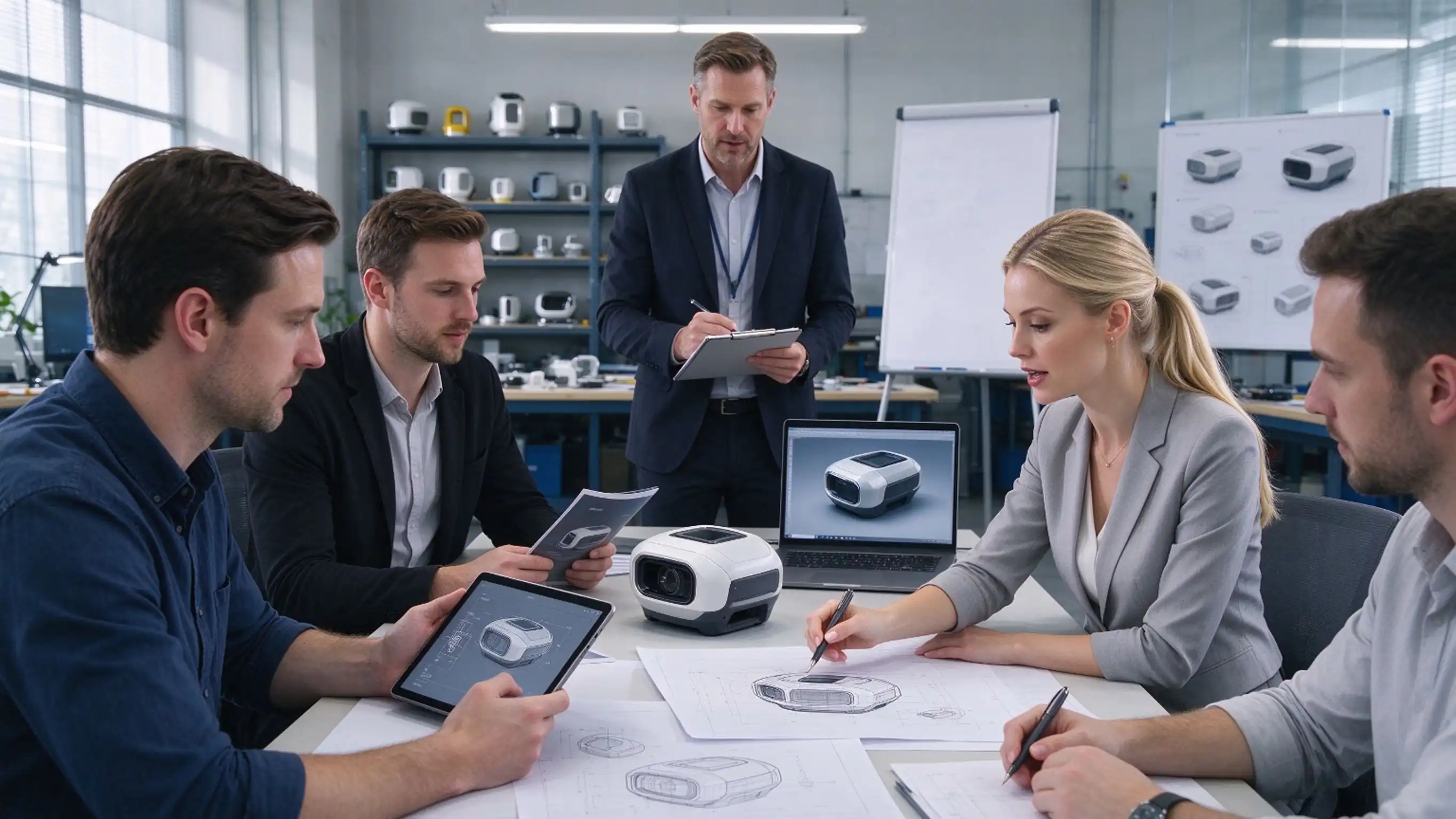
The steps in the industrial design process usually include researching the market, figuring out what users want, coming up with ideas, making sure the ideas work, and improving them over and over again. At each stage, people from different fields must work together, from engineers and material scientists to people who work in the supply chain and on quality testing teams. This cross-functionality makes it even more important for procurement decision-makers to have trained designers who can clearly explain technical requirements and predict problems that might come up during production.
Spending money on thorough training makes sure that designers know not only how things look, but also how to use engineering drawing standards, choose the right materials, and design for manufacturing (DFM) principles. This wide range of skills cuts down on expensive rework, speeds up teamwork between suppliers, and raises the quality of both sourced parts and final goods.
Key Skills and Tools to Build Job-Ready Industrial Designers
To succeed in the fast-paced B2B environment of 2026, modern industrial designers need to learn both hard and soft skills. Some technical skills that are needed are CAD modeling, 3D rendering, engineering drawing, and making prototypes. SolidWorks, Rhino, AutoCAD, and Fusion 360 are just a few of the platforms that are used by professionals to turn ideas into precise specs that can be manufactured.
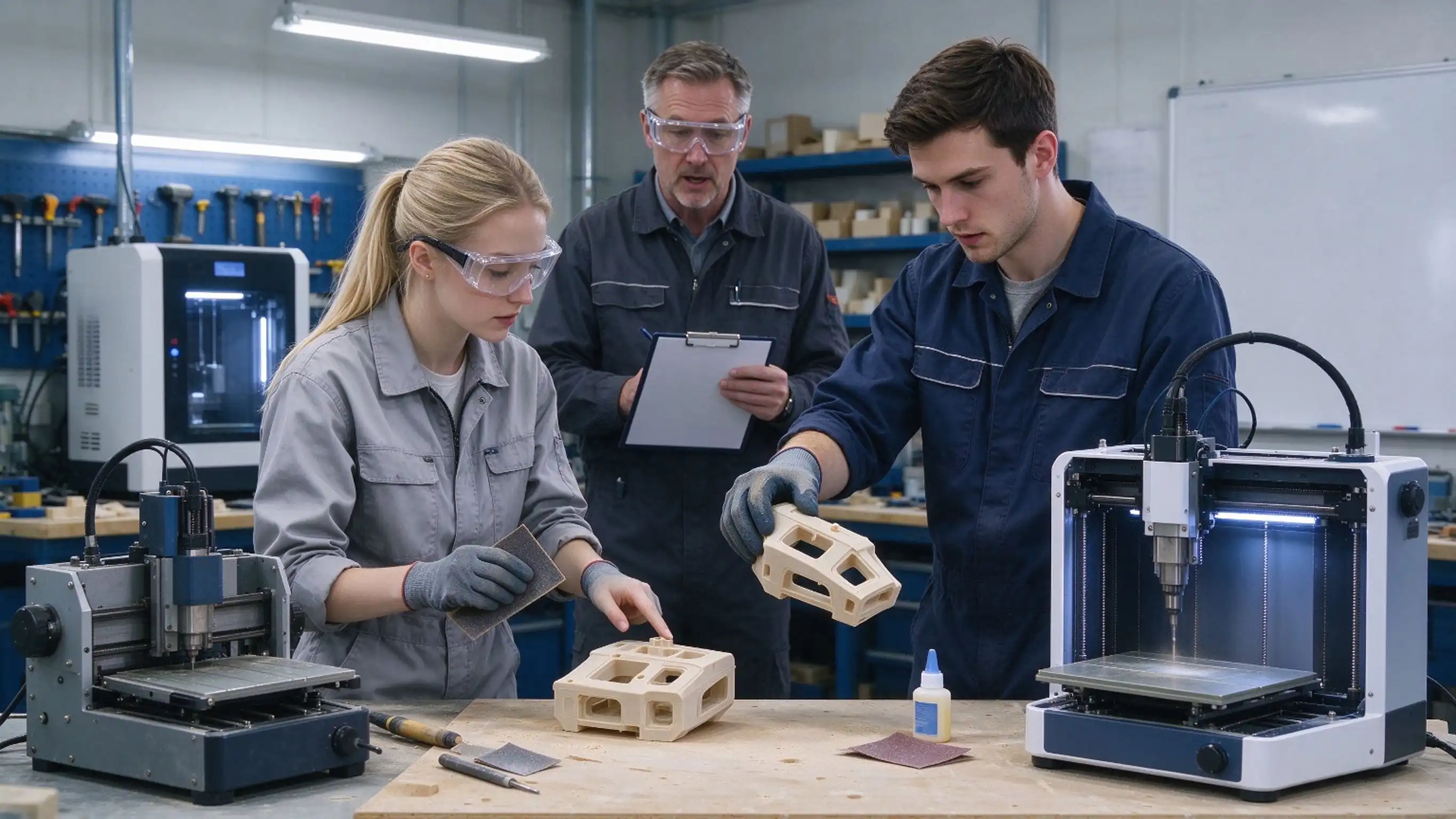
It's still very important to be able to make models by hand, even if you have tools. Training programs that teach CNC cutting, 3D printing, and clay modelling can help students turn digital ideas into real samples. This helps with fixing problems by feeling and thinking about space. These skills come in handy when you need to look at samples from suppliers or explain the design to partners in other countries that make things.
Soft skills are also very important. Some examples are managing comments iteratively, thinking about design with users in mind, and communicating across departments. It helps buying teams when designers can explain technical trade-offs, material choices, and how drawings can be changed to fit the supply chain. A lot of companies use certification programs to check how ready job applicants are and how well their training is. These programs can work with China's 1+X vocational credential system or be recognised by foreign design councils.
These are the main skills that good training programs should focus on developing:
- Product engineering drawing: Designers can make accurate technical documents for manufacturing and quality control when they know how to use mechanical drafting standards, projection rules, view representation, and dimensioning.
- Model-making proficiency: Working with clay models, making prototypes, and 3D printing closes the gap between idea and output by enhancing spatial awareness and tactile design instincts.
- Design engineering application: Design engineering uses knowledge of how products are put together, how they are made, and how to choose the right materials to make sure that design ideas are practical, affordable, and in line with what suppliers can do.
- Systematic design methods: Learning how to do market research, user research, concept evaluation, and design refinement helps you think more clearly and cuts down on the number of times you have to make changes.
- Digital design tools: Knowing how to use 2D drawing programs and 3D modeling programs helps with visualization, rendering, and talking to stakeholders.
These skills don't work alone; together, they make up a set of skills that cover the whole process of making a product. If procurement professionals pay for training from companies that stress this all-around approach, they can expect designers who make important contributions to quality control, innovation projects, and supplier evaluations.
How Industrial Design Training Aligns With Procurement and Supply Chain Goals
Effective industrial design training has a direct effect on buying results by lowering prototyping mistakes, lowering the need for expensive repairs, and improving teamwork between suppliers. When designers know about the limitations of making and the qualities of materials, they can choose parts that are compatible with what suppliers can do. This cuts down on lead times and the difficulty of negotiations. The Design Management Institute released a report in 2023 that said design-led companies always do better than industry standards when it comes to product innovation and supply chain efficiency.
To find a reliable training service, you should carefully consider the buildings, the depth of the program, and the knowledge of the teachers. Look for schools that offer both tough studies and classes taught by experts in the field. In this way, students will learn both in a classroom setting and through working on real projects. Some companies that give students the hands-on training they need to get ready for work are those that offer access to engineering drawing rooms, model-making classes, CAD labs, and material libraries.
The return on investment of training is even higher when skilled designers are involved in buying things like checking the quality of samples, auditing suppliers, and auditing suppliers. If a designer knows a bit about engineering, they can spot early signs of possible problems during production, use 3D scans to make sure the measurements are correct, and check that the surface finish meets the standards. This direct involvement cuts down on errors and makes relationships with providers better by making sure everyone knows the same technical language.
There are case studies that show how useful this alignment is. A company in Europe that makes appliances worked with a trade school to make a one-of-a-kind training program based on the concepts of DFM and CMF (Colour, Material, and Finish). The company said that prototype changes had dropped by 25% in 18 months and that junior designers were being added to cross-functional product teams more quickly. These results show that training has real practical effects besides making people smarter.
Industrial Design Trends and Future Directions Impacting B2B Procurement in 2026
For buying industrial design workers who value innovation and sustainability, keeping up with new trends is a must. The way goods are thought up, tested, and sold is changing thanks to eco-friendly materials, AI-driven generative design, and digital twin models. McKinsey & Company (2024) says that companies that use digital design tools in their workflows get up to 40% faster iteration cycles and much better collaboration with their suppliers.
It's now possible to stand out from the crowd by using eco-friendly materials. Biodegradable plastics, recycled metals, and low-carbon alloys are just a few of the materials that designers can use that won't change how the product works if they know about lifetime assessment and the circular economy. Being aware of these changes makes it easier for procurement teams to pick vendors and makes sure they follow the new rules in global markets.
Generative design tools that use AI let you try out different forms and functions quickly. They come up with a lot of different designs that work best with different manufacturing methods. Design teams can work better with engineering and sourcing teams if they know about these platforms. They can then suggest options that are a good balance between cost, lead time, and technical feasibility. AI and modelling software used in training programs help students get ready for a tech-based future, which makes them useful for buying things and making new ones.
Because of this, the things that are used to pick sellers are changing. Buyers are looking for sellers more and more who have their own design teams, digital testing tools, and experience making products that are good for the environment. Your design team or university partners will be able to stay flexible and competitive as the industry changes quickly if they are trained in these skills.
Case Examples and Practical Tips for Building a Strong Industrial Design Portfolio
When trying to get B2B clients, OEM partners, and wholesalers interested, a well-made resume is very helpful. It should show how well you can solve problems, how good you are with technology, and what real projects you've worked on can do, not just how nice your work looks. When hiring designers or looking at training programs, people in charge of buying things should look for portfolios that have engineering drawings, CAD models, physical prototypes, and records of how the designs were improved over time.
Case studies are a common part of good portfolios because they show reviewers the whole design process, from user research and idea sketches to final prototypes and manufacturing specs. This openness shows that you can think in a structured way and work with real-life problems like limited budgets, limited materials, and following rules. Unfinished projects, a lack of technical documentation, or user-centered research are all red flags that could mean the person isn't fully trained or hasn't had enough professional experience.
Clear communication, iterative feedback loops, and digital collaboration tools are some of the best ways to work together after training. Platforms like shared digital asset libraries, cloud-based CAD systems, and project management tools make it easy for designers, engineers, and buying teams in different parts of the world to work together. Students in training programs that use these tools as part of their work are better prepared for how current product development is spread and cross-functional.
Training is the first step in making a good portfolio. Students who finish from programs that focus on project-based learning, real-world client tasks, and creative workshop settings have portfolios that show they are ready to work as professionals. Hands-on projects should be given more weight than academic homework by schools and training providers to make sure that students learn both technical skills and how to effectively explain the reasoning behind design decisions.
Conclusion
To get ready for a job in industrial design, you need to strategically invest in thorough training that mixes technical knowledge, hands-on experience, and working with people from different departments. The skills and information in this guide, which range from engineering drawing and model-making to digital design and manufacturing, are the building blocks of good design practice. When schools, training centers, and procurement workers put an emphasis on developing all of a person's skills, they will see changes in product quality, supplier collaboration, and new ideas. As trends like eco-friendly materials and AI-powered tools change the field, it's still important to stay up-to-date through ongoing professional development to stay ahead in global markets.
FAQ
1. What is the difference between industrial and mechanical design in procurement contexts?
While mechanical design places an emphasis on technical usefulness, structural stability, and building systems, Industrial design focuses on the user experience, aesthetics, and product interaction. In buying situations, Industrial designers are usually in charge of making products that people will buy, while Mechanical Designers are in charge of making internal parts and systems. CAD, modeling, and DFM techniques are useful to learn in both fields, even though their project goals and outcomes are different.
2. How much does professional design training typically cost?
The cost of training depends a lot on the length of the program, how it is delivered, and the name of the school. Workshops that last only a few days cost between $500 and $3,000. At universities or vocational schools, full certificate programs can cost between $10,000 and $50,000 per year. Custom corporate training programs usually cost between $20,000 and $120,000, but this depends on what the program covers and how many people are in it. When figuring out ROI, procurement teams should look at things like lower development costs, shorter time-to-market, and better teamwork between suppliers.
3. Which certifications are most valued by leading design firms?
There is a lot of weight behind ISO standards-aligned credentials, national professional systems (like China's 1+X credentials), and platform-specific credentials (like SolidWorks Certified Professional). Candidates with international recognition from groups like the industrial designers Society of America (IDSA) or design competition placements (Red Dot, iF Design) are also more likely to be hired. Certifications that show both professional skill and project knowledge in the real world should be given the most weight by procurement managers.
Partner With E.C.R Academy for Comprehensive Industrial Design Training Solutions
Finding the right teaching industrial design partner is the first step to becoming a world-class designer. E.C.R Academy offers project-based classes that teach engineering drawing, model-making, digital design, and manufacturing. These classes prepare students to make an immediate impact in B2B product development settings. Our staff includes both creative professionals from the business world and academic experts, so the classes are relevant and useful. Your team gets hands-on experience that directly leads to successful collaboration between procurement and suppliers when they have access to CAD labs, model-making workshops, and material libraries. We offer flexible partnership models that can be adjusted to your needs, whether you're a school, a manufacturing company, or a design service provider looking for white-label training options or custom program development. Get in touch with us at ecr2008@enteredu.com or visit enteredu.com to learn more about how our skills can help you improve your design skills and supply chain performance.
References
1. Industrial Designers Society of America. (2023). The Value of Design in Product Development.
2. Design Management Institute. (2023). Design-Led Organizations and Supply Chain Performance.
3. McKinsey & Company. (2024). Digital Design Tools and Product Development Efficiency.
4. American Society of Mechanical Engineers. (2023). Engineering Drawing Standards and Best Practices.
5. International Organization for Standardization. (2024). ISO 2768: General Tolerances for Linear and Angular Dimensions.
6. National Institute of Standards and Technology. (2023). Additive Manufacturing and Prototyping Guidelines.


_1781601799781.webp)