How to Master Additive Manufacturing Equipment Operations & Maintenance
Mastering Additive Manufacturing Equipment Operations & Maintenance requires a structured approach combining technical knowledge, hands-on experience, and systematic preventive care protocols. This competency extends beyond operating 3D printing systems to encompass the full lifecycle management of FDM, SLA, and SLS equipment—from pre-print inspection and parameter optimization to post-processing quality control and predictive troubleshooting. Industry-leading organizations now recognize that effective equipment operations paired with proactive maintenance strategies directly impact production uptime, part repeatability, and total cost of ownership in advanced manufacturing environments.
The growing complexity of industrial additive manufacturing has created an urgent skills gap. Manufacturing decision-makers face mounting pressure to reduce unplanned downtime while ensuring their teams possess the capabilities to manage sophisticated 3D printing workflows. Whether you're a technical director at a mid-sized aerospace component supplier, a training coordinator at a vocational institution preparing students for Industry 4.0 careers, or a plant manager seeking to optimize your existing 3D printing infrastructure, understanding the fundamentals of equipment operations and maintenance forms the foundation for sustainable production success.
Understanding the Core Challenges in Additive Manufacturing Equipment Operations
Using additive manufacturing systems has its own problems that are very different from using traditional subtractive cutting. Material jams in filament-based systems are common problems that equipment operators have to deal with. Other problems include calibration drift that affects the accuracy of measurements over long production runs and software compatibility issues when slicing programs are used with older manufacturing execution systems. A study published in the International Journal of Advanced Manufacturing Technology in 2021 says that about 34% of all production delays in additive manufacturing facilities are caused by broken equipment (Gibson et al., 2021).
Identifying Common Operational Failures
One of the most common problems in operations is mistakes made when moving or dealing materials. When filament is stored incorrectly in FDM systems, it breaks down due to moisture, which causes problems with layer bonding and surface flaws. SLA equipment has its own problems, like uncured resin contamination and optical path obstructions that can stop production in the middle of a build. SLS technology makes it harder to handle powder because the density and mechanical qualities of parts can be affected by bad screening or recycling ratios.
As mechanical parts wear down, calibration shift happens slowly over time. Over hundreds of build cycles, the setting of the build platform moves by a few micrometers. This causes problems with the first layer bonding that operators often mistake for problems with the material. Laser-based systems need to check the beam alignment on a regular basis because thermal cycling and vibration can move optical parts too far out of tolerance.

Environmental and Human Factors
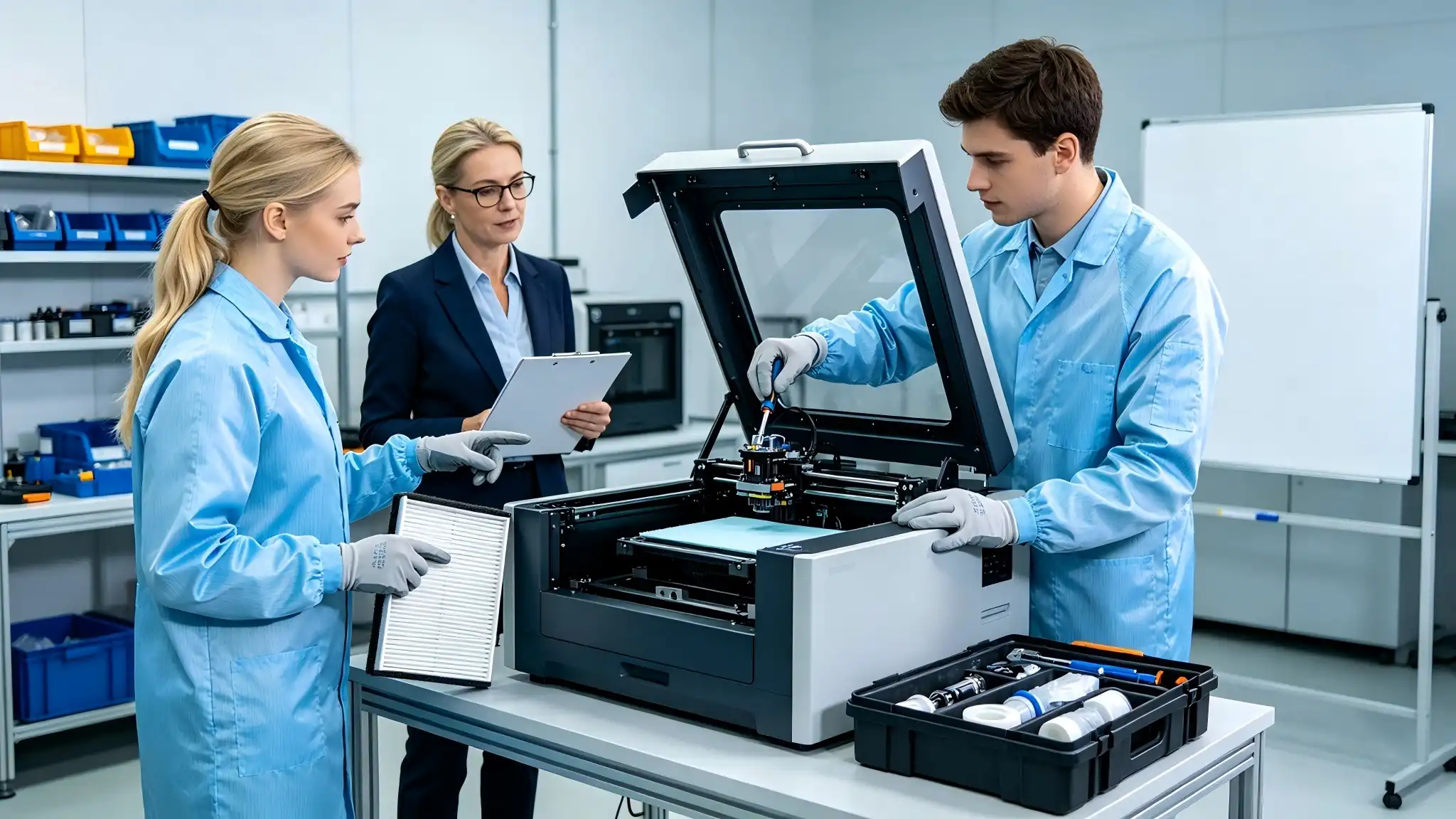
Changes in temperature and humidity have a bigger effect on process stability than most operators realize. A climate-controlled setting keeps things the same, but many places forget to include this requirement when they specify equipment. Human factors also play a role. For example, operators who haven't been properly trained may choose the wrong parameters, do not do enough inspections before the build, or take too long to respond to warning lights during active builds.
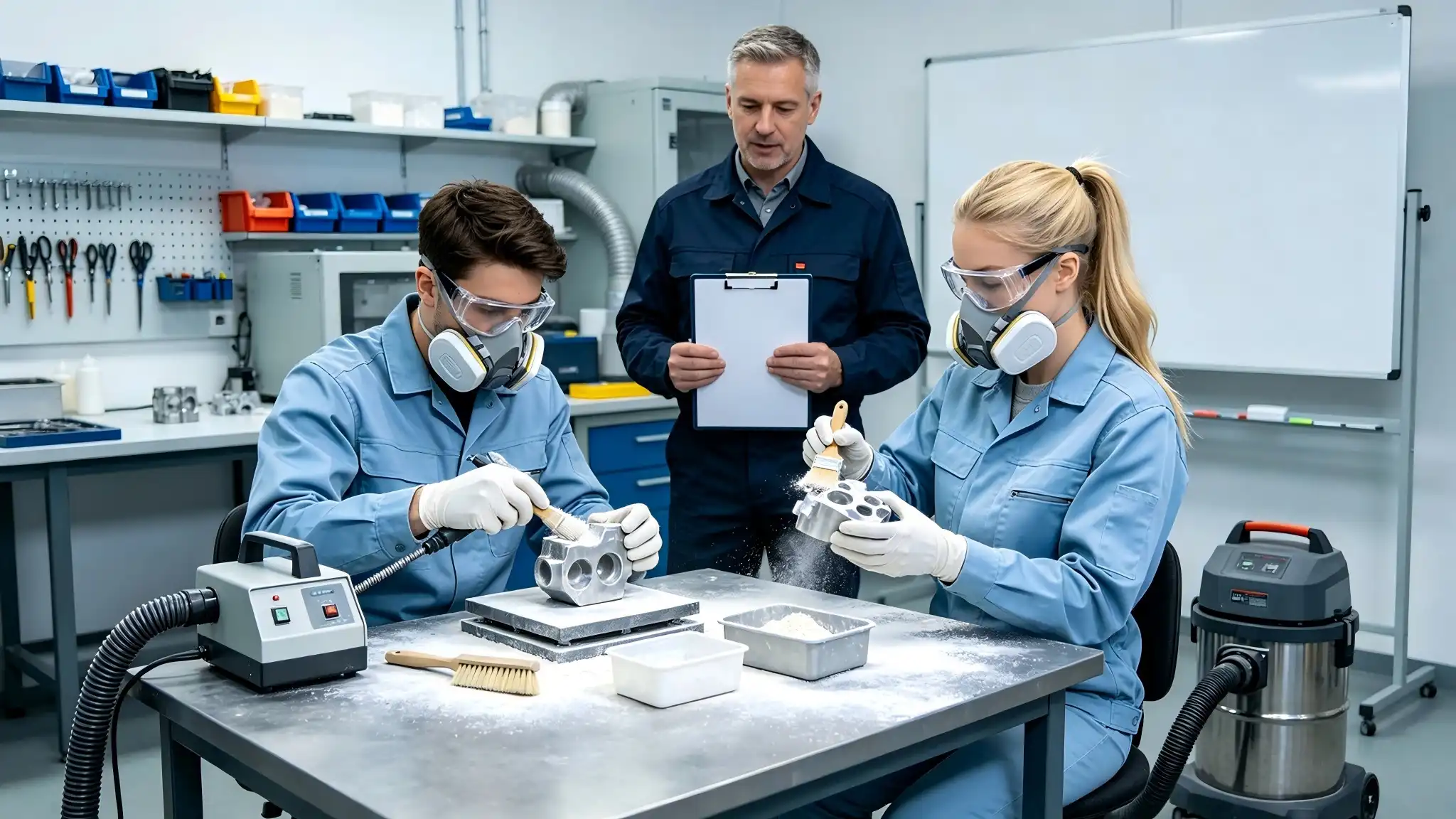
Extra care should be taken with safety measures. To avoid inhalation and fire risks, metal powder systems need to be handled in a very specific way. Companies like Renishaw and EOS have created thorough safety training programs that cover things like how to handle powder, how to keep the build room ventilated, and what to do in an emergency. Putting money into approved training programs cuts down on accidents at work and keeps expensive tools from getting damaged by operators.
Step-by-Step Guide to Effective Additive Manufacturing Equipment Maintenance
Preventive maintenance is one of the most important parts of running a reliable 3D printer. A good repair program balances what the maker says with how the facility uses its equipment. This makes a long-term plan that stops problems before they stop production.
Daily and Weekly Maintenance Routines
Every day, maintenance starts before the equipment is turned on. Operators should check the build rooms for leftover material, make sure there is enough material, and make sure that the environmental monitors read within acceptable ranges. For FDM systems, the nozzles need to be cleaned and the printer gear needs to be checked for buildup of dirt. For SLA tools to keep working right, the resin tank's sharpness needs to be checked and the optical window needs to be cleaned. Before each build cycle, SLS systems need to check the condition of the powder bed and rollers.
Schedules for weekly maintenance include protocols for more thorough inspections. Technicians check the tightness of motion systems' belts, grease linear bearings according to the manufacturer's instructions, and make sure that software versions match what is recommended for the latest release. These routine tasks take between 30 and 45 minutes per machine, but they stop failures that cause downtimes of several days and costly part replacements.
Structured Troubleshooting Methodology
Systematic troubleshooting saves time and keeps people from making the wrong diagnosis when problems happen in Additive Manufacturing Equipment Operations & Maintenance. When something mechanical fails, it usually makes strange noises, moves in strange ways, or has damage that can be seen. When software mistakes happen, they leave behind log files that only skilled techs can read to find the root causes. Material problems have specific signs. For example, stringing and oozing are signs of temperature miscalibration, and layer delamination is a sign of adhesion parameter errors.
Troubleshooting that works follows a rational order: recreate the failure situation, separate variables through controlled testing, look at maker literature and user groups, try the most likely solution, and write down the results for future use. This methodical approach builds institutional knowledge that makes it faster to fix things after each incident.
Lifecycle Management and Service Planning
Strategic lifecycle management is part of equipment maintenance, not just reactive repairs. Predictive maintenance methods are possible by keeping records of when parts need to be replaced, how they were calibrated, and how well they are working over time. Sensor-based monitoring systems are used in modern factories to keep an eye on things like vibration patterns, temperature profiles, and the accuracy of motion in real time. This lets maintenance teams know about problems before they stop production.
Manufacturers of tools offer maintenance programs that you can subscribe to. These programs help you plan your budget and guaranty reaction times. Preventive repair visits, priority access to expert help, and handling of software updates are all common parts of these agreements. When procurement pros look at these choices, they should compare the scope of coverage, reaction time promises, and exclusion clauses to make sure they meet operational needs.
Comparing Additive Manufacturing Maintenance Solutions: Choosing the Right Plan and Equipment
Long-term operational success is greatly affected by choices made during procurement regarding upkeep strategies and equipment selection. To get the best total cost of ownership, you need to carefully look at the relationship between the initial capital investment and the ongoing maintenance costs.
Maintenance Approach Options
There are three main types of maintenance models in the additive manufacturing field. When you use self-managed maintenance, your own staff is in charge of everything. This means you have to spend money on training, extra parts, and diagnosis tools. This method gives you the most power and might lower your long-term costs, but it requires technical know-how that smaller businesses might find hard to acquire.
Manufacturer-managed service contracts give maintenance to the companies that sell the equipment, making sure that they use OEM-certified technicians and original replacement parts. Even though these contracts are more expensive than self-managed ones, they get rid of the need for specialized internal knowledge and give you access to the newest diagnosis methods. To balance cost control with technical capability needs, hybrid models combine routine maintenance done by the manufacturer with help from the manufacturer for more complicated repairs.
Equipment Selection Criteria
The choice of equipment has a big effect on how hard and how much it costs to maintain. Industrial machines have features that make maintenance easier, like access panels that don't need tools, systems that can diagnose themselves, and modular parts that can be quickly replaced. Industry benchmarking data (Wohlers, 2022) shows that top makers such as 3D Systems, HP, EOS, and SLM Solutions have made platforms that have uptime rates of more than 95% in well-kept facilities.
When choosing equipment, procurement teams should look at the infrastructure for manufacturer support. How long downtime lasts when problems happen is directly related to how easily accessible local service is, how long it takes to get spare parts, and how quickly technical support can help. It may be tempting to buy equipment with proprietary parts or restricted service networks at a low price, but the long-term operating risks are greater than the initial savings.
Spare Parts and Software Management
Keeping enough spare parts on hand balances the cost of carrying them against the availability they provide. Important wear parts like nozzles, resin tanks, recoater blades, and optical windows need to be available right away because they break down so often and affect production. Just-in-time ordering can be used for less important things as long as source wait times are still acceptable. Genuine OEM parts make sure that the equipment works with other equipment and that the guarantee is honored. On the other hand, aftermarket parts may have quality issues that make the equipment work less well.
Maintenance for software should get the same amount of care as maintenance for hardware. Regular firmware updates fix security holes, make processing algorithms better, and make more materials compatible. In the same way, changes to slicing software improve the quality of parts and make design possibilities bigger. Companies should set up rules for updating software that balance the benefits of getting new features with the stability risks that come with changing versions often.
Optimizing Performance and Uptime in Additive Manufacturing Operations
To get the most out of your tools, you need to keep an eye on its performance and keep working to make it better. This goes beyond basic repair procedures.
Data-Driven Performance Analysis
During each build cycle, modern additive manufacturing systems record a lot of process data, such as temperature patterns, motion paths, and sensor readings, which is essential for Additive Manufacturing Equipment Operations & Maintenance. By looking at this data, you can see performance trends that can help you spot problems before they become failures. Build completion rates, average cycle times, and first-pass yield metrics measure how well operations are running and show where they can be improved.
Statistical process control methods that have been taken from traditional manufacturing work well for additive operations. Tracking the accuracy of dimensions across multiple builds shows patterns of calibration drift, while measuring the surface finish finds problems that might be happening because of the quality of the material or the surroundings. These methods based on data change maintenance from responding to problems to making things better before they happen.
Real-World Success Examples
Companies that make things and use structured maintenance programs say their performance has gotten a lot better. When a medical device company in the Midwest put predictive maintenance tracking on their SLS equipment fleet, unexpected downtime dropped by 67%. An aerospace parts seller got 99.2% of their equipment to work by using a hybrid repair method that mixed daily tasks with visits from the maker every three months.
Investing in training has the most significant effect. A technical college in the Southeast worked with equipment makers to create a full operator certification program that teaches students how to use equipment, do basic maintenance, and fix problems. Employer surveys showed that graduates who started working in manufacturing got to be productive 40% faster than their peers who didn't have any formal training.
Operator Training and Culture Development
Equipment performance depends on operator skills and workplace culture. Comprehensive training combines technical instruction, hands-on equipment practice, simulated faults, and competency assessments. A strong stewardship culture encourages workers to maintain and monitor assets proactively. Regular refresher training, peer knowledge sharing, and incentive programs further reinforce responsible equipment management.
Procurement Guidance for Additive Manufacturing Equipment Maintenance Services and Tools
When procurement workers choose repair services and support tools, they have to make tough choices that will have long-lasting effects on how the business runs. Structured review systems make these decisions easier to understand.
Evaluating Service Providers
Evaluating maintenance providers requires assessing technical expertise, responsiveness, and pricing transparency. Verify qualifications through certifications, relevant case studies, and customer references. Contracts should include response-time guarantees and penalties. Clear service scopes, exclusions, escalation triggers, and sample incident reports help prevent hidden costs and ensure effective communication with operations teams.
Service Package Structures
Bundled service packages simplify maintenance planning and provide predictable costs through preventive maintenance, technical support, covered parts, and software updates. Subscription models improve cash flow by spreading expenses over several years. When comparing packages, companies should standardize service levels and match coverage, response guarantees, downtime tolerance, production needs, and internal technical capabilities.
Contract Negotiation Strategies
Effective maintenance contract negotiation requires balancing pricing, service quality, and equipment longevity. Multi-year or fleet commitments may secure discounts, while single-machine buyers can prioritize faster response times. Service-level agreements should define response, resolution, uptime guarantees, penalties, escalation procedures, spare-parts supply, training, and legal responsibilities.
Conclusion
Organizations that want to compete in the advanced manufacturing sectors need to know how to operate and maintain Additive Manufacturing Equipment Operations & Maintenance. The skills needed go beyond just operating machines; they also include preventative maintenance plans, methodical ways to fix problems, and lifecycle management strategies that make the most of equipment uptime and production quality.
For implementation to go well, money needs to be spent on thorough training for operators, structured upkeep programs, and smart partnerships with service providers who know what the industry needs. When companies put these skills at the top of their list of priorities, they set themselves up to get the productivity gains and competitive benefits that additive manufacturing technologies offer. Getting more technical knowledge, improving the mindset of the company, and using techniques for continuous improvement can turn equipment operations from a cost center into a strategic capability.
FAQ
1.How often should preventive maintenance be performed on additive manufacturing equipment?
How often you need to do maintenance depends on the type of equipment, how much you use it, and what the manufacturer recommends. For all types of tools, the standard is daily checks of the material systems, build rooms, and environment. For setups that don't get a lot of use, weekly maintenance that includes checking the mechanical systems, motion parts, and software changes should be enough. Manufacturers usually suggest full repair every 200 to 500 build hours for settings that are used for a lot of production. Setting up maintenance schedules based on operating hours instead of calendar dates makes sure that the right amount of service is done at the right time based on how the equipment actually wears out.
2.What causes most unplanned downtime in additive manufacturing operations?
Many unplanned stops are caused by problems with materials, changes in calibration, and maintenance that wasn't done when it was supposed to be. FDM systems are affected by improper storage of materials that allow moisture to enter, while SLA systems are affected by resins that are contaminated or broken down. Gradual changes in calibration aren't noticed until there are problems with the dimensions, which means that time-consuming recalibration procedures need to be done. When compared to reactive maintenance methods, organizations that use strict guidelines for handling materials, regular plans for checking calibration, and consistent preventive maintenance processes have much lower rates of unplanned downtime.
3.Why do software updates matter for additive manufacturing equipment?
Updates to software improve speed, make it safer, and make it compatible with more materials, all of which have a direct effect on how well it works. Firmware changes make motion control algorithms work better, which improves the quality of the surface finish and the accuracy of the measurements. Updates to slicing software include advanced support generation strategies that cut down on the amount of material used and the time needed for post-processing. Patches for security prevent networked devices from cyber holes that could let hackers into production or reveal private design data. Setting up controlled update processes that combine access to features with the need for stability makes sure that organizations get continuous growth while lowering the risk of disruption.
Elevate Your Team's Capabilities with Comprehensive Training Solutions
E.C.R Academy offers the best operations and repair training classes for Additive Manufacturing Equipment Operations & Maintenance to manufacturers, schools, and training groups that want to improve their technical skills to a world-class level. Our project-based curriculum covers the whole production process for common FDM, SLA, and SLS technologies. It does this by combining theoretical background with a lot of practice using high-quality professional tools.
What makes our method different? We worked with experts in the additive manufacturing field and experienced college teachers to create training classes that meet international operator standards and real-world job skill requirements. Our all-in-one platform includes full-process operation scenarios, virtual simulation resources, and detailed troubleshooting case libraries that help people learn faster and remember what they've learned. Participants learn how to process data, inspect and fix problems with equipment, do forming operations, post-processing techniques, quality control methods, and follow systematic maintenance protocols.
Our flexible engagement models can be used to meet the needs of a wide range of organizations, whether they are looking for training options to help their employees grow, to set up formal additive manufacturing programs, or to find white-label courseware partnerships. Since 2010, we've successfully taught skills to more than 500,000 people in 28 countries, and more than 300,000 of them have earned accepted certifications. Get in touch with our team at ecr2008@enteredu.com to talk about how our tried-and-true training models can meet your needs. Visit enteredu.com to learn more about all of our services. We don't just teach skills; we also push the limits of innovation and get your company ready for the future of industry.
References
1. Gibson, I., Rosen, D., Stucker, B., & Khorasani, M. (2021). Additive Manufacturing Technologies (3rd ed.). Springer International Publishing.
2. International Organization for Standardization. (2018). ISO/ASTM 52920:2018 – Additive manufacturing – Qualification principles. ISO Standards Catalog.
3. Renishaw plc. (2020). Additive Manufacturing System Maintenance Best Practices. Technical White Paper Series.
4. Wohlers Associates. (2022). Wohlers Report 2022: 3D Printing and Additive Manufacturing Global State of the Industry. Wohlers Associates, Inc.
5. American Society for Testing and Materials. (2019). ASTM F3122-14: Standard Guide for Evaluating Mechanical Properties of Metal Materials Made via Additive Manufacturing Processes. ASTM International.
6. National Institute of Standards and Technology. (2021). Measurement Science Roadmap for Metal-Based Additive Manufacturing. NIST Special Publication 1283.


_1781601799781.webp)