Additive Manufacturing Technology Trends Shaping Modern Factories
Modern factories are undergoing a fundamental shift, and additive manufacturing technology sits at the center of it. By building parts layer-by-layer from digital models, this approach eliminates many constraints that traditional subtractive and formative methods impose. According to the ASTM International standard ISO/ASTM 52900, the process spans seven distinct categories, including Powder Bed Fusion, Directed Energy Deposition, and Binder Jetting. For institutions, enterprises, and training program developers navigating procurement decisions, understanding where this technology is heading is no longer optional — it is a strategic imperative.
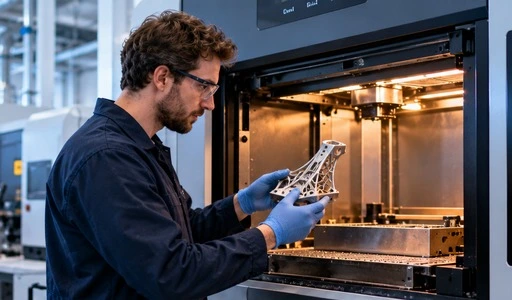
The Evolution of Additive Manufacturing Technology in Modern Factories
From Prototyping Tool to Industrial Workhorse
In the beginning, additive manufacturing technology was mostly used for fast testing, which was useful but not very broad. That view has changed a great deal. For making final parts, today methods like FDM, SLA, SLS, DMLS, and EBM are used in the medical device, aerospace, and automobile industries. One of the most famous examples of what industrial-grade layer-by-layer manufacturing can do when used seriously is GE Aviation's groundbreaking combination of 20 fuel valve parts into a single cobalt-chrome part, which cut weight by 25%.
High-volume production is still mostly done with CNC machining and injection molding, but these methods have their drawbacks, such as long lead times, high machine costs, and limited design freedom. Additive manufacturing technology methods don't need any tools at all, which is why companies that need to make a lot of different shapes or have short production runs are quickly adopting them. According to figures released by Fortune Business Insights, the global additive manufacturing technology market was worth about $18.3 billion in 2023 and will be worth more than $83 billion by 2032.
Current Additive Manufacturing Technology Trends Shaping Factory Operations
AI-Driven Process Control and Smart Factory Integration
The way manufacturers manage and keep an eye on additive manufacturing technology workflows is changing because of AI. Machine learning models use real-time sensor data to find problems like delamination or porosity before they get worse and cost a lot to fix. With this closed-loop quality assurance, the number of scraps goes down, and validation cycles are shortened. When factories use digital twin settings with additive manufacturing technology equipment, they can model full build jobs before committing material. This is especially useful for metal powder bed fusion systems, where consumable costs are high.
Materials Expansion and Hybrid Manufacturing
Standard thermoplastics are no longer the only materials that can be used for layer-based fabrication. These days, engineers work with materials made of titanium alloys, aluminum composites, stainless steel powders, biocompatible polymers, and materials that are reinforced with continuous fibers. This growth directly increases the number of useful industrial uses. At the same time, tools for hybrid production that blend additive manufacturing technology deposition with CNC finishing are becoming more popular. Surface roughness is a problem that people often have with raw additive parts. These systems fix this problem by combining post-machining into a single workflow. This makes both the accuracy of the measurements and the speed of production better.
Sustainability as a Design Constraint
One of the most underrated benefits of additive manufacturing technology in the business world is how well it uses materials. When cutting titanium aerospace parts, 80–90% of the material that is put in can be wasted with traditional machining. Layer-based processes only use what the design calls for, and powder that isn't used is often reused or recycled. As rules and customers put more pressure on companies to leave less of an impact on the environment, the waste-reducing features of additive manufacturing technology processes easily fit with circular economy ideas.
Advantages and Limitations of Additive Manufacturing for B2B Procurement
When purchasing managers look at additive manufacturing technology providers, they find a value offer that is both strong and complex. It's possible to see and measure the main benefits.
Here are the primary factors that make additive manufacturing technology attractive for B2B sourcing decisions:
- Tool-less customization: Not using hard tools gets rid of a big upfront cost barrier, especially for parts with complicated internal shapes like conformal cooling channels in injection molds, which can cut cycle times by up to 30%.
- Compressed lead times: Digital-to-physical production processes speed up research and development by letting design iterations be tested in hours instead of weeks.
- Inventory reduction: Making spare parts only when they are needed cuts down on storage costs and the risk of disruptions in the supply chain.
- Part consolidation: Often, several combined parts can be remade as a single printed structure. This cuts down on the work needed to put them together and the number of places where they could fail.
These benefits give manufacturers in the aerospace, tooling, and medical device sectors a direct edge over their competitors. Still, people who make decisions must also take into account real limitations. Post-processing steps like sanding, polishing, heat treatment, and measurement checking take time and money that may not be reflected in the original price comparisons. Metal additive manufacturing technology systems are expensive to buy and need operators with a lot of special skills. Injection molding and die casting are still the most cost-effective ways to make large quantities of simple parts.
Effective procurement requires evaluating additive manufacturing technology suppliers not only on equipment specifications but on support infrastructure, consumable pricing transparency, and training ecosystem depth.
Comparing Additive Manufacturing with Traditional Techniques for B2B Applications
Choosing the Right Process for the Right Part
It's not always a simple choice between traditional manufacturing and additive manufacturing technology. A clear decision strategy is most helpful for procurement professionals. For prototypes and small runs, additive manufacturing technology processes work better than injection molding because they don't need expensive tools that can cost tens of thousands of dollars each. Layer-based production does things that neither drilling nor milling can do for parts with complicated shapes, like internal channels, lattice structures, and undercuts. However, CNC cutting is still the best way to make parts with tight tolerances that are made in large quantities and have simple shapes. This is especially true when material removal rates and surface finish are very important.
The smartest manufacturing plans see additive manufacturing technology and subtractive methods as working together, not against each other. In aircraft MRO operations and advanced tooling settings, hybrid processes that use both are becoming more common.
How to Successfully Incorporate Additive Manufacturing into Your Supply Chain
Building Internal Capability vs. Outsourcing
When deciding whether to build or buy additive manufacturing technology, output rate, part complexity, and the availability of technical talent are all very important. Before buying expensive equipment, companies that are new to the space often start by outsourcing bureau services to make sure they can be used. Once there is enough demand within the company to justify the investment, setting up an in-house lab needs both equipment and organized training programs that cover the whole workflow, from 3D design and reverse engineering to operating the equipment, post-processing, and quality control.
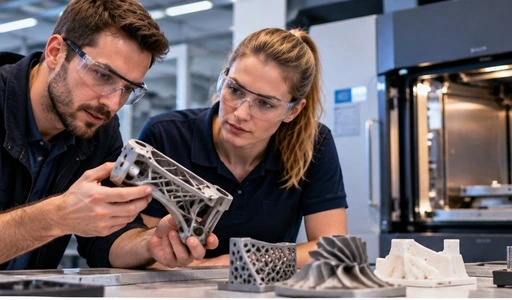
This is exactly the need that training classes are meant to fill. The additive manufacturing technology program at ECR Academy helps students get better at five related skills: designing products in 3D, using reverse design technology, operating and maintaining equipment, inspecting and post-processing, and optimizing structures through process simulation. The curriculum uses both project-based learning and a virtual simulation platform to make sure that students are working with real-world workflows instead of simplified examples. Enterprise engineers and academic teachers teach the faculty together, and every lesson is based on real-world production situations.
Institutions building smart manufacturing training labs and enterprises developing internal additive manufacturing technology talent will find this structured approach far more transferable to industrial settings than generalist courses.
Conclusion
Additive manufacturing technology is no longer a small new idea; it is changing how companies plan, make prototypes, and make final products. Companies that don't have structured additive manufacturing technology capabilities are falling behind as AI-assisted process control, advanced materials, hybrid workflows, and the need to be environmentally friendly all come together. When businesses and organizations spend money to improve their staff, the quality of the training facilities is just as important as the tools itself. The best return on investment comes from programs that cover the whole technical process and are based on real-world applications in the business.
FAQ
Q1: What industries benefit most from layer-based fabrication?
The best returns on additive manufacturing technology are always seen in industries that value part complexity, customizing, and quick iteration, such as aircraft, medical equipment, tooling, and automobiles. These industries need shapes and levels of performance that are hard for traditional machining to meet.
Q2: Can beginners enroll in additive manufacturing technology training?
Yes. Structured programs start with basic subjects like mechanical drawing, engineering materials, and heat treatment. Then they move on to core additive manufacturing technology workflows. Basic knowledge of mechanics and computers is a good place to start, but you don't need to have experience with additive manufacturing technology before.
Q3: What career roles does AM training prepare learners for?
Graduates of complete programs in additive manufacturing technology are ready for jobs as a product designer, process engineer, equipment operator, or post-processing technician in the manufacturing of plastic and metal products, as well as general equipment manufacturing sectors.
Q4: How does post-processing affect part quality in additive manufacturing?
Sanding, polishing, heat treatment, chemical finishing, and measurement checking are some of the post-processing steps that directly check to see if a printed part meets industry standards. One of the main reasons additive manufacturing technology parts fail quality checks is that they skip this step or don't spend enough in it.
Partner With E.C.R Academy for Industrial-Grade Additive Manufacturing Technology Training
Businesses, trade schools, and industry groups can connect with ECR Academy to get a proven additive manufacturing technology program made for real-world use. With 16 years of experience teaching skills in 28 countries and more than 500,000 trained participants, our programs give the workforce the skills they need. Reach our team at ecr2008@enteredu.com or visit enteredu.com to learn more about how our supplier-aligned education for additive manufacturing technology can help your organization's training needs.
References
1. Fortune Business Insights. Additive Manufacturing Market Size, Share & Industry Analysis. 2024.
2. ASTM International. ISO/ASTM 52900: Additive Manufacturing — General Principles — Fundamentals and Vocabulary. 2021.
3. Wohlers Associates. Wohlers Report: 3D Printing and Additive Manufacturing Global State of the Industry. 2023.
4. National Institute of Standards and Technology (NIST). Measurement Science Roadmap for Metal-Based Additive Manufacturing. 2013.
5. Deloitte Insights. Additive Manufacturing: A New Industrial Revolution. 2022.
6. SME (Society of Manufacturing Engineers). Additive Manufacturing Handbook: Product Development for the Defense Industry. 2017.


_1781601799781.webp)