Emergency Rescue Technology
Training Model: Professional emergency rescue equipment and teaching support
Faculty: Dual-qualified teachers, rescue experts, and senior Red Cross trainers
Platform: Realistic first-aid simulation environments
Outcome: Proven training impact with 5,000+ trainees served
Target Partners: Enterprises, educational institutions, industry associations, and other organizations
Emergency Rescue Technology
Course Overview
The Emergency Rescue Technology program is built on the core principle of "Golden Time, Life-Saving Response." It helps learners develop practical skills in on-site casualty assessment, emergency first aid, and safe transport — enabling responders to deliver effective first aid at the critical moment, helping improve response effectiveness and reduce the risk of further injury.
The program integrates theory, hands-on practice, and scenario-based training into a unified learning system, covering the complete emergency response chain from scene assessment through to casualty handover.
Why This Course?
1.Curriculum
A "Hypothesis + Hone + Situation" educating system, combining information building with practical hands-on application.
2. Faculty
Instruction by dual-qualified instructors, crisis protect specialists, and senior Ruddy Cross to begin with help coaches. The group frequently upgrades aptitudes and educating substance to remain adjusted with the most recent residential and worldwide to begin with help standards.
3. Platform
Training offices completely reenact genuine crisis scenes, supporting multi-scenario recreation exercises.
4. Equipment
Complete set of proficient crisis protect hardware for down to earth training.
5. Outcomes
More than 5,000 learners have completed the preparing, supporting wide community-based to begin with help capacity building.
What You'll Be Able to Do?
1. Assess Casualty Conditions
- Evaluate scene safety, identify hazards, and confirm a secure environment
- Rapidly identify consciousness level, breathing status, circulation signs, and bleeding sites
- Apply the ABCDE principle to systematically classify and prioritize casualties
- Make emergency calls and accurately report on-scene conditions to request professional support
2. Perform CPR and Operate AED
- Perform chest compressions with correct hand placement, depth, rate, and compression-to-ventilation ratio
- Open airways and administer mouth-to-mouth or mouth-to-mask rescue breaths
- Operate an Automated External Defibrillator (AED) in coordination with CPR
- Apply adapted CPR techniques for drowning, electrocution, and choking scenarios
3. Apply Hemostasis, Bandaging, and Fracture Immobilization
- Identify arterial, venous, and capillary bleeding characteristics
- Apply direct pressure, pressure dressings, and tourniquets to control bleeding
- Perform circular, spiral, figure-eight, and recurrent bandaging techniques
- Immobilize upper limb, lower limb, and spinal fractures using appropriate methods
4. Perform Casualty Transport and Transfer
- Assess casualty condition and select appropriate transport methods and equipment
- Execute manual carries (assisted walking, back carry, cradle carry, two-person seat carry)
- Operate stretchers including scoop stretchers, spinal boards, and emergency stretchers
- Monitor vital signs during transport, maintain ongoing first aid measures, and manage emergencies en route
What You Will Learn?
|
Training Skills
|
Description
|
|
1. Human Body Structure & Injury Recognition
|
Identify skeletal composition (skull, trunk, limbs), vital organ locations, vascular distribution (arteries, veins, capillaries), and mechanisms of various injury types.
Understand how injury type affects first aid decisions
|
|
2. Casualty Assessment & Triage
|
Apply the ABCDE assessment method (Airway, Breathing, Circulation, Disability, Exposure).
Identify life-threatening conditions such as massive hemorrhage, shock, and airway obstruction.
Practice triage using assessment scales.
|
|
3. Golden Time & Emergency Workflow
|
Understand critical time windows (CPR within 4 minutes, hemorrhage control within 10 minutes).
Follow the standard emergency workflow (Assess–Call–Treat–Transport); master key decision points and time management.
|
|
4. Cardiopulmonary Resuscitation (CPR)
|
Perform standard CPR for adults, children, and infants — including chest compressions (depth ≥5 cm, rate 100–120/min), rescue breaths (30:2 ratio), and the key elements of high-quality CPR.
|
|
5. Automated External Defibrillator (AED)
|
Understand AED operating principles.
Execute the four-step procedure (Power On–Attach Pads–Plug In–Deliver Shock); integrate AED use with CPR cycles.
|
|
6. Hemostasis Techniques
|
Compare bleeding types and associated risks; apply direct pressure, pressure dressings, and tourniquets following proper indications and contraindications (e.g., avoid tourniquets on forearm and lower leg).
|
|
7. Wound Bandaging Techniques
|
Use triangular bandages and roller bandages.
Apply bandaging techniques for head, limb, chest, and abdominal wounds; manage embedded object wounds.
|
|
8. Fracture Immobilization
|
Recognize fracture signs (deformity, abnormal movement, crepitus); immobilize upper limb (forearm, upper arm), lower limb (thigh, lower leg), and pelvic fractures; apply spinal injury immobilization and transport protocols.
|
|
9. Casualty Transport & Transfer
|
Use various transport equipment.
Perform manual carries with proper assessment and technique.
Execute standardized spinal injury transport procedures.
|
|
10. Common Emergency First Aid
|
Manage heat stroke (cooling, fluid replacement), drowning (clear airway, CPR), electrocution (disconnect power, CPR), burns (cool, remove clothing, cover), poisoning response, including exposure assessment, emergency calling, airway protection, and coordination with professional medical treatment, and fracture immobilization
|
|
11. Special Situation First Aid
|
Manage choking (Heimlich maneuver), shock (positioning, fluid replacement, warmth), and altered consciousness (assessment, monitoring, airway protection)
|
|
12. First Aid Equipment Operation
|
Operate AEDs, oxygen masks, cervical collars, splints, and vacuum mattresses.
Understand first aid kit configuration standards and common medication usage guidelines.
|
|
13. First Aid Psychology & Communication
|
Apply psychological support techniques for casualties and families; communicate effectively with local emergency dispatch services and hospitals.
Understand first aid ethics, basic legal protections, and responder responsibilities
|
|
14. Scenario Simulation & Comprehensive Drills
|
Perform integrated first aid exercises in simulated fire scenes, traffic accidents, and collapse incidents.
Develop team coordination, on-scene command, and multi-skill integration capabilities.
|
Learning Environment
Progressed CPR Test systems — Full-body cleverly manikins with real-time input on chest compression profundity, protect breath exactness, and generally CPR quality. Bolsters grown-up, child, and newborn child preparing modes.
AED Preparing Gadgets — Recreated AED units with programmable cardiac beat scenarios for rehashed procedural training.
Multi-Function Injury Manikins — Mimic different injury sorts (scraped spots, slashes, breaks, burns) for practicing hemorrhage control, dressing, and immobilization.
Hemostasis & Bounding Preparing Units — Incorporate roller gauzes, triangular gauzes, tourniquets, and hemostatic clamps for different strategy practice.
Immobilization & Transport Preparing Units — Incorporate cervical collars, props, spinal sheets, and stretchers for break immobilization and casualty transport training.
Virtual Recreation Framework — Advanced scenario-based preparing stage for supplementary aptitude fortification.
Company Strength
At ECR Academy, our Emergency Rescue Technology training programs are built on proven expertise you can trust. Here's what sets us apart:
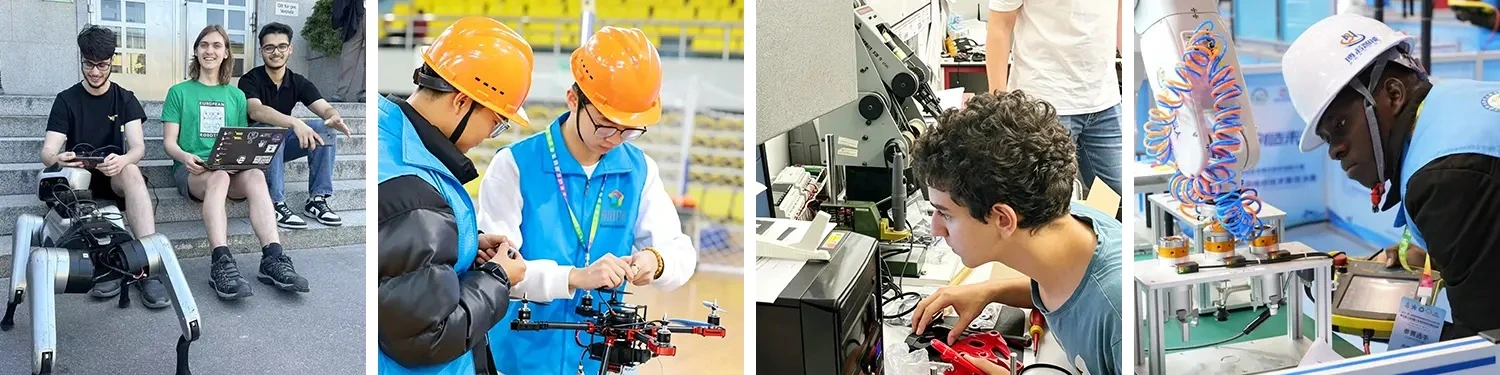
- We've delivered professional training to nearly 500,000 participants across China and 28 countries since 2010, with over 300,000 earning recognized skills certifications
- Our product curriculum combines theory, hands-on practice, and scenario-based response training using professional rescue equipment
- You'll learn from dual-qualified instructors, rescue experts, and senior Red Cross trainers supported by our network of 3,300+ industry specialists
- We've organized over 150 skills competitions, helping 30,000+ learners sharpen their technical capabilities through real-world challenges
- Our training uses realistic first-aid simulation environments and draws on 60,000+ educational resources including standards, case studies, and assessment systems
- With 16 years in vocational training and partnerships with 500+ enterprises, we bridge education and industry to deliver future-focused emergency response solutions

FAQ
Q: Are there any prerequisites for enrolling?
A: No strict prerequisites are required. Anybody matured 16 or over, in great wellbeing, with essential learning and hands-on capacity can enlist. The program is particularly prescribed for: undertaking security officers and extraordinary operations work force, community laborers and volunteers, school instructors, transport drivers, and sports coaches, open setting staff (airplane terminals, stations, shopping shopping centers), and any part of the common open interested in learning to begin with help skills.
Q: How long is the training?
A: Preparing term changes by course level:
- Basic First Responder: 16 hours (2 days) — focusing on CPR and fundamental trauma first aid
- Intermediate First Responder: 24 hours (3 days) — covering all four core skill modules
- Comprehensive First Aid Skills: 32 hours (4 days) — including scenario simulations and integrated drills
Q: How long is CPR certification substantial? Is refresher preparing required?
A: CPR and to begin with help certification is regularly substantial for 2–3 a long time, depending on the issuing organization and nearby prerequisites. To keep up ability capability, it is suggested to: go to customary refresher courses to upgrade information and abilities, remain educated of changes to the most recent to begin with help rules and measures, utilize online stages for aptitude survey and fortification, and take part in to begin with help volunteer administrations to hone abilities in genuine circumstances.

Contact Us
Ready to elevate your emergency rescue capabilities with Emergency Rescue Technology? Reach out to our team at ecr2008@enteredu.com to discuss customized training solutions for your organization.








_1781601799781.webp)