Environmental Engineering Technology
Standards: Aligned with environmental industry standards and skill requirements
Faculty: Joint instruction by enterprise experts and college teachers
Platform: Virtual simulation integrated with real-scenario training
Outcome: Job-ready skills for environmental governance positions
Target Partners: Enterprises, educational institutions, industry associations, and other organizations
Environmental Engineering Technology
Course Overview
The Environmental Engineering Technology program focuses on building end-to-end skills across the environmental treatment workflow—from chemical inspection and equipment maintenance to environmental monitoring. Centered on a "Chemical Testing + Equipment Maintenance + Environmental Monitoring" competency framework, the program develops practitioners capable of performing laboratory analysis, installing and maintaining environmental protection equipment, and conducting environmental monitoring and treatment operations.
Based on modern environmental treatment training facilities and simulation systems, the program integrates theory with practice through virtual simulation and case-based learning, preparing professionals to support the green and intelligent transformation of the environmental treatment industry.
Why This Course?
1.Curriculum
A "Chemical Testing + Equipment Maintenance + Environmental Monitoring" integrated framework covering the complete skill chain from sample analysis through equipment commissioning to environmental monitoring and reporting.
2. Standards
Aligned with environmental industry technical standards and vocational skill level requirements, the course trains skilled operators who can work in line with industry norms and regulatory requirements.
3. Faculty
Joint instruction by enterprise technical specialists and academic teachers, combining field expertise with structured teaching.
4. Platform
Deep integration of virtual simulation and real-scenario practical training.
5. Outcomes
Aligned with the practical needs of environmental treatment enterprises, the course helps learners build job-relevant capabilities for key technical positions.
What You'll Be Able to Do?
1. Perform Chemical Testing and Analysis
- Apply fundamental analytical chemistry knowledge, methods, and laboratory techniques
- Prepare standard solutions and chemical reagents; conduct visual inspection and physicochemical property testing
- Perform four major titration methods (acid-base, complexometric, redox, and precipitation titration) and gravimetric analysis
- Record, calculate, and evaluate test data; compile inspection reports
2. Install and Commission Environmental Protection Equipment
- Evaluate material properties for environmental equipment and select appropriate materials based on application requirements
- Perform machining, installation, lubrication, corrosion protection, and derusting operations with green manufacturing practices
- Install, test, and maintain piping systems and valves
- Select, install, commission, and troubleshoot common environmental equipment, such as pumps and fans
3. Maintain and Repair Environmental Protection Equipment
- Identify working principles and structural characteristics of common environmental equipment
- Conduct routine inspections, scheduled maintenance, and fault diagnosis
- Install, commission, and maintain waste gas treatment and solid waste treatment equipment
- Develop and execute preventive maintenance plans
4. Conduct Environmental Monitoring
- Monitor routine indicators for air, water, soil, and noise pollution
- Operate environmental monitoring instruments for sample collection, preservation, and preparation
- Process monitoring data and compile environmental monitoring reports
- Operate digital monitoring systems and understand emerging intelligent monitoring technologies
What You Will Learn?
|
Training Skills
|
Description
|
|
1. Chemical Analysis Techniques
|
Perform acid-base titration, complexometric titration, redox titration, and precipitation titration.
master titration principles, operational procedures, and data processing for precise chemical analysis.
|
|
2. Instrumental Analysis Techniques
|
Operate spectrophotometers and pH meters for sample component determination.
understand the principles and applications of advanced instruments, including atomic absorption spectrometers and gas chromatographs.
|
|
3. Environmental Equipment Recognition & Selection
|
Classify wastewater treatment, waste gas treatment, and solid waste treatment equipment by structure and working principle.
Perform equipment sizing calculations; select appropriate equipment based on treatment requirements.
|
|
4. Environmental Equipment Installation
|
Install, commission, and accept piping, valves, pumps, and fans; develop installation procedures, and perform on-site installation operations incorporating green manufacturing principles
|
|
5. Environmental Equipment Maintenance
|
Perform routine inspections, scheduled maintenance, fault diagnosis, and repair.
develop and implement preventive maintenance plans to ensure stable equipment operation.
|
|
6. Water Pollution Treatment Technology
|
Operate and manage domestic sewage and industrial wastewater treatment systems.
Regulate process parameters; handle abnormal operating conditions across the full wastewater treatment workflow.
|
|
7. Environmental Monitoring Technology
|
Collect, prepare, and analyze samples for air, water, soil, and noise pollution indicators.
Process data and compile environmental monitoring reports.
|
|
8. Digital Monitoring Technology
|
Operate intelligent monitoring systems through simulation.
acquire skills in online monitoring instrument operation, data acquisition and transmission, and IoT monitoring terminal operation and maintenance.
|
Learning Environment
Basic Chemistry Lab — For foundational chemical analysis skill training, including reagent preparation and conventional analytical methods.
Electrical & Electronic Training Lab — For understanding electrical control systems of environmental equipment and developing basic electrical operation skills.
Microbiology Lab — For cultivating and observing water treatment microorganisms and learning biological wastewater treatment processes.
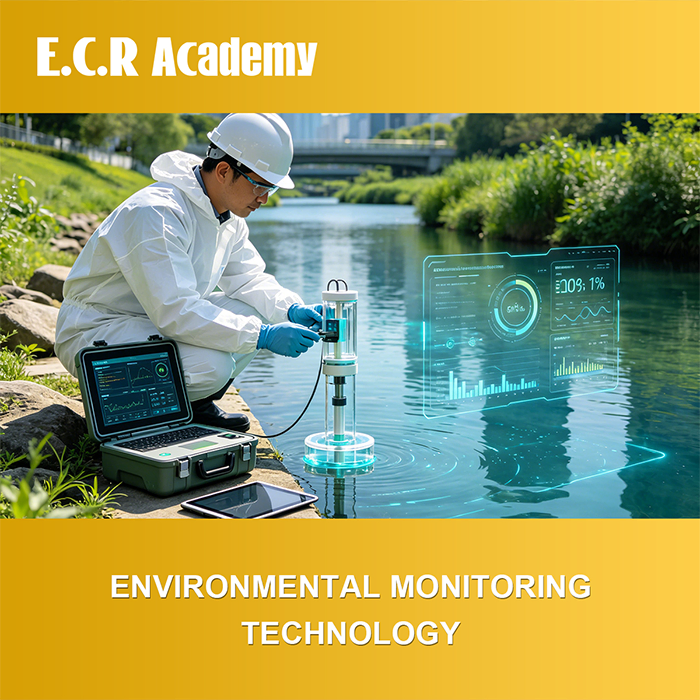
Environmental Monitoring Lab — For detecting and analyzing routine water quality indicators, atmospheric pollutants, and noise levels.
Environmental Engineering Simulation Lab — For virtual training on equipment structure recognition, process flow simulation, equipment operation, and fault handling — delivering an integrated virtual-plus-real learning experience.
Company Strength
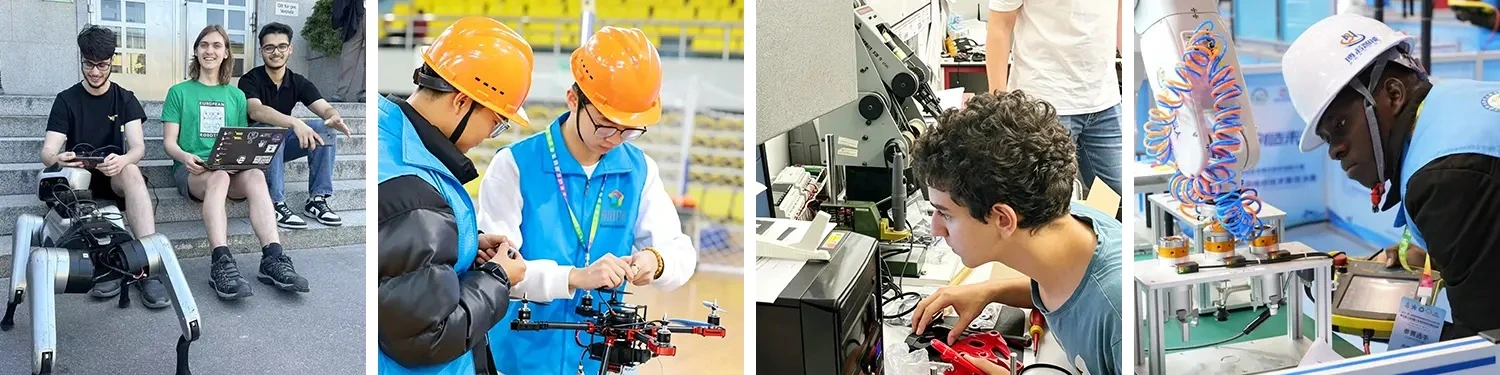
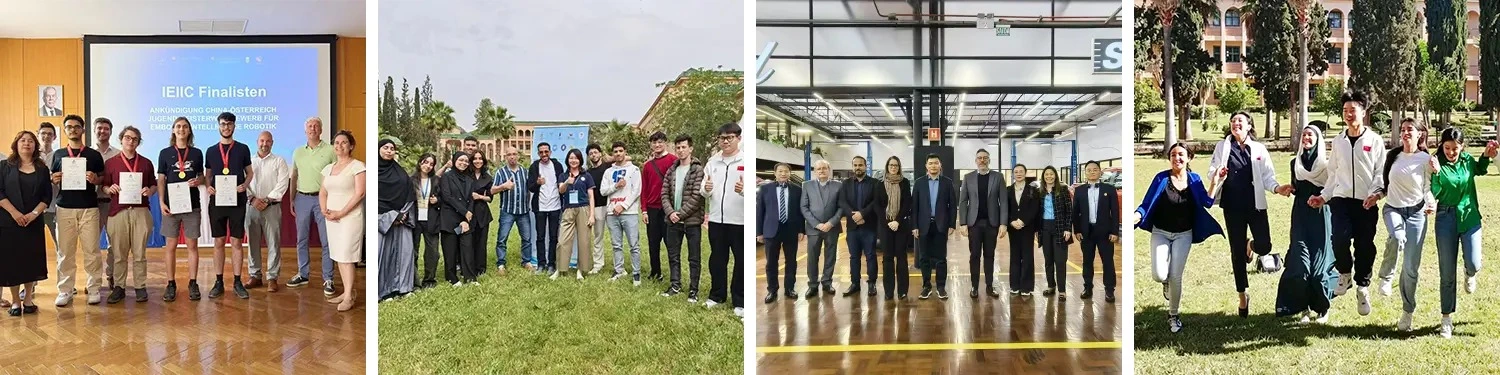
At ECR Academy, our Environmental Engineering Technology program is built on proven expertise and global reach. We've trained nearly 500,000 participants across 29 countries since 2010, with over 300,000 earning recognized certifications. Our program leverages:
- A network of more than 3,300 industry and academic experts specialized in environmental sectors
- Partnerships with over 500 enterprises providing real-world insights into pollution control and resource management
- 16 years of experience delivering industry-aligned vocational training
- Over 60,000 educational resources including skill standards, case studies, and assessment systems tailored to environmental monitoring and chemical testing
- Successfully organized 150+ skills competitions, preparing 30,000+ learners for careers in environmental governance
You'll benefit from our industry-academia collaboration model, where enterprise experts and college teachers jointly deliver curriculum covering chemical testing, equipment maintenance, and environmental monitoring—all aligned with current environmental industry standards and regulatory requirements.
FAQ
Q: Can I take this course with no prior background?
A: Yes. The program is structured progressively, starting with foundational topics such as analytical chemistry and advancing to equipment operation and environmental monitoring. Even without prior experience in environmental treatment, learners can develop core skills in chemical testing, equipment installation, and maintenance, and environmental monitoring through systematic study.
Q: What career paths does this program prepare me for?
A: Learners can develop skills relevant to roles such as: Environmental Equipment Installation and Commissioning Technician, Environmental Equipment Maintenance Technician, Water and Air Environmental Monitoring Technician, Chemical Testing Analyst, Environmental Facility Operation and Maintenance Technician, Third-Party Testing Agency Inspector, and Industrial Enterprise Environmental Compliance Officer.
Q: What emerging technologies are covered in the program?
A: The program integrates digital monitoring technology, intelligent environmental equipment operation and maintenance, and environmental big data applications. Topics include online monitoring system operation, IoT sensor technology, PLC-based environmental equipment control, and simulation modeling—preparing learners for the smart environmental protection industry. Green manufacturing and green operation concepts are also embedded throughout the curriculum.

Contact Us
Ready to develop future-ready skills in Environmental Engineering Technology? Partner with ECR Academy today. Reach us at ecr2008@enteredu.com to explore training solutions tailored for your organization.


 Product Design & Development.webp)

_1781601799781.webp)