New Energy Vehicle Design & Control Technology
Training Model: Virtual–physical training with NEV three-electric system testing and parts design labs
Faculty: Automotive engineers and college teachers
Certificate: NEV engineer, CAD mechanical design, and EDA electronic design certifications
Employment: Skills for NEV design, testing, improvement, and R&D roles
Target Partners: Enterprises, educational institutions, industry associations, and other organizations
New Energy Vehicle Design & Control Technology
Course Overview
This course is designed against the background of high-quality development in the new energy vehicle industry and low-carbon development goals. It focuses on core capabilities in new energy vehicle design and control technology for New Energy Vehicle Design & Control Technology. Built around an integrated curriculum of mechanical design, electrical control, and system integration, the course combines real project tasks with industry standards to help learners develop key skills in overall vehicle design, electronic and electrical system design, drive system design, charging system design, and control system development.
The program covers the full technical workflow from new energy vehicle design to control technology. Training extends from CAD structural design, EDA circuit design, and digital simulation analysis to control system programming and debugging, forming a complete technical capability chain. Through progressive, practice-oriented learning, the course develops technical personnel with capabilities in NEV and component design, electronic control system development, motor drive applications, power battery management, and the three-electric system (core EV systems, including the power battery, drive motor, and electronic control system) integration.
Why This Course?
1. Curriculum
Focuses on the integrated core technologies of new energy vehicle mechanical design, electrical control, and system integration, combining CAD/EDA software applications with digital simulation.
2. Practical Training
Supported by advanced platforms such as the NEV three-electric system performance testing laboratory and the component design training laboratory, enabling virtual-physical practical training.
3. Faculty
Delivered jointly by enterprise automotive engineers and professional college instructors, providing guidance that combines theoretical foundations with industry practice.
4. Certificates
Supports preparation for professional certificates related to new energy vehicle engineering, CAD mechanical design, and EDA electronic design.
5. Career Pathways
Aligned with the needs of the new energy vehicle manufacturing industry, supporting roles in NEV and component design improvement, prototype testing, and technical R&D.
What You Will Be Able to Do?
This program is aligned with full-position skill requirements in new energy vehicle design and control technology, covering core capabilities from basic skills to integrated application.
New Energy Vehicle Mechanical System Design
- Understand basic theories and methods for overall NEV design.
- Understand the structure, operating principles, and design methods of vehicle transmission systems, including reducers, hybrid transmissions, drive shafts, and drive axles.
- Understand the structure, operating principles, and design methods of suspension, steering, and braking systems.
- Apply vehicle overall layout and ergonomics design methods.
- Use CAD software to complete structural design of vehicle assemblies or components.
- Use digital simulation software to complete simulation analysis for vehicle assemblies or components.
New Energy Vehicle Electrical Control System Design
- Understand basic theories and methods for electronic circuit design.
- Apply specifications and standards for automotive electronic and electrical system design.
- Design controller schematics and PCB layouts.
- Apply electrical control system design and wiring techniques.
- Use EDA software to draw controller schematics and PCB layouts.
- Design electrical schematics and circuit layouts for vehicle systems.
- Prepare electrical testing and maintenance process plans for vehicle systems.
New Energy Vehicle Powertrain Design and Control
- Understand motor principles and structures, including DC motors, AC induction motors, permanent magnet synchronous motors, and switched reluctance motors.
- Apply motor vector control and drive technologies.
- Understand the power battery structure, operating principles, and module grouping technologies.
- Apply high-voltage distribution system design and safety requirements.
- Apply energy monitoring and battery management technologies, including BMS.
- Design and optimize motor controllers.
- Design and apply power battery controllers.
- Complete drive optimization and power battery system integration tasks.
New Energy Vehicle Charging System Design and Control
- Understand the basic principles of power conversion technology.
- Understand the structure and operating principles of the On-Board Charger (OBC).
- Understand design technologies for DC charging piles and AC charging piles.
- Apply charging control strategies and communication protocols.
- Design charging control circuits.
- Complete product assembly testing and maintenance process planning for charging systems.
- Develop and apply AC/DC charging pile systems.
What You Will Learn?
|
Training Skills
|
Content Description
|
|
1. Overall Vehicle Design
|
Centered on overall NEV design, learners complete practical training in overall vehicle concept design, body structure design, chassis layout, and ergonomics design.
The module focuses on vehicle design standards and methods, overall vehicle layout design, body structure design principles, and fundamentals of crash safety design, developing capabilities in overall NEV design.
|
|
2. Electronic and Electrical System Design
|
Centered on NEV electronic and electrical system design, learners complete full-process training in E/E architecture design, wiring harness design, sensor selection, and whole-vehicle electrical system integration.
The module focuses on automotive E/E architecture, wiring harness design methods and standards, sensor principles and applications, and vehicle electrical system matching design, developing capabilities in E/E system design.
|
|
3. Reducer and Transmission System Design
|
Centered on reducer and transmission system design, learners complete full-process training in reducer structure design, drive shaft design, and drive axle design.
The module focuses on reducer gear design and strength verification, drive shaft structure design, drive axle type selection and structure design, and transmission system matching calculations, developing capabilities in transmission system design.
|
|
4. Suspension and Chassis System Design
|
Centered on suspension and chassis system design, learners complete full-process training in suspension system design, steering system design, and braking system design.
The module focuses on suspension type and structure design, steering mechanism design and motion analysis, braking system design and calculation, and chassis system integration matching, developing capabilities in chassis system design.
|
|
5. EDA Application and PCB Design
|
Centered on EDA software applications and PCB design, learners complete full-process training in controller schematic drawing, PCB layout and routing, design rule checking, and prototype preparation.
The module focuses on EDA software operation and design standards, schematic drawing and component selection, PCB layout and routing, rule configuration, design file output, and board fabrication preparation, developing capabilities in electronic control system design.
|
|
6. Charging System Design and Application
|
Centered on NEV charging system design and application, learners complete full-process training in On-Board Charger design, charging pile design, charging control strategy, and charging system testing.
The module focuses on power conversion technology, OBC topology and design, DC charging pile structure and control, AC charging pile design, charging protocols and communication, and charging system safety requirements, developing capabilities in charging system development.
|
|
7. Digital Simulation and CAE Analysis
|
Centered on NEV digital simulation and CAE analysis, learners complete full-process training in structural simulation, flow-field simulation, thermal simulation, and multibody dynamics simulation.
The module focuses on CAD/CAE software applications, finite element analysis fundamentals, structural strength simulation, fluid dynamics simulation, thermal management system simulation, and multibody dynamics simulation, developing capabilities in digital design and simulation.
|
Training Environment
This course is supported by a comprehensive new energy vehicle engineering training base equipped with training equipment and systems for design, testing, control, and system integration.
New Energy Vehicle Three-Electric System Performance Testing Laboratory
Motor Test Bench
Motor performance testing systems, motor controller testing platforms, power analyzers, and related equipment support motor efficiency testing, torque characteristic testing, and controller function testing.
Battery Testing System
Battery charge-discharge testing equipment, battery module testing platforms, and battery pack testing systems support battery capacity testing, rate performance testing, and cycle life testing.
Electronic Control System Testing Platform
Vehicle controller test benches, CAN bus analyzers, signal generators, and related equipment support electronic control system function testing and communication protocol testing.
New Energy Vehicle Component Design Training Laboratory
CAD Design Workstations
3D CAD design software such as CATIA, UG, and SolidWorks, together with engineering workstations, support 3D modeling, assembly design, and engineering drawing generation for automotive components.
EDA Design Platform
EDA software such as Altium Designer, Cadence, and KiCad supports schematic drawing, PCB design, and simulation analysis.
3D Printing Equipment
Industrial-grade 3D printers support rapid prototyping and component verification.
New Energy Vehicle Engineering Training Laboratory
Whole-Vehicle NEV Training Platform
Pure electric vehicle and hybrid vehicle training benches support whole-vehicle structure understanding, system debugging, and fault diagnosis.
Chassis System Training Equipment
Sectioned models and training benches for reducers, transmission systems, and suspension systems support chassis structure understanding and design analysis.
Charging Equipment Training System
On-Board Chargers, DC charging piles, AC charging piles, and related training equipment support charging system structure learning and fault diagnosis.
Microprocessor Application and Electrical Design Training Laboratory
Microcontroller Development Platform
STM32, TI DSP, and related development boards and emulators support embedded system development and driver programming.
FPGA/CPLD Development Platform
FPGA development boards and Quartus/ISE development environments support digital system design and hardware accelerator development.
Electrical Design Training Platform
Electrical control training benches and PLC programming/debugging equipment support electrical control system design and PLC programming tasks.
Company Strength
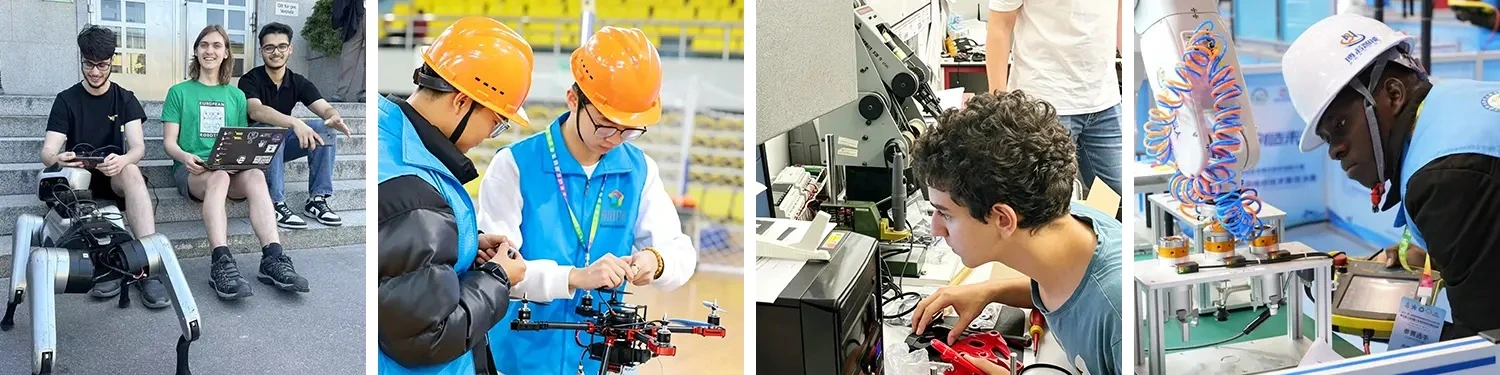
At ECR Academy, our New Energy Vehicle Design & Control Technology program is powered by real-world expertise and proven global reach. Since 2010, we've trained nearly 500,000 participants across 28 countries, with over 300,000 earning recognized certifications. You benefit from a comprehensive ecosystem of more than 3,300 industry experts and partnerships with 500+ leading enterprises. Our training integrates virtual-physical labs for NEV three-electric system testing, CAD/EDA design tools, and digital simulation platforms. We've successfully organized over 150 skills competitions, helping 30,000+ learners gain hands-on experience. With 16 years of vocational education leadership and 60,000+ educational resources including skill standards, courseware, and assessment systems aligned with ASIL-D and IATF 16949 standards, we deliver industry-ready capabilities you can trust.

FAQ
Q: Can beginners take this course?
A: Yes. The course is divided into foundation modules and advanced modules. The foundation modules begin with entry-level topics such as mechanical drawing, engineering mechanics, automotive mechanical fundamentals, and automotive electrical and electronic technology. The advanced modules then deepen professional skills based on this foundation, supporting a step-by-step progression from entry level to advanced application.
Q: What job roles can learners pursue after completing the course?
A: After completing the training, learners can prepare for roles such as:
- New Energy Vehicle Design Engineer
- Automotive Component Design Improvement Engineer
- New Energy Vehicle Prototype Testing Engineer
- Automotive Production Process Design Engineer
- Charging System Development Engineer
- Automotive Electronic Control System Engineer
- New Energy Vehicle Technology R&D Engineer
Q: Which CAD/EDA software does the course cover?
A: The course covers mainstream engineering design software, including:
- 3D CAD Design Software such as CATIA, UG, and SolidWorks
- EDA Design Software such as Altium Designer, Cadence, and KiCad
- Simulation Analysis Software such as ANSYS and MATLAB/Simulink
Learners may choose one or two main software tools for deeper study based on their career direction.

Contact Us
Ready to advance your New Energy Vehicle Design & Control Technology career? Connect with our team at ecr2008@enteredu.com to explore training programs tailored to your goals.



_1781601799781.webp)