Port Logistics Management
Standards: Port logistics industry alignment
Faculty: Port experts + college teachers
Platform: Port training labs, container terminal simulation, and international logistics documentation systems
Outcome: Skills aligned with freight forwarding, shipping operations, and supply chain management roles
Target Partners: Enterprises, educational institutions, industry associations, and other organizations
Port Logistics Management
Course Overview
This course is based on professional teaching standards and focuses on the digital, networked, and intelligent development trends in port logistics for Port Logistics Management. Core modules cover:
- Terminal operations management
- Container transport
- Multimodal transport
- International freight forwarding operations
- International ship agency operations
- International logistics documentation
- Smart warehousing and distribution
- Import/export customs declaration and inspection
Through project-based and scenario-based teaching—supported by real professional environments, including the port comprehensive training lab, international logistics comprehensive training lab, port enterprise business sandbox="allow-scripts allow-same-origin allow-presentation" lab, and smart port virtual simulation lab—learners systematically acquire key skills in port scheduling, logistics operations, freight forwarding, ship agency, customs declaration, and customer service.
Why This Course?
1.Curriculum
Theory combined with practice, driven by real port logistics projects, covering the full workflow from terminal operations and container transport to freight forwarding and customs declaration.
2.Standards
Aligned with higher vocational education professional teaching standards, developing skilled port logistics professionals who meet the digital transformation needs of the port and shipping logistics industry.
3.Faculty
Joint instruction by port logistics enterprise experts and academic teachers, integrating frontline practical experience with systematic theoretical teaching.
4.Platform
Based on a port comprehensive training lab, container terminal simulation system, international logistics documentation system, and more—providing realistic port logistics scenario simulation and digital operations platforms.
5.Outcomes
Mapped to occupational standards for freight forwarding, shipping operations, and supply chain management, helping learners build job-relevant capabilities for the port and shipping logistics industry.
What You'll Be Able to Do?
1. Perform Terminal Business Operations
- Identify terminal functions and layout; perform intelligent vessel arrival and departure operations and intelligent loading/unloading operations
- Manage terminal yards, terminal gate operations, and terminal cargo handling
- Develop terminal production plans and perform tally operations
2. Manage Container Transport and Multimodal Operations
- Configure container cargo stowage and operate container vessel scheduling; execute container import and export process operations
- Prepare container transport and multimodal transport documents; calculate freight rates and provide customer quotations
- Organize and manage container multimodal transport; apply big data analytics for cargo tracking and management
3. Perform International Freight Forwarding Operations
- Execute freight forwarding business processes across international sea, air, land, and multimodal transport modes
- Operate freight forwarding software to manage client relationships and handle cargo incidents
- Conduct freight forwarding business marketing, tracking, software operations, and document archiving
4. Perform International Ship Agency Operations
- Establish international ship agency relationships; prepare for vessel arrival and departure procedures
- Coordinate cargo transport-related operations
- Perform port agency operations during vessel stays and other international ship agency activities
5. Process International Logistics Documentation
- Apply international logistics documentation systems and preparation requirements
- Process sea, land, and air transport documents; handle international container documentation
- Prepare documents for export collection and import/export letter of credit (L/C) transactions
6. Operate Smart Warehousing and Distribution
- Organize inbound, storage, and outbound operations in smart warehouses
- Apply warehousing and distribution information technology, inventory control, and management methods
- Optimize distribution routes intelligently; schedule vehicles, and manage delivery operations
What You Will Learn?
|
Training Skills
|
Content
|
|
1. Terminal Operations Management
|
Study terminal functions, layout, enterprise organization, and production characteristics.
Perform intelligent vessel arrival/departure operations, intelligent loading/unloading operations, yard management, gate management, and cargo management.
Develop terminal production planning and tally operation capabilities.
|
|
2. Container Transport & Multimodal Transport
|
Configure container cargo stowage and vessel operations.
Execute container import/export processes.
Prepare containers and multimodal transport documents.
Calculate freight and provide customer quotations.
Organize and manage container multimodal transport.
|
|
3. International Freight Forwarding Operations
|
Execute freight forwarding processes for international sea, air, land, and multimodal transport.
Apply freight forwarding marketing, tracking, software operations, and archiving skills.
Manage client relationships and handle cargo incidents using forwarding software.
|
|
4. International Ship Agency Operations
|
Establish ship agency relationships.
Prepare vessel arrival and departure procedures.
Perform port agency operations during vessel stays.
Coordinate cargo transport-related operations.
|
|
5. International Logistics Documentation
|
Apply international logistics documentation systems and preparation standards.
Process sea/land/air transport documents and international container documents.
Prepare export collection and import/export L/C documentation.
|
|
6. Smart Warehousing & Distribution
|
Organize smart warehouse inbound, storage, and outbound operations.
Apply warehousing and distribution IT, inventory control, and performance management methods.
Optimize distribution routes and schedule vehicle deliveries intelligently.
|
|
7. Import/Export Customs Declaration & Inspection
|
Apply cargo clearance policies and common customs declaration procedures.
Classify commodities, prepare supporting customs documents, and complete import/export customs declaration forms.
Calculate import/export duties on electronic customs platforms.
Complete inspection and quarantine procedures.
|
Learning Environment
The Port Logistics Management learning platform is built around four core training labs, forming an integrated "virtual + real, industry-education fusion" training system:
- Port Comprehensive Training Lab — Equipped with large-scale container terminal simulation equipment, terminal import/export business training systems, and 3D container terminal software. Simulates real port scenarios for terminal import/export operations and container terminal simulation training.
- International Logistics Comprehensive Training Lab — Equipped with international logistics documentation systems, freight forwarding business operation systems, ship agency operation systems, and customs declaration and inspection operation systems. Supports international logistics documentation, freight forwarding, ship agency, and customs/inspection comprehensive training.
- Port Enterprise Business Sandbox Lab — Equipped with port enterprise business sandbox="allow-scripts allow-same-origin allow-presentation" training systems and mechanical models. Supports port enterprise business simulation and decision-making training.
- Smart Port Virtual Simulation Lab — Equipped with smart gate systems, intelligent tally systems, equipment intelligent control systems, central control computers, and VR awareness systems. Leverages big data, cloud computing, artificial intelligence, and virtual simulation technologies for smart port operations training.
All labs support full-process hands-on training across terminal operations, container transport, and multimodal transport, freight forwarding, ship agency, and customs declaration and inspection.
Company Strength
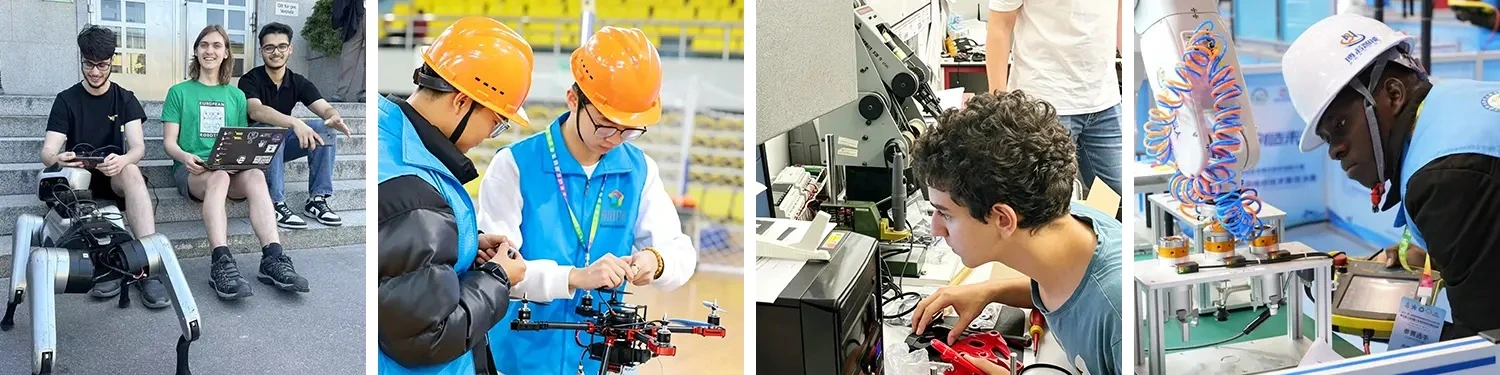
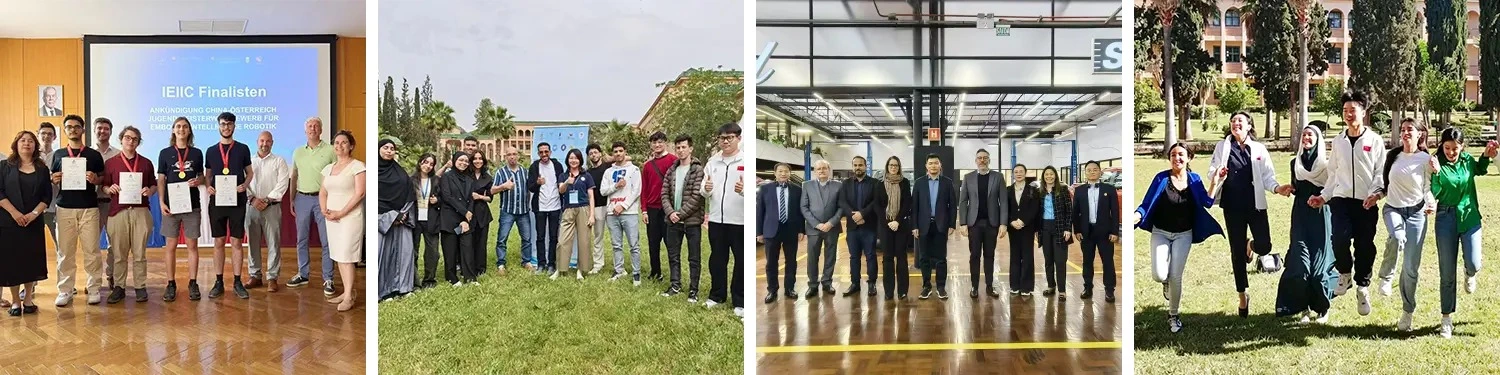
At E.C.R Academy, our product training brings you real-world expertise built over 16 years of excellence in skills education. We've empowered nearly 500,000 participants across 29 countries, with over 300,000 earning recognized certifications. Our program is backed by:
- A network of more than 3,300 industry and academic experts specializing in terminal operations and supply chain systems
- Partnerships with over 500 leading enterprises in freight forwarding, shipping, and intermodal logistics
- 60,000+ educational resources including skill standards, case studies, and assessment tools aligned with ISO 9001 and ISO 28000 compliance
- Proven track record organizing 150+ skills competitions that prepared 30,000+ learners for real port challenges
- Hands-on training through port labs, container terminal simulation, and international logistics documentation platforms
We blend port experts with college educators to deliver practical competencies in customs declaration, freight forwarding, and TOS operations—preparing you for high-demand roles in today's smart intermodal corridors.
FAQ
Q: Can I take this course with no prior background?
A: The program is suitable for learners in the product, international shipping management, customs and international freight, and general logistics management. Some foundational knowledge of business and international trade is recommended. The course uses a progressive teaching approach—advancing from basic operations to comprehensive applications—combined with hands-on practice in the port comprehensive training lab and smart port virtual simulation lab. With dedicated effort, even beginners can effectively acquire the core skills.
Q: What career paths does this program prepare me for?
A: Learners can develop skills relevant to roles such as:
- Port Scheduling Operator
- Freight Forwarding Agent
- Ship Agency Operations Specialist
- Customs Declaration / Inspection Agent
- Container Terminal Operator
- Supply Chain Management Specialist
Customs-related roles may require additional local qualifications, licensing, or compliance with national customs regulations.
Q: How is the platform deployed?
A: The platform supports blended online and offline learning, removing time and location constraints. Theoretical courses can be completed online, while practical training is conducted in the specialized training labs. Learners can access course resources, complete training tasks, and receive real-time feedback anytime and anywhere, providing a convenient and efficient learning experience for the product studies.

Contact Us
Ready to master terminal operations and supply chain coordination with Port Logistics Management? Reach out to our team at ecr2008@enteredu.com and start your journey today.

_1781601799781.webp)