Intelligent Logistics Technology
Standards: Digital logistics industry alignment
Faculty: Logistics technology experts + college teachers
Platform: Smart warehousing, intelligent transport, and IoT application training labs
Outcome: Skills aligned with warehousing and information system administration roles
Target Partners: Enterprises, educational institutions, industry associations, and other organizations
Intelligent Logistics Technology
Course Overview
This course focuses on Intelligent Logistics Technology and the digital, networked, and intelligent development trends in the logistics sector. Targeting technical fields such as logistics management information systems, warehousing equipment control systems, and transport technology systems across manufacturing, transportation, warehousing, and postal industries, the course develops highly skilled professionals capable of smart warehousing and distribution, IoT technology applications, logistics system operations and maintenance, and big data analysis and visualization. Core modules cover:
- Smart warehousing and distribution
- Smart transport
- Logistics management systems
- RFID technology and applications
- IoT technology applications
- Cargo tracking and positioning technology
- Big data analysis and mining
- Logistics scenario design and simulation.
Through project-based and scenario-based teaching, learners systematically acquire key skills in logistics hardware and software system installation and commissioning, fault diagnosis and troubleshooting, logistics data collection and analysis, and logistics process design and optimization.
Why This Course?
1.Curriculum
Theory combined with practice, driven by real logistics projects, covering the full workflow from smart warehousing, transport management, to logistics information system operations and maintenance.
2.Standards
Aligned with higher vocational education professional teaching standards, developing skilled product professionals who meet industry digital transformation demands.
3.Faculty
Joint instruction by enterprise logistics technology experts and academic teachers, integrating frontline practical experience with systematic theoretical teaching.
4.Platform
Based on a smart warehousing training lab, smart transport training lab, IoT technology application training lab, and more—providing realistic logistics scenario simulation and digital operations platforms.
5.Outcomes
Mapped to occupational standards for warehousing management and ICT information system administration, the course helps learners build job-relevant capabilities for the intelligent logistics industry.
What You'll Be Able to Do?
1. Operate Smart Warehousing and Distribution
- Apply smart warehousing inbound, outbound, cargo storage, and cargo allocation processes and technologies; manage routine warehouse operations
- Collect and analyze warehousing and distribution operational data; define warehousing and distribution KPIs, and manage performance based on data analysis results
- Apply inventory management and control methods and tools; execute inventory control based on inventory variance analysis
- Plan distribution routes and schedule vehicles; implement route and dispatch optimization using distribution management systems
2. Manage Smart Transport Operations
- Operate transport management systems; develop transport solutions for clients
- Apply transport monitoring and dispatch methods; monitor transport status changes and optimize dispatch in response
- Apply transport route planning, mode selection, and scheduling methods; select appropriate routes and transport modes
- Manage fleet resources and maintain facilities and equipment; track and dispatch vehicles by location
3. Apply IoT Technology in Logistics
- Identify the main components of IoT technology; select appropriate IoT solutions for warehousing, transportation, and distribution scenarios
- Apply IoT principles and technologies to collect data on logistics object position, temperature, humidity, light exposure, and other environmental parameters
- Apply different network communication technologies for appropriate scenarios; enable data transmission between IoT devices and management systems
- Apply IoT device data collection methods; analyze and control logistics workflows based on collected data
4. Maintain and Operate Logistics Systems
- Apply the architecture and functions of logistics management systems; complete system configuration and deployment
- Identify common hardware and software fault codes and operational commands; diagnose and resolve common system faults
- Monitor logistics system operational data; present data effectively, and respond promptly to anomalies
5. Perform Big Data Analysis and Visualization
- Apply big data collection methods and tools; acquire business and equipment data from diverse sources
- Apply data preprocessing methods; perform data cleaning, filtering, and correlation operations
- Build data analysis models; implement data analysis and modeling using SQL
- Apply data visualization tools; present results using appropriate chart types and visual formats
6. Design and Simulate Logistics Scenarios
- Describe logistics systems using models and parameters based on fundamental system architectures
- Apply mainstream simulation methods and tools; build simulation models that match real business requirements
- Run, calibrate, and optimize simulation models; use simulation models to improve real-world logistics systems
What You Will Learn?
|
Training skills
|
Description
|
|
1. Smart Warehousing & Distribution
|
Study smart warehousing inbound/outbound, cargo storage, and allocation processes and technologies.
Manage routine warehouse operations.
collect and analyze warehousing and distribution operational data.
define KPIs and manage performance based on analysis results.
apply inventory management and control methods and tools.
plan distribution routes and schedule vehicles.
implement route optimization using distribution management systems.
|
|
2. Smart Transport
|
Operate transport management systems and develop transport solutions for clients.
Apply transport monitoring and dispatch methods.
Monitor transport status and optimize dispatch.
apply route planning, mode selection, and scheduling methods.
manage fleet resources and equipment maintenance.
Apply methods and tools for transport data collection, visualization, and analysis.
|
|
3. Logistics Management Systems
|
Apply the architecture and functions of logistics management systems.
Complete system configuration and deployment.
Identify common hardware and software fault codes and operational commands.
Diagnose and resolve common system faults to ensure stable operation.
Monitor system operational data.
present data effectively and respond promptly to anomalies.
|
|
4. RFID Technology & Applications
|
Study RFID fundamentals and system deployment environments and requirements.
Identify typical logistics scenario characteristics and select appropriate tags and readers.
Apply RFID device read/write and management methods and tools.
perform tag reading, writing, and deletion operations integrated with business workflows.
manage electronic tag data interfaces and analyze captured tag data.
|
|
5. IoT Technology Applications
|
Identify the main components of IoT technology.
Select appropriate IoT solutions for warehousing, transportation, and distribution scenarios.
apply IoT principles and technologies to collect logistics object position, temperature/humidity, and light exposure data.
apply different network communication technologies for appropriate scenarios.
apply cloud computing technologies.
collect IoT device data and analyze and control logistics workflows.
|
|
6. Cargo Tracking & Positioning Technology
|
Apply common cargo tracking and positioning technologies.
Use BDS/GIS systems for cargo positioning and tracking.
apply geofencing technology for address-based business process control.
apply image/video recognition technology for cargo identification and tracking.
apply wireless sensor network technology for in-transit and in-storage cargo condition monitoring and control.
|
|
7. Big Data Analysis & Mining
|
Apply big data collection methods and tools to acquire business and equipment data from diverse sources.
Apply data preprocessing methods for cleaning, filtering, and correlation.
Build data analysis models using SQL.
Apply data visualization tools and present results using appropriate chart types.
apply big data-driven decision-making methods and practices.
|
|
8. Logistics Scenario Design & Simulation
|
Describe logistics systems using models and parameters based on fundamental system architectures.
Apply mainstream simulation methods and tools.
build simulation models matching real business requirements.
run, calibrate, and optimize simulation models to improve real-world logistics systems.
|
Learning Environment
The Intelligent Logistics Technology learning platform is built around six core training labs, forming an integrated "virtual + real, industry-education fusion" training system:
Keen Warehousing and Dispersion Preparing Lab — Prepared with robotized capacity and recovery frameworks (AS/RS), standardized tag scanners, distribution center administration frameworks (WMS), electronic name picking frameworks, and shrewdly picking systems.
Smart Transport Preparing Lab — Prepared with transport administration frameworks, BDS/GIS stages, organize cargo stages, and coordinations information visualization systems.
IoT Innovation Application Preparing Lab — Prepared with RFID perusers and scholars, sensors, and PLC controllers.
Logistics Virtual Recreation Preparing Lab — Prepared with coordinations recreation frameworks and forklift driving virtual recreation platforms.
Big Information Examination Preparing Lab — Prepared with enormous information investigation program stages, visualization dashboards, and measurable investigation software.
Logistics Hardware O&M Preparing Lab — Bolsters coordinations gear upkeep and investigating training.
All labs back full-process hands-on preparing over shrewd warehousing operations, transport operations, coordinations framework operations, and support, and huge information analysis—providing proficient specialized back for the item abilities improvement.
Company Strength
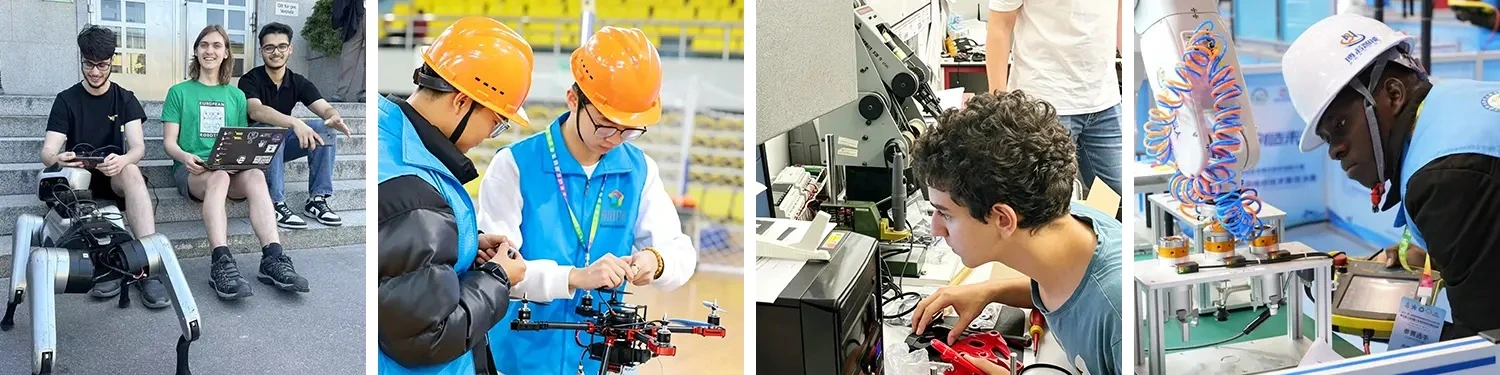
ECR Academy brings deep expertise to the product training solutions through proven global experience. Our comprehensive programs integrate smart warehousing systems, transportation management, and logistics information platforms that mirror real-world operational demands. Key strengths include:
- Nearly 500,000 participants trained across 29 countries since 2010, with over 300,000 earning recognized certifications
- 16 years of specialized experience in future-focused skills education and vocational training development
- Over 150 skills competitions organized, providing 30,000+ learners with hands-on experience in digital logistics environments
- Ecosystem of 3,300+ industry experts and partnerships with 500+ enterprises ensuring curriculum relevance
- 60,000+ educational resources including logistics-specific standards, case studies, and assessment tools aligned with automated warehousing and IoT applications
Our industry-academia collaboration show guarantees you get preparing that addresses basic challenges like stock perceivability, independent robot route, and supply chain optimization utilizing AI and Enormous Information analytics.

FAQ
Q: Can I take this course with no earlier background?
A: The program is appropriate for learners in coordinations administration, coordinations designing innovation, computer applications innovation, and related areas. A few foundational information of computers and data innovation is suggested. The course employments a dynamic educating approach—advancing from essential operations to comprehensive applications—combined with hands-on hone in the IoT innovation application preparing lab and coordinations virtual recreation preparing lab. With devoted exertion, indeed tenderfoots can successfully secure the center skills.
Q: What career ways does this program get ready me for?
A: Learners can create abilities significant to parts such as:
- Warehouse Operations Specialist
- ICT Information System Administrator
- Logistics System O&M Engineer
- IoT Device Installation and Commissioning Technician
- Transport Dispatcher
- Big Data Analyst
- Logistics Simulation Engineer
Q: How is the platform deployed?
A: The platform supports blended online and offline learning, removing time and location constraints. Theoretical courses can be completed online, while practical training is conducted in the specialized training labs. Learners can access course resources, complete training tasks, and receive real-time feedback anytime and anywhere, providing a convenient and efficient learning experience for the product studies.

Contact Us
Ready to transform your team's capabilities in smart logistics with Intelligent Logistics Technology? Connect with ECR Academy today at ecr2008@enteredu.com to explore customized training solutions.

 Applications.webp)

_1781601799781.webp)