Combining Additive Manufacturing (3D printing) with Reverse Engineering
Standards: Aligned with international technical skill standards for global talent development
Faculty: Joint instruction by enterprise engineers and college experts
Platform: Geomagic-based workflow covering data acquisition, processing, model reconstruction, and 3D inspection
Outcome: Skills aligned with automotive, aerospace, mold, and related industry needs
Target Partners: Enterprises, educational institutions, industry associations, and other organizations
Combining additive manufacturing (3D printing) with reverse engineering
Course Overview
This course focuses on the core applications of Combining Additive Manufacturing (3D printing) with Reverse Engineering, with an emphasis on building end-to-end capabilities from physical objects to digital models to innovative design. Design tasks are arranged according to the reverse design and innovative design process of products, guiding learners to complete integrated practical capabilities from 3D measurement to CAD modeling to product innovative design, developing professionals skilled in reverse modeling and product innovation aligned with industry standards. The course content covers five core modules:
- Reverse engineering technology overview
- Data acquisition technology
- 3D data processing (including Geomagic Wrap software)
- 3D digital model reconstruction (including Geomagic Design X software)
- 3D digital inspection (including Geomagic Control X software).
Teaching content is strictly organized according to the product development process of "3D scanning → data processing → digital model reconstruction → 3D inspection → innovative design," enabling students to systematically master the complete knowledge system and practical skills of reverse engineering technology.
Why This Course?
1. Curriculum
Learn through project-based tasks that combine theory with hands-on practice.
2. Organization
Designed in line with international technical standards to support global industry needs.
3. Faculty
Taught by enterprise engineers and academic experts.
4. Platform
Based on the Geomagic series professional reverse engineering software platform, covering the full process of data acquisition, data processing, digital model reconstruction, and 3D inspection.
5. Outcomes
Build job-ready skills for industries such as automotive, aerospace, and mold manufacturing.
What You'll Be Able to Do?
This course is aligned with the career requirements of additive manufacturing reverse engineering technology positions, covering full-process core capabilities from data acquisition to innovative design:
1. Understand and apply reverse engineering principles
- Gain a deep understanding of concepts, process routes, and implementation conditions of reverse engineering.
- Understand the three application levels of reverse engineering: replication, improved design, and innovative design.
- Select appropriate reverse engineering solutions based on product characteristics.
- Perform 3D data acquisition.
- Operate desktop and handheld laser 3D scanners proficiently.
- Apply key techniques such as workpiece pre-scan preparation, marker placement, and equipment calibration.
- Develop scanning strategies based on object geometry to ensure complete and accurate data capture.
2. Process and Optimize 3D Data
- Apply point cloud data processing workflows using Geomagic Wrap.
- Process point cloud data, including selection, noise removal, merging, and polygon model construction.
- Process 3D data from complex products to provide a high-quality foundation for digital model reconstruction.
3. 3D Digital Model Reconstruction Capability
- Use Geomagic Design X for parametric reverse modeling.
- Apply parametric reverse modeling techniques based on 2D sketches, including feature extraction and constraint recognition.
- Reconstruct digital models of complex products (e.g., consumer components and automotive brackets), restoring original geometric features.
4. Identify and Repair Defects
- Identify and repair product defects, including scratches, flash, shrinkage, deformation, flow marks, and burn marks.
- Apply defect repair techniques to ensure consistency with original structures.
Restore damaged parts to their design condition, meeting precision requirements (±0.1 mm to ±0.15 mm).
5. Conduct 3D Inspection and Analysis
- Perform 3D inspection workflows using Geomagic Control X.
- Apply inspection techniques including data alignment, 3D comparison, color map analysis, and 2D cross-section comparison.
- Inspect part dimensions and geometric tolerances, and generate a professional inspection report.
What You Will Learn?
|
Training Skills
|
Description
|
|
1. Reverse Engineering Fundamentals
|
Learn how reverse engineering is applied in real-world design and manufacturing. You will follow the complete workflow, from 3D scanning and data processing to CAD surface reconstruction and manufacturing. You will work with professional tools such as Geomagic Design X and other reverse engineering software. You will also understand how hardware systems support the full process, including scanning and fabrication. You will apply reverse engineering in different scenarios, including part replication, design optimization, and product innovation. Through case studies such as cultural artifact restoration and automotive part redesign, you will develop practical skills for real engineering tasks.
|
|
2. 3D Data Acquisition
|
Learn how to capture 3D data using both contact and non-contact scanning methods. You will understand technologies such as CMM measurement, laser scanning, structured light, and industrial CT. You will operate different types of 3D scanners, including desktop and handheld systems. You will perform tasks such as calibration, marker placement, data merging, and scan quality control. You will also develop data acquisition strategies and basic point cloud processing skills.
|
|
3. 3D Data Processing (Geomagic Wrap)
|
Learn how to process point cloud data using Geomagic Wrap. You will convert point cloud data into polygon models and work through standard data processing workflows. You will clean and optimize data through filtering, noise removal, merging, and mesh generation. You will also ensure model quality to support accurate digital reconstruction. These tasks help you build practical skills in point cloud processing and preparation for reverse engineering.
|
|
4. 3D Model Reconstruction (Geomagic Design X)
|
Learn how to reconstruct CAD models from point cloud data using Geomagic Design X. You will create parametric models based on sketches, feature extraction, and constraint recognition. You will apply both solid and surface modeling techniques to rebuild product geometry. You will also refine models to match original design intent. These tasks help you develop practical skills in reverse modeling and digital product reconstruction.
|
|
5. 3D Inspection (Geomagic Control X) |
Learn how to perform 3D inspection and quality analysis using Geomagic Control X. You will align data, analyze deviations, and evaluate part dimensions and tolerances. You will apply tools such as color maps, cross-section analysis, and dimensional measurement. You will also generate structured inspection reports for quality evaluation. These tasks help you develop practical skills in data analysis and quality control for real inspection scenarios.
|
|
6. 3D Modeling and Defect Repair
|
Learn how to repair defects and reconstruct models from point cloud data. You will identify common defects such as scratches, deformation, and surface irregularities. You will apply repair techniques to restore geometry and ensure structural consistency. You will also control modeling accuracy and validate results through quality checks. These tasks help you develop practical skills in defect repair and reverse modeling for real engineering scenarios.
|
Learning Environment
You will train with industry-standard reverse engineering tools, including Geomagic Wrap, Geomagic Design X, and Geomagic Control X.
The platform supports the full workflow, from data acquisition and processing to model reconstruction and inspection. You will use Geomagic Wrap to process point cloud data and create high-quality polygon models. You will then build parametric CAD models in Geomagic Design X using feature extraction and constraint-based modeling. You will also perform 3D inspection and quality analysis using Geomagic Control X, including deviation analysis and report generation.
The platform is equipped with both desktop and handheld 3D scanners, allowing you to practice data acquisition, calibration, and data merging.
Through a combination of software tools and hands-on training, you will gain practical experience across the complete reverse engineering workflow used in real industrial scenarios.
Company Strength
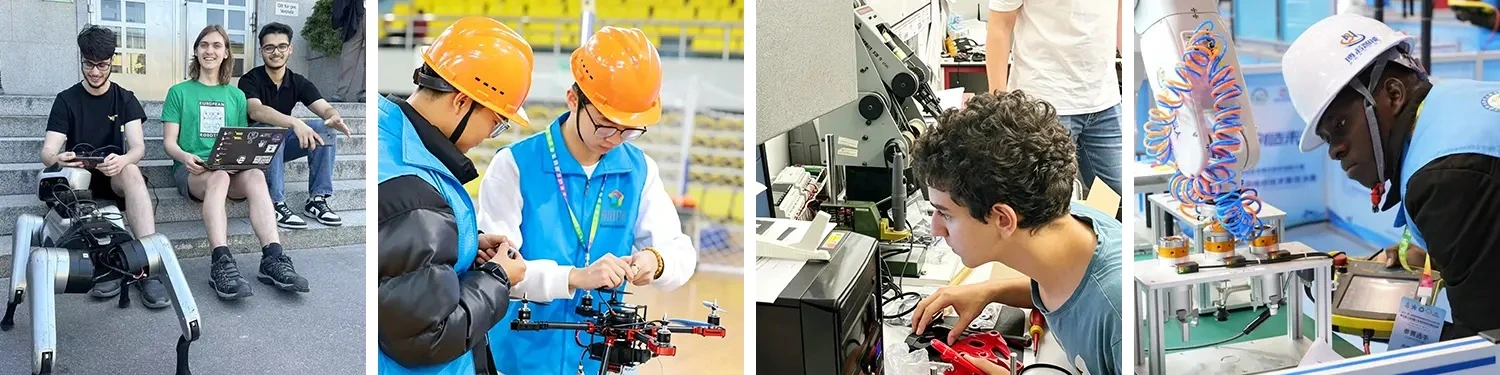
When you choose Combining Additive Manufacturing (3D printing) with Reverse Engineering solutions at ECR Academy, you partner with a globally recognized leader in advanced skills training. Our expertise transforms how you approach legacy part restoration, rapid prototyping, and custom manufacturing.
- Proven Global Reach: Since 2010, we've trained nearly 500,000 participants across 28 countries, with over 300,000 certified learners mastering cutting-edge technical workflows.
- Deep Industry Network: Access to more than 3,300 industry and academic experts, partnerships with over 500 enterprises, and 60,000+ educational resources including skill standards, case studies, and assessment systems tailored to additive and reverse engineering workflows.
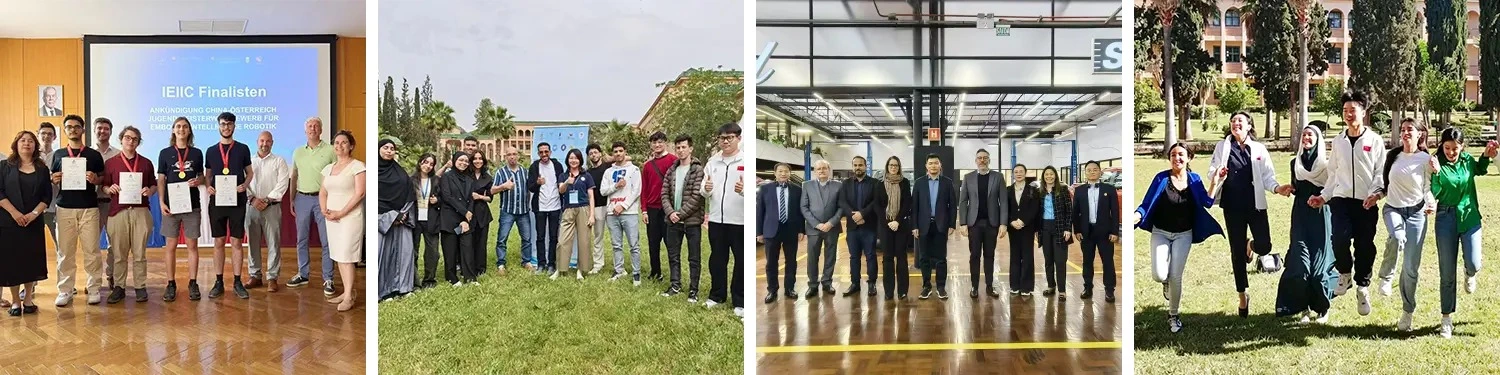
- Real-World Competition Experience: Over 150 skills competitions organized, empowering 30,000+ learners to sharpen their technical capabilities through hands-on challenges in automotive, aerospace, and mold industries.
- Comprehensive Training Ecosystem: Our Geomagic-based platform covers the complete workflow—from 3D scanning and mesh processing to CAD reconstruction and quality inspection—aligned with ISO/ASTM 52900 and ISO 10360 standards.
- 16 Years of Educational Excellence: Industry-academia collaboration ensures your team learns from both enterprise engineers and college experts, bridging theory with real-world application.
FAQ
Q: Can I learn this course with zero foundation?
A: Yes, the course adopts the teaching philosophy of "project-driven, task-led," starting with basic cognition of reverse engineering technology, systematically explaining core content such as 3D scanning technology, data processing, digital model reconstruction, and 3D inspection. The textbook structure is clear, arranged in the order of learning objectives, task description, task analysis, essential knowledge, task implementation, and task evaluation, making it easy for beginners to learn and understand. It is also equipped with rich hands-on cases and micro-course resources, supporting personalized learning.
Q: What positions can I pursue after learning?
A: After completing this course, you can pursue roles such as:
- Reverse Engineer / Reverse Modeling Engineer
- 3D Scanning Engineer / Data Acquisition Engineer
- Mold Designer / Mechanical Designer
- Quality Inspection Engineer / 3D Inspection Engineer
- Additive Manufacturing (3D Printing) Technology Engineer
- Cultural Heritage Digital Preservation and Restoration Technician.
Q: Do I need to install the software?
A: The Geomagic series software (Wrap, Design X, Control X) used in the course needs to be installed on computers. The software provides complete reverse engineering function modules and supports offline learning and training. Schools or training institutions need to be equipped with corresponding software licenses, and students can study and practice in school computer labs or training centers. The software interface is user-friendly, operation processes are clear, and it supports Windows operating systems with moderate configuration requirements.
Contact Us
Reach out to us at ecr@enteredu.com and let's build your future skills in Combining Additive Manufacturing (3D printing) with Reverse Engineering together.




_1781601799781.webp)