Innovative Design and 3D Printing for Additive Manufacturing
Standards: Aligned with international additive manufacturing skill standards for interdisciplinary talent development
Faculty: Joint instruction by enterprise engineers and college experts
Platform: Full-process training covering 3D modeling, motion simulation, and multiple 3D printing processes
Outcome: Skills aligned with additive manufacturing industry needs and stronger employability
Target Partners: Enterprises, educational institutions, industry associations, and other organizations
Innovative Design and 3D Printing for Additive Manufacturing
Course Overview
This course focuses on product Innovative Design and 3D Printing for Additive Manufacturing applications. It covers product design fundamentals, mechanical transmission principles, 3D digital modeling, motion simulation, additive manufacturing processes, and post-processing workflows.
Training is organized around a complete product development process: requirement analysis, structural design, motion simulation, process planning, 3D printing, assembly, and testing. Learners build practical skills in digital product design, integrated structure design, lightweight design, simulation verification, and printed part production.
The course includes mainstream technologies such as FDM, SLA/LCD resin printing, and SLM metal 3D printing, helping learners connect design concepts with manufacturable parts and real engineering workflows.
Why This Course?
1. The curriculum combines theory, hands-on practice, and project-driven learning based on real additive manufacturing design and printing tasks.
2. Standards
Designed with reference to international additive manufacturing technical skill standards and industry practice requirements.
3. Faculty
Delivered by enterprise engineers and academic instructors, combining engineering project experience with structured teaching.
4. Platform
Provides a full-process training system covering 3D modeling, motion simulation, and multiple 3D printing processes.
5. Outcomes
Builds practical skills for additive manufacturing product design, 3D printing process planning, digital modeling, and printed part production roles.
What You'll Be Able to Do?
This course is aligned with job requirements in additive manufacturing product design and production. It covers the full workflow from product innovation design to 3D printed part fabrication.
1. Product Concept and Solution Design
- Create product design proposals based on functional requirements and structural planning.
- Prepare 2D part drawings and assembly drawings with dimensions, GD&T requirements, and technical notes.
- Translate design requirements into clear, manufacturable product concepts.
2. 3D Digital Modeling
- Use 3D CAD software for part modeling, assembly modeling, and parametric design.
- Design mechanical transmission mechanisms such as gear drives and linkage mechanisms.
- Develop product appearance designs that consider usability, ergonomics, and practical manufacturing needs.
3. Innovative Structural Design
- Apply integrated structure design methods for combining multiple parts into printable assemblies.
- Use lightweight design methods such as topology optimization, lattice structures, and weight-reduction features.
- Design structures that meet the process requirements of additive manufacturing and 3D printing.
4. Motion Simulation and Verification
- Set up assembly relationships, constraints, and motion pairs for product mechanisms.
- Run virtual motion simulations to verify mechanism functions and movement logic.
- Export motion animations to demonstrate working principles and product operation processes.
5. 3D Printing Operation and Process Planning
- Operate FDM equipment for setup, parameter configuration, and printing production.
- Use SLA/LCD resin printing processes for high-precision printed parts.
- Understand SLM metal 3D printing principles and process workflows for metal part production.
- Complete post-processing tasks such as support removal, sanding, joining, repair, assembly, and finishing.
6. Professional Practice and Workshop Skills
- Follow safe and standardized equipment operation procedures during training.
- Use tools and measuring instruments correctly for inspection and assembly tasks.
- Plan tasks, organize workflows, analyze problems, and complete practical project work with clear technical documentation.
What You Will Learn?
|
Learning Module
|
Content Description
|
|
1. Fundamentals of Product Innovation Design
|
Learn the basic process and methods of product innovation design.
Study requirement analysis, concept development, functional principles, structural design, and appearance design.
Practice 2D engineering drawing standards, including view representation, dimensioning, GD&T annotation, and technical notes.
This module builds disciplined engineering design thinking and standardized technical communication skills.
|
|
2. Mechanical Transmission Principles
|
Study the design and analysis of mechanical transmission systems, including gear drives, linkage mechanisms, and belt drives.
Learn how to select appropriate transmission solutions based on functional requirements, and understand speed matching, transmission ratio calculation, and motion coordination.
|
|
3. 3D Digital Modeling
|
Use 3D CAD software for product digital modeling, including part modeling, assembly modeling, and parametric modeling.
Learn structural design methods for complex mechanisms and practice the rapid transformation from concept design to 3D models.
|
|
4. Integrated Structure Design
|
Learn integrated structure design methods based on the advantages of additive manufacturing.
Practice multi-part integration, assembly-free structure design, and assembly relationship optimization.
Understand how integrated printing can simplify product structure and support functional implementation.
|
|
5. Lightweight Design Technologies
|
Study lightweight design methods such as topology optimization, lattice structures, and weight-reduction hole design.
Learn how to reduce part weight while maintaining function, including design exercises with defined weight-reduction targets.
Understand applications in aerospace, automotive, robotics, and related industries.
|
|
6. Motion Simulation Analysis
|
Learn assembly relationship setup, constraint configuration, and motion pair definition for product simulation.
Run virtual motion simulations to verify mechanism functions and export motion animations to demonstrate product working principles and movement processes.
|
|
7. FDM Printing Process
|
Study the principles and operation of FDM printing.
Practice equipment setup, parameter configuration, support generation, printing, and post-processing.
Learn how to optimize parameters according to material properties and understand the process features and material suitability of FDM technology.
|
|
8. SLA/LCD Resin Printing Process
|
Study the principles and operation of SLA/LCD resin printing.
Learn processing methods for high-precision printed parts, resin material characteristics, post-curing, support removal, and surface finishing.
Practice printing complex surfaces and high-precision components.
|
|
9. SLM Metal 3D Printing Process
|
Understand the principles and application areas of SLM metal 3D printing.
Learn metal printing workflows, equipment operation requirements, and safety precautions.
Explore applications in prototypes, mold inserts, and functional metal parts.
|
|
10. Product Assembly and Testing
|
Learn assembly methods and functional testing for 3D-printed parts.
Practice surface treatment, accuracy inspection, fastening, adjustment, and function verification.
Complete the full production workflow from printed parts to assembled products.
|
Learning Environment
The learning platform provides a complete teaching and training system for additive manufacturing product innovation design and 3D printing. With 3D CAD software as the core, it supports the digital design workflow from concept design to 3D modeling, assembly design, and motion simulation.
The platform is equipped with multiple 3D printing systems, including FDM, SLA/LCD resin printing, and SLM metal printing equipment, providing a practical production-oriented environment for converting digital models into physical products.
Teaching resources include micro-lesson videos, operation demonstrations, and project cases, supporting blended online and offline learning. Through the complete workflow of design, simulation, process planning, printing, assembly, and testing, learners gain practical project experience and strengthen their ability to solve real engineering problems in additive manufacturing product design and production.
Company Strength
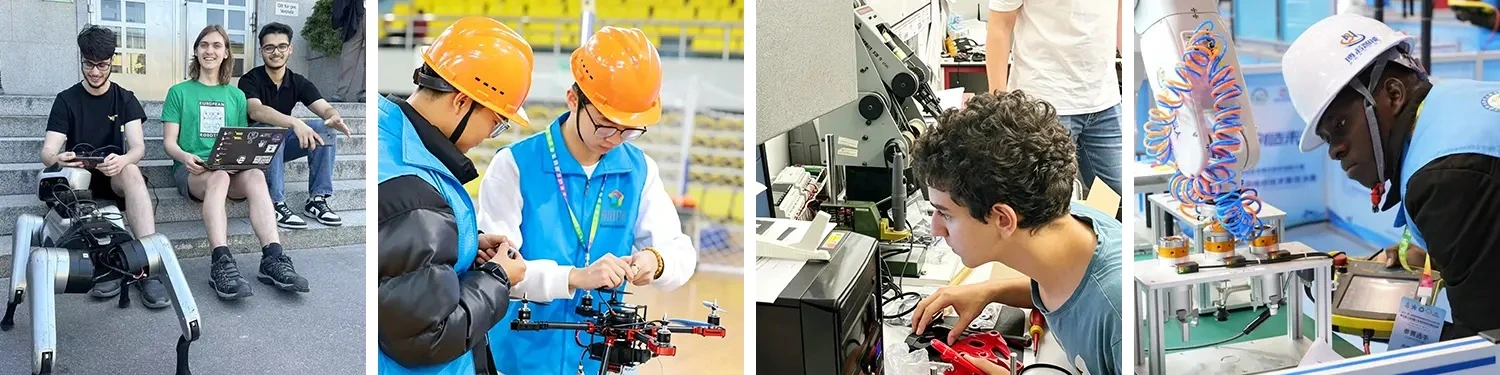
At ECR Academy, we bring you real-world expertise in Innovative Design and 3D Printing for Additive Manufacturing backed by proven results. Since 2010, we've trained nearly 500,000 participants across 28 countries, helping over 300,000 learners earn recognized skills certifications. Our strength lies in:
- 16 years of professional experience in skills education and vocational training
- Successfully organized over 150 domestic and international skills competitions
- A robust ecosystem of more than 3,300 industry and academic experts
- Partnerships with over 500 enterprises globally
- Over 60,000 educational resources including skill standards, courseware, and assessment systems
- Project-driven curriculum that integrates 3D modeling, motion simulation, and multiple additive manufacturing processes
- Joint instruction model combining enterprise engineers with college experts for practical, industry-aligned learning

FAQ
Q: Can beginners take this course?
A: Yes. The course uses a project-driven and task-based learning approach. It starts with the fundamentals of product design and gradually introduces requirement analysis, structural design, motion simulation, and 3D printing. Micro-lesson videos and operation demonstrations help beginners build skills step by step. Enterprise mentors can also support learners with project guidance and Q&A.
Q: What job roles can learners pursue after completing the course?
A: Learners can prepare for roles such as:
- Additive Manufacturing Process Engineer
- 3D Printing Engineer
- Product Structure Designer
- Mechanical Designer
- Reverse Engineering Engineer
- 3D Modeling Engineer
- Intelligent Manufacturing Equipment Operator
- Process Equipment R&D Engineer
- Industrial Designer
Q: Is professional software required?
A: Yes. 3D CAD software such as SolidWorks or CATIA, together with 3D printing slicing software, is used for design and printing preparation. Schools or training institutions may provide software licenses for use in training centers or cloud platforms. The software supports Windows operating systems. The platform also provides online simulation functions, allowing learners to practice motion simulation even when local software is not available.

Contact Us
Ready to transform your skills in Innovative Design and 3D Printing for Additive Manufacturing? Reach out to us at ecr@enteredu.com to explore how we can support your learning journey together.



 with Reverse Engineering.webp)

_1781601799781.webp)