Electronic Information Engineering Technology
Standards: Aligned with international technical skill standards
Faculty: Joint instruction by enterprise engineers and college experts
Platform: Cloud-based B/S lab environment for online learning and development
Employment: Industry-aligned skills across the full lifecycle of electronic products
Target Partners: Enterprises, educational institutions, industry associations, and other organizations
Electronic Information Engineering Technology
Course Overview
Focused on the digitalization, networking, and intelligence development trends in Electronic Information Engineering Technology in the electronic information industry, this course aligns with core job requirements in smart electronic product design, development, assembly, and commissioning. The curriculum covers:
- Foundational modules including circuit fundamentals
- Electronic engineering drafting
- C programming
- Analog electronics
- Digital electronics
Along with core skill areas such as PCB design, MCU technology, electronic assembly, sensor technology, and embedded technology.
This course adopts project-based and scenario-based instructional models, integrating real production projects and typical workplace tasks to cultivate highly skilled electronic information engineering professionals with international competitiveness.
Why This Course?
1.Curriculum
Theory integrated with practice, project-driven learning supporting practical application of acquired skills.
2.Standards
Benchmarked against international technical skill standards, cultivating professionals with a global perspective.
3.Faculty
Enterprise engineers and academic experts co-deliver instruction, bridging industry and education.
4.Platform
Cloud-based laboratory environment built on a B/S (Browser/Server) architecture, enabling online learning and development anytime, anywhere.
5.Career Pathways
Aligned with industry demands, covering the full product lifecycle of electronic products to enhance employability.
What You'll Be Able to Do?
This course is benchmarked against the full lifecycle of electronic information products, covering core competencies from design and development through electronic assembly, testing, and maintenance:
1. Circuit Analysis and Design
- Read and interpret electronic equipment schematic diagrams and assembly drawings; apply working principles of fundamental circuit units
- Identify, test, and select common electronic components
- Operate electronic instruments for electrical parameter measurement and debugging
2. Smart Electronic Product Development
- Use PCB design software to create circuit schematics and printed circuit board layouts
- Develop and debug hardware and software for MCU-based and embedded systems
- Develop application software using C language and other tools to implement intelligent control functions
3. Electronic Assembly and Testing
- Apply major electronic assembly production processes and workflows; manage electronic product manufacturing operations
- Perform fault diagnosis and troubleshooting for electronic products using established testing and repair methods
- Execute SMT (Surface Mount Technology) assembly processes; assemble and commission smart hardware
What You Will Learn?
|
Training Skills
|
Description
|
|
1. Circuit Fundamentals
|
Apply basic circuit laws and analysis methods.
Follow electronic engineering drafting standards.
Create circuit schematics and assembly drawings.
|
|
2. Programming Fundamentals
|
Learn c programming basics.
Apply core principles of analog electronics and digital electronics to build a foundation for smart electronic product development.
|
|
3. PCB Design
|
Use mainstream pcb design software to complete circuit schematic design and single- and double-sided pcb layout.
Perform signal integrity testing and dfm (design for manufacturability) analysis.
|
|
4. MCU Technology
|
Apply mcu i/o ports, interrupt systems, timers, serial communication, and a/d conversion modules.
Design hardware and software for typical mcu-based application systems.
|
|
5. Electronic Assembly, Testing, and Maintenance
|
Identify and test common components.
Perform manual soldering and smt assembly processes.
Test key performance parameters of smart electronic products.
Follow fault diagnosis procedures.
Debug, inspect, and repair electronic products.
|
Learning Environment
This course provides comprehensive cloud-based laboratory platforms and hands-on training facilities, including:
- Electrical and Electronic Training Lab
- Electronic Product Assembly Training Lab
- EDA Technology Training Lab
- Electronic Technology Comprehensive Training Lab
- MCU Technology Training Lab
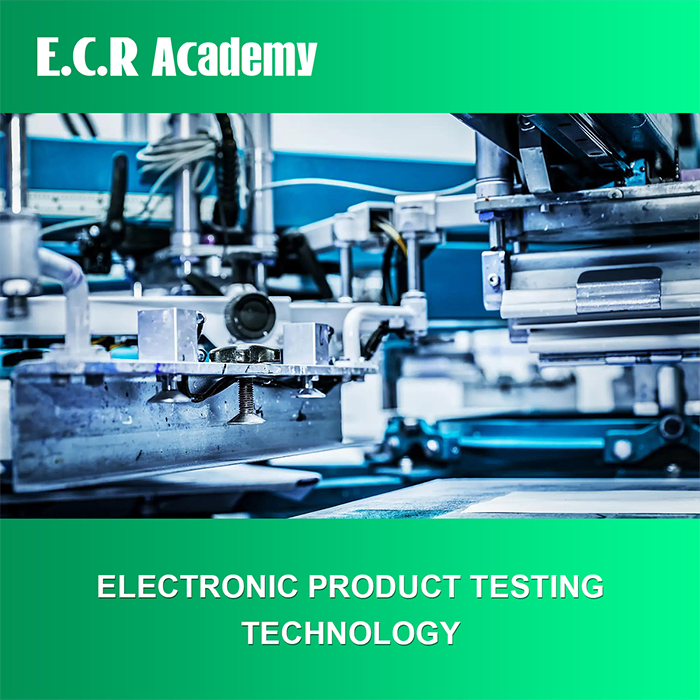
- Electronic Testing and Maintenance Training Lab
- Embedded Technology Training Lab
- Information System Integration Training Lab
Built on a B/S (Browser/Server) architecture, the platform supports browser-based online learning and experimentation — no local software installation required. A virtual simulation experiment environment integrates premium teaching resources from both industry and academia, with enterprise engineers and academic experts providing joint instruction and guidance, delivering comprehensive technical support for core skill development in smart electronic product design and development, electronic assembly, testing and maintenance, and system integration.
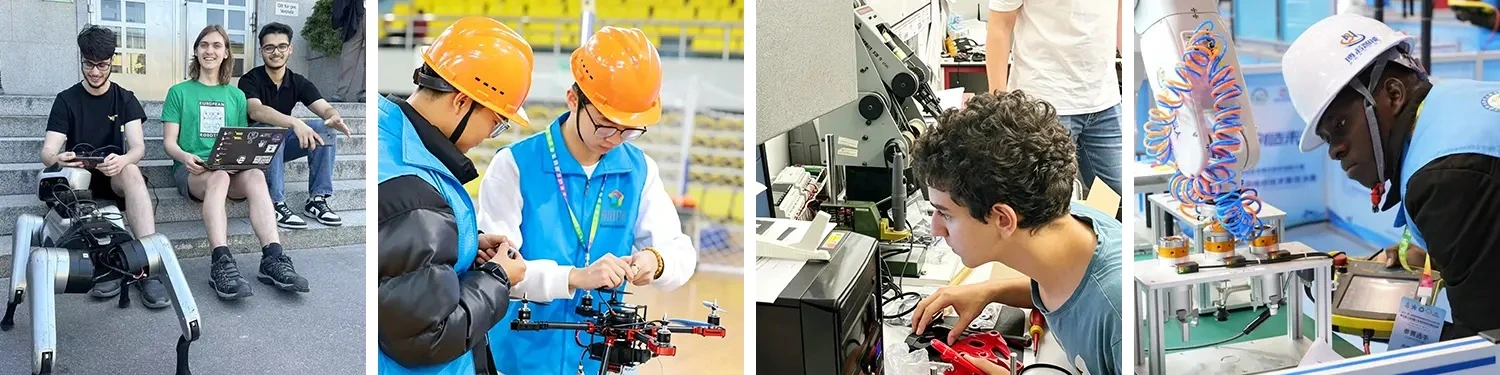
Company Strength
At ECR Academy, our Electronic Information Engineering Technology program is built on deep industry experience and global reach. Here's what sets us apart:
- Since 2010, we've trained nearly 500,000 participants across China and 28 countries, with over 300,000 certified learners gaining recognized skills credentials
- Our program leverages 16 years of professional expertise in vocational training, connecting you with more than 3,300 industry and academic experts
- We've organized over 150 skills competitions that helped 30,000+ learners master product through real-world challenges
- You'll access 60,000+ educational resources including industry-aligned standards, courseware, case studies, and assessment systems developed with 500+ enterprise partners
- Our project-driven curriculum combines cloud-based B/S lab environments with joint instruction from enterprise engineers and college experts, ensuring you develop practical competencies in signal processing, embedded systems, and telecommunication networks

FAQ
Q: Can I enroll in this program with no prior background?
A: Yes. The program starts with foundational circuit knowledge and provides guided hands-on practice, making it accessible to beginners. Rich online learning resources and a virtual experiment environment are available to help learners progressively build professional skills.
Q: What career paths are available after completing the program?
A: Graduates can prepare for roles such as:
- Smart electronic product designer / development engineer
- Electronic equipment assembly and commissioning engineer / PCB design engineer
- Electronic product testing and certification engineer / maintenance technician
- Smart application system integration engineer / operations and maintenance technician
- IoT device engineer / embedded development engineer
Q: How is practical training structured?
A: Practical training runs throughout the entire program, including on-campus and off-campus lab sessions, internship placements, and capstone projects. Training content covers electrical and electronic labs, PCB design labs, electronic assembly labs, smart electronic product development comprehensive labs, and smart application system integration labs. Internships are conducted at electronic information manufacturing enterprises with a cumulative duration of no less than six months in relevant positions, enhancing real-world working capability.

Contact Us
Ready to advance your skills in Electronic Information Engineering Technology? Reach out to our team at ecr2008@enteredu.com to learn more about our training programs and partnership opportunities.


 Engineering Technolog_1782984752055.webp)


_1781601799781.webp)