Mold Manufacturing Technology
Training Model: Modular project-based learning
Faculty: Teachers + enterprise experts + skills mentors
Platform: Five training bases for mold assembly, CAD/CAM, CNC machining, EDM, and commissioning
Outcome: Vocational training certificates and job-ready mold manufacturing skills
Target Partners: Enterprises, educational institutions, industry associations, and other organizations
Mold Manufacturing Technology
Course Overview
This course is designed for roles in mold computer-aided drafting, mold manufacturing equipment operation, mold fitter assembly and maintenance, mold forming equipment operation and debugging, and product quality inspection. It develops skilled technical personnel with integrated capabilities in mold structure reading, process design, machining and manufacturing, assembly and debugging, and quality inspection.
Built on a solid understanding of mold structure and practical mold manufacturing skills in Mold Manufacturing Technology, the course focuses on solving real production problems in mold manufacturing. It aims to develop versatile mold technicians who can read structures, design processes, complete machining tasks, and carry out assembly and debugging.
Workplace safety is emphasized throughout the course. Learners develop the awareness and ability to follow health and safety requirements in mold manufacturing environments. Green and low-carbon manufacturing concepts are also introduced, helping learners understand energy-efficient machining, cleaner production, and responsible workshop practice.
Why This Course?
1. Curriculum
Builds a full-process training system covering structure reading, process design, machining and manufacturing, assembly and debugging, and quality inspection, supporting systematic development of mold manufacturing skills.
2. Organization
Uses a modular training system and project-based practice mechanism, with integrated theory-and-practice teaching to support step-by-step skill development.
3. Faculty
Delivered by a dual-qualified teaching team of professional instructors and enterprise specialists, with skills mentors providing technical guidance and career development advice.
4. Platform
Supported by five professional training bases for mold disassembly and assembly, CAD/CAM, CNC machining, electrical discharge machining, and assembly/debugging, together with virtual-physical simulation systems for full-process training.
5. Outcome
Qualified learners may receive a vocational skills training certificate, supporting further study and job-oriented development in mold manufacturing roles.
What You Will Be Able to Do?
Process Specification Development
- Select suitable machining methods according to the characteristics of mold parts.
- Prepare process specifications for mold part machining.
- Determine machining operation sequences and process parameters.
Materials and Heat Treatment
- Select common metallic materials used for mold parts correctly.
- Understand heat treatment requirements for mold materials.
- Determine appropriate heat treatment methods for different mold parts.
Computer-Aided Drafting
- Use CAD software to prepare mold part drawings and assembly drawings.
- Create 3D models of mold components and assemblies.
- Produce engineering drawings that meet applicable drafting standards.
Computer-Aided Manufacturing
- Use CAM software to generate CNC machining programs based on 3D models.
- Select suitable machining operations and cutting tools.
- Determine machining parameters and generate toolpaths.
Part Measurement and Inspection
- Use common measuring tools such as vernier calipers and micrometers for part measurement.
- Use precision instruments such as coordinate measuring machines for inspection of mold parts, electrodes, and product quality.
- Support dimensional inspection and quality evaluation tasks.
Mold Assembly and Debugging
- Carry out mold assembly, adjustment, and trial mold operations.
- Operate injection molding machines or presses for mold debugging.
- Identify and solve common mold faults during production.
Quality Control Capability
- Record inspection data and prepare inspection reports.
- Analyze causes of non-conforming products and support corrective follow-up.
- Apply mold quality evaluation methods in practical tasks.
What You Will Learn?
|
Training Module
|
Content Description
|
|
Mold Structure Understanding
|
Fundamentals of plastic molding, injection mold structure, gating system design, cooling system structure, demolding mechanisms, and analysis of typical plastic mold structures.
Fundamentals of cold stamping, stamping mold structure, punch and die design, unloading and ejecting devices, and analysis of typical cold stamping mold structures.
|
|
Mold Surveying, Disassembly and Assembly
|
Use of mold disassembly and assembly tools, part measurement methods, use of vernier calipers and micrometers, part sketching, and mold assembly drawing preparation.
Reading assembly process cards, preparing mold assembly workflows, controlling assembly accuracy, and carrying out mold debugging and acceptance.
|
|
Mold Manufacturing Processes
|
Processability analysis of mold parts, machining method selection, process route planning, cutting parameter determination, and heat treatment process planning.
Application of turning, milling, grinding, and electrical discharge machining in mold manufacturing, including wire cutting and EDM.
|
|
Computer-Aided Design
|
2D sketching, 3D solid modeling, mold part modeling, component assembly, and engineering drawing creation.
|
|
Computer-Aided Manufacturing
|
3D model processing, machining operation selection, tool selection and parameter setting, toolpath generation, and post-processing program output.
|
|
CNC Machining Operation
|
CNC system operation, program input and debugging, workpiece clamping and alignment, tool installation and tool setting, and machine tool maintenance.
|
|
Quality Inspection Technology
|
Use of coordinate measuring machines, projector measurement, surface roughness inspection, geometric error measurement, and inspection report preparation.
|
|
Mold Debugging Technology
|
Injection molding machine operation, mold installation and adjustment, process parameter setting, and product defect analysis and adjustment.
Press operation, mold installation and debugging, stamping process parameter adjustment, and stamped part quality control.
|
Learning Platform
This course is supported by five professional training bases and a complete online learning platform. The training equipment is comprehensive and supports the full workflow of mold manufacturing technology training.
Mold Disassembly, Assembly and Surveying Training Room
Supports mold disassembly and assembly practice, as well as surveying and mapping training, helping learners understand mold structure and operating principles directly.
CAD/CAM/CAE Training Room
Supports mold part design, 3D modeling, assembly design, engineering drawing preparation, CNC programming, and simulation verification.
Mold CNC Machining Training Room
Supports CNC programming and machining operation practice for mold parts, helping learners develop digital manufacturing skills for mold components.
Electrical Discharge Machining Training Room
Supports precision electrical discharge machining practice for mold parts, helping learners master special machining technologies for complex mold components.
Part Inspection Training Room
Supports precision inspection of mold parts, electrodes, and products, developing quality inspection and quality control capabilities.
Mold Assembly Training Room
Supports mold assembly, adjustment, and debugging practice, developing core mold fitter skills.
Company Strength
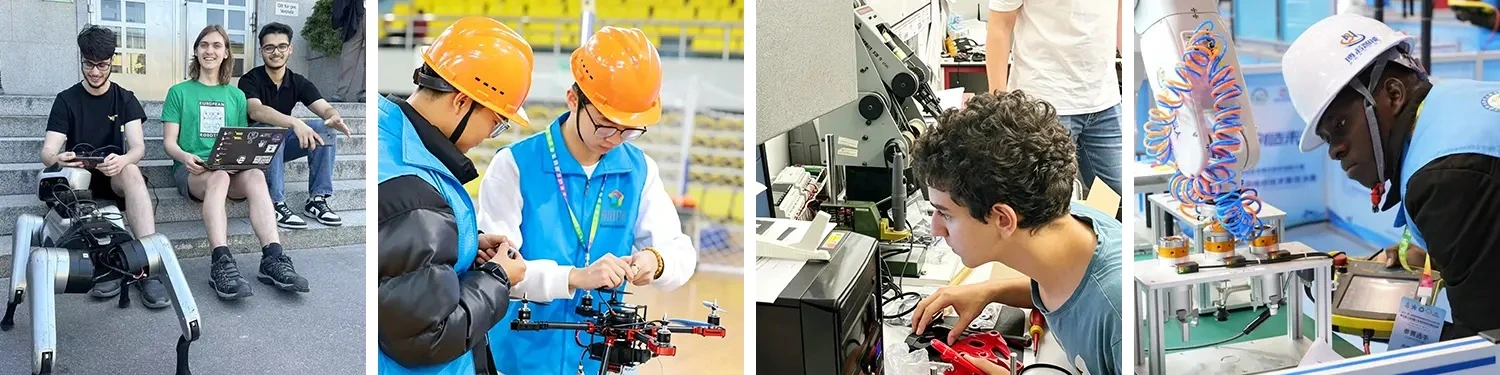
At ECR Academy, our product training program is built on 16 years of professional expertise in skills education and a global network spanning 28 countries. We've successfully trained nearly 500,000 participants, with over 300,000 earning recognized certifications. Our program delivers:
- Full-process curriculum covering structure reading, process design, CNC machining, EDM, assembly, commissioning, and quality inspection aligned with industry standards
- Five specialized training bases equipped with advanced CAD/CAM workstations, CNC machining centers, EDM equipment, and mold assembly facilities
- Expert instruction combining over 3,300 industry professionals, enterprise mentors, and certified skills coaches
- Modular project-based learning methodology reflecting real-world production challenges in automotive, medical device, and consumer electronics sectors
- Access to 60,000+ educational resources including technical standards, courseware, case libraries, and assessment systems developed with 500+ enterprise partners
- Proven track record organizing 150+ skills competitions, preparing 30,000+ learners for competitive industry environments
- Job-ready outcomes: participants gain vocational certificates and practical competencies in precision tooling, achieving tolerances of ±0.005mm to ±0.01mm

FAQ
Q: What foundation is recommended before joining this course?
A: This course is designed for learners in mechanical manufacturing and related fields. A basic understanding of mechanical drawing, the ability to read part drawings, basic knowledge of metallic materials and machining processes, and basic computer operation skills are recommended. For learners with a weaker foundation, introductory support can be provided to help them complete the core modules smoothly.
Q: What career directions does the course support?
A: Graduates can work in
- Special-Purpose Equipment Manufacturing (including mold manufacturing and maintenance)
- Automotive Manufacturing (including automotive mold machining)
- Electronics and Electrical Equipment Industries (including plastic mold manufacturing)
- Precision Mold Enterprises (including mold design and machining)
- Aerospace Manufacturing (including precision mold manufacturing)
Q: Can learners without a mold manufacturing background study this course?
A: Yes. The course is designed with beginners in mind. The theory modules progress from basic to advanced topics and include diagrams and physical demonstrations. Practical training follows a step-by-step approach of understanding, imitation, practice, and independent operation. Learners receive sufficient hands-on practice time, small-group instruction, and mentor guidance. Teaching-oriented training equipment and virtual simulation systems support safer entry-level practice.

Contact Us
Ready to elevate your mold manufacturing capabilities with Mold Manufacturing Technology? Reach us at ecr2008@enteredu.com to explore customized training solutions for your team.



_1781601799781.webp)