Industrial Robot Programming & Operations
Standards: Occupational skill standards for industrial robot system operators
Faculty: Industry engineers with real project experience
Platform: ABB / FANUC / KUKA hands-on training platforms
Outcomes: Prepare learners for roles such as robot operator, commissioning engineer, and programming technician
Target Partners: Enterprises, educational institutions, industry associations, and other organizations
Industrial Robot Programming & Operations
Course Overview
This course focuses on Industrial Robot Programming & Operations for smart manufacturing environments. Developed with reference to recognized occupational skill standards for industrial robot system operators, the course covers mechanical assembly, electrical debugging, teach pendant programming, robot operation, and workstation integration.
Learners complete hands-on programming and debugging tasks on real industrial robot platforms. Training scenarios include material handling, palletizing, welding, spraying, and workstation commissioning. Through guided practice and project-based training, learners build practical skills required for industrial robot operation, programming, equipment debugging, and technical maintenance.
Why This Course?
1. Curriculum
Developed around the National Word related Abilities Standard for Mechanical Robot Framework Administrators, with organized preparing in robot operation, programming, investigating, and framework integration.
2. Full-Process Training
Covers the total expertise chain from mechanical gathering and electrical commissioning to instruct pendant programming, prepare alteration, and workstation operation.
3. Faculty
Delivered by industry engineers and specialized educates utilizing genuine venture cases from robot application scenarios.
4. Platform
Uses genuine mechanical robot preparing stages from ABB, FANUC, KUKA, and standard household brands, bolstered by offline programming and recreation computer program such as RobotStudio and ROBOGUIDE.
5. Outcomes
Build viable aptitudes for mechanical robot operation, commissioning, programming, and gear upkeep parts.
What You'll Be Able to Do?
By the end of this course, learners will be able to perform core tasks across industrial robot assembly, electrical commissioning, programming, operation, and safety management.
1. Mechanical System Assembly and Adjustment
- Read industrial robot mechanical assembly drawings.
- Select suitable assembly tools and install robot bodies and end effectors.
- Connect and debug hydraulic and pneumatic systems.
- Inspect mechanical functions and perform precision adjustment tasks.
2. Electrical System Assembly and Commissioning
- Read electrical schematics and follow wiring procedures.
- Install electrical components and connect the robot's body electrical systems.
- Connect and test safety protection devices and safety circuits.
- Test sensors and configure related parameters.
3. Robot Operation and Programming
- Operate and program robots using teach pendants.
- Set coordinate systems and create robot motion paths.
- Debug programs and adjust process parameters.
- Apply basic PLC configuration and master control program concepts.
4. Safe Operation
- Identify industrial robot safety signs and follow operating procedures.
- Perform emergency stop operations correctly.
- Set up safe operation mechanisms and protective areas.
- Apply workplace safety awareness and basic emergency response procedures.
What You Will Learn?
|
Training Module
|
Content Description
|
|
Mechanical System Assembly and Adjustment
|
Mechanical engineering drawing, assembly processes, fits and tolerances; assembly and debugging of robot bodies, end effectors, fixtures, and tooling; connection and maintenance of hydraulic and pneumatic systems.
|
|
Electrical System Assembly and Commissioning
|
Electrical schematic reading, basic electrical and electronic technology, sensor principles and wiring, robot electrical connections, safety circuit setup, and electrical function testing.
|
|
Teach Pendant Programming and Operation
|
Teach pendant operation, coordinate system setup, trajectory programming, and application programming for material handling, palletizing, welding, and spraying. Training also covers program debugging, process parameter adjustment, and exception handling.
|
|
System Integration and PLC
|
PLC fundamentals and configuration, industrial robot communication settings, master control program development, offline programming and simulation, and robot workstation integration and joint commissioning.
|
|
Safety and Professional Practice
|
Safety sign recognition, safe operating procedures, emergency stop training, safety mechanism setup, 6S management practices, and professional ethics for industrial work environments.
|
Learning Environment
The course is conveyed in an cleverly preparing base prepared with multi-brand mechanical robot stages, counting ABB, FANUC, KUKA, and standard household robot frameworks. Learners can rehash down to earth errands on genuine hardware and construct certainty through workshop-based training.
Offline programming and recreation devices such as RobotStudio and ROBOGUIDE are utilized to confirm program rationale in virtual situations some time recently applying programs to physical robot frameworks. An online learning stage gives video lessons, advanced course readings, and hone address banks for audit and self-paced learning.
Training ventures are built around genuine mechanical cases, from fabric dealing with workstations to adaptable generation lines, making a difference learners advance from essential operation to coordinates robot workstation commissioning.
Company Strength
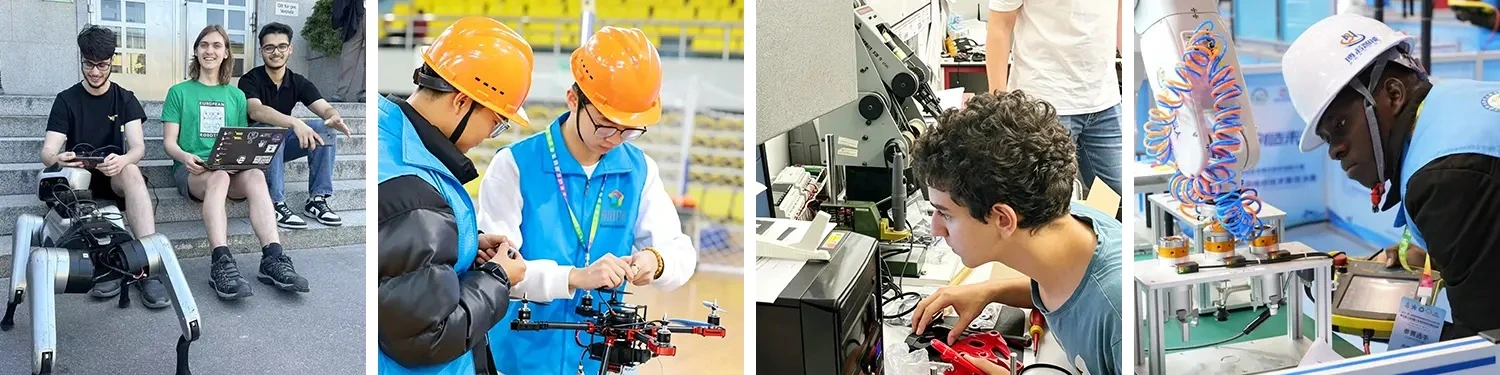
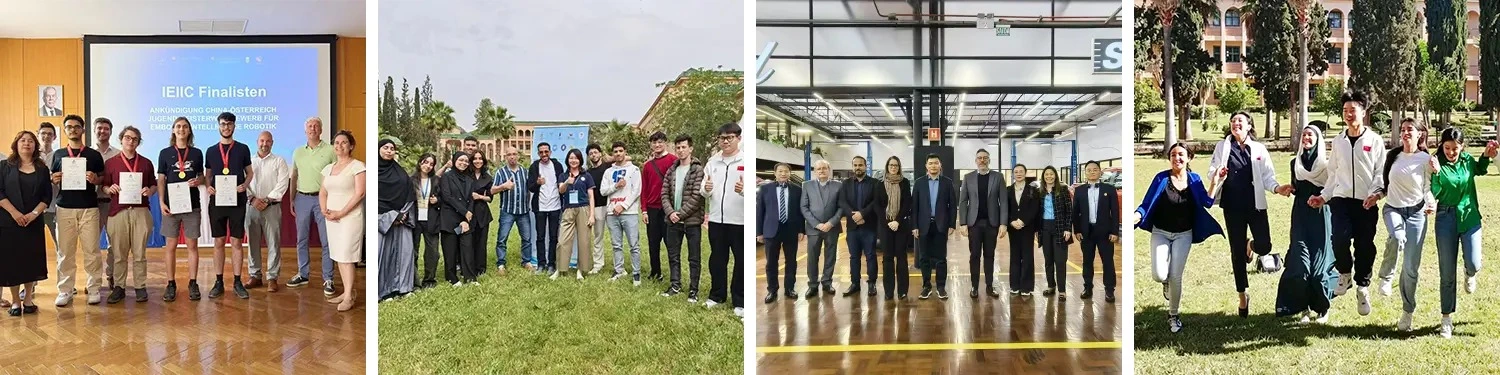
At E.C.R Academy, our Industrial Robot Programming & Operations training stands on proven global experience and industry-deep partnerships. We've delivered professional skills development to nearly 500,000 participants across 29 countries since 2010, with over 300,000 earning recognized certifications. Our program features:
- Hands-on training with ABB, FANUC, and KUKA platforms covering mechanical assembly, electrical commissioning, programming logic, and full-cycle operations
- Access to more than 3,300 industry and academic experts who bring real project experience into your learning journey
- Over 60,000 educational resources including skill standards, courseware, case studies, and assessment systems tailored for the products
- Proven track record organizing 150+ domestic and international skills competitions, helping 30,000+ learners gain competitive recognition
- Industry-aligned curriculum co-developed with 500+ enterprise partners, preparing you for roles like robot operator, commissioning engineer, and programming technician
You'll ace basic competencies—from TCP calibration and way exactness to multi-protocol interoperability—ensuring you're prepared for real-world computerization challenges in car, semiconductor, and progressed fabricating situations.
FAQ
Q: Can beginners take this course?
A: Yes. The course starts with essential theory and preparatory knowledge, including basic electrical skills and mechanical drawing. It is suitable for beginners who are interested in industrial robots and willing to complete hands-on practice.
Q: What job roles can learners pursue after completing the course?
A: Learners can prepare for roles such as industrial robot operator, robot commissioning technician, robot programming technician, and equipment maintenance technician. Industrial robots are widely used in automotive manufacturing, electronics assembly, logistics and warehousing, metal processing, and related industries.
Q: What are the minimum computer requirements for this course?
A: Recommended configuration:
- Operating System: Windows 10/11 (64-bit)
- CPU: Intel i5 or an equivalent AMD processor or above
- RAM: 16 GB RAM or above
- HDD: 256 GB SSD or above
- Graphics card: A dedicated graphics card supporting OpenGL 3.0 or later (for simulation software)
- Display: Resolution of 1920×1080 or higher
- Software: Offline robot programming and simulation software (such as RobotStudio, ROBOGUIDE, etc.)

Contact Us
Ready to advance your career in Industrial Robot Programming & Operations? Reach out to our team at ecr2008@enteredu.com to explore training solutions tailored for you.



 Engineering Technolog_1782984752055.webp)

_1781601799781.webp)