AI-based Power Inspection
Standards: International technical skills and AI engineering standards
Faculty: Power industry engineers and academic experts
Platform: Quadruped robot + AI intelligent inspection platform
Outcomes: Build practical, job-ready skills aligned with real power industry inspection needs
Target Partners: Enterprises, educational institutions, industry associations, and other organizations
AI-based Power Inspection
Course Overview
This course focuses on the full workflow of AI-based Power Inspection and intelligent power equipment inspection. Training covers data collection and processing, intelligent data annotation, AI model training and optimization, and integrated industrial inspection applications.
Designed around real power equipment inspection tasks, the course helps learners develop practical skills in dataset preparation, model training, algorithm optimization, system integration, and inspection system operation. Through project-based training, learners work with power inspection scenarios and build applied capabilities for AI training, machine vision, and intelligent inspection operations in the power industry.
Why This Course?
1. Curriculum
Combines theory with hands-on practice through power equipment inspection projects, helping learners apply AI technologies in real inspection scenarios.
2. Standards
Developed with reference to international technical skills standards and occupational requirements for AI engineering and intelligent inspection applications.
3. Faculty
Delivered by power industry engineers and academic instructors, combining field experience with structured technical training.
4. Platform
Uses an integrated intelligent inspection platform combining a quadruped inspection robot, data annotation platform, AI algorithm platform, and intelligent inspection system.
5. Outcomes
Builds practical skills for AI application development, data annotation, model training, machine vision, smart grid inspection, and intelligent inspection system operation.
What You'll Be Able to Do?
This course is designed around the full workflow of AI engineering for power inspection, from data processing and annotation to model training, system integration, and inspection system operation.
1. Data Processing and Annotation
- Collect, clean, preprocess, classify, and review power equipment inspection data.
- Use data annotation tools for image annotation, object detection annotation, text classification, and related labeling tasks.
- Define data categories and annotation rules to improve labeling accuracy and consistency.
- Perform data review and quality assessment to build reliable training datasets.
2. AI Model Training and Optimization
- Select algorithms and configure model parameters for power inspection scenarios.
- Divide training and validation datasets and monitor the model training process.
- Evaluate model performance using accuracy, recall, F1 score, and other metrics.
- Identify overfitting and underfitting issues, then optimize models through tuning, transfer learning, and fine-tuning methods.
3. Intelligent Inspection Application Development
- Analyze inspection requirements for power equipment and identify potential safety risks.
- Select suitable models and algorithms for inspection data processing and intelligent recognition.
- Integrate AI solutions into intelligent inspection systems and verify system performance.
- Operate and maintain intelligent inspection systems, manage system data, and support continuous optimization.
- Design business data collection and processing workflows for power inspection applications.
What You Will Learn?
|
Training Skills
|
Content Description
|
|
1. Data Collection and Processing
|
Work through the full data workflow for power equipment inspection.
Learn data cleaning, deduplication, missing value handling, format standardization, business data review, and data processing rule development.
The module focuses on data quality control and standardized data preparation for AI model training.
|
|
2. Intelligent Data Annotation
|
Use a human-machine collaborative data annotation platform to complete image annotation, object detection annotation, semantic segmentation, and related labeling tasks.
Learn annotation tool operation, annotation rule development, and labeling quality assessment, with a focus on data classification, labeling consistency, and annotation management.
|
|
3. AI Model Training and Optimization
|
Train models through an AI algorithm platform using mainstream deep learning frameworks such as TensorFlow, PyTorch, and PaddlePaddle.
Learn algorithm selection and parameter tuning with models such as YOLOv5 and ShuffleNet.
Training focuses on model monitoring, performance evaluation, algorithm tuning, and optimization for power inspection scenarios.
|
|
4. Integrated Industrial Inspection Applications
|
Apply robotic intelligent inspection systems in practical power equipment scenarios.
Learn inspection monitoring, task management, data analysis, and intelligent recognition functions.
Practice quadruped robot path planning, fixed-point navigation, and remote control, while building skills in scenario analysis, requirement interpretation, solution design, and system integration testing.
|
Learning Environment
The AI-Powered Power Inspection Development Platform is an integrated training platform designed for intelligent inspection in the power industry. It brings together a quadruped inspection robot, data annotation platform, AI algorithm platform, and intelligent inspection system. All software modules and development environments are pre-installed, allowing learners to focus on the application of AI technologies in real inspection scenarios.
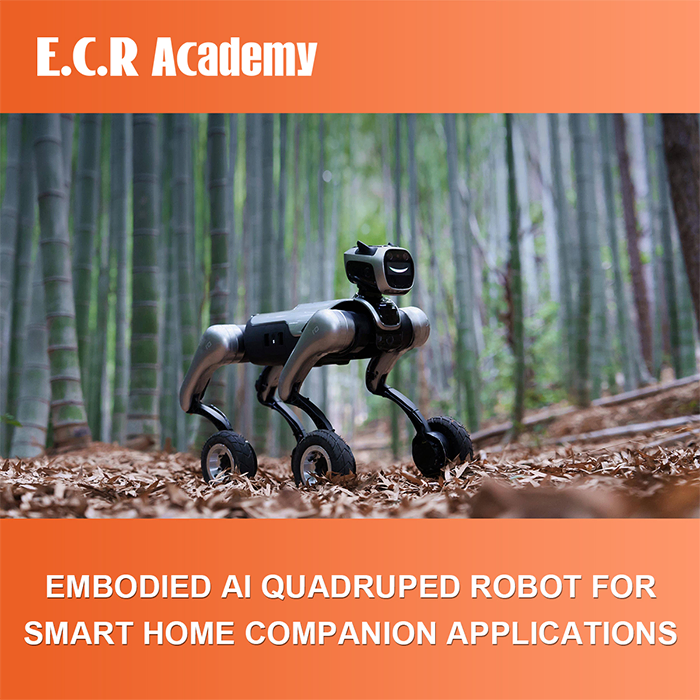
The quadruped inspection robot supports all-direction mobility, with a minimum obstacle-crossing height of 250 mm and a maximum speed of 7.2 km/h. It supports autonomous navigation, intelligent obstacle avoidance, and positioning accuracy up to ±10 cm. The AI algorithm platform is compatible with TensorFlow, PyTorch, and PaddlePaddle, and includes algorithms such as YOLOv5 and ShuffleNet.
The intelligent inspection system provides real-time monitoring, task management, data analysis, and intelligent recognition functions. It also supports digital twin technology and 3D visual alarm functions, giving learners a practical environment for AI model training, robotic inspection, system integration, and intelligent inspection operations.
Company Strength
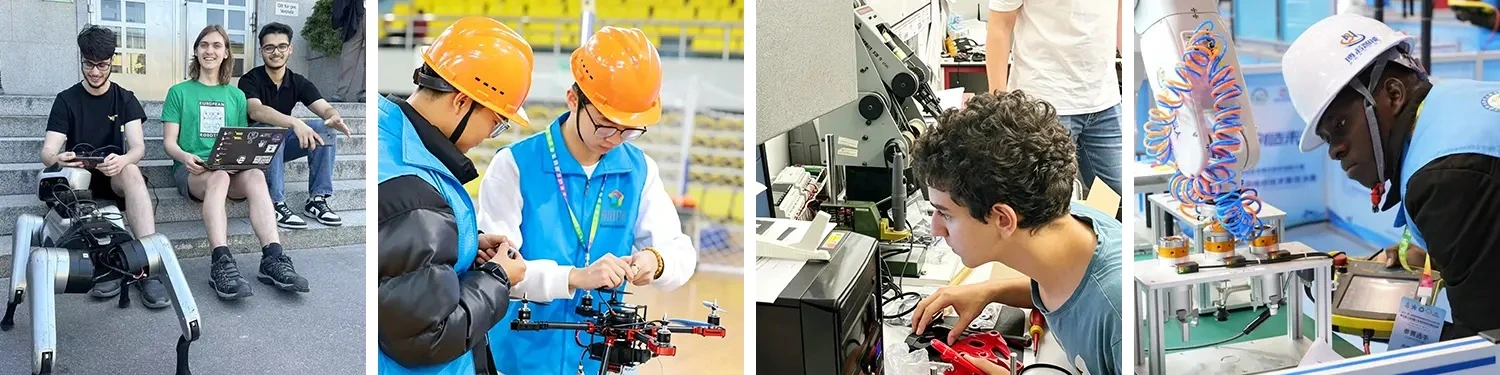
When you partner with E.C.R Academy for AI-based Power Inspection training, you gain access to unmatched expertise and resources. Our product curriculum combines cutting-edge quadruped robot platforms with intelligent inspection systems, ensuring your team masters real-world power grid challenges.
- We've trained nearly 500,000 participants across 29 countries since 2010, with over 300,000 earning recognized certifications
- Our 16 years of vocational education experience ensures industry-aligned product skill development
- You benefit from 3,300+ industry experts and partnerships with 500+ enterprises
- We provide 60,000+ educational resources including AI inspection standards, case studies, and assessment systems
- Our 150+ skills competitions have prepared 30,000+ learners for competitive technical roles
- Project-based training delivers job-ready competencies aligned with actual power inspection requirements

FAQ
Q: Can beginners take this course?
A: Yes. The platform uses an integrated design, and all software environments are pre-installed and configured. The course starts with basic data processing, then moves step by step into data annotation, model training, and application deployment. A Python programming fundamentals module is also included, making the course suitable for beginners.
Q: What job roles can learners pursue after completing the course?
A: Learners can prepare for roles such as:
- AI Application Development Engineer for Industrial Inspection
- AI Trainer
- Data Annotation Engineer
- Intelligent Inspection System Operations Engineer
- Machine Vision Algorithm Engineer
- Smart Grid Technology Engineer
- Industrial AI Solution Engineer
Q: How is the platform deployed?
A: The platform adopts an integrated deployment model. The quadruped robot is ready to use out of the box, and the PC workstation is pre-installed with the required software and development environments. The system supports remote access and cloud deployment, and can connect with existing enterprise inspection management systems. Learners can begin training after basic power-on and system startup.

Contact Us
Ready to empower your workforce with AI-based Power Inspection capabilities? Reach out to discuss customized training solutions today at ecr2008@enteredu.com.


_1781601799781.webp)