Humanoid Robot Programming
Standards: Aligned with international technical skills standards for embodied AI talent development
Faculty: Industry engineers and academic experts
Platform: Open-source SDK + built-in motion library
Outcomes: Build practical, job-ready skills aligned with real embodied AI and robotics needs
Target Partners: Enterprises, educational institutions, industry associations, and other organizations
Humanoid Robot Programming
Course Overview
This course is designed to help you build practical skills in humanoid robot programming and embodied intelligence applications.
You will learn how to work with robot platforms, develop applications using ROS, process multi-sensor data, and build intelligent systems such as navigation, perception, and human–robot interaction.
Through hands-on projects, you will develop real-world skills in motion control, mapping, object detection, and system integration.
Why This Course?
1. Curriculum
Learn through real-world tasks that combine theory with hands-on practice
2. Organization
Cultivate internationally oriented embodied intelligence professionals based on international technical skills standards
3. Faculty
Taught by both enterprise engineers and academic experts
4. Platform
Adopts open-source SDK and preset action libraries, supports remote and flexible learning
5. Outcomes
Build practical, job-ready skills for robotics and AI roles
What You'll Be Able to Do?
This project is aligned with the full-lifecycle career requirements of embodied intelligent robots, covering full-process core capabilities from basic introduction to competition applications. By the end of the course, you’ll be able to:
1. Operate and Control Humanoid Robots
- Understand the software and hardware architecture and operation methods of general-purpose humanoid robots
- Master multiple control methods, including mobile apps, controllers, and remote control
- Use built-in functions such as anthropomorphic motion control, dexterous hand operation, acrobatic movements, and voice interaction
- Master the features of robot debugging mode switching, system status monitoring, and safety protection mechanisms
2. Develop Intelligent Robot Applications
- Use ROS/ROS2 fundamentals and Python/C++ programming languages to build robot applications.
- Build environment maps and detect obstacles using 3D LiDAR and depth cameras.
- Capture and process full-scene visual data using multi-camera fisheye systems.
- Use motion control APIs, perform joint control, apply YOLO for object detection, and process RTSP video streams.
- Develop applications with the SDK, control dexterous hands using force–position hybrid methods, and implement multi-robot collaboration and scheduling.
3. Build Advanced Integrated Systems
- Develop smart tour guide applications that integrate navigation, path planning, voice interaction, and face recognition.
- Implement programs for industrial tasks such as material handling, parts assembly, and multi-robot collaboration.
- Design anthropomorphic robot motions such as waving, handshaking, celebrating, and bending. Create interactive behaviors with basic emotional responses.
- Debug code, identify and resolve issues, and optimize system performance.
What You Will Learn?
|
Training Skills
|
Description
|
|
1. Robot Platform Introduction
|
Learn how the humanoid robot platform works, including its hardware and software architecture. You will practice operating the robot and setting up the development environment. You will also learn ROS/ROS2, programming, and core perception technologies.
|
|
2. Basic Module Usage
|
Learn how to monitor robot status and control core functions such as lighting and voice interaction. You will perform human-like motions such as waving, handshaking, and nodding. You will also operate dexterous hands for tasks such as grasping and two-finger manipulation. Through guided exercises and demonstrations, you will quickly gain hands-on experience.
|
|
3. Motion Control and Acrobatics Development
|
Learn how to control robot motion using high-level APIs. You will perform actions such as standing, balancing, and executing dynamic movements. You will also apply low-level interfaces for precise joint control. You will program advanced motions such as recovery from falls, disturbance handling, and back bending.
|
|
4. Multi-Sensor Data Processing
|
Learn how to collect and process environmental data using sensors such as 3D LiDAR, depth cameras, and fisheye cameras. You will develop multi-modal perception functions, including obstacle detection, environment mapping, and object recognition.
|
|
5. Smart Tour Guide Comprehensive Case Training
|
Learn how to build smart tour guide applications through real-world scenarios such as exhibition halls, museums, and science centers. You will develop integrated solutions that combine navigation, mapping, and path planning. You will also implement features such as voice interaction, face recognition, and human-like motion.
|
|
6. Industrial Scenario Multi-Robot Collaborative Development
|
Learn how to program multi-robot collaboration for industrial tasks. You will implement coordinated operations for material handling and parts assembly. You will also use tools such as MagicDraw for map sharing, task scheduling, and fault tolerance. You will develop integrated applications for real industrial scenarios.
|
Learning Environment
The course is equipped with the Magic Atom full-size general-purpose humanoid robot MagicBot Gen 1 physical platform, standing 174 cm tall, equipped with 42 active degrees of freedom, self-developed dexterous hand MagicHand S01 (11 degrees of freedom per hand), 3D LiDAR, 2 depth cameras, 3 fisheye cameras, and other multi-modal perception modules, supporting anthropomorphic running, straight-knee walking, standing up from a fallen position, bending backward, and other high-dynamic movements.
Based on the Magic Atom open-source SDK (magicbot-gen1_sdk), providing dual-language C++/Python development interfaces, with built-in rich preset action libraries including nodding, shaking head, waving, handshaking, celebrating, etc.
You can directly call or customize control programs to quickly implement anthropomorphic motion control and intelligent interaction functions, providing strong hardware support for competition applications and project development.
Company Strength
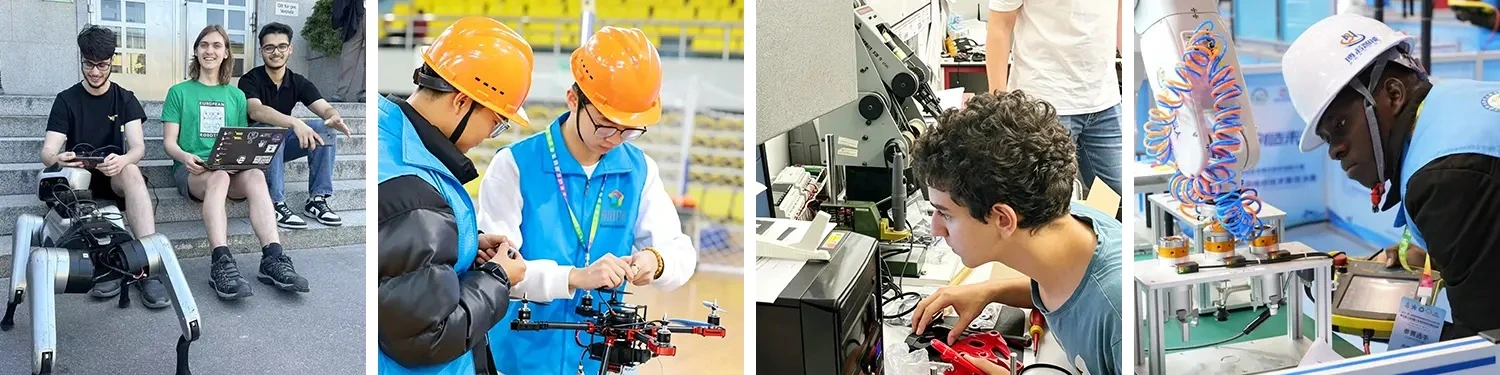
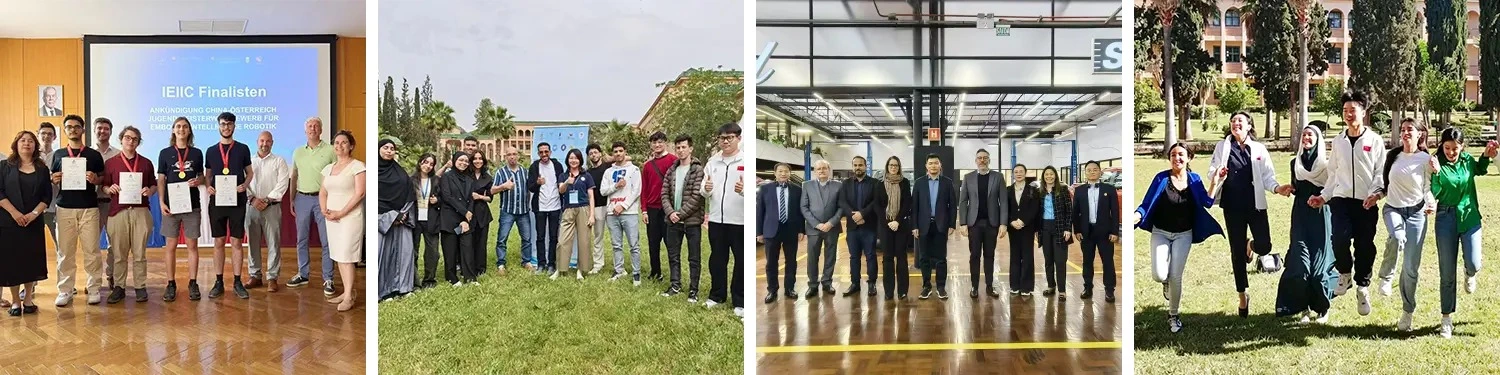
At ECR Academy, our Humanoid Robot Programming training solutions are built on proven global expertise and real-world impact. We've delivered skills development to nearly 500,000 participants across 29 countries since 2010, with over 300,000 earning recognized certifications. Our curriculum combines project-based learning with hands-on practice, supported by more than 3,300 industry engineers and academic experts who bring cutting-edge embodied AI and robotics knowledge directly to your learners. You'll benefit from our open-source SDK and built-in motion libraries, aligned with international technical standards for humanoid robotics control. With 16 years in vocational education and over 150 successful skills competitions engaging 30,000+ learners, we transform theoretical concepts into job-ready competencies that meet real industry demands in advanced industrial assembly, healthcare robotics, and disaster response applications.
FAQ
Q: Can I take this course with no prior experience?
A: Yes. The course is designed for beginners and starts with the fundamentals.
You will gradually learn how the robot works and how to develop applications step by step.
Q: What career positions can I pursue after completing the course?
A: After completing the training, you can pursue roles such as:
- Humanoid Robot Algorithm Engineer / Embodied Intelligence Development Engineer
- General-Purpose Humanoid Robot Application Development Engineer
- Robot Vision Algorithm Engineer / Motion Control Engineer
- Autonomous Navigation and Path Planning Engineer
- Dexterous Hand Operation and Precision Work Development Engineer
- Multi-Robot Collaborative System Development Engineer
- ROS/ROS2 Development Engineer
- International Competition Instructor / Trainer
Q: What are the minimum computer configuration requirements for learning?
A: Platform configuration requirements
- Operating System: Ubuntu 22.04 or higher (recommended)
- CPU: Intel Core i5 or above (GCC ≥ 11.4)
- Memory: 16GB or above
- Hard Drive: 256GB or above
- Graphics Card: Dedicated graphics card, 4 GB VRAM
- Development Environment: CMake ≥ 3.16, Python 3.10, supporting the C++20 standard

Contact Us
Ready to empower your team with future-ready Humanoid Robot Programming skills? Reach out to us at ecr2008@enteredu.com to explore tailored training solutions for your organization.

 Technology.webp)




_1781601799781.webp)