Green Food Production Technology
Training Model: Project-based learning with real production cases
Faculty: Dual-qualified instructors with teaching and industry experience
Platform: Practical training platform for production and testing scenarios
Outcomes: Build practical skills for agricultural technology, plant protection, and agricultural product quality inspection roles
Target Partners: Enterprises, educational institutions, industry associations, and other organizations
Green Food Production Technology
Course Overview
The Green Food Production Technology program addresses the growing demand for safe, sustainable, and certified food production. Focused on standardized green production and quality safety assurance, this program develops professionals capable of implementing green food production standards and performing agricultural product quality testing.
The program targets four core competency areas: standardized vegetable production, eco-friendly pest management, agricultural product quality testing, and green food certification and marketing — all aligned with industry needs in green food production, technical services, and quality inspection.
Why This Course?
1.Curriculum
Built on a "Theory–Practice–Certification" framework, integrating real production cases throughout the entire training process.
2. Faculty
Delivered by dual-qualified instructors with both academic expertise and hands-on industry experience in green agriculture.
3. Platform
Equipped with advanced labs and testing facilities that replicate real production and inspection environments.
4. Industry Alignment
Course content is closely mapped to job requirements in agricultural enterprises and green food production sectors.
5. Outcomes
Learners develop job-relevant skills for agricultural technology guidance, plant protection, and agricultural product quality inspection.
What You'll Be Able to Do?
1. Perform Standardized Vegetable Production
- Apply plug seedling and grafting techniques for vegetable propagation
- Manage facility environment control for greenhouse vegetable production
- Implement standardized field management and quality regulation
- Perform post-harvest handling and quality assessment
2. Conduct Eco-Friendly Pest Management
- Identify and diagnose agricultural pests and diseases
- Apply ecological regulation and physical control methods
- Operate biological pesticide application techniques
- Perform drone-based precision spraying operations
3. Execute Agricultural Product Quality Testing
- Perform sample collection and preparation
- Conduct production environment monitoring and analysis
- Operate spectroscopic and chromatographic instruments for safety testing
- Analyze and evaluate test results against quality standards
What You Will Learn?
|
Module
|
Content
|
|
1. Agricultural Chemistry Application
|
Perform soil nutrient analysis and evaluation.
Apply fertilizer selection and dosage techniques.
Conduct plant nutrition diagnosis.
Manage chemical inputs safely.
|
|
2. Plant Growth Environment Control
|
Apply soil improvement techniques.
Manage irrigation and water systems.
Regulate facility environments for optimal crop growth.
|
|
3. Agricultural Microbiology Technology
|
Analyze soil microbial communities; apply microbial fertilizer technologies.
Isolate and cultivate beneficial microorganisms.
Apply fermentation techniques in edible fungi production.
|
|
4. Standardized Vegetable Production
|
Apply plug seedling and grafting techniques.
Produce leafy and fruiting vegetables under standardized protocols.
Manage greenhouse environments and crop scheduling.
|
|
5. Plant Protection Technology
|
Identify and diagnose crop pests and diseases.
Conduct field surveys and monitoring.
Develop integrated pest management strategies.
Operate and maintain plant protection equipment.
|
|
6. Eco-Friendly Pest Management
|
Apply agricultural ecological regulation; implement physical control methods.
Select and apply biological pesticides.
Operate drone spraying following standard protocols.
|
|
7. Agricultural Product Quality Testing
|
Perform sample collection and preparation.
Apply spectrophotometric methods.
Operate atomic absorption spectrometers.
Conduct chromatographic analysis (GC/HPLC).
|
|
8. Pesticide Residue Detection
|
Prepare samples for residue testing.
Operate gas chromatographs.
Operate liquid chromatographs.
Analyze and evaluate detection results.
|
|
9. Agricultural Product Quality Management
|
Build green food traceability systems.
Establish and manage production records.
Assess quality safety risks; classify product quality grades.
|
Learning Environment
1. Plant Production Environment Lab
Equipped with environmental monitoring and soil analysis instruments, including weather monitoring stations, soil nutrient rapid testers, soil heavy metal detection devices, and atomic absorption spectrophotometers.
2. Crop Production Lab
Features intelligent crop production equipment, including smart artificial climate chambers, variable-temperature germinators, grain moisture analyzers, near-infrared quality analyzers, and seed viability testers.
3. Plant Protection Lab
Includes a pest and disease specimen display area and a modern plant protection training zone, with resources such as pest/disease specimens, agricultural drones, rapid plant disease diagnostic instruments, spore traps, and insect monitoring lamps.
4. Agricultural Product Environmental Testing Lab
Equipped with professional analytical instruments, including spectrophotometer series, Kjeldahl nitrogen analyzers, atomic absorption spectrophotometers, and ultrapure water systems.
5. Agricultural Product Safety Inspection Lab
Equipped with high-end chromatographic instruments, including HPLC systems, GC systems, atomic absorption spectrophotometers, rotary evaporators, and high-speed refrigerated centrifuges.
Company Strength
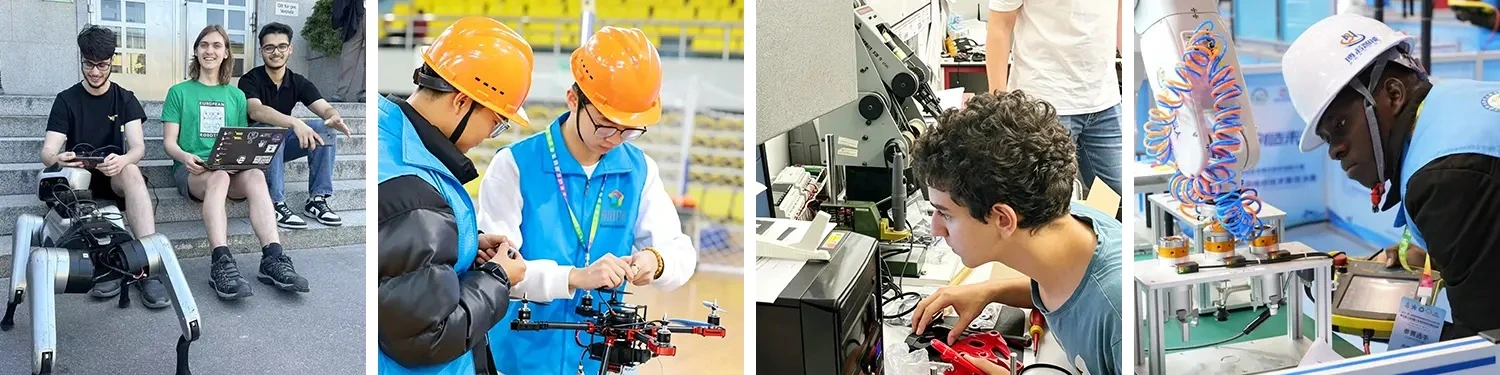
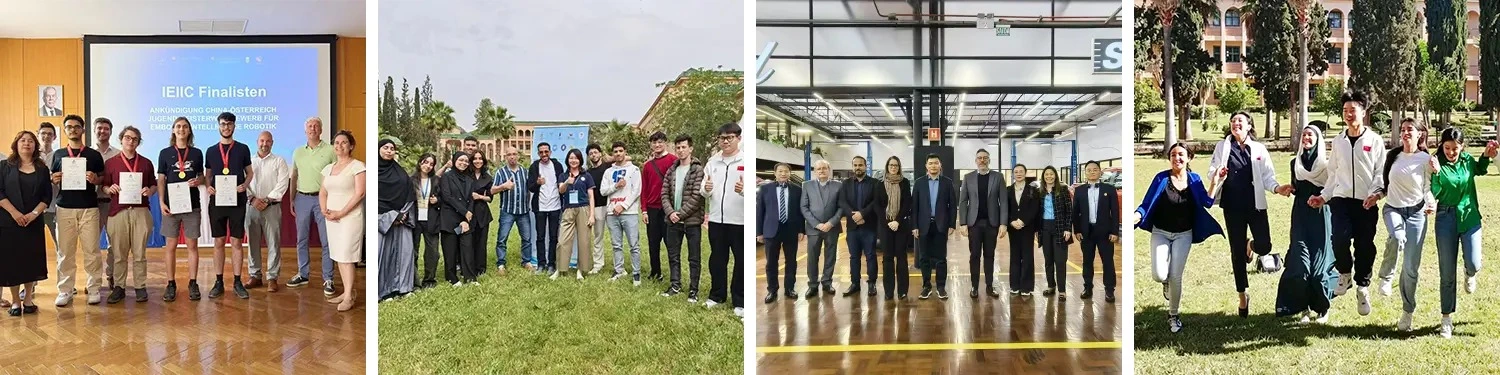
At ECR Academy, our Green Food Production Technology training builds on over 16 years of proven expertise in global skills education. Here's what sets us apart:
- We've successfully trained nearly 500,000 participants across China and 28 countries, with more than 300,000 earning recognized certifications in sustainable agriculture and food production
- Our program leverages a comprehensive ecosystem of 3,300+ industry experts and partnerships with 500+ enterprises to deliver real-world green farming solutions
- You'll access over 60,000 specialized educational resources covering sustainable production standards, quality testing protocols, and certification systems
- We've organized 150+ skills competitions that helped 30,000+ learners master practical techniques in biological control, precision nutrient management, and ecological farming
- Our dual-qualified instructors combine teaching excellence with hands-on industry experience in organic agriculture and environmental management
- You benefit from our project-based learning model using actual production cases that prepare you for roles in agricultural technology and quality inspection
FAQ
Q: Do I need prior experience to enroll?
A: No prior professional background is required. The program starts with foundational modules covering basic agricultural science and chemistry, then progresses to advanced skill development. A high school education and interest in green food production are sufficient. Some background in agriculture, biology, or chemistry may enhance the learning experience.
Q: What career paths does this program prepare me for?
A: Graduates can pursue roles including: Agricultural Technical Advisor (promoting and guiding production techniques), Plant Protection Technician (pest monitoring and eco-friendly control), Crop Production Manager (managing standardized green food production), and Agricultural Product Quality Inspector (conducting safety testing at inspection agencies).
Q: How is the course delivered?
A: The program combines classroom lectures with multimedia instruction, case analysis, and group discussions. Hands-on training is conducted in professional labs and training bases, emphasizing practical operation skills. Learning schedules can be customized based on participant needs.
Q: Are the training facilities sufficient for hands-on practice?
A: Yes. Training equipment is configured according to class size. Learners can work in groups during practical sessions, ensuring sufficient hands-on opportunities for each participant.

Contact Us
Ready to advance your expertise in sustainable agriculture with Green Food Production Technology? Connect with ECR Academy today at ecr2008@enteredu.com to explore our training programs.





_1781601799781.webp)