Electronic Product Inspection Technology
Core Skills: Electronic product testing and analysis aligned with industry standards
Faculty: Joint instruction by enterprise engineers and college experts
Platform: Virtual simulation platform for component testing, measurement calibration, and process training
Employment: Skills aligned with testing needs in the electronic information industry
Target Partners: Enterprises, educational institutions, industry associations, and other organizations
Electronic Product Inspection Technology
Course Overview
This program focuses on Electronic Product Inspection Technology and is designed for quality inspection roles in the electronic information industry. The curriculum covers electronic component identification and testing, electronic measurement technology, sensor principles and applications, instrument calibration technology, electronic process training, and electronic CAD.
Learners systematically study methods for identifying and testing common electronic components, the use of measuring instruments such as multimeters and oscilloscopes, sensor application and debugging, instrument calibration, electronic product assembly processes, and CAD drawing skills. After completing the program, learners can prepare for roles in electronic product quality inspection, instrument calibration, sensor applications, and related technical work.
Why This Course?
1. Curriculum
Combines theory with hands-on practice and project-based learning to support practical application.
2. Skills
Aligned with industry standards, the program develops practical capability in electronic product testing and analysis.
3. Faculty
Delivered jointly by enterprise engineers and academic instructors.
4. Platform
Supported by an integrated virtual simulation platform for component testing, measurement calibration, and electronic process training.
5. Career Pathways
Aligned with testing needs in the electronic information industry and related technical roles.
What You Will Be Able to Do?
This program is aligned with core skill requirements in the electronic information industry and covers the full workflow from component testing to process application.
1. Electronic Component Identification and Testing
- Identify common electronic components such as resistors, capacitors, inductors, diodes, transistors, and integrated circuits.
- Use multimeters and related instruments to measure component parameters and make replacement judgments.
- Perform component appearance inspection, parameter testing, and selection tasks.
2. Electronic Measurement Technology
- Use common electronic measuring instruments, including multimeters, oscilloscopes, signal generators, and frequency counters.
- Measure voltage, current, resistance, capacitance, frequency, and related parameters correctly.
- Analyze and record electronic measurement data.
3. Sensor Principles and Applications
- Understand the working principles of temperature sensors, pressure sensors, humidity sensors, photoelectric sensors, and related devices.
- Select appropriate sensors and design basic application circuits.
- Test and debug sensor applications.
4. Instrument Calibration Technology
- Understand calibration principles, calibration methods, and calibration cycle management for electronic measuring instruments.
- Calibrate and adjust instruments such as multimeters and oscilloscopes according to metrology procedures.
- Manage measuring instruments and support measurement traceability.
5. Electronic Process and Electronic CAD
- Understand electronic product assembly processes and soldering processes.
- Use basic functions of electronic CAD software.
- Read and prepare simple circuit diagrams and PCB drawings.
What You Will Learn?
|
Training Skill
|
Content Description
|
|
1. Electronic Component Identification and Testing
|
Learn identification methods, parameter measurement, and replacement principles for common electronic components, including resistors, capacitors, inductors, diodes, transistors, and integrated circuits.
Develop capability in appearance inspection, parameter testing, and component selection.
|
|
2. Electronic Measurement Technology
|
Use common electronic measuring instruments such as multimeters, oscilloscopes, signal generators, and frequency counters.
Complete correct measurement of voltage, current, resistance, capacitance, frequency, and related parameters.
|
|
3. Sensor Principles and Applications
|
Study the working principles, selection methods, and application circuits of common sensors, including temperature sensors, pressure sensors, humidity sensors, and photoelectric sensors.
Develop sensor testing and debugging capability.
|
|
4. Instrument Calibration Technology
|
Understand calibration principles, calibration methods, and calibration cycle management for electronic measuring instruments.
Calibrate and adjust instruments such as multimeters and oscilloscopes according to metrology procedures.
|
|
5. Electronic Process and Electronic CAD
|
Learn electronic product assembly processes, soldering processes, and process document preparation.
Use basic functions of electronic CAD software, and read and prepare simple circuit diagrams and PCB drawings.
|
Learning Platform
The platform builds a complete technical workflow from component testing to electronic process training.
The component testing platform focuses on core skills such as electronic component identification and parameter measurement.
The electronic measurement platform uses instruments such as oscilloscopes and multimeters to support accurate measurement practice.
The sensor application platform simulates testing scenarios for temperature, pressure, humidity, and related sensors, helping learners move from principle understanding to application debugging.
The instrument calibration platform develops capability in following metrology procedures and calibrating instruments.
The electronic process platform supports soldering process training and CAD drawing practice.
Together, the five platforms form an integrated technical system of cognition, measurement, application, calibration, and process training, covering the key stages of electronic product testing technology. The platform uses virtual simulation technology with smart terminals as the operating environment. Learners can complete operation training in a highly simulated environment, supporting structured practice and flexible learning scenarios.
Company Strength
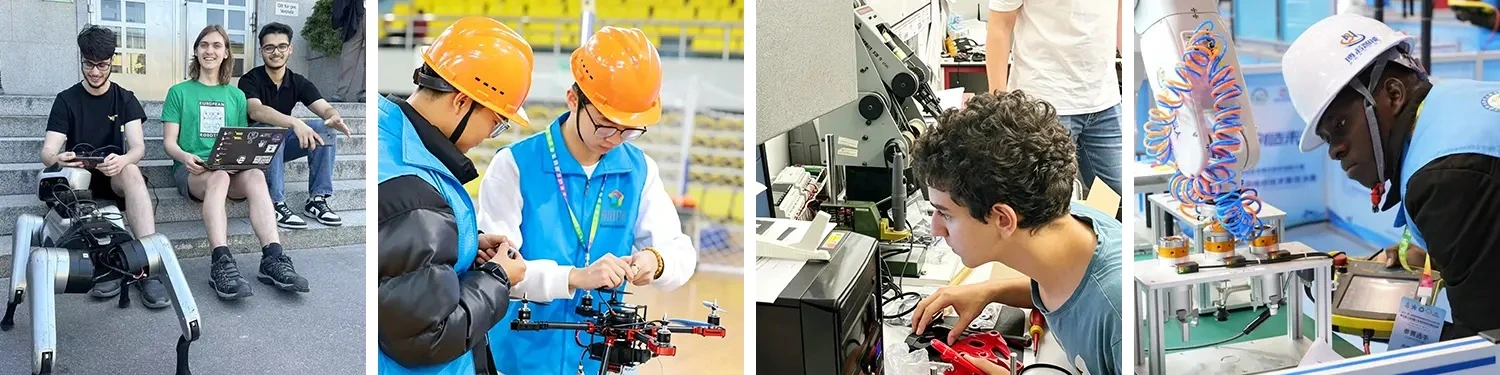
When you partner with ECR Academy for Electronic Product Inspection Technology training solutions, you gain access to a proven educational ecosystem built on real-world expertise. Our platform equips learners with critical skills in Automated Optical Inspection (AOI), X-ray analysis, and PCB quality verification through industry-aligned curriculum.
- We've trained nearly 500,000 participants across 29 countries since 2010, with over 300,000 earning recognized certifications in electronics testing and quality control
- Our network includes 3,300+ industry experts and 500+ enterprise partners who co-develop practical training in component testing and measurement calibration
- You'll benefit from 60,000+ educational resources covering skill standards, assessment systems, and real case studies in electronic assembly inspection
- We've organized 150+ skills competitions helping 30,000+ learners master hands-on techniques in solder joint analysis and functional verification
- Our virtual simulation platform mirrors actual production environments where PCB integrity and regulatory compliance testing happen

FAQ
Q: Can beginners study this program?
A: Yes. The program combines theory with hands-on practice and starts with the fundamentals of electronic components and basic circuit principles. Learners are guided step by step toward core knowledge in electronic product testing technology. Basic physics knowledge and computer operation skills are recommended.
Q: What roles can learners pursue after completing the program?
A: After completing the training, learners can prepare for roles such as:
- Electronic Component Inspector
- Electronic Product Testing Technician
- Measuring Instrument Calibration Technician
- Sensor Application Engineer
- Electronic Process Technician
- Quality Control Technician
- Quality Inspection Engineer
Q: How is the platform deployed?
A: The platform uses virtual simulation technology with smart terminals as the operating environment. Learners need computer equipment that meets the configuration requirements, such as Windows 10 and 8 GB or more memory, to complete virtual simulation training through the software. The platform supports online learning and simulation practice, connecting theoretical learning with practical operation training.

Contact Us
Ready to build future-ready talent in Electronic Product Inspection Technology? Reach out to our team at ecr2008@enteredu.com to explore partnership opportunities today.

_1781601799781.webp)