Agricultural Product Processing and Quality Testing
Standards: Aligned with agricultural product processing and food safety standards
Faculty: Enterprise technical experts and academic instructors
Platform: Virtual-real training based on production lines and testing equipment
Outcomes: Build practical skills aligned with the needs of agricultural product processing enterprises, quality inspection agencies, and third-party testing laboratories
Target Partners: Enterprises, educational institutions, industry associations, and other organizations
Agricultural Product Processing and Quality Testing
Course Overview
This course on Agricultural Product Processing and Quality Testing focuses on value-added utilization of agricultural products and food safety assurance. Built on a dual-core curriculum of processing technology + quality inspection, the program delivers systematic, industry-standard training through real-world projects.
Learners will develop practical skills across
- Grain & oil processing
- Fruit & vegetable processing
- Livestock product processing
- Storage & preservation
- Quality inspection
- Safety control
The training covers the complete industrial chain—from raw material acceptance, pre-treatment, and processing to quality inspection and safety control—using a progressive, hands-on teaching approach.
Why This Course?
1.Curriculum
Covers three major spaces: grain & oil, natural product & vegetables, and animals items. Coordinating full-chain quality review and security control through an coordinates learning, hone, and aptitudes competition approach.
2.Faculty
Joint instruction by endeavor specialized specialists and proficient educators—dual direction in hypothesis and practice.
3.Platform
Blends genuine generation lines with assessment hardware in a virtual-physical coordinates environment, overcoming conventional preparing limitations.
4. Industry Alignment
Aligned with agrarian preparing endeavors, quality assessment organizations, and third-party testing laboratories.
5.Outcomes
Builds job-relevant capabilities for handling and review parts, improving learners’ employability in the agrarian item industry.
What You'll Be Able to Do?
1. Process Grain, Oil, Fruit, Vegetable & Livestock Products
- Operate rice milling, flour milling, oil extraction, and baking production lines
- Perform fresh-cut, pickled, candied, dried, quick-frozen, and canned fruit/vegetable processing
- Apply low-temperature, modified atmosphere, and irradiation technologies in meat, dairy, and egg product processing
- Operate, maintain, and troubleshoot food processing machinery
2. Manage Agricultural Product Storage & Preservation
- Apply controlled atmosphere, cold storage, drying, chemical, and irradiation preservation techniques
- Analyze quality changes during storage and develop preservation plans
- Control raw material acceptance standards and storage conditions
- Understand cold chain logistics and warehouse management workflows
3. Perform Quality Inspection
- Conduct nutritional analysis: protein, fat, carbohydrate, moisture, and ash content
- Detect hazardous substances: pesticide residues, veterinary drug residues, heavy metals, and microorganisms
- Operate GC, HPLC, AAS, and Kjeldahl analyzers
- Analyze test data, compile inspection reports, and evaluate product quality
4. Implement Quality & Safety Control
- Develop and execute HACCP plans; identify critical control points (CCPs) and monitoring measures
- Establish and operate quality management systems (ISO 22000, ISO 9001)
- Interpret agricultural product standards and regulations; perform compliance analysis and risk assessment
- Handle quality incidents and establish product traceability systems
What You Will Learn?
|
Training Module
|
Content
|
|
1. Grain & Oil Product Processing
|
Learn how to perform raw material cleaning, hulling, milling, flour grinding, oil extraction, dough mixing, forming, and baking.
Master rice processing (brown rice, germ rice, polished rice), vegetable oil extraction (pressing and solvent methods), grain flour processing, starch production, soy product processing, and baked food manufacturing.
|
|
2. Fruit & Vegetable Product Processing
|
Learn how to perform pre-treatment, peeling, cutting, pulping, juice extraction, sterilization, filling, pickling, candying, drying, and quick-freezing.
Master fresh-cut processing, pickled products (kimchi, sauced vegetables), candied products (preserved fruits, jams), dried products, fruit/vegetable juice, and canned products.
|
|
3. Livestock Product Processing
|
Learn how to perform cutting, curing, tumbling, chopping, emulsifying, stuffing, smoking, sterilization, and drying.
Master meat products (sausage, ham, bacon), dairy products (yogurt, cheese), egg products (salted eggs, preserved eggs), and low-temperature meat products.
Apply cold chain, modified atmosphere, and irradiation technologies.
|
|
4. Storage & Preservation Technology
|
Learn how to perform pre-cooling, storage environment control, preservative application, and packaging.
Master controlled atmosphere storage operation and parameter adjustment, cold chain management, dehydration preservation, chemical preservative formulation, and irradiation preservation principles.
|
|
5. Quality Inspection Technology
|
Learn how to perform sample collection, physicochemical index determination, hazardous substance detection, and microbiological testing.
Master nutritional analysis, pesticide residue detection (GC), veterinary drug residue detection (HPLC), heavy metal detection (AAS), and microbiological testing (total colony count, E. coli, Salmonella).
|
|
6. Quality & Safety Control Technology
|
Learn how to interpret standards and regulations, build HACCP systems, implement GMP, and establish traceability systems.
Master the seven HACCP principles, CCP identification and monitoring, risk assessment, non-conforming product control, emergency response, and product traceability.
|
Learning Environment
The course is delivered through a comprehensive training base equipped with industry-standard facilities:
- Grain & Oil Processing Lab: Rice milling, vegetable oil extraction, baked food production
- Fruit & Vegetable Processing Lab: Juice processing, canning, dried products, quick-frozen products
- Livestock Product Processing Lab: Meat, dairy, and egg product processing
- Physicochemical Testing Lab: Nutritional analysis, pesticide residue, heavy metal detection
- Microbiological Testing Lab: Microbiological inspection, colony counting, biological indicators
- Chemistry Lab: Sample pre-treatment, physicochemical index determination
All hardware mirrors genuine generation lines and testing research facilities. Learners perform hands-on operations in little bunches with full get to to hardware.

Company Strength
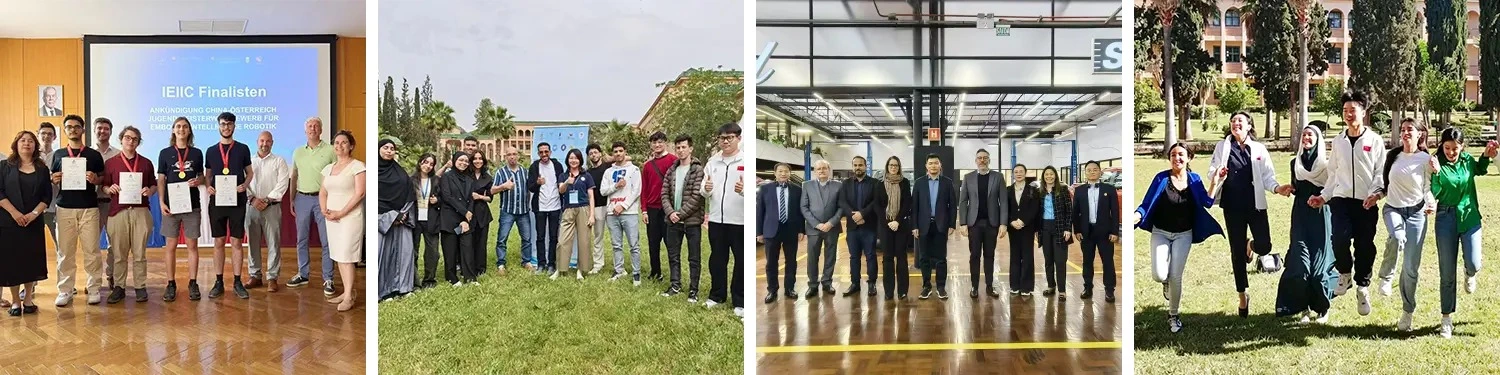
At ECR Academy, our Agricultural Product Processing and Quality Testing programs are built on real-world industry needs and proven educational excellence. Here's what sets us apart:
- We've trained nearly 500,000 participants across China and 28 countries since 2010, with over 300,000 learners earning recognized skills certifications in food safety and processing fields
- Our curriculum integrates hands-on training in grain, oil, fruit, vegetable, and livestock processing, aligned with international agricultural product standards and food safety protocols
- You'll learn from a network of more than 3,300 industry and academic experts who bring practical experience from processing enterprises and quality inspection agencies
- We provide access to over 60,000 educational resources, including skill standards, case studies, and assessment systems specifically designed for agricultural processing professionals
- Our training combines virtual simulations with real production line environments and testing equipment, ensuring you master both theoretical knowledge and practical competencies
- With partnerships across over 500 enterprises and 16 years of vocational training experience, we connect you directly to career opportunities in agricultural processing, quality control labs, and third-party testing facilities
FAQ
Q: Can fledglings with no foundation take this course?
A: Yes. The course is organized into establishment and progressed modules. The establishment modules cover chemistry essentials, microbiology essentials, and agrarian handling apparatus. Progressed modules construct on this establishment to create specialized proficient skills.
Q: What positions can I seek after after completing this course?
A: After completing the preparing, learners can create aptitudes significant to parts such as:
- Agricultural Product Processing Technician / Workshop Supervisor
- Grain & Oil Processing Engineer / Fruit & Vegetable Processing Engineer / Livestock Product Processing Engineer
- Agricultural Product & Food Inspector / Quality Testing Technician
- Quality & Safety Administrator / HACCP Internal Auditor
- Quality Control Supervisor / Quality Department Manager
- Third-Party Testing Laboratory Engineer
- Food Factory Technical Director / Quality Management Director
Q: Is a chemistry or biology background required?
A: No. The curriculum is designed for beginners. Foundation stages cover basic chemistry and microbiology. Advanced stages involve analytical chemistry and instrumental analysis, taught through integrated theory-practice methods from basic operations to comprehensive application.
Q: How is the training equipment used?
A: All equipment is configured to real production line and laboratory standards. Learners operate in small groups under instructor guidance with ample hands-on practice. Processing equipment covers full workflows from raw material to finished product. Testing equipment covers full workflows from sample collection to report issuance.

Contact Us
Ready to advance your expertise in Agricultural Product Processing and Quality Testing? Reach out to our team at ecr2008@enteredu.com to explore training solutions tailored for your goals.



_1781601799781.webp)