Renewable Energy Equipment Technology
Standards: Aligned with international skill standards and new energy equipment industry needs
Faculty: Joint instruction by enterprise engineers and college experts
Platform: Training facilities supported by simulation, big data, and cloud computing
Outcome: High-level skills aligned with new energy equipment industry needs
Target Partners: Enterprises, educational institutions, industry associations, and other organizations
Renewable Energy Equipment Technology
Course Overview
This course is oriented toward the equipment manufacturing and electromechanical equipment categories in Renewable Energy Equipment Technology, helping learners develop practical technical capabilities capable of engaging in process design, assembly, lifting and installation, and commissioning of new energy equipment, as well as operation and management, equipment maintenance, and overhaul of new energy power plants. The curriculum covers core skills including:
- Renewable energy equipment assembly
- Renewable energy equipment commissioning
- PV module fabrication and testing
- Renewable energy equipment testing and control
- Renewable energy equipment maintenance and overhaul
- Renewable energy power conversion technology
- Power supply and distribution system installation and maintenance
Adopting an integrated theory-and-practice teaching approach, the program delivers project-based instruction built on real production projects and typical work tasks, combined with virtual simulation and intelligent monitoring technology, cultivating versatile technical professionals who can meet the demands of the new energy equipment industry's large-scale, digital, and intelligent development.
Why This Course?
1. Curriculum
Integrates theory with practice through project-driven learning, supporting practical skill application.
2. Standards
Aligned with international technical skill standards and the job requirements of the renewable energy equipment industry.
3. Faculty
Enterprise engineers and academic experts co-deliver instruction.
4. Platform
Equipped with comprehensive training facilities leveraging cutting-edge information technologies including virtual simulation, big data, and cloud computing.
5. Outcomes
Directly aligned with new energy equipment industry development needs, helping learners develop practical technical capabilities and supporting career development in renewable energy equipment-related roles.
What You'll Be Able to Do?
1. New Energy Equipment Manufacturing and Assembly
- Master the components and structural principles of new energy equipment such as wind power generation equipment and PV power generation equipment
- Assemble wind or PV power generation equipment in accordance with workshop assembly processes, specifications, standards, and tool usage methods
- Apply on-site installation processes and methods for new energy equipment; organize and manage on-site installation activities
- Perform PV module fabrication processes including single soldering, string soldering, and layup; operate equipment such as laminators
2. New Energy Equipment Commissioning and Testing
- Perform workshop commissioning of wind power generation equipment in accordance with relevant processes, specifications, and standards
- Conduct on-site commissioning of wind or PV power generation equipment and systems in accordance with relevant processes and specifications
- Master the principles and usage methods of sensors for common signal detection in wind or PV power generation equipment and systems
- Correctly interpret electrical control drawings for wind or PV power generation equipment; perform complete machine integrated commissioning
3. New Energy Equipment Operation, Maintenance, and Overhaul
- Perform routine maintenance and servicing of wind or PV power generation equipment in accordance with relevant processes, specifications, and standards
- Analyze and handle common faults in wind or PV power generation equipment
- Apply knowledge of major electrical equipment and relay protection in power supply and distribution systems
- Maintain and overhaul substation electrical equipment
What You Will Learn?
|
Training Skills
|
Description
|
|
New Energy Equipment Assembly Technology
|
Master the components and structural principles of wind or PV power generation equipment.
Perform workshop mechanical assembly and electrical assembly in accordance with assembly processes, specifications, and standards.
Study on-site mechanical and electrical installation methods for wind or PV power generation equipment.
Develop on-site installation organization and management capabilities.
|
|
New Energy Equipment Commissioning Technology
|
Study workshop mechanical inspection and electrical commissioning methods for wind power generation equipment.
Master on-site commissioning and complete machine integrated commissioning techniques for wind or PV power generation equipment.
Perform commissioning in accordance with commissioning processes, specifications, and standards.
Develop on-site commissioning organization and management capabilities.
|
|
PV Module Fabrication and Testing
|
Master PV module workshop fabrication processes, including single soldering, string soldering, layup, and TPT/EVA cutting.
Operate laminators for PV module fabrication.
Study PV module visual quality inspection and electrical performance testing methods.
Use testing equipment to test PV cells.
|
|
New Energy Equipment Testing and Control
|
Master the principles and usage methods of sensors for common signal detection in wind or PV power generation equipment and systems.
Study the basic control requirements and control strategies of the equipment.
Identify common control devices.
Correctly interpret electrical control drawings.
Perform testing and control system commissioning.
|
|
New Energy Equipment Maintenance and Overhaul
|
Study periodic inspection, routine maintenance, and fault-overhaul methods for wind or PV power generation equipment.
Perform routine maintenance and servicing in accordance with maintenance processes, specifications, and standards.
Master common fault analysis and handling methods.
Correctly fill in maintenance logs and fault overhaul records.
Develop maintenance personnel scheduling and organization capabilities.
|
|
New Energy Power Conversion Technology
|
Master analysis methods for power electronic devices, drive and protection circuits.
Analyze and build controlled rectifier circuits, DC-DC conversion circuits, and inverter circuits.
Troubleshoot power conversion devices in wind or PV power generation equipment and systems.
|
|
Power Supply and Distribution System Installation and Maintenance
|
Master knowledge of major electrical equipment and relay protection in power supply and distribution systems.
Calculate secondary circuits and automatic devices, electrical safety, and power loads in power supply systems.
Perform short-circuit calculations and electrical equipment selection and verification.
Interpret and draw power supply and distribution system circuit diagrams.
Maintain and overhaul substation electrical equipment.
|
Learning Environment
The course is equipped with comprehensive training facilities, including:
Foundational Skills Training Labs
Electrical engineering fundamentals training lab, electronic technology training lab, electrical control circuit assembly and commissioning training lab, programmable control comprehensive training lab, and power electronics experiment training lab — equipped with complete experiment benches, multimeters, oscilloscopes, PLC programming and simulation software, and other equipment and facilities.
Professional Core Training Labs
Wind turbine principles and control training lab, wind turbine complete machine assembly and commissioning training lab, PV cell performance testing training lab, and PV module and resin-drip board production training lab — equipped with wind turbine training devices, PV module production equipment, and other professional equipment.
Virtual Simulation Training Labs
Wind turbine simulation training lab and PV power system design and simulation training lab — equipped with virtual simulation software for training in assembly, commissioning, maintenance, and overhaul.
The training environment is aligned with real occupational scenarios, leveraging cutting-edge information technologies including virtual simulation, big data, cloud computing, and artificial intelligence to achieve integrated theory-and-practice teaching.
Company Strength
At ECR Academy, our Renewable Energy Equipment Technology training programs are built on proven global expertise and real-world impact:
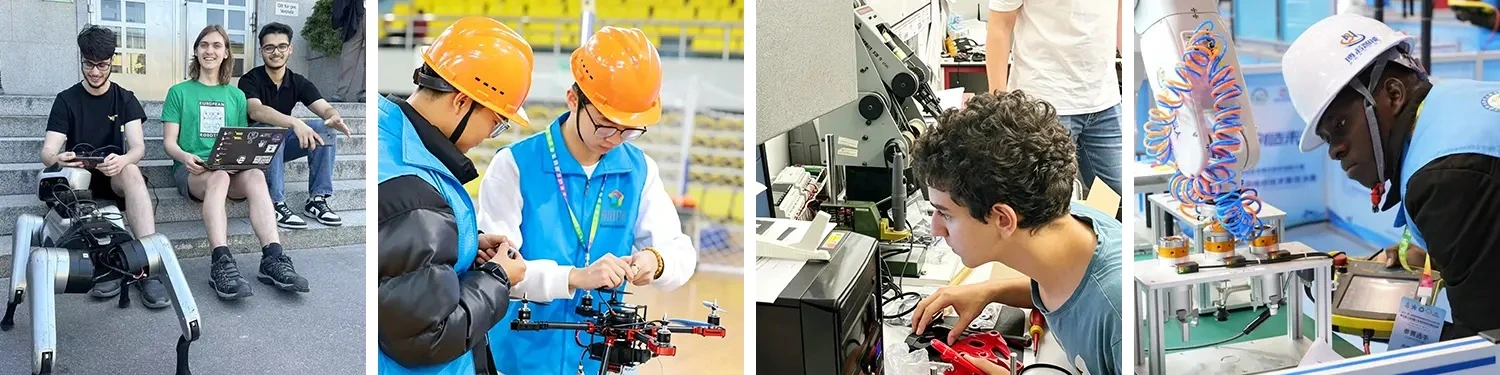
- Since 2010, we've delivered professional training to nearly 500,000 participants across 28 countries, with over 300,000 earning recognized skills certifications
- Our 16 years of specialized experience in vocational education ensures you receive industry-aligned, future-focused training in solar PV systems, wind turbine operations, and Battery Energy Storage Systems
- We've organized over 150 skills competitions, empowering 30,000+ learners to master practical competencies through hands-on challenges
- You'll learn from a network of 3,300+ industry experts and access over 60,000 curated educational resources—including technical standards, case studies, and assessment tools
- Our curriculum integrates project-driven learning, simulation platforms, and collaborative instruction from both enterprise engineers and academic professionals
- We partner with 500+ leading enterprises to ensure your training directly addresses real market demands in renewable energy sectors
FAQ
Q: Can I take this course with no prior background?
A: Yes. The course starts with foundational theory and progresses step by step, equipped with comprehensive training facilities and professional instructors.
Q: What career paths are available after completing the program?
A: Learners can prepare for roles such as:
- Renewable Energy Equipment Process Design Engineer
- Wind Power / PV Equipment Assembly Engineer
- Renewable Energy Power Plant O&M Engineer
- Renewable Energy Equipment Commissioning and Testing Engineer
- Renewable Energy Equipment Maintenance Technician
- Renewable Energy Equipment Maintenance Technician
Q: How does this program differ from traditional electromechanical programs?
A: This course focuses specifically on new energy equipment within this strategic emerging industry. Compared to traditional electromechanical programs, it places greater emphasis on the specific characteristics of new energy equipment such as wind power and PV power generation.
Additionally, the course emphasizes digital and intelligent transformation, integrating cutting-edge information technologies including virtual simulation, big data, cloud computing, and artificial intelligence, enabling students to adapt to new trends in digital, networked, intelligent, and green development in the new energy equipment industry, supporting industry demand for skilled technical personnel driven by new energy strategies.
Contact Us
Ready to elevate your renewable energy skills with Renewable Energy Equipment Technology? Reach out to ECR Academy today at ecr2008@enteredu.com to explore our training solutions.


_1781601799781.webp)