Why Every Workplace Needs Emergency Rescue Technology Training
Every workplace should teach people how to use emergency rescue technology, because the first few minutes after an accident are very important for how it turns out. Fires, chemical spills, falls and sudden cardiac arrest may all happen very rapidly. There is not long to wait for 911. The ability to look at an accident scene, start CPR, use an AED, stop the bleeding and transport a sufferer safely may save lives and save them from being wounded worse. Tools don’t perform the task themselves. Trained humans do. You may use this book to create a training plan your team can utilize again and over to see how well it works. Today’s emergency rescue technology has transformed how people behave and tells you where the previous manner of doing things is deficient.
Why Traditional Workplace Rescue Methods Fall Short?
Where Phone Calls, Radios, and Paper Checklists Break Down?
Many places still employ radios, phones, voice directions, paper to-do-lists and individuals tallied by hand. These tools function in quiet times. They have a hard time when the electricity goes out, mobile service goes down, smoke makes it impossible to see, or a gate becomes jammed. A manager with a clipboard can't see who is safe or the spreading danger immediately away. It’s simple to see how perilous labor is: In the U.S. The Bureau of Labor Statistics says 5,283 workers died on the job in 2023. That figure makes me think that plans need to work for what to do even if things don't go as planned.
How Untrained Responses Add Risk?
Employees who have not been taught frequently react differently. They don’t check for risk the second someone walks in the door. They move a wounded co-worker the incorrect direction. They wait too long to get aid. And every error might either create another victim, or delay the arrival of a professional. “Heart failure is an evidence of its importance. According to the American Heart Association, CPR may double or triple a person’s chance of survival immediately away. OSHA also states in 29 CFR 1910.151(b) that a qualified first aid provider must be available if a hospital, clinic or infirmary is not near the worksite. That gap is bridged by training before anything unpleasant occurs.
How Emergency Rescue Technology Closes Information Gaps?
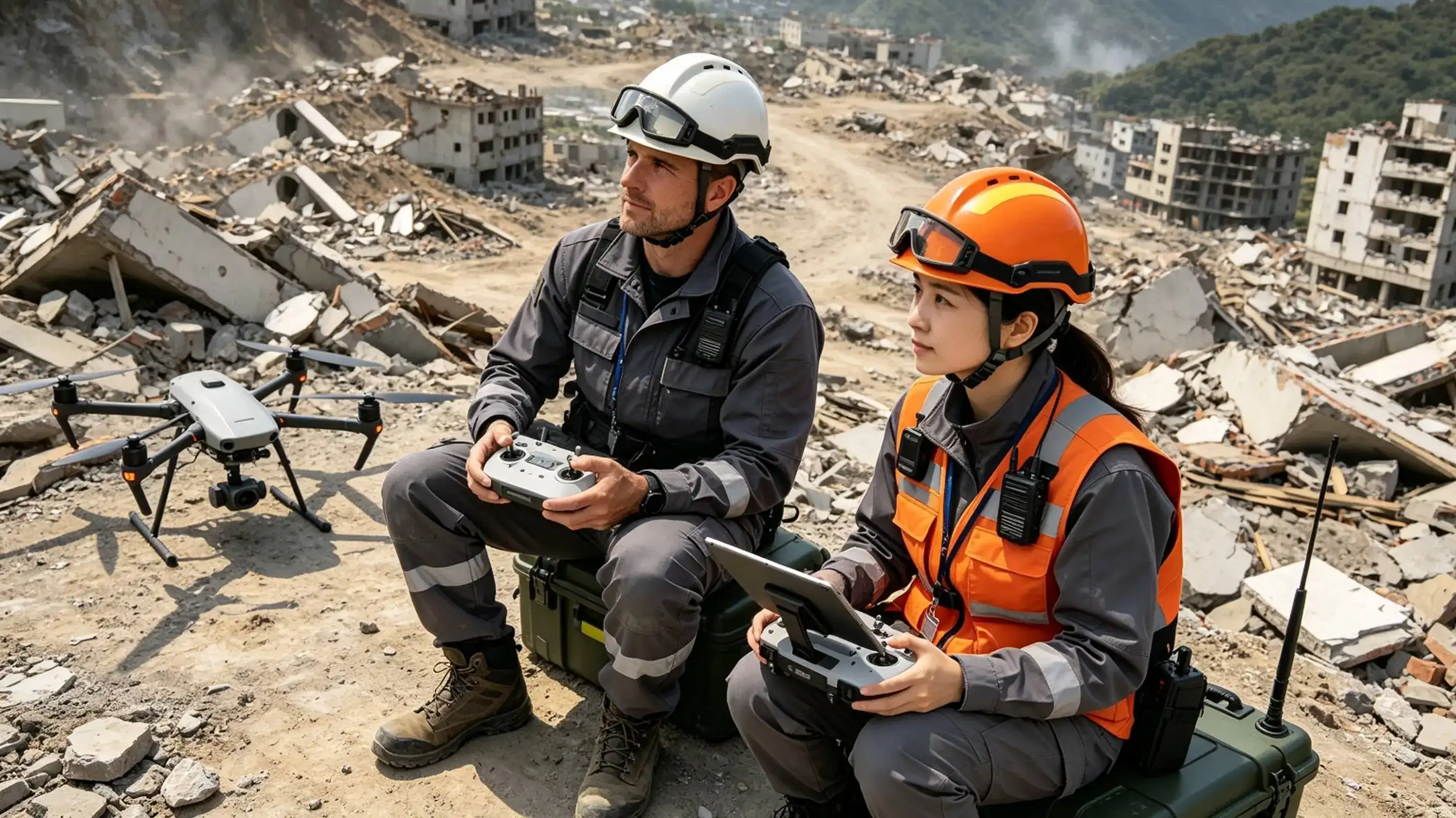
Modern emergency rescue technology fills in the informational gaps that older methods leave. People can still talk to each other if the towers go down because of satellite communication. IoT monitoring lets you know right away when temperature, gas, or smoke levels change. Smart tech lets bosses see who is on the job and where they are. People who use these tools are less likely to break the rules, have downtime, or damage property. But a tracking screen and an alert can't stop the bleeding or press on the chest. Data moves quickly thanks to technology, and trained people act on it while they are with the patient. The training ties the two together because they are both important for a good plan.
How Emergency Rescue Technology Changes Workplace Response?
From Reactive Rescue to Proactive Risk Management
A company can switch from reactive rescue to proactive risk management with the help of technology. With the help of sensors, predictive alerts, digital inspections, and practice runs, risks can be found before they become big issues. When teams use integrated platforms to communicate, track employees, keep an eye on the environment, and send out messages, they don't need to rely on separate devices. ISO 22320 tells you how to handle incidents. It talks about command and control, operational information, and making sure that everyone who is helping works together. Things like AI can look at data and rank tasks, but people still need to look at the data, use their own judgment, report problems, and make the final decision about how to run the business. They have been trained to handle a broken network, poor visibility, many deaths, dangerous materials, and bad weather.
Core Technology Types Employees Should Recognize
A thorough response plan often include a mix of many tools. Some of the instruments that can be used to communicate to each other include digital radios, mass notification systems, mobile command centers and satellite emergency communication. You can utilize GPS, RFID, Bluetooth and UWB technologies to accomplish headcounts, geofencing and position tracking within or outside of buildings. Wearable sensors and IoT monitor workers’ health, temperature, fires, smoke and pollutants. Drones and ground bots inspect sites that are unsafe or hard to get to. Digital incident platforms allow individuals to report events, communicate real time updates, assign tasks and upload video. Not every site needs everything. First, choose the tools that are suited for your actual threats, your surroundings, your connections and how you want to operate. Then, demonstrate to everybody the usage of every instrument they will touch.
Why Training Improves Response Performance
People who know when and how to use emergency rescue technology will get the most out of it. Training reduces the time to get an alarm, verify it, report it and act on it. It explains you how to Contact each other, what to do in an emergency, who is responsible for getting everyone out and how to send a distress signal. Wearable gear and location monitoring makes it simpler to hold those working alone or in tiny places accountable. Live data can assist get rescue crews, medical supplies and vehicles to where they are most needed. Skill gaps, delays, and false alarms might be evident in the system logs and performance statistics after each drill or event. You may correct those flaws before the next event based on what you learnt.
Emergency Rescue Technology Training by Workplace Scenario
Manufacturing, Warehouses, and Construction
Each firm should receive training on how it operates. Things may happen in industries including chemical spills, explosions, machinery mishaps and gas risks. “We practice finding problems, shutting down, keeping production going so that we are ready for these kinds of events. Forklift accidents, racking collapses, fires and hazardous items may all occur in warehouses. So there must be an easy exit out of the building and a rapid means to check whether anyone is wounded. Building sites are changing day by day. Plans alter, subs come and go and temporary utilities spring up. And it is also more probable to fall while you are operating at height. So when processes change, and therefore, everyone on the staff is kept up to speed. If you are the first person on the scene at any of the three situations you will probably witness someone bleeding, broken, burnt or suffering a heart attack. Safety is knowing first aid.
Mining, Confined Spaces, and Remote Sites
Monitoring the environment, communicating to individuals underneath, keeping track of people and organizing specialized rescues are all part of mining and confined space jobs. The team close by needs to make sure the individual is stable and figure out a safe means to get them out since rescuers may not be able to get to them fast. Ports, the sea and distant locations sometimes lack cell connection or outside support, therefore satellite phones, GPS, drones and rugged gear are routinely carried along. There are areas where a drill where people can’t communicate to each other teaches more than a drill when everything is going smoothly. Workers at the firm learn to change channels, to report the incident properly and to keep treating the wounded while they wait.
Healthcare, Schools, and Public Venues
During mass casualty events, hospitals need to keep track of their patients. Clear communication and triage are needed for this. Every school, transit worker, sports program, and public place is at a different risk, but they all need someone nearby to take the first step. This course is good for public safety officers, people who work in special operations, community workers and volunteers, school teachers, bus drivers, sports coaches, and people who work at airports, train stations, and shopping malls. When there are a lot of different people in a group, scenario drills help because they let everyone practice their part and learn how to hand to first responders.
What the E.C.R Academy Emergency Rescue Technology Course Teaches
A Three-Part Model Built on Golden Time
E.C.R.'s Emergency Rescue Technology program. School is based on the idea of "Golden Time, Life-Saving Response." It covers the whole response chain, from evaluating the scene to handing over the victim. It does this through theory, hands-on practice, and scenario-based training. There are important time limits that students learn about, like how to do CPR in 4 minutes and stop bleeding in 10 minutes. Assess, Call, Treat, and Transport are always things they do. They also work on making big decisions and keeping track of their time. Since 2010, E.C.R. Academy has helped almost 500,000 people in China and 28 other countries get tested and trained to be professionals.
Skills Your Team Will Practice
Your team will learn useful skills in the course. First, students make sure the scene is safe. Then, they use the ABCDE method (Airway, Breathing, Circulation, Disability, and Exposure) to sort the casualties into groups. Adults, children, and babies are all given CPR. For each person, they press down at least 5 cm deep, 100 to 120 times per minute, and 30:2. Turn them on, connect the pads, plug them in, and give the shock. That's what an AED says to do. In order to stop the bleeding, they use direct pressure, pressure dressings, and tourniquets. After that, they put on bandages and don't let broken bones move. As part of transport training, people learn how to use scoop stretchers, spinal boards, and carry people by hand. Kids learn about heat stroke, drowning, burns, choking, shock, and how to call 911 in other lessons.
Faculty, Equipment, and Simulation Environments
So I want to be clear: buyers care about credentials and how well the practice does its job. The instructors are both rescue experts and senior Red Cross first aid trainers, so they can teach the course successfully. It is kept up to date so that it meets the latest national and international first aid standards. When people are learning CPR, they use full-body manikins that show them in real time how deep the compressions are, how accurate their breaths are, and how good the overall quality is. Training devices for AEDs play cardiac rhythm scenarios that can be set up ahead of time. There are trauma manikins that act out wounds like cuts, scrapes, broken bones, and burns, and you can practice even more with a virtual simulation system. Fires, car accidents, and building collapses that happen in real life are simulated in training facilities. For more than 5,000 people, the training is over.
How to Build and Choose a Training Program That Lasts
Start with a Risk Assessment and Clear Roles
An in-depth risk assessment is the first thing that needs to be done to make a strong program. Check the list of past incidents, how the staff is split up, the business's hours, the site's conditions, how to get to emergency services, and any rare events that turned out very badly. The OSHA guide to workplace first aid programs also says that before you make plans, you should check out the site's risks. Next, make it clear who is responsible for finding people, talking to them, getting them out of the building, giving first aid, rescue, running equipment, and working with outside groups. Make sure there are back-ups for every shift. There should be a mix of classroom lessons, hands-on lessons, simulations, tabletop exercises, and full-scale drills. Check how quickly equipment is turned on, who is responsible, how well communication works, and how long it takes to get out of the building. It's not a box to be checked when you do these steps. It's proof that you can look over.
Compare Solutions and Suppliers by Outcomes
Compare ideas by how well they work instead of their labels. Voice-only channels don't give as much information as integrated channels, and automated detection means that reports don't have to be written by hand as often. People can't see everything when drones search, but they are limited by the weather, battery life, rules, and the skill level of the driver. It is possible for AI to recognize patterns and rank resources, but it needs good data and human supervision. Make sure you know about the device's uptime, communication range, battery life, security, certifications, and maintenance. Add up all the costs, such as the cost of licenses, setup, training, upgrades, spare parts, and calibration. Find a training provider and ask about their credentials, the simulation equipment they use, how they test students, and how they plan to handle refreshers. A good supplier will also check out the site, provide paperwork, and offer quick service after the sale.
Avoid Common Mistakes and Plan for Long-Term Value
A lot of the time, companies buy high-tech equipment without thinking about who will use it or how they will test it. The device doesn't make things safer if employees misread its alerts or don't keep it in good shape. Ask end users, EHS staff, supervisors, maintenance teams, and first responders what they think about each system before you choose one. Also, make sure that the pilot tests happen in real life. Plan ahead for what to do if the power goes out, your devices break, your software stops working, or your network goes down. Because skills wear off over time, plan drills and review sessions. This depends on the organization that gave you the certificate and the rules in your area. Most first aid certificates are good for two to three years. Training that is written down also helps with audits, insurance reviews, and making sure that customers are qualified. Injuries and downtime can be lessened by finding problems faster and talking to each other better.
Conclusion
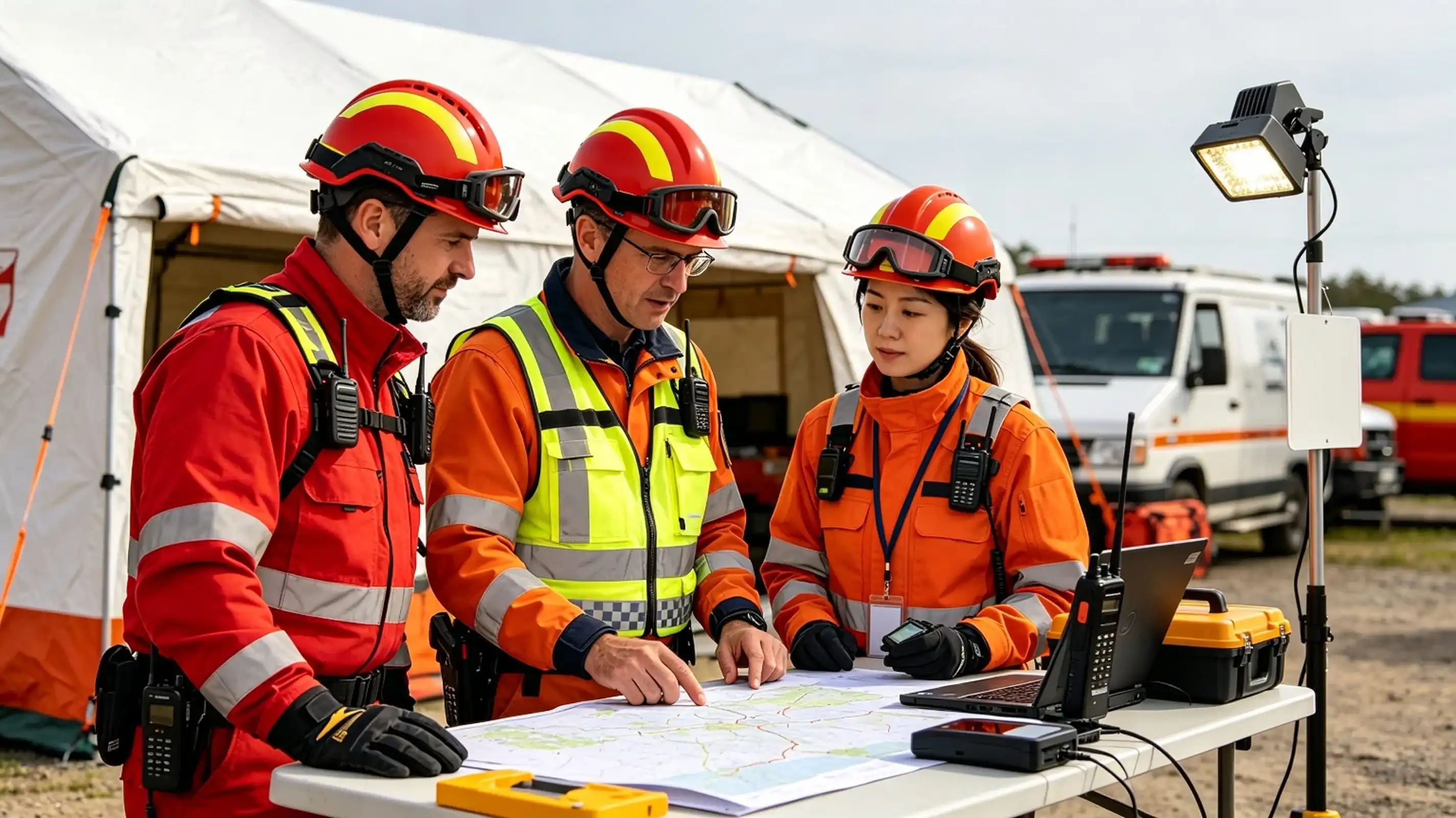
When there is an emergency at work, things move faster than outside help can get there. Also, old tools like phones, radios, and paper checklists don't work when the power, networks, or visibility go out. Teams can get real-time information from communication, tracking, and monitoring tools in emergency rescue technology, but they must check it and treat casualties. Different types of jobs have different risks, so training that is specific to the setting is best. This is especially true in healthcare, schools, public places, and manufacturing. The course I just talked about has theory, practice, and scenario drills that cover assessment, CPR, using an AED, stopping bleeding, immobilization, transport, and CPR. Realistic simulators are used to teach it by teachers with two degrees and trained Red Cross instructors. Programs that work start with a risk assessment, compare solutions based on how well they work and how much they cost all together, teach people how to avoid common buying mistakes, and keep their skills sharp by doing drills over and over again.
FAQ
1. Who can join the training?
There aren't any strict rules. People over 16 who are healthy, can learn simple things, and are good with their hands can sign up. This course is good for people who work in business safety, the community, schools, as bus drivers, sports coaches, or in public places.
2. How long does the training last?
It takes two days to finish the 16-hour Basic First Responder course, which is mostly about CPR and basic first aid for trauma. The course is 24 hours long and spread out over three days. It covers all four core skill modules. The 32-hour, 4-day level now has built-in drills and simulations of different situations.
3. How long does CPR certification last, and is refresher training needed?
Depending on the rules in your area and the organization that gave you the certification, it should be good for two to three years. Up-to-date courses keep things going. Read over their skills online and volunteer to do first aid to get more practice. Learners should also keep an eye on how the rules change.
Train Your Team with E.C.R Academy's Emergency Rescue Technology Course
Are you looking for a business that can give your business, school, or group emergency rescue technology? The E.C.R. Academy has courses taught by teachers who are also senior Red Cross trainers. It also has realistic simulation rooms and has taught more than 5,000 people in the past. Send an email to ecr2008@enteredu.com to talk about your training goals, the size of your team, and the risks that come with the job. To find out more, please visit enteredu.com.
References
1. American Heart Association, Guidelines for Cardiopulmonary Resuscitation and Emergency Cardiovascular Care, 2020
2. U.S. Bureau of Labor Statistics, National Census of Fatal Occupational Injuries in 2023, 2024
3. Occupational Safety and Health Administration, Best Practices Guide: Fundamentals of a Workplace First-Aid Program, 2015
4. International Organization for Standardization, ISO 22320: Security and Resilience – Emergency Management – Guidelines for Incident Management, 2018
5. International Federation of Red Cross and Red Crescent Societies, International First Aid, Resuscitation, and Education Guidelines, 2020
6. National Fire Protection Association, NFPA 1600: Standard on Continuity, Emergency, and Crisis Management, 2019