Addressing Robot Talent Gaps with Industrial Robot Maintenance and Integration Services
The robot skills gap gets smaller when businesses and schools pay for industrial robot maintenance and integration services that offer both repair work and hands-on training. More quickly, a trained technician can figure out what's wrong with the controls, electricity, or mechanics of a machine. An integration specialist can hook up robots, PLCs, vision systems, and tools. When these people aren't at a plant, it has more broken down time and safety risks. We work with outside service providers to meet urgent needs, and we use structured courses to train the next generation of technicians. This post was written to show you how to compare the two paths and how E.C.R. The academy helps you get better.
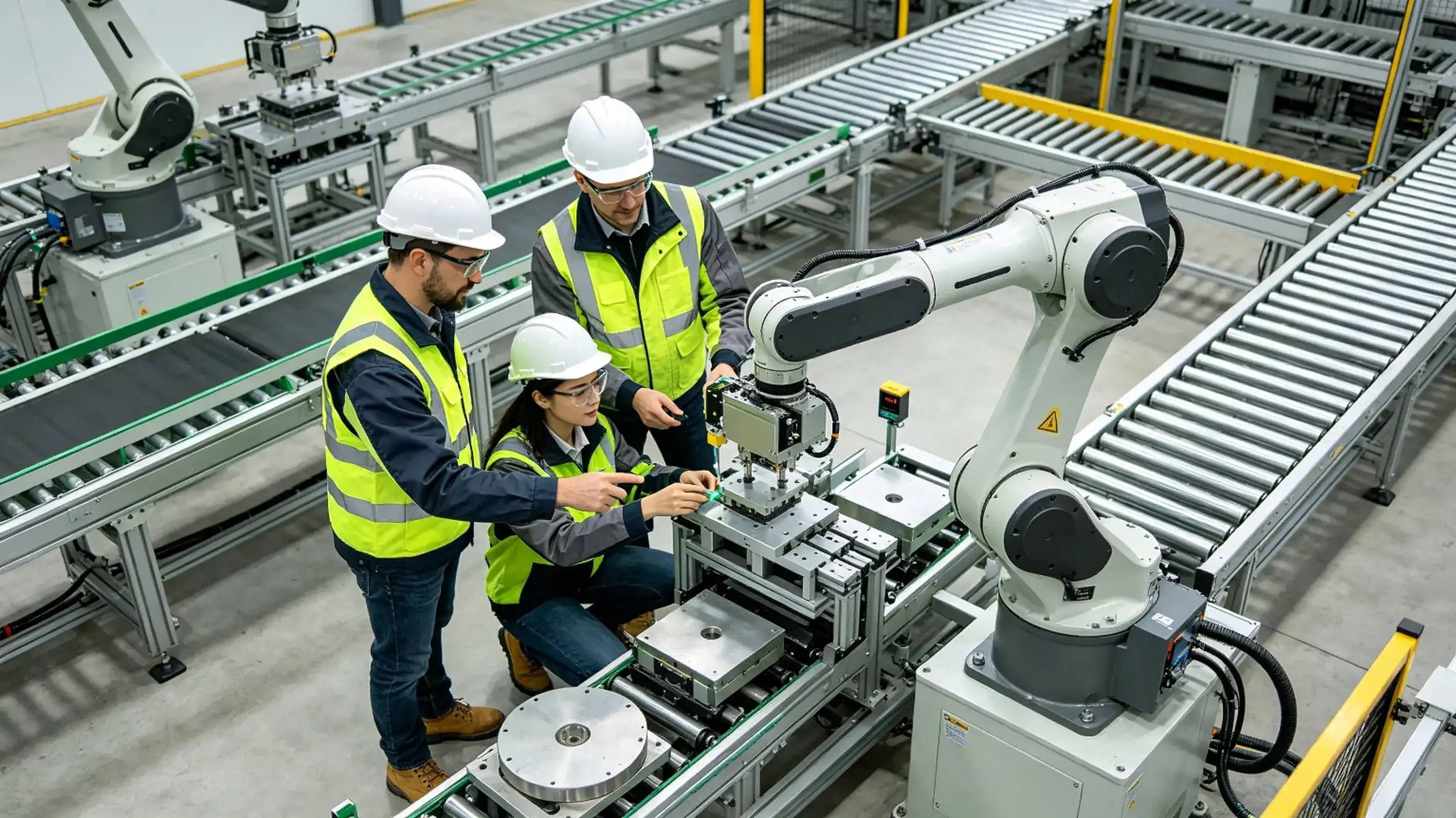
Understanding the Robot Talent Gap and Why Older Maintenance Models Struggle
Where the Skills Shortage Shows Up on the Plant Floor?
There are not enough people to take care of all the robots being produced. According to the International Federation of Robotics, 541.000 new industrial robots were deployed all over the globe in 2023. There were also 4.28 million copies in circulation worldwide. All those computers must be checked by everyone and their apps should be updated and they should be repaired. But a study from Deloitte and the Manufacturing Institute projects that U.S. manufacturers would need 3.8 million extra workers between 2024 and 2033, and that 1.9 million of those jobs may go unfilled. Many people working in many industries do not know how to use safety circuits, controllers, servo systems and industrial networks. When staff leave or change shifts it takes longer to get a response and inspections are missed or rushed.
Why Reactive and Single-Source Maintenance Models Fall Short?
But after a break, when maintenance kicks back in, it’s hard to control repair costs and delivery risk. Usually the in house teams are really quick to get off the ground, but they may not know how to tackle more difficult challenges or have the right equipment or knowledge with more than one brand. With OEM service you learn a lot about the brand, it helps if you have to do warranty repair or use specialized equipment. It is best to have different service providers for separate fleets rather than attempting to operate together. There is no one size that fits every model. By the hour is not the only reason a choice is preferred. Also examine the risk, application complexity, age of the equipment, warranty coverage and response time. Move to planned preventive and predictive maintenance and you’ll be able to solve difficulties before they become worse.”
How Thin Expertise Leads to Incorrect Diagnosis
A lack of skill doesn't usually show up as a single big mistake. It can be seen in a short-term fix that stays in place, an alarm history that no one looks over, or a problem that is blamed on the robot when it's really a problem with a cable, a sensor, or a PLC signal. Most robot problems are in more than one area, like safety, electronics, mechanics, or software. This means that a technician who only knows a few things might not be able to figure out what's wrong. In an ideal world, one team member would know a lot about all four, or a partner could fill in the gaps. This is why training in robot maintenance should cover all three: building, wiring, and controlling the robot all at the same time.
What Industrial Robot Maintenance and Integration Services Include
Preventive and Predictive Maintenance
The times for preventive work are based on cycles, operating hours, or time. Industrial robot maintenance and integration services include putting grease on the bearings, checking the axes, cables, and dress-pack, backing up the controller, and putting new batteries in. Each manufacturer has its own intervals, however the rule is always to be found in the robot's handbook. Instead, conditions are employed for projections. As soon as an issue begins to show itself, technical experts monitor temperature, vibration, motor current and how properly the machine is located. Old grease contains iron and other metals which may tell you how worn out a gearbox is before it fails. Like a blood test or anything. Many plants employ a combination of both schedules and condition data. That is because condition data picks up surprises, while schedules pick up routine wear and tear. R. Keith Mobley, in his work on predictive maintenance, goes into great depth on this condition-based approach.
Repair, Calibration, and System Integration
The repair services can fix problems with the drive, the servo, the encoder, the reducer, or the electricity. Calibration brings back the accuracy of the position, and technicians keep an eye on repeatability because even a small drift can lower the yield of the product. These are some of the things that the robot can talk to: tools, PLCs, vision systems, and fieldbus networks such as PROFINET, EtherCAT, and EtherNet/IP. If you want to connect different brands on the same line, you can use standard protocols like OPC UA. For a unified HMI, however, you may need customize driver work. Also, safety checks should go here. Teams make sure that emergency stops and light curtains work well by following ISO 10218-1, ISO 13849-1, and ANSI/A3 R15.06 in the US. When one partner does both the repair and the integration, it's easy to see who is in charge of what.
A Practical Service Process from Assessment to Verification
The first step in a good engagement is to look at the fleet. The service provider keeps track of the types of robots, their controllers, open hours, uses, old alarm records, spare parts, and the workers' skills. Next, each side writes down their goals for response time and what they need to do to prevent, predict, correct, upgrade, or deal with an emergency. After that, a standard list includes things like the condition and calibration of the machine, as well as its cables, tools, controllers, software, safety systems, and paperwork. The steps for most integration projects are the same: look over the application, pick out the robot and tools, program, put in place, turn on, train, and communicate between the PLC and vision system. The last check makes sure that all the requirements for cycle time, quality, safety, backups, and maintenance readiness are met. To do the work over and over, write down the steps. This also makes it easy for new technicians to learn from them.
Reducing Robot Downtime Through Better Service Planning
Common Failure Sources Worth Tracking
When teams know where they're going, they're less likely to fail. Damage to the reducer, problems with lubrication, servo faults, communication errors, wrong payload data, programming mistakes, and collisions are some of the most common reasons why this happens. A lot of these leave marks. In order to reset the system, the home position needs to be fixed if it moves around, the collision alarms need to stop going off for no reason, or the product yield drops. Technicians can fix problems faster when they have accurate robot programs, controller parameters, electrical drawings, alarm histories, and spare-parts lists. This is because they don't have to guess what to look for. I believe that each robot should have an list of its parts that is kept up to date after each service visit. Even a skilled engineer has to spend the first hour getting the basics without that record.
KPIs That Show Whether the Plan Works
Numbers keep the truth about a service plan safe. This graph shows how often and how long it takes to fix a robot. There is planned and unplanned downtime that shows how it affects production. On the other hand, the first-time fix rate shows how well the technician found the issue. Check these numbers once a month to see if there are any mistakes that keep happening in the same cell. If it takes a long time to fix something, it might be because you don't have enough spare parts or good documentation. Many times, training is what's wrong when the first-time fix rate is low. You can find the best investment if you keep an eye on all five of these at the same time.
Comparing In-House, OEM, and Independent Support
There is a place for every choice. Inside teams can quickly do simple tasks and know the plant well, but they might not be able to work late or with more than one brand. Factory-made parts and warranty work are good things that OEM service can do. Service providers who work on their own can fix things, program them, and connect them all for fleets that have a mix of brands. Full-service programs, emergency agreements, scheduled visits, and remote support are some of the different types of contracts that can be made. You should make your decision based on the level of technical risk, the priority of production, the resources you have access to, and the level of coverage you need. A lot of plants choose a hybrid system, where in-house staff do basic checks and outside experts do complex programming, controller repair, and calibration. That's why the people who work in a hybrid are so important: they can only do their jobs well if they are trained.
Choosing a Provider and Planning the Budget
What to Check Before You Select a Provider
Fit should be the first thing you do. You should make sure that the service provider knows how to work with the robots, controllers, PLCs, vision systems, tools, safety gear, and networks that you have. You should ask to see examples of backup plans, records of calibration, risk assessments, maintenance reports, and customer references. Response times for both in-person and online help should be written down. This is especially important for cells that are very important. When you compare bids, they should be fair if they break down the costs of labor, travel, parts, software, training, commissioning, and emergencies on separate lines. You will be able to see who is responsible for what and get help when you add new automation if you hire a company that does both maintenance and integration. A provider's paperwork can often tell you more about them than what they say in their sales pitch.
Cost, ROI, and Procurement Inputs
What it costs to service a controller depends on its age, brand, type, operating conditions, how often it needs service, how complicated the application is, how far it needs to be traveled, how many spare parts it needs, and how quickly it needs to be fixed in an emergency. To get a good quote, you should tell the service provider about your robot models, cells, applications, alarm records, downtime history, site locations, and service levels. Then, make a business case that includes costs like scrap, overtime, missed deliveries, lost production, restart costs, and extra equipment that needs to be bought. It helps you decide whether to replace everything, get a controller or safety retrofit, or keep fixing things. Robot bodies and spare parts can be expensive, so part of the plan should be to make sure there is a steady supply of parts. Structured contracts tend to lower risk because they make it easier to plan, get assets, and keep them for longer.
Building a Service Program That Lasts
For a program to last, there needs to be clear ownership. This includes the outside provider, engineering, maintenance, production, safety, purchasing, and everyone else who works at the plant. Everyone should know what their job is, how to get help when they need it, how to get approvals, and how often they need to be serviced. For each robot, there should be an asset record with electrical drawings, service reports, calibration results, programs, controller parameters, and information on spare parts. Sort the parts by how important they are, how long it takes to get them, and how likely it is that they will break. This way, you'll only have the best parts left. Every so often, look over the service to find issues that keep happening, response times that were missed, and problems that need to be fixed. In the service-level agreement, you should include KPIs that can be tracked and make sure there are regular technical reviews. Then the partnership helps with what's up today and what's planned for tomorrow.
Closing Long-Term Talent Gaps with Training from E.C.R Academy
Why Knowledge Transfer Belongs in Every Service Plan
The breakdown today can be fixed with help from outside. You can learn how to solve the next one. You can share what you know by making troubleshooting guides, standard operating procedures, repair records that everyone sees, and giving people hands-on training. People are less likely to leave a plant over time if it has a written service history and standard ways of programming. There is also pressure on schools and colleges from employers in the area who want to hire people who can fix, program, and connect robots. When these people hire robots, they often have fleets of different kinds. E.C.R. is the company that developed our Industrial Robot Maintenance and Integration Services course. Academy for companies, schools, trade groups, and other organizations that want to improve the skills of their employees. Since 2010, we've trained and tested almost 500,000 people from China and 28 other the world.
Project-Based Curriculum, Standards, and Faculty
We learn how to build, set up, and take care of robots by working on real-life projects that combine classroom learning with hands-on experience. We were able to meet international standards for technical know-how and the best ways to do things in the field. Students learn from experts in the field who teach with them. This way, students can hear both how things work on the plant floor and why a method works. Starters will find the course easy. Every student is helped in a different way by their teacher based on how well they are doing. E.C.R. It has also made more than 60,000 learning resources, like standards, courseware, case studies, and test banks, and worked with more than 500 businesses and hired more than 3,300 experts.
The Three Skill Areas and the BN-R365 Platform
They work on three different kinds of skills. The first kind of work is mechanical. For example, motors, reducers, and other robot parts need to be taken apart and put back together again. Belt tension and bolt torque also need to be checked. The second is electrical work, which includes fault finding and testing with multimeters and oscilloscopes, as well as wiring circuits and pneumatic connections. Setting up networks, parameters, software updates, and programming with a teach pendant are all part of the third area, which is control systems. All of this takes place in the Industrial Robot System Operations and Maintenance Training and Assessment System (BN-R365). This system helps with controlling robots, writing code for them, finding problems, putting the whole system together, and using machine vision. For those who pass, the test leads to jobs as an industrial robot system operations and maintenance technician, an industrial robot system operator, a robotics engineering technician, a mechanical equipment installer, or an electrical equipment installer.
Conclusion
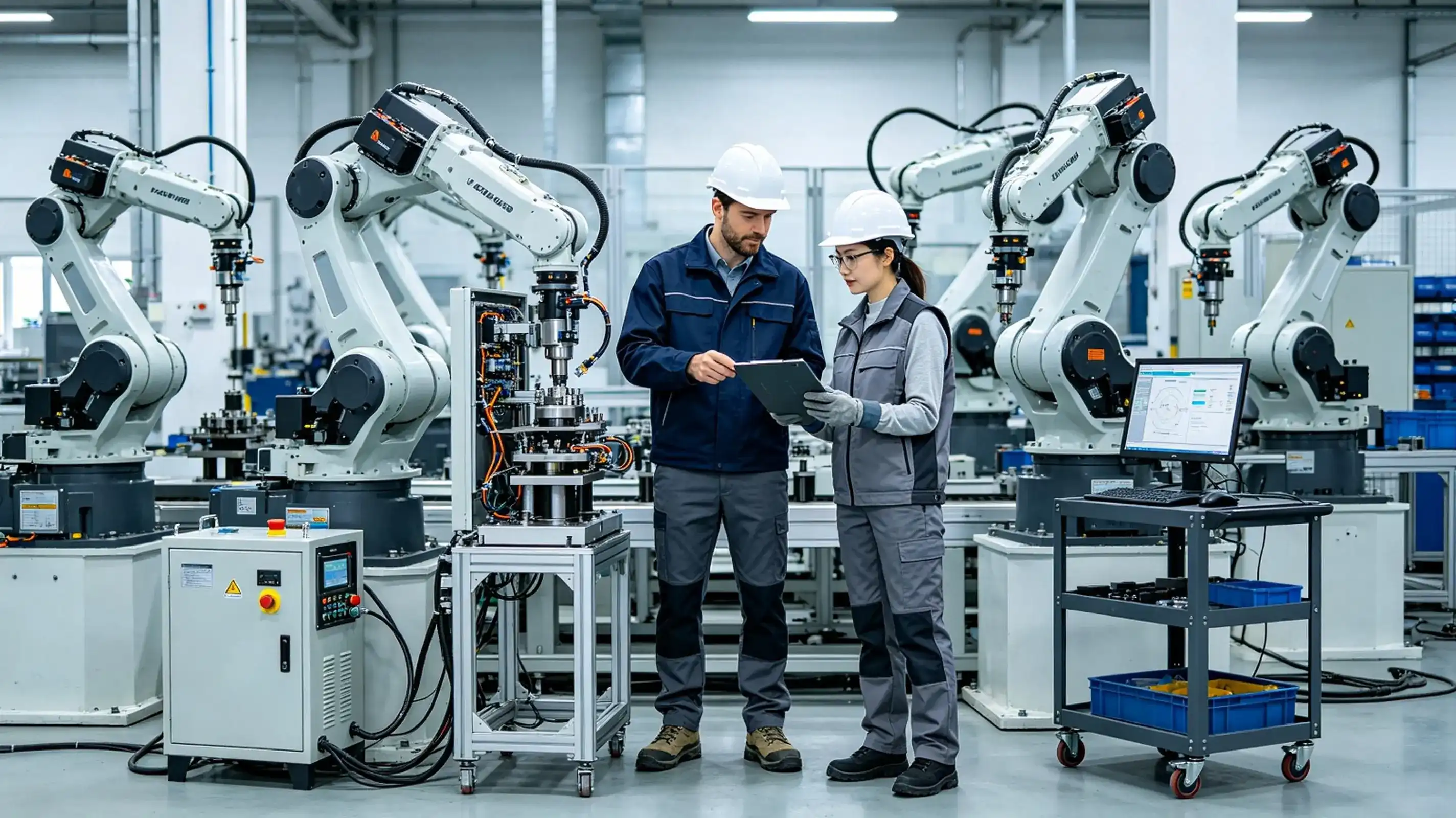
More and more robots are being put in place, and U.S. manufacturers are preparing for a big worker shortage. Without enough skilled workers, there will be more downtime and more risk. This is where industrial robot maintenance and integration services come in. They fix and calibrate robots, check for safety, and connect robots to PLCs and vision systems. Reactive models with only one source don't work well. But planned service, clear KPIs, full asset records, and a mix of support from inside and outside the company do. A provider is picked based on how well they cover brands, how quickly they respond, how much documentation they have, and how clear their quotes are. Throughout an asset's life, cost should be taken into account. Technicians are ready for these jobs because they have learned project-based skills in electrical, mechanical, and control. Over time, this will close the gap.
FAQ
1. Can I take the course with no prior experience?
Yes. It's good for people who are just starting out because it starts with something simple. Each student gets help that is tailored to their level of progress.
2. What jobs can the course support?
If you finish the course and do well on the test, you can work as an operator for an industrial robot system, a robotics engineering technician, a technician who sets up mechanical or electrical equipment, or who works with industrial robot systems.
3. What computer do I need?
A dedicated GPU with 4 GB of VRAM, 16 GB of memory, 256 GB of storage, and Windows 10 are all you need for this to work.
4. How often should a robot receive maintenance?
The frequency of checks depends on how long the machine is used, its environment, the manufacturer's instructions, and the application's needs. Condition monitoring and scheduled checks should be done at the same time.
5. Can integration combine different robot brands on one line?
Yes. An engineer will use standard protocols such as OPC UA and PLC integration. A unified HMI, on the other hand, might need its own drivers.
Contact E.C.R Academy for Industrial Robot Maintenance and Integration Services Training
Want to improve the skills of your workers by using industrial robot maintenance and integration services? The BN-R365 platform is what makes E.C.R Academy possible. It has project-based classes taught by engineers and teachers with years of experience in the field. We work with corporations, schools, and trade groups, among other places. When we get back to you at ecr2008@enteredu.com, we'll let you know about your robot brands, class size, and due date. To find out more, go to enteredu.com.
References
1. International Federation of Robotics, World Robotics 2024: Industrial Robots (2024)
2. Deloitte and The Manufacturing Institute, Taking Charge: Manufacturers Support Growth with Active Workforce Strategies (2024)
3. International Organization for Standardization, ISO 10218-1: Robots and Robotic Devices, Safety Requirements for Industrial Robots, Part 1: Robots (2011)
4. Association for Advancing Automation and American National Standards Institute, ANSI/A3 R15.06: Industrial Robots and Robot Systems, Safety Requirements (2012)
5. Mobley, R. Keith, An Introduction to Predictive Maintenance (2002)
6. International Organization for Standardization, ISO 13849-1: Safety of Machinery, Safety-Related Parts of Control Systems, Part 1 (2023)