Where to Find Humanoid Robot Programming for Beginners
Finding quality resources for Humanoid Robot Programming as a beginner can feel overwhelming, but the right pathways exist for vocational institutions, enterprises, and learners alike. Structured courses from platforms like Coursera, Udemy, and specialized institutions like E.C.R Academy offer hands-on training with real robots, covering ROS/ROS2, motion control, and sensor integration. Open-source SDKs and simulation environments such as Webots provide practical experience before deploying physical systems. Whether you're an engineering team looking to upskill or a vocational college seeking curriculum partners, identifying credible training programs with industry-aligned standards is your starting point for successful robot application development.
Understanding Humanoid Robot Programming Basics
What Is Humanoid Robot Programming?
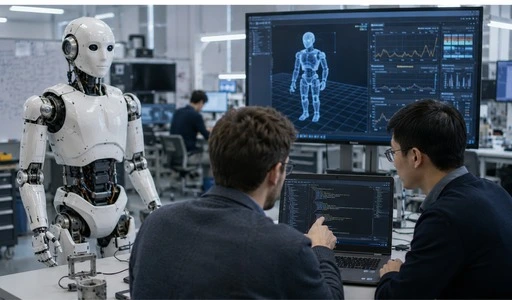
Humanoid Robot Programming is a complex, broad field where software meets motors that look like people. This field is all about making algorithms that help robots that look like people understand their surroundings, make choices, and do tasks in places that were made for people. Humanoid systems need dynamic balance, adaptive gait control, and real-time sensor fusion, but traditional industrial robots are fixed to assembly lines. The difficulty comes from controlling 20 to 50 or more degrees of freedom at the same time while keeping things stable and safe when interacting with people.
Core Programming Languages and Tools
Languages and frameworks that can be used in many situations are needed to program these complex systems. Python is great for perception tasks like object recognition using YOLO algorithms because it lets you make prototypes quickly and has a lot of tools for integrating machine learning. C++ has the performance needed for real-time control loops that run at frequencies higher than 1kHz, which is necessary to keep the robot's balance. Robot Operating System (ROS and ROS2) is the middleware backbone that makes modular development possible. It lets movement, sensing, and control parts talk to each other without any problems. Knowing how to use these tools helps procurement managers figure out what technology skills their teams need to improve.
Key Challenges for Beginners
When they first start programming robotic motion, new developers face clear problems. When arranging dozens of joints to make natural, fluid movement, the "dimensionality curse" shows up. What seems easy in human motion becomes very hard to do on a computer. Another problem is the gap between simulations and the real world. Algorithms that work well in simulations often don't work well in the real world, where surfaces are unpredictable, sensors make noise, and physics are different. Managing latency is very important; control signal delays of more than one millisecond can make a walking robot unstable. When engineering teams are aware of these problems ahead of time, they can choose training programs that focus on real-world problem-solving instead of just theory ideas.
Where to Find High-Quality Humanoid Robot Programming Tutorials and Courses
Online Learning Platforms for Robot Development
E-learning platforms that have been around for a while have added more robotics lessons, including Humanoid Robot Programming, to keep up with demand. Coursera works with universities to offer classes on things like motion planning, sensor processing, and autonomous systems. These classes often include projects with virtual robotic platforms. Udemy has more flexible, instructor-led courses that cover everything from the basics of ROS to more advanced topics like reinforcement learning and controlling the whole body. edX has professional certificates from schools that teach embedded intelligence. These certificates are accepted by many different types of businesses. Individual learners and small groups that want to build basic skills before buying gear can use these platforms as easy starting points.
Specialized Robotics Training Programs
Learning paths that focus on real-world applications are available at schools that only teach robotics. The E.C.R. Academy offers complete training that meets worldwide standards for technical skills. The training includes both theory and practical work with full-size humanoid platforms. The 174 cm Magic Atom MagicBot Gen 1 is part of our program. It has 42 active degrees of freedom, dexterous hands, 3D LiDAR, depth cameras, and fisheye vision systems. Students work directly with hardware, writing navigation systems, setting up force-position hybrid control for handling, and creating industrial processes for multiple robots working together. This useful method fills in the gaps between what you learn in school and how you use it in the real world, which is exactly what trade schools and business training departments need.
Manufacturer-Specific Educational Resources
More and more, companies that make robots are making educational materials that are specifically made for their platforms. SoftBank Robotics provides instructions and example code for creating NAO and Pepper robots, with a focus on social and human-robot interactions. Boston Dynamics has put out teaching material about Spot and Atlas that shows off their advanced mobility algorithms. UBTECH sells curriculum materials that are made for schools that want to use their humanoid platforms. When companies have already chosen a certain piece of hardware, these tools come in handy because they help teams get up to speed quickly on proprietary SDKs and pre-set action libraries that shorten the time it takes to build software.
Comparison of Humanoid Robot Programming Platforms and Software Frameworks
Open-Source vs. Proprietary Development Environments
Choosing between open-source and proprietary platforms for Humanoid Robot Programming is a smart choice that will affect the project's ability to stay alive in the long run. Open-source frameworks like ROS2 are good for research institutions and tech startups because they are flexible, have community support, and don't charge licensing fees. The open environment lets you change things and connect different sensor packages without being tied to one seller. On the other hand, proprietary systems offer structured support, guaranteed compatibility, and often come with detailed documentation that cuts down on development time. The total cost of ownership must be considered by procurement committees. Open-source solutions save money on licenses but may need more engineering hours, while proprietary solutions include support but charge monthly fees.
Simulation Tools for Risk-Free Development
By letting you test thoroughly before deploying, simulation platforms greatly lower the costs and risks of development. Webots offers accurate physics simulations for a number of robot models. This lets developers test navigation algorithms, sensor setups, and control strategies in virtual environments that are like the real world. V-REP, which is now called CoppeliaSim, has similar features and a lot of plugin support for machine learning frameworks. Gazebo is strongly connected to ROS, which makes the process of going from simulation to hardware release smooth. When engineering teams use these tools, they can quickly make changes to find bugs and improve speed without having to worry about costly hardware damage or safety issues.
Selection Criteria for B2B Buyers
When looking at programming frameworks, businesses should use a set of criteria that are specific to their needs. It's important that platforms have graphical programming interfaces and lots of tutorials for teams that don't know much about robotics. When working with current business infrastructure, system compatibility is very important. This means that operating system requirements, middleware standards, and data format support need to be looked at. Scalability tells us if the platform can handle more computing and coordinating multiple robots as it goes from a pilot to a fleet launch. When teams run into difficult implementation problems, the availability of technical support, such as how quickly vendors respond and how active the community forum is, has a direct effect on project timelines.
Where to Purchase Beginner-Friendly Humanoid Robot Programming Kits and Software
Trusted Vendors and Supplier Evaluation
Finding trustworthy Humanoid Robot Programming suppliers takes more than just comparing prices. Established sellers show their trustworthiness by giving client recommendations, preferably from schools and businesses in the same industry. Following international standards is shown by certifications like ISO 13482 for personal care robot safety. Technical know-how is shown by being open about hardware specs, such as joint torque values, sensor accuracy specs, and control loop rates. When buyers can, they should ask to see demonstration units or facility tours where they can see robots doing tasks that are related to what they are going to be used for. Stability in the supply chain is also important. Vendors who source components from a variety of sources lower the risk that hardware shortages will cause projects to be late.
Pricing Models and Licensing Structures
Beyond the cost of the gear itself, software licensing has a big effect on the total investment. Subscription models have lower start-up costs and include regular updates, making them a good choice for businesses running pilot programs or schools with changing enrollment. Perpetual rights cost more up front but don't charge any fees in the future, which makes them appealing to businesses that plan to use the software for a long time. Hardware, software, training, and support are often bundled together in enterprise deals into complete packages. Schools that buy a lot of classroom sets can get discounts. Pay close attention to any hidden costs; check to see if the base price includes SDK access, simulation environment licenses, and expert help, or if there are extra costs. Making update policies clear will keep you from having to pay extra when you need new features or hardware support.
Safe SDK Downloads and Installation
Getting development tools from official sources keeps security holes from appearing and makes sure they work with other programs. Manufacturers usually put SDKs on their official websites with checksum checking, which lets writers make sure the files are correct. For example, the magicbot-gen1_sdk has interfaces in both C++ and Python, as well as built-in action libraries that make it easier to make anthropomorphic movements like shaking hands, nodding, and waving. To keep things from not working with each other, installation guides should list exact versions of CMake, compilers, and Python environments that are needed. Teams should start using version control from the beginning of a project and keep track of which SDK release goes with each software build so that problems can be reproduced and fixed.
Tips and Best Practices for Beginner Programming Projects
Project Planning and Skill Development Phases
Setting clear goals and a step-by-step learning path are the first steps to successful Humanoid Robot Programming projects. Teams should start with simple tasks, like programming a robot to wave or follow a colored object, before moving on to more difficult ones, like letting robots find their own way or working together as a group. Putting projects into steps with clear goals helps them stay on track and finds knowledge gaps early on. Mastering basic robot operation and state tracking should be the first step in skill development. Next should be motion control APIs, then sensor integration, and finally system-level applications that combine multiple capabilities. This step-by-step method keeps teams from getting too stressed out by having to deal with multiple technical problems at the same time in the hardware, software, and integration areas.
Leveraging Community Resources and Support Networks
Developer groups help each other learn faster by sharing answers to problems that everyone faces. ROS Discourse and Stack Overflow are home to thousands of threads that talk about specific error messages, setup problems, and ways to solve algorithms. Manufacturer forums bring together people who are using the same hardware platforms, making it easier for them to share information about how to calibrate sensors, find the best control parameters, and find ways to get around problems. Teams can use open-source versions of common robots techniques on GitHub repositories instead of starting from scratch. These include different types of SLAM, path planning methods, and computer vision pipelines. Using these tools turns individual learning into a collection of knowledge, which cuts down on the time needed to fix individual problems by a huge amount.
Integrating Advanced Capabilities Strategically
Adding sensors and AI requires setting strategic priorities that are in line with the needs of the application. 3D LiDAR makes it possible to accurately map the environment and find obstacles, which is important for self-navigation in industrial settings that are always changing. For manipulation tasks, depth cameras give robots spatial awareness, which lets them find things and plan their paths for grabbing them. Fisheye camera arrays provide wide visual coverage for applications that need to find people or interact with them. Robots can recognize specific parts, tools, or people with the help of machine learning models like YOLO object detection that add semantic understanding. Teams shouldn't implement all features at once; instead, they should plan the order of integration based on the project's goals. For example, applications that focus on navigation should prioritize LiDAR processing, while interactive scenarios should focus on vision and audio systems.
Common Pitfalls and How to Avoid Them
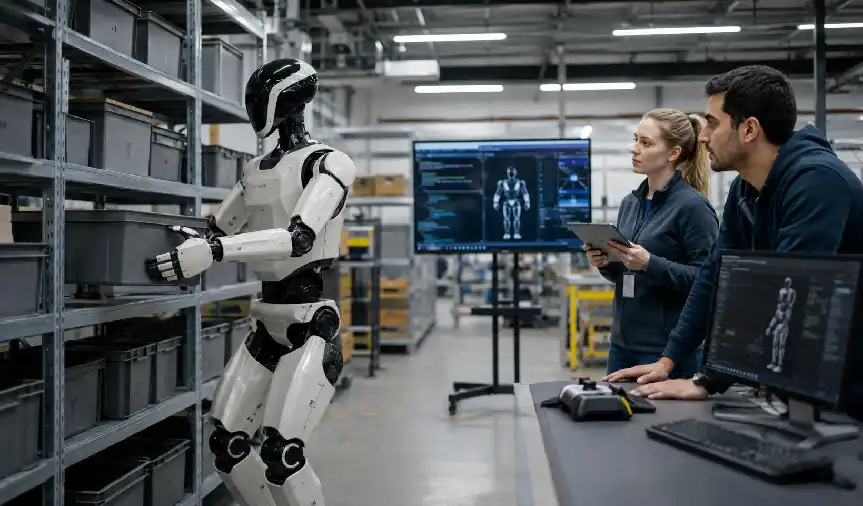
Beginner coders keep making mistakes that they could have avoided, which throw off their projects. When sensor data isn't aligned correctly with robot body frames, navigation fails because coordinate frame transformations weren't done. When sensors give wrong readings or data links break, the system crashes because of not enough error handling. When limits on computing resources are ignored, algorithms work well in testing but take too long to run in real time when they are put into use. When robots do things they weren't supposed to, bad safety rules could damage gear or hurt people. Taking care of these issues by carefully reviewing the code, validating it through simulations, profiling resources, and putting in place software-enforced joint limits creates strong, stable systems that are ready for production settings instead of weak demos.
Conclusion
To find good Humanoid Robot Programming training for beginners, you need to make sure that the learning materials you choose are in line with your organization's goals, technical needs, and skill levels. Online platforms teach basic skills, while specialized schools like E.C.R Academy offer hands-on experience with professional-grade hardware and lessons that are aligned with the needs of the industry. Procurement teams can choose frameworks that work best for their development processes by comparing the freedom of open source with the support of proprietary frameworks. When you work with reputable providers, you can get access to good hardware-software bundles and ongoing expert support. Structured project planning, using community tools, and learning from mistakes made by others all speed up the growth of team skills. Robot application development is now possible for trade schools, businesses, and eager students who are ready to work with this game-changing technology thanks to the combination of easy-to-find learning materials, powerful simulation tools, and thorough training programs.
FAQ
1. Can complete beginners succeed in learning robot application development?
Of course. Modern Humanoid Robot Programming courses are made with beginners in mind. They start with basic ideas like robot architecture and coordinate systems and then move on to coding. For example, E.C.R Academy's program starts with guided exercises in setting up the environment and operating robots. As the students get better, they move on to more difficult tasks like working together with multiple robots. The important thing is to choose training that builds skills gradually instead of assuming that you already know a lot about robotics.
2. What career opportunities open after completing robot programming training?
Graduates look for a wide range of jobs in the field of automation. Among the jobs available are embodied intelligence development engineers who work on integrating AI, motion control specialists who improve gait algorithms, autonomous navigation engineers who set up SLAM systems, and multi-robot collaboration developers who manage fleet operations. These skills are useful in many fields, such as study, healthcare, manufacturing, and transportation. A lot of them go on to teach competitions or work as business trainers, passing on their knowledge to the next generation of robotics experts.
3. What hardware is needed to start developing robot applications?
For development platforms, you need Ubuntu 22.04 or higher, an Intel Core i5 processor (or an equivalent), at least 16GB of RAM, and a graphics card with 4GB of VRAM that is only used for simulations. To fit development tools, simulation software, and project files, storage should be bigger than 256GB. These specs let you run ROS2, compile C++ code, run Python scripts with machine learning libraries, and use 3D modeling settings all at the same time. This is the standard set of tools for making professional robot apps.
Partner With E.C.R Academy for Professional Humanoid Robot Programming Training
To get people trained enough to use anthropomorphic automation, you need more than just online lessons. You need full, hands-on training that meets industry standards. This is exactly what E.C.R. Academy offers through our unique robots program, which was created with the help of business engineers and academic experts. Our students use the MagicBot Gen 1 tool to learn how to control movements, process data from multiple sensors, and connect smart systems. We provide the educational infrastructure for success whether you're a vocational school looking to start robotics programs, a business building up its own skills, or a Humanoid Robot Programming supplier looking for trained implementation partners. Get in touch with us at ecr2008@enteredu.com to talk about unique training options that turn theory knowledge into automation skills that can be used.
References
1. Siciliano, B., & Khatib, O. (2021). Springer Handbook of Robotics (3rd ed.). Springer International Publishing.
2. Murphy, R. R. (2019). Introduction to AI Robotics (2nd ed.). MIT Press.
3. Goebel, P., & Cañas, J. M. (2020). Programming Robots with ROS: A Practical Introduction to the Robot Operating System. O'Reilly Media.
4. Kurfess, T. R. (Ed.). (2018). Robotics and Automation Handbook (2nd ed.). CRC Press.
5. International Federation of Robotics. (2023). World Robotics Report: Service Robots. IFR Statistical Department.
6. IEEE Robotics and Automation Society. (2022). Standards for Robot Software Architectures and Middleware. IEEE Standards Association.


_1781601799781.webp)