Emergency Rescue Technology Course: Save Lives with CPR & AED Skills
When seconds separate life from death, Emergency Rescue Technology becomes the critical bridge between crisis and recovery. Our comprehensive course integrates the latest advancements in cardiopulmonary resuscitation (CPR) and automated external defibrillator (AED) operation with scenario-based training environments that mirror real-world emergencies. At ECR Academy, we've trained over 5,000 professionals worldwide through our proven "Theory + Practice + Scenario" framework, equipping emergency management departments, corporate safety teams, and educational institutions with the skills to respond decisively when golden time matters most.
Understanding Emergency Rescue Technology and Its Role in Life-Saving
For emergency rescue operations to work, they need more than just good intentions. They need to use tried-and-true methods, certified equipment, and people who have been trained to do their jobs perfectly. Emergency Rescue Technology includes all the life-saving actions, from evaluating the scene of the accident to advanced airway management and defibrillation. Our program fills the important gap between theory knowledge and real-world application that procurement managers in public safety agencies say is their biggest training challenge.
The Golden Hour Principle in Modern Rescue Operations
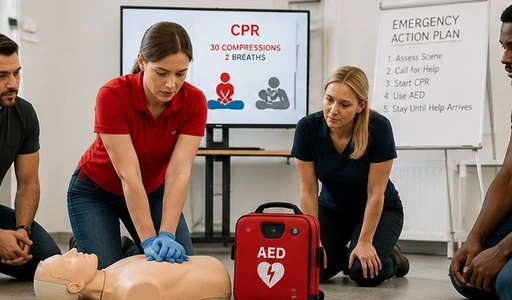
Medical research shows over and over that the chance of survival drops sharply with each minute that passes during cardiac emergencies. Within four minutes of cardiac arrest, brain damage starts to happen, so CPR must be done right away. Our training focuses on the ABCDE assessment method, which stands for Airway, Breathing, Circulation, Disability, and Exposure. This helps first responders organize victims and use resources effectively when there are multiple injuries.
The way ECR Academy does things is by using smart CPR simulators and real-time feedback tools that check the depth, rate, and efficiency of the rescue breath. These training tools make students' bodies react in ways that are similar to what will happen in real situations. By using them over and over, students build muscle memory and trust. When our training model is used by organizations in industrial, educational, and municipal settings, response times and success rates in CPR have been shown to improve.
Integrating CPR Devices and AED Systems into Emergency Response Protocols
Skilled people responding to emergencies and reliable emergency tools work together to make the best conditions for life. Modern AEDs have become complex diagnostic tools that can read heart beats, deliver perfectly timed shocks, and have voice prompts that help even first-time users thru life-saving processes. In our training space, we have programmable AED simulators that let students practice different cardiac emergencies, such as ventricular fibrillation and asystole.
When purchasing managers look at training options, they should give more weight to programs that teach both how to use the equipment and how to do it correctly. Our staff, which includes teachers with two degrees, experts in emergency rescue, and top Red Cross trainers, regularly changes the lessons to keep up with changing international first aid standards. By making this promise, you can be sure that your teams always follow the latest American Heart Association standards, European Resuscitation Council protocols, and area safety rules.
The Importance of CPR & AED Skills in Emergency Rescue Training
Technology by itself can't save lives; skilled people must use these tools at the very last second. It is both morally and legally required for organizations that work with high-risk groups or in dangerous settings to have skilled first responders on staff. Our Emergency Rescue Technology training turns employes from idly watching to confident first responders who can take care of injured people until professional help arrives.
Comprehensive Skill Development Through Scenario-Based Learning
A lot of the time, traditional classroom instruction doesn't prepare students for the chaos and stress of real emergencies. The training facilities at ECR Academy are like real rescue scenes, where teams practice working together to handle accidents at work, nature disasters, and sudden heart events. As the course goes on, students are put thru more difficult situations where they have to evaluate a victim, perform CPR, use an AED, and talk to emergency services all at the same time.
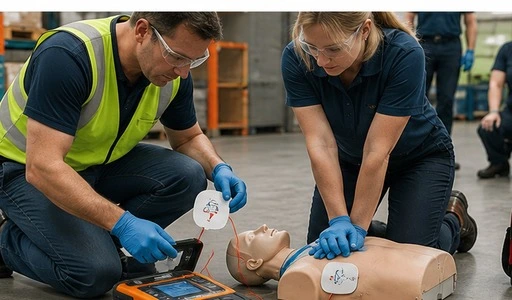
The course covers specialized uses in a range of emergency situations within Emergency Rescue Technology. Before normal CPR can be done on a drowning victim, their airways must be cleared. In cases of electrocution, the power must be cut off and certain techniques must be used to revive the person. When someone is choking, they need to know how to do the Heimlich move. Our multi-function trauma manikins accurately portray these different situations so that students can practice how to handle each one. Partner organizations that train people say that this hands-on method cuts down on hesitation and improves teamwork in real emergencies.
Certification Standards and Professional Credibility
More and more, government contracts, insurance requirements, and regulatory compliance systems require authorized people to have qualified first aid training. Our program is in line with internationally recognized standards. This makes sure that certificates meet the needs of municipal emergency management, workplace safety rules, and industry-specific rules for high-risk areas like petrochemical plants, mines, and construction sites.
In addition to helping with compliance, certified training shows that an organization cares about the safety and well-being of its employes and the public. Communities that are served by organizations with full emergency preparedness programs have measurably better outcomes during incidents with a lot of casualties. When you spend money on good training, you get it back in the form of lower insurance rates, less liability, and a better image among stakeholders who value strategic risk management.
Comparing Emergency Rescue Technology Solutions for Procurement Decisions
To choose the right training options, you need to carefully look at the depth of the curriculum, the quality of the tools, the credentials of the instructors, and the ability to expand the program. It can be hard for procurement managers to tell the difference between real programs and shallow ones that don't produce qualified respondents. There are a few key differences between efforts in training that work and ones that don't.
Traditional Approaches Versus Modern Integrated Systems
Old-fashioned methods vs. modern integrated systems. In the past, first aid training usually started with a lecture and ended with some hands-on practice using simple tools. This method doesn't prepare first responders well enough for the physical and mental challenges of real situations. Learners may be able to remember compression ratios and AED sequences, but they may freeze when they see a person who is bleeding and unconscious in a busy place. Our method, which is based on evidence, gets around these problems by building skills gradually in a way that boosts both technical knowledge and operational confidence.
Simulation technology that gives objective success measures is built into modern training platforms. Our high-tech CPR models check the depth of compressions to the millimeter, making sure that students reach the minimum 5-centimeter depth needed for effective chest compressions. Instructors can see and fix mistakes in technique right away with real-time feedback displays. This stops the reinforcement of bad habits that could hurt patients. Professional-level training is different from basic awareness programs because it uses technology.
Evaluating Equipment Standards and Supplier Reliability
When an organization buys training in Emergency Rescue Technology, it should carefully check the quality and age of the training materials. Manikins and AEDs that are too old don't work with modern devices or follow modern operating standards. ECR Academy keeps its training areas up to date with the latest technology that your teams will use on real deployments. Thru our relationships with major medical device makers, we make sure that students learn on simulation units that are exact copies of systems that are used in the field right now.
Suppliers should be judged on more than just the quality of their initial equipment. They should also be judged on their ongoing support, curriculum updates, and teacher training. As part of our training approach, we regularly update the material to include new best practices, changes to guidelines, and lessons learned from recent emergency situations. Instead of static educational materials that become less useful over time, training partners have access to a knowledge environment that is always changing. This flexible method protects the money you spend on training and makes sure that everyone in your company is always getting better at what they do.
How to Implement and Maintain Emergency Rescue Skills Effectively
Successful training implementation includes more than just finishing the course. It also includes keeping skills up to date, making sure equipment is ready to use, and integrating training into the organization as a whole. When buying something, you should think about all the costs that come with it over its whole life, such as refresher training, equipment maintenance, and keeping your skills up to date over the course of a certification's two to three-year validity period.
Establishing Sustainable Training Cadences
Without regular practice, CPR and AED skills get worse very quickly. When companies run one-time training programs, they often find that responders' skills drop greatly within six months. This makes the company less prepared for emergencies, even tho they spent a lot of money on the program at the beginning. ECR Academy suggests structured refresher training that is in line with the standards for renewing a certification, along with regular skill drills that keep people operationally ready in between official training rounds.
Our approach to Emergency Rescue Technology is a mix of intensive initial certification programs and ongoing digital reinforcement thru virtual simulation platforms. Trainees can use online resources to review their skills, watch videos that show how to do something, and use self-assessment tools to see what they need to work on more. This model of sustained engagement makes it much easier to remember what you've learned compared to traditional one-time training methods. This makes your investment in preparedness more useful.
Integrating Emergency Response Capabilities into Organizational Culture
Technical skill is only one part of being able to respond effectively to emergencies. In order for organizations to be ready for a crisis, they need to encourage people to act right away instead of hesitating or showing respect. Our training focuses on first aid ethics, legal protections for good Samaritans, and mental preparation for the emotional challenges of taking care of seriously injured victims. This all-around approach to growth creates work environments where skilled workers are strong enough to use their skills in emergencies.
Access to equipment and maintenance rules have a direct affect on how well a reaction works. Even highly trained teams can't save lives if AEDs are locked away in places that are hard to get to or if the batteries have died because of poor repair plans. We give advice on how to place equipment, how to check it, and how to handle the supply chain for things like electrode pads, bandages, and oxygen systems. When these operational factors are taken into account, training purchases become useful emergency reaction skills.
Future Trends and Innovations in Life-Saving Training
The field of emergency response is always changing as new technologies are developed and protocols are improved based on evidence. Procurement managers who are looking to the future should look at training programs to see how well they can change to new technologies and changing best practices that will affect emergency management in the years to come.
Smart Technology Integration in Emergency Response
Next-generation AEDs have connectivity features that send information about the patient to emergency medical services that are reacting. This lets doctors plan the right steps to take before they get there. Some more advanced systems have real-time CPR coaching that checks the quality of the compressions and gives feedback on how to improve them during real emergencies. As companies improve their emergency gear, training programs that teach first responders how to use these smart systems are a measurable benefit.
Virtual reality training tools are a new way to teach people how to be ready for emergencies. Immersive simulations put students in high-stress situations that would be impossible or dangerous to recreate in real life, like mass casualty incidents, confined space rescues, and working in dangerous environments. As ECR Academy continues to grow our digital learning environment, we offer training partners cutting-edge technology solutions that complement traditional hands-on teaching rather than taking the place of important physical skill development.
Expanding Community Resilience Through First Responder Networks
More and more, study in the field of public health shows that citizen first responders play a key part in raising the mortality rate of people who have cardiac arrests outside of hospitals. Communities with higher numbers of people who know how to do CPR have much better results during heart emergencies. By increasing their training programs, businesses help make the public safer and build their own skills at the same time. ECR Academy works with educational institutions, business groups, and local emergency management agencies to grow first responder networks that make communities stronger in the US and around the world.
This approach that focuses on the community is in line with the policy priorities pushed by federal emergency management frameworks and state-level public health programs. Training relationships with well-known providers show that a group cares about doing the right thing and could help it get grants, insurance discounts, and government compliance points. When organizational readiness and community benefit come together, they make strong value propositions for procurement decision-makers who are looking at training investments.
Conclusion
Being ready for emergencies is an important duty for every business, as it affects the safety of employes, the community, and the rules that businesses must follow, making Emergency Rescue Technology a critical component. People who are fully trained in CPR, AED use, and emergency response procedures go from being passive bystanders to being capable first responders who can make the difference between life and death during critical incidents. The proven curriculum framework, expert faculty, and realistic simulation environments at ECR Academy give companies scalable training options that improve their abilities in a wide range of operational settings.
Systematic emergency rescue training works everyplace, as shown by our work with nearly 500,000 participants in 28 countries. We are committed to curriculum excellence so that your investment stays up to date with the changing standards and new technologies that shape modern life-saving practices.
FAQ
1. What makes ECR Academy's emergency rescue training different from basic first aid courses?
Theory, hands-on practice, and realistic scenario simulations that mimic real emergency situations are all part of our program, which makes it stand out. In contrast to basic awareness training, our program builds real operating competency by gradually improving skills using high-quality practice equipment. Students practice figuring out who is hurt, giving CPR, using an AED, and working together as a team in settings that are like accidents at work, nature disasters, and sudden heart events that people may experience in real life.
2. How long does certification remain valid and what refresher training is recommended?
Most CPR and first aid certifications are good for two to three years, but this depends on the group that issued the certification and the rules in your area. To stay up to date on changing standards, we suggest that you take official refresher courses before your certification expires. Organizations that want to stay as ready as possible often do skill tests every three months in addition to official recertification training. This makes response times much better than with minimum compliance methods.
3. Can your training programs accommodate large groups from single organizations?
Our training model is designed to support large-scale rollout for institutional clients who need to train various teams at the same time. We've successfully run programs for government agencies, corporate safety departments, and educational institutions that trained hundreds of people by planning schedules that kept operations running as smoothly as possible. Customized programs can be taught at your location using portable simulation equipment, or they can be taught at our training centers, which have full emergency rescue simulation environments.
Partner with Leading Emergency Rescue Technology Training Experts at ECR Academy
If an organization needs a reliable Emergency Rescue Technology training provider with scalable delivery models and skilled knowledge, ECR Academy is the only company that can meet their complex readiness needs. Government agencies, business safety offices, educational institutions, and industry groups that need certified training options that meet regulatory requirements and build real life-saving skills use our comprehensive programs. With instructors who are dual-qualified, realistic simulation platforms, and 16 years of experience delivering training around the world, we can give your emergency preparedness efforts the solid foundation they need.
Email our team at ecr2008@enteredu.com to talk about custom training options that fit the needs of your company, the way it works, and the certification standards. We'll work together to come up with programs that meet price and time limits while still providing the best training possible.
References
1. American Heart Association. Guidelines for Cardiopulmonary Resuscitation and Emergency Cardiovascular Care. Circulation Journal, 2020.
2. European Resuscitation Council. Advanced Life Support Provider Manual. ERC Publications, 2021.
3. National Safety Council. First Aid, CPR, and AED Training Standards for Workplace Preparedness. NSC Press, 2022.
4. International Federation of Red Cross and Red Crescent Societies. Global First Aid Reference Manual. IFRC Publications, 2020.
5. Occupational Safety and Health Administration. Emergency Response and Preparedness Requirements for General Industry. U.S. Department of Labor, 2021.
6. Sasson, C., Rogers, M.A., Dahl, J., & Kellermann, A.L. Predictors of Survival from Out-of-Hospital Cardiac Arrest: A Systematic Review and Meta-Analysis. Circulation: Cardiovascular Quality and Outcomes, 2019.


_1781601799781.webp)