Virtual Reality Digital Content Creation in Marketing: New Opportunities
Virtual reality digital content creation is reshaping how brands communicate, demonstrate, and sell in the B2B space. Rather than relying on static visuals or flat product pages, immersive 3D environments now allow buyers to explore, interact, and experience offerings before making procurement decisions. According to PwC's 2023 Extended Reality Report, VR-trained employees showed 275% more confidence in applying new skills than classroom learners. For digital media programs and enterprise training teams, understanding how immersive content fits into modern marketing workflows is no longer optional — it is a competitive necessity.
Understanding Virtual Reality Digital Content Creation in Marketing
What Makes Immersive Content Different From Traditional Media
Immersive digital content can do a lot more than a brochure or product video. Virtual reality digital content creation encompasses 360° video walkthroughs, interactive 3D showrooms, spatial stories, and scenario-based demos — all designed to put the customer inside an experience rather than outside of it. This change is significant for professionals in B2B procurement. When a manufacturing buyer can virtually walk through a production line before signing a contract, they can make decisions more quickly and with more confidence. When a cultural institution uses a virtual exhibition hall, geographic distance is no longer a problem.
Being here is the biggest reward. When someone is truly in a place, they are more engaged, remember things better, and don't hesitate as much. Researchers at Stanford's Virtual Human Interaction Lab have found that interactive experiences make people feel much stronger emotions than neutral media.
There are problems. Adoption has usually been slowed down by technical problems, the need for specific hardware, and the high cost of maintaining content. But browser-based platforms that don't need to be installed are actively getting rid of these problems, making it possible to access VR content on regular devices without the need for special hardware.
How to Create Effective Virtual Reality Content for Marketing: A Step-by-Step Guide?
Planning Your Immersive Content Strategy
Effective virtual reality digital content creation begins with clearly defined objectives. Who is the audience? What decision should this experience support? What action should the visitor take after exploring the space? Answering these questions affects every other decision made during production, from the layout of the space to how people interact with it.
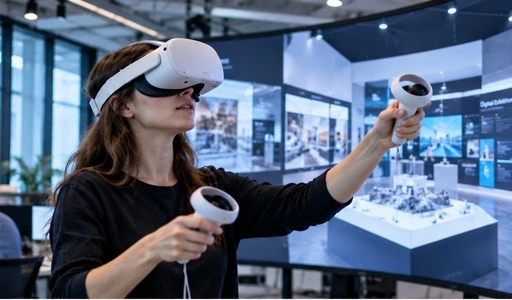
Here is how a structured production workflow typically unfolds:
- Define the visitor journey: Make a list of what the user should see, feel, and understand at every stage of the experience. It is a lot like putting together a real exhibition — the order and speed are deeply important.
- Design the spatial environment: To make virtual rooms, galleries, or displays, use scene makers. How people perceive the brand and the content inside it is directly affected by the lighting, the choice of materials, and the flow of the space.
- Integrate multimedia assets: Pictures, 3D models, audio storytelling, linked video, and animated parts all work together to make more complex and interesting experiences that keep attention longer than single-format content.
- Build interactive touchpoints: Exhibits that can be clicked on, information panels that pop up, scene-switching triggers, and game-like quizzes give visitors control — turning passive viewing into active exploration.
- Test and optimize across devices: Performance testing ensures that the experience loads quickly, responds to user input, and looks good on all devices, whether a guest is on a desktop computer, a tablet, or a mobile phone.
These steps are not sequential checkboxes but iterative cycles. With each round of user testing, friction points are found that make the experience clearer and more powerful.
Comparing Virtual Reality Content Creation Platforms for B2B Procurement
Matching Platform Capabilities to Institutional Needs
Not every platform suits every use case. When evaluating virtual reality digital content creation tools, procurement teams must weigh usability against feature depth, and scalability against cost. High-end engines like Unreal Engine 5 offer photorealistic rendering and six-degrees-of-freedom interaction — making them perfect for industrial simulation or architectural visualization — but they carry steep learning curves and require capable local hardware.
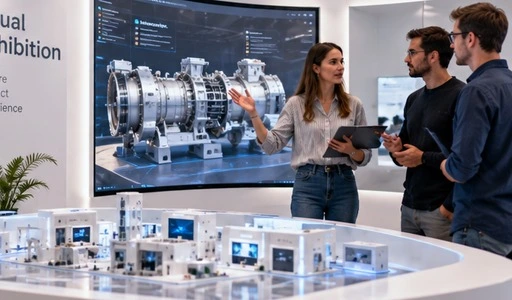
Browser-based low-code platforms are a great option for schools and corporate training departments that want to build their own skills. This model is shown by the Veryengine Digital Exhibition Hall Development Platform, which runs ECR Academy's interactive content program. In their computers, learners can use a visual scene designer, an interactive component library, and display themes. They don't need to download or set up anything difficult. Performance is taken care of by cloud graphics, and team-based project processes are supported by tools that let multiple users work together.
This platform-first approach is important because it lowers the bar for faculty, cuts down on IT costs, and lets students go from idea to deployed project in just one semester. This directly fills the gap between academic teaching and real outputs for trade schools that don't want students to graduate without having completed a portfolio.
Future Trends and Opportunities in VR Digital Content Creation for Marketing
AI, Cloud Collaboration, and the Shift Toward Accessible Immersive Media
The trajectory of virtual reality digital content creation points toward broader accessibility and deeper intelligence. AI-assisted content generation tools now help designers plan spatial layouts, auto-generate 3D assets from text prompts, and personalize visitor journeys based on behavioral data. Cloud-based collaboration removes the need for co-located teams, allowing an instructor in one city and a student in another to build the same virtual exhibition simultaneously.
New business models are emerging alongside these tools. Subscription-based VR asset libraries, white-label digital exhibition solutions, and enterprise VR content-as-a-service packages are enabling organizations of all sizes to deploy immersive marketing without building full production pipelines in-house. Active adopters include museums, corporate showrooms, cultural tourism boards, and online education providers.
For programs and enterprises investing now, the strategic advantage is compounding. Teams that develop virtual reality digital content creation competencies today will be positioned to lead client engagements, win content contracts, and demonstrate graduate employment outcomes that lagging institutions cannot match.
Educational Resources and Training for VR Digital Content Creation
Building Workforce Capability Through Structured Curriculum
Sustaining competitive relevance in immersive media requires more than awareness — it requires structured skill development. Through a project-based curriculum aligned with international technical skills standards, ECR Academy's virtual reality digital content creation course addresses this directly. The program covers exhibition planning and spatial design, 3D scene construction, interactive experience development, multimedia content integration, gamification design, and full-cycle platform deployment.
Faculty includes industry engineers and academic experts with active professional experience in digital media, interactive design, and virtual content development. This matters for programs concerned about teaching credibility and for enterprises that need trainers who understand real project environments, not just textbook workflows.
The platform eliminates the friction that typically discourages adoption. Because Veryengine runs entirely in-browser, no local software installation is required. Learners can begin building, testing, and publishing virtual exhibition projects from day one. By the end of the course, participants hold portfolio-ready projects spanning museum exhibitions, corporate showrooms, educational displays, and cultural tourism presentations — work that speaks directly to employer expectations.
ECR Academy has delivered professional training and assessment services to nearly 500,000 participants across 28 countries since 2010, with more than 300,000 learners obtaining recognized skills certifications. This track record reflects not just reach but sustained curriculum relevance in fast-moving technical fields.
Conclusion
Virtual reality digital content creation has moved from novelty to necessity in B2B marketing and workforce development. Immersive exhibitions, interactive showrooms, and spatial storytelling are now practical tools that shorten buyer decision cycles, strengthen engagement, and produce measurable outcomes. For vocational programs, enterprise training departments, and digital media professionals, the question is no longer whether to invest in immersive content skills — it is how to do so efficiently, with curriculum that stays current, delivers real project outcomes, and prepares learners for roles the market is actively hiring for.
FAQ
1. What is the difference between a digital exhibition hall and a regular website?
Digital exhibition halls prioritize immersive spatial exploration over linear information browsing. Visitors navigate 3D environments, interact with multimedia exhibits, and experience content narrative — much closer to visiting a physical gallery than reading a webpage. Regular websites present information efficiently but offer little sensory engagement. Digital exhibition platforms use spatial design, interaction logic, and multimedia layering to create experiences that hold attention and communicate brand identity far more memorably.
2. Does this course require an art or programming background?
No prior art or coding experience is required. The curriculum introduces design principles and aesthetic fundamentals as part of the learning sequence. The Veryengine platform provides ready-to-use templates and asset libraries, allowing learners to focus on curatorial thinking, visitor experience logic, and content strategy rather than technical execution from scratch.
3. What industries actively use digital exhibition technology?
Application scenarios span cultural heritage institutions (museums, memorial halls), corporate environments (brand showrooms, product experience centers), education (campus exhibitions, online course supplements), cultural tourism (destination introductions, travel planning), commercial marketing (product launches, online trade shows), and personal creative portfolios.
Partner With ECR Academy for Virtual Reality Digital Content Creation Training
ECR Academy connects institutions and enterprises with structured, industry-validated immersive media training. Our virtual reality digital content creation supplier network, curriculum resources, and Veryengine-powered platform give your team the tools to build, deploy, and deliver real digital exhibition projects — not just theoretical knowledge. Backed by 16 years of global experience across 28 countries, we help programs close the skills gap and help enterprises build internal teams that win content contracts. Reach us at ecr2008@enteredu.com or visit enteredu.com to begin the conversation.
References
1. PwC. (2023). Seeing Is Believing: How VR and AR Will Transform Business and the Economy. PwC Global.
2. Stanford Social Media Lab. (2022). The Proteus Effect and Immersive Media Engagement. Stanford University Press.
3. Greenlight Insights. (2023). 2023 VR Industry Report: Enterprise Adoption and Market Growth. Greenlight Insights.
4. Statista Research Department. (2024). Virtual Reality Market Revenue Worldwide 2020–2028. Statista.
5. XR Association. (2023). 2023 Augmented and Virtual Reality Survey Report. XR Association Publications.
6. eLearning Industry. (2023). Immersive Learning: The Impact of VR on Corporate Training ROI. eLearning Industry Press.


_1781601799781.webp)