Virtual Reality Digital Content Creation in Education: What’s Changing?
Virtual reality digital content creation is reshaping how educational institutions design learning experiences. Where classrooms once relied on static textbooks and flat presentations, immersive 3D environments now allow learners to explore, interact, and build. This shift is not cosmetic — it reflects a fundamental change in how skills are acquired and demonstrated. From vocational colleges upgrading their digital media programs to enterprise training teams preparing for immersive media projects, the demand for structured, project-based virtual reality digital content creation curricula has never been more urgent.
The Current Challenges in Educational VR Content Development
A lot of schools have trouble going beyond theory. Immersive media skills are something that teachers want to teach, but the tools that are out there are often hard to set up, have long learning curves, or cost a lot of money. This makes a hole between what the program says and what the students actually do.
Why Traditional Tools Fall Short
Traditional 3D software pipelines, which are made for expert companies, make it too hard for teachers who don't know much about computers. The program stops before it even starts when a teacher needs weeks of training just to be able to run a demo. Adding the problem of different software versions on lab computers to this mix makes it hard for many schools to teach virtual reality content production without having students turn in work that isn't consistent or is missing parts.
The Procurement Dilemma
A similar problem exists for procurement managers at trade schools. According to a 2023 survey by the XR Association, "lack of ready-to-use curriculum materials" was the main reason why over 60% of educational schools didn't use immersive media programs. Budget cycles are long, and it's risky for an institution to invest in a platform that will be out of date in two years. Getting a platform, education, and project cases all in one package has become the most important thing to look for when buying something.
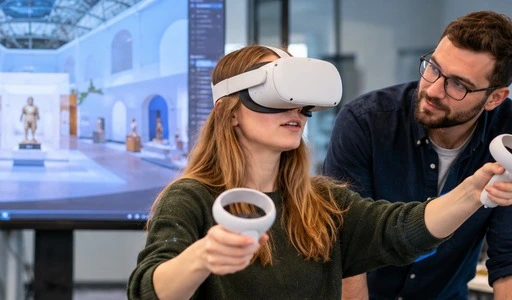
How Immersive Digital Content Creation Is Evolving in Education?
It's no longer just 360° film. Space scene design, interactive logic development, multimedia asset integration, and cloud-based deployment are all parts of modern virtual reality digital content creation in education. They are all done in the same production workflow.
From Passive Viewing to Active Building
The most significant shift is pedagogical. Learners are no longer just spectators in virtual worlds; they are building them. Students are now expected to plan exhibition themes, create visitor journeys, set up interactive hotspots, and make sure that the site works well on all devices. This focus on production is similar to how things are done in the real world in fields like cultural tourism, digital exhibitions, and corporate showroom development, all of which are actively hiring interactive media grads. Cloud rendering and browser-based systems have removed the hardware bottleneck that once limited access. Without installing anything locally, students can now build, test, and show off their virtual exhibition projects from any device that is linked to the internet. The number of institutions that can offer legitimate training in virtual reality digital content creation has significantly increased as a result of this accessibility.
Leading Platforms and Tools for VR Content Education in 2026
Institutions evaluating platforms for interactive content education typically compare options across three dimensions: technical depth, ease of onboarding, and real-world applicability. For high-fidelity real-time graphics, Unreal Engine 5 and Unity are still the best in the business. Both platforms have strong asset pipelines and are used a lot in film, games, and architectural visualization. But they have high learning curves, and putting student projects online needs a lot of technology support. Because of this, they work better for advanced courses than for basic training. Browser-based platforms with zero-code and low-code workflows have become a practical alternative for institutions that want to make virtual reality content that many people can access. ECR Academy's Virtual reality digital content creation training uses the Veryengine – Digital Exhibition Hall Development Platform as an example. It provides a visual scene editor, an interactive component library, and exhibition templates that are ready to use in the real world. This means that students can create immersive virtual spaces, set up multimedia interactions, and manage cloud deployment all without writing a single line of code. These benefits have direct effects on measured educational results. In one course term, students finish the whole project cycle, from planning the idea to building the scene to putting it online. These are the main benefits that make browser-based tools great for professional and trade training where getting a portfolio together quickly is important.
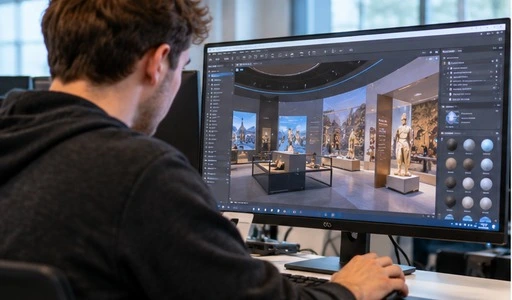
Implementing VR Content Creation Curricula: A Practical Guide for Program Directors
Program directors evaluating virtual reality digital content creation suppliers need a structured application strategy to lower risk and show institutional leadership why the money should be spent.
Mapping Use Cases Before Selecting Tools
Before you choose a platform or curriculum package, you should make a list of the types of projects your students will need to complete by the time they graduate. At the moment, the most useful output types for digital media and animation programs are virtual museum exhibits, business digital showrooms, educational science shows, and culture tourist experiences. When you align your curriculum to these situations instead of just doing abstract technical exercises, you get portfolio work that employers can see right away.
Evaluating Curriculum-Platform Bundles
The best way to buy something is to think of the program and the site as a single unit. The Virtual reality digital content creation course at ECR Academy is divided into eight skill modules. These modules cover a wide range of topics, from planning exhibitions and designing spaces to making games and improving user experiences. In-house teachers don't have to do as much teaching because faculty teach with the help of beginner tutorials, project resources, and built-in technical support. Here are the core evaluation criteria that program leaders and training managers should apply when comparing virtual reality digital content creation suppliers:
- Curriculum-to-platform integration: Does the courseware match the production tools, or do students have to switch between them all the time?
- Faculty onboarding support: Do you include training tools for instructors? Are the software lessons up to date?
- Project authenticity: Do students finish real-life products like a working museum exhibit or brand store, or do they just do skill-based activities?
- Platform scalability: Can the platform support collaboration between multiple users and grow with different cohort sizes without having to pay for extra infrastructure?
- Update cadence: How often does the platform release new themes, components, and changes to the way work is done?
These criteria are very similar to the things that institutional buyers care about most when making decisions during a 3–9 month procurement cycle.
Future Trends Shaping Immersive Content Education
Scene generation with AI help, real-time cloud modeling, and joint development by multiple users are all coming together to speed up and simplify the process of making virtual exhibitions. The education market is also moving toward subscription-based curriculum licensing. This way, schools don't have to buy static course packages that become out of date quickly, but instead can get new content all the time. The need for employees who can make their own virtual reality content is growing quickly in business training departments, especially those that work with cultural tourism, digital displays, and brand experience. Instead of outsourcing every immersive project, companies are putting money into building up their own skills. This means that organized virtual reality digital content creation training is a practical investment rather than an optional education budget line.
Conclusion
Traditional digital media education is giving way to interactive content creation. The schools that have matched the right curriculum with the right platform are moving forward the fastest. Virtual reality digital content creation is no longer an elective that looks to the future; it is now an essential skill for getting a job in digital media, culture display, and immersive marketing. The hard part for program directors is coming up with a solution that is up-to-date technically, good for teaching, and easy to use without making retraining faculty too hard. That's exactly what a well-organized course-platform mix gives you.
FAQ
1. What is the difference between a digital exhibition hall and a regular website?
Immersive spatial experiences are more important than viewing material in digital display rooms. Like going to a real gallery, visitors can move around in 3D environments, interact with exhibits, and follow storylines. Most websites are set up so that you can read and navigate the content, not look around in different places. Digital display platforms let you make experiences that a regular web page can't match by using scene editors, engaging parts, and multimedia integration.
2. Does this course require prior technical or art experience?
No knowledge of the art or code is needed ahead of time. Along with teaching production skills, the course teaches design principles and basic esthetics. The Veryengine platform has libraries of assets and exhibition templates, so students can start making right away. Instead of demanding knowledge of fine art or advanced coding, the program focuses on curatorial thought and user experience logic—skills that can be used in any job that involves immersive content.
3. What industries actively use virtual exhibition skills?
Applications span cultural heritage institutions, corporate brand showrooms, educational science centers, cultural tourism platforms, commercial marketing campaigns, and personal portfolio presentations. Graduates with demonstrated virtual reality digital content creation skills are positioned for roles across all of these sectors, which represent growing employment markets in immersive media production.
Start Building Your Immersive Media Program with ECR Academy
ECR Academy offers a structured Virtual reality digital content creation course built for institutions and enterprise training teams ready to move from concept to deployable student work. Backed by 16 years of global skills education experience and partnerships across 28 countries, we deliver curriculum, platform access, and faculty support as a unified solution. Connect with our team at ecr2008@enteredu.com or visit enteredu.com to explore how this virtual reality digital content creation supplier partnership can elevate your program outcomes.
References
1. XR Association. XR Industry Insights Report. 2023.
2. Johnson, L., & Adams Becker, S. NMC Horizon Report: Higher Education Edition. EDUCAUSE, 2022.
3. Radianti, J., Majchrzak, T. A., Fromm, J., & Wohlgenannt, I. "A systematic review of immersive virtual reality applications for higher education." Computers & Education, 2020.
4. Merchant, Z., Goetz, E. T., Cifuentes, L., Keeney-Kennicutt, W., & Davis, T. J. "Effectiveness of virtual reality-based instruction on students' learning outcomes in K-12 and higher education." Computers & Education, 2014.
5. Parong, J., & Mayer, R. E. "Learning science in immersive virtual reality." Journal of Educational Psychology, 2018.
6. Dede, C., Jacobson, J., & Richards, J. Virtual, Augmented, and Mixed Realities in Education. Springer, 2017.


_1781601799781.webp)