New Energy Vehicle Design & Control Technology for Automotive
New energy vehicle design & control technology is the combined technical field of the mechanical construction, electrical architecture and software-defined control system of electric and hybrid cars. It encompasses the whole technological chain, from engine architecture and battery management to motor drive and charging system development. As global EV adoption grows – with the International Energy Agency projecting that more than 14 million new electric vehicles were sold in 2023 alone – these disciplines have become a workforce priority for universities, corporations and training institutions throughout the globe.
Core Principles of New Energy Vehicle Design
Thermal Management and Aerodynamic Efficiency
Proper thermal management maintains battery cells within a temperature range of 15°C to 35°C, which significantly impacts cycle life and safety. “Poor thermal design accelerates cell degradation and increases risk of thermal runaway.” Aerodynamic optimization minimizes the drag coefficients, with a demonstrable influence on the driving range. For passenger EVs, engineers generally aim for a Cd < 0.25. Physical restrictions must be addressed from the very first phases of vehicle layout design.
Battery Management System Architecture
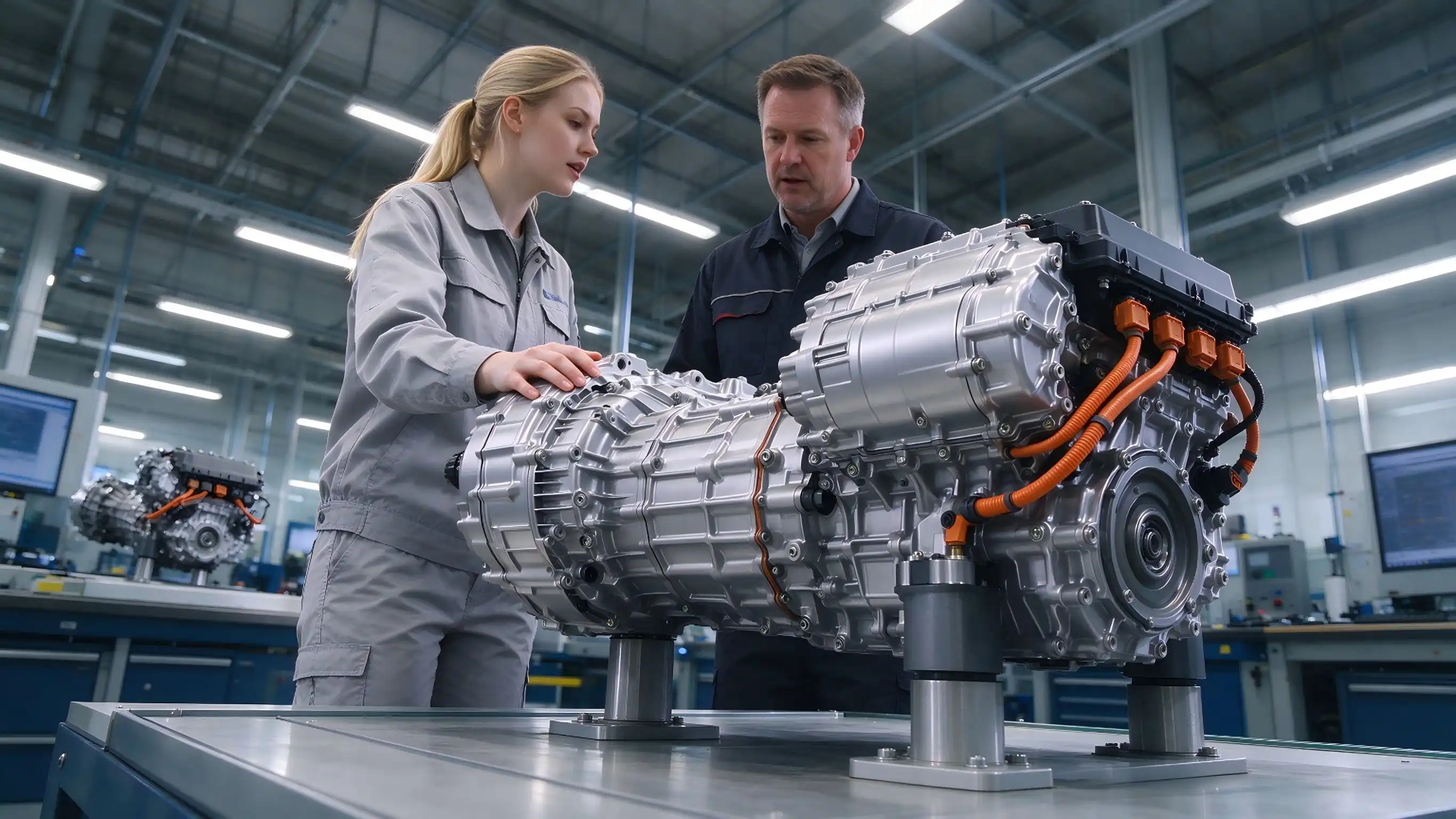
The Battery Management System (BMS) controls the State of Charge (SoC), the State of Health (SoH), the cell voltage balance and the insulation resistance. A good BMS architecture will combine functional safety requirements of ISO 26262 at ASIL-D level with fault detection and safe shutdown under abnormal conditions. BMS capacity is directly linked to a platform’s ability to satisfy market-entry regulations in the US, EU or China in the procurement environment. Before signing the contract, the procurement team may check supplier compliance by understanding the design of the BMS.
Sensor Networks and Real-Time Control Platforms
The NEVs of today are built on distributed sensor networks that are linked via CAN-FD or Automotive Ethernet. These networks transmit data into the Vehicle Control Unit (VCU) that manages power flow between the battery, motor and charging systems in real time. MATLAB/SIMULINK and CarMaker are industry standard software for modeling and validation of these control platforms before the actual prototyping is started. These tools are a necessary for every training program to get engineers ready for production-level work.
Overview of Electric and Hybrid Vehicle Control Systems
Electric Motor Control Algorithms
The most popular type of engine in EVs today is a PMSM, which stands for permanent magnet synchronous motor. They have a lot of torque and are quiet. This type of control, which is also called field-oriented control (FOC), keeps the flux and torque parts separate. You can finetune the speed and torque this way. It takes less power to use this method than scalar control methods. People who know how to build and tune FOC systems are in high demand in the EV business right now.
Regenerative Braking and Energy Recovery
Using less energy to move in new energy vehicle design & control technology means you can turn that energy back into electricity when you slow down. Depending on the road conditions, this could help the car use 10–25% less gas overall. How the driver feels and how fast the energy is returned should both be taken into account by the control method. The motor driver and the hydraulic parts of the brake system need to be fine-tuned in this case. Hands-on training is a good way for engineers to learn how to change regenerative braking systems. This can help projects move along faster.
Hybrid Powertrain Control Strategies
These automobiles need communication between " both "a gasoline engine and electric motor , at the same time . Cars on the road utilize both rule-based and optimization-based methods to control the energy they use.To do a good job on hybrid control systems, engineers need to know about state-machine reasoning, change from one working mode to another, and modeling fuel use. A lot of the time, simulation tools like AVL CRUISE are used to test how well energy management methods work before they are used in real cars.
Selecting and Procuring Advanced NEV Control Components
To find the best teaching tool, department heads and purchasing teams at schools or businesses must do more than just compare specs. What kind of depth does the program have? How well do the tools connect? Will they be able to work together for a long time?
In order to find ways to teach people how to drive NEVs, these are the most important things to remember:
- Curriculum coverage: Does the program address the full three-electric system — power battery, drive motor, and electronic control — along with charging system design and overall vehicle layout?
- Software integration: Does training incorporate industry tools such as CATIA, MATLAB/Simulink, Altium Designer, and ANSYS for simulation and PCB design?
- Laboratory infrastructure: Are dedicated testing environments available, including motor test benches, battery charge-discharge systems, and CAN bus analyzers?
- Certification pathways: Does the program support credentials in NEV engineering, CAD mechanical design, and EDA electronic design that employers recognize?
- Faculty composition: Are courses delivered by engineers with active industry experience alongside qualified academic instructors?
Emerging Trends and Technologies Shaping NEV Design
Wireless Charging and V2G Integration
Electric cars will soon be able to wirelessly distribute energy . SAE J2954 is a standard that describes operating frequencies and alignment limits for wireless power transmission . Vehicle-to-Grid (V2G) technology offers a two-pronged strategy to charge EVs. EVs that are parked can now be used to help the grid. An engineer needs to know a lot more than how to make charging piles for these systems to work. Some things they need to know are the topology of power electronics, how to talk to each other, and how to isolate safety.
ADAS and Software-Defined Vehicle Architecture
A lot of the time in new energy vehicle design & control technology, the car control layer and perception devices need to work well together for advanced driving aid systems to work. There are software-defined architectures in more and more cars. This increases the modularity of electronic control systems and the ability to swap them over the air. This development means that the engineers designing PCBs, integrated software and control systems need to start collaborating earlier in the design phase. If they learned different things, they might not be ready for the real world of putting hardware and software together.
New Materials and Regulatory Compliance
They are lighter because they are made of different types of cells (CTP and CTC), but they need to be stored and put together in different ways. The US (FMVSS), the EU (UNECE), and China (GB standards) are all moving toward stricter rules for electromagnetic compatibility (EMC) and thermal runaway containment. An engineer who knows both the rules that need to be followed and the properties of materials is better able to help get goods approved.
Case Studies – Successful Applications of NEV Design & Control Technology
University-Enterprise Co-Training Models
Several universities in China that teach applied engineering have teamed up with companies that make NEVs to make shared labs. You will do both classwork and project work at the production level in these rooms. Kids have a better chance of getting skilled jobs after they graduate if they work on real cars instead of just doing drills from books. That's what the "Excellence Engineer 2.0" plan calls for: training that is based on the job.
Accelerated Onboarding in Enterprise Training
Top firms that make parts for electric cars say that engineers can finish their training 20–30% faster if they learn how to use simulation-first processes with tools like MATLAB and Simulink before they work with real hardware. Structured BMS programming jobs and motor controller tuning labs help people learn faster than just going to school.
Digital Simulation Reducing Prototype Costs
When people working on an electric powertrain used CAE-based structural and thermal modeling early in the design process, they cut the number of real prototypes they made by 40%. If engineers had learned how to do finite element analysis and multibody dynamics modeling first, they could have cut costs on the gear. This can be found over and over again when modeling is a regular part of engineering school.
Conclusion
There is a real and important difference between what engineers know and what they can do in new energy vehicle design & control technology. Universities that are making "New Engineering" programs, businesses that want to train new workers faster, and foreign organizations that need to hire EV experts all have the same problem: they need training that ties technical ideas to real hardware, tools, and industry standards. That's exactly what a well-designed NEV engineering school does: it builds skills across the whole technical chain, from planning the car to writing the BMS to making sure the charging system works.
FAQ
1. Can someone with no prior EV experience take this course?
Yes. The program begins with basic subjects including mechanical drawing, engineering mechanics and principles of automotive electrical, then proceeds to BMS design, motor control and system integration. The learners learn step by step.
2. What certifications can learners earn?
The program supports preparation for professional certificates in new energy vehicle engineering, CAD mechanical design, and EDA electronic design — credentials recognized by employers across the automotive manufacturing sector.
3. Which simulation software is covered?
The course covers CATIA, UG, SolidWorks for 3D mechanical design; Altium Designer, Cadence, and KiCad for PCB and circuit design; and ANSYS and MATLAB/Simulink for structural, thermal, and control system simulation.
Partner with E.C.R Academy for NEV Engineering Training
Since 2010, E.C.R. Academy has helped more than 300,000 certified graduates and almost 500,000 trainees in 28 countries. Business, universities, and industry groups can trust us to provide them with reliable new energy vehicle design & control technology. We offer open course scheduling, shared lab space, staff work, and well-known certification tracks. Email us at ecr2008@enteredu.com or visit enteredu.com to talk about the training your school or group needs.
References
1. International Energy Agency. Global EV Outlook 2024. IEA, 2024.
2. SAE International. SAE J2954: Wireless Power Transfer for Light-Duty Plug-In/Electric Vehicles and Alignment Methodology. SAE International, 2020.
3. ISO. ISO 26262: Road Vehicles – Functional Safety. International Organization for Standardization, 2018.
4. Larminie, J., & Lowry, J. Electric Vehicle Technology Explained (2nd ed.). Wiley, 2012.
5. Chan, C. C., & Wong, Y. S. "Electric vehicles charge forward." IEEE Power and Energy Magazine, 2004.
6. Ehsani, M., Gao, Y., Longo, S., & Ebrahimi, K. Modern Electric, Hybrid Electric, and Fuel Cell Vehicles (3rd ed.). CRC Press, 2018.