How Virtual Reality (VR) Product Design & Development Builds Future VR Talent
Institutions are using virtual reality (VR) product design & development to teach the next generation of digital producers. With immersive technology infiltrating education, cultural tourism, healthcare and real estate there has never been a greater need for job-ready VR expertise. A structured training that covers the whole process from scene development and interaction design to the deployment in the browser offers learners a straight entry into the business. At ECR Academy, we’ve created a course that fills this gap between classroom theory and genuine professional production.
Understanding VR Product Design & Development: Foundations and Key Principles
Before creating any VR application, learners need to have a clear idea of what the task comprises. VR development is more than putting on a headset, it is a multi-layered process that incorporates 3D spatial design, real-time rendering and human-computer interaction logic.
The Three Core Principles: Interaction, Immersion, and Imagination
All good VR products are based on three principles. Interaction is when users can manipulate the virtual world in meaningful ways. Visually and spatially the immersive experience is convincing. Imagination implies that the design is not a copy but produces experiences that are not achievable in the physical world. These principles influence every choice from scene arrangement to UI flow.
From Ideation to Web-Based Deployment
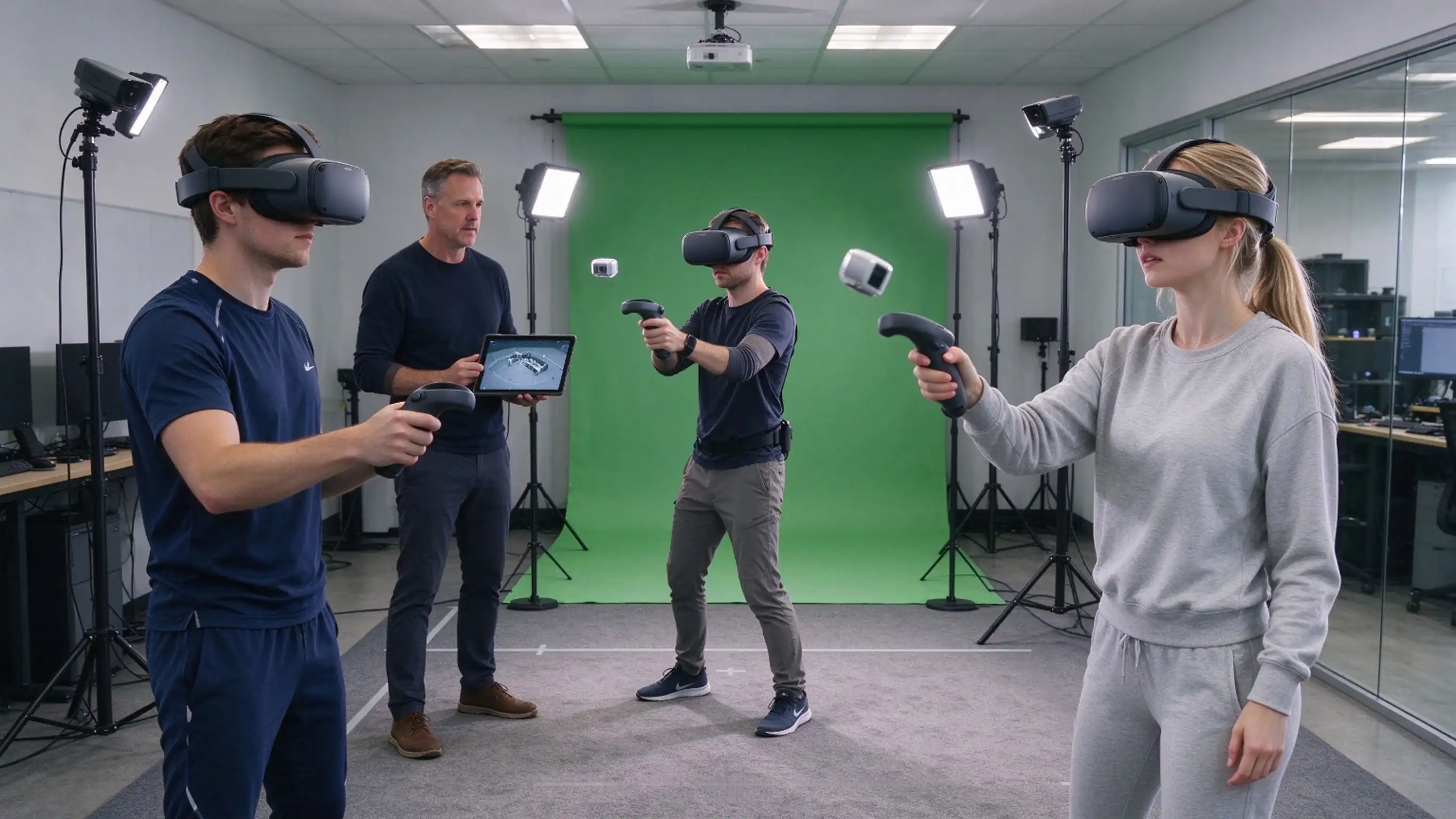
The VR development process has a distinct life cycle: requirements analysis, scene design, functional architecture, asset generation, interaction coding, testing and browser based publication. This sequence of understanding allows learners to prioritise work and avoid frequent blockages. This methodology immediately translates onto assessable project milestones for universities constructing a teaching chain.
Why B/S Architecture Changes Everything for Education
Traditional VR tools demand significant local installs, and high-end hardware. A browser-based B/S platform eliminates these restrictions completely. The development environment is available using a web browser and does not need the learners to install a client. The design allows lab administrators to have uniform access to all devices on a shared network without the maintenance overhead, even when space and power are limited.
The Role of VR Product Design in Building Future VR Talent
The VR industry truly requires talented people. According to PwC’s 2022 research on immersive technologies, the number of people working in VR and AR has to increase significantly if the anticipated demand in the industry is to be met. But when students graduate, most of them don’t know how to utilise the tools and the procedures that professional studios employ.
Project-Based Learning Accelerates Real Skill Formation
Passive lessons don’t turn out on-the-job engineers.” Students greatly develop their abilities while working on actual VR projects, from the concept to the final completed result. Our VR training at ECR Academy is built on real-life activities including importing 3D material, developing scenarios, enhancing cognitive skills, and designing how people will interact with each other. Learners obtain a certificate and a portfolio item for the completion of a course.
Cross-Disciplinary Collaboration Mirrors Industry Reality
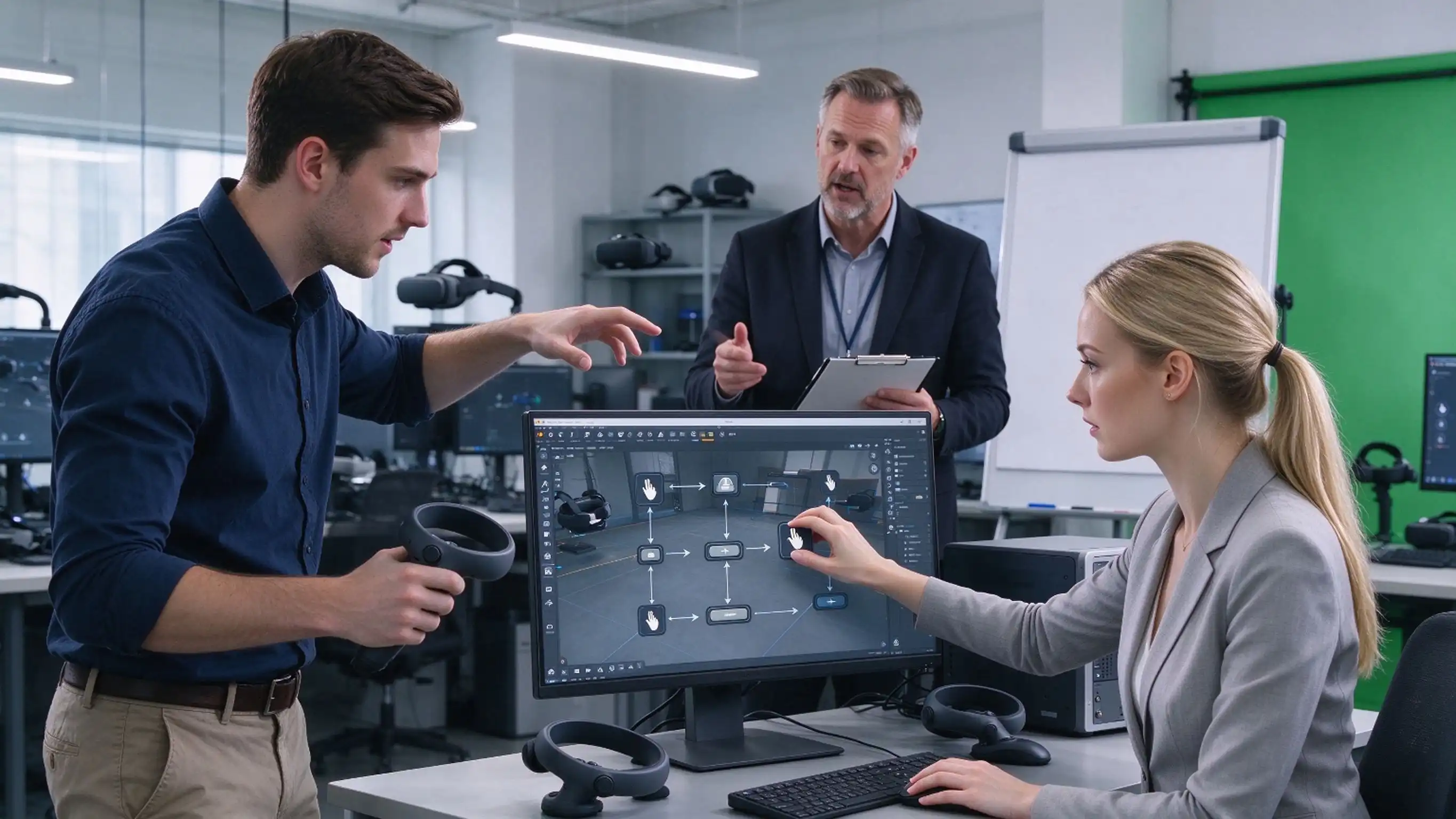
Professional Virtual reality (VR) product design & development businesses include of designers, builders and content specialists. Training programs that segregate these functions are not beneficial. Our course is designed in such a manner that students have to work on both design thinking and technical development, which is how VR products are really developed. Graduates are ready to get into the labour force and immediately work as a team.
Institutions That Train VR Talent Create Industry Pipeline
What does a university or vocational college do when it provides organised training in VR development? It does more than fill seats, it provides local companies with skilled personnel. Students in programs that meet worldwide requirements for technical abilities may start working on VR material in weeks, not months.
Best Practices and Tools for Effective VR Development Training
As important as the material is, picking the right tool and way to teach is just as important. If you use the wrong tools, you might not learn as quickly or get skills that you can't use in the real world.
VeryEngine: A Browser-Based Platform Built for Training
The VR course at ECR Academy is built on B/S architecture, and uses VeryEngine, a programming platform based on HTML5 and WebGL. You may change sceneries in real time and get previews directly in the browser. This shortens the time to acquire feedback and increases confidence since learners can immediately see the modifications to their ideas. The platform is good with 3D assets thus load times remain minimal even on regular lab equipment.
When it comes to technology, VeryEngine is a great platform for teaching because:
- No installation required: Learners open a browser and start building. Lab administrators do not need to manage software licenses or update client packages across dozens of machines.
- Real-time preview: Scene edits appear instantly, so learners can test interaction logic and visual results without switching between tools or waiting for build cycles.
- Lightweight resource management: The platform synchronizes local and server assets efficiently, reducing network load—a practical advantage for labs with shared bandwidth.
No need to install anything; learners just open a browser and start making. The people in charge of the lab don't have to keep track of software rights or client packages on dozens of computers.
Real-time preview: Changes to a scene show up right away, so students can see how the interactions work and how the images turn out without having to switch tools or wait for build cycles.
Aligning Tools with Unity and Unreal Workflows
The lessons at ECR Academy are based on international standards for technical skills and include processes that work with Unity, Unreal Engine, and WebXR development methods. For those who want to move up, this means that they can use the basic skills they've learned in the tools that companies actually use.
Iterative Feedback as a Teaching Method
People who learn how to make VR games learn to test and fix their work. In our course, debugging, performance tuning, and UI optimization are taught as normal steps, not as extras. This is like working in the real world, and it makes grads familiar with iteration.
Strategic Approaches: In-House VR Training vs. External Outsourcing
Institutions and enterprises often face a choice: build internal VR training capacity or rely on external vendors. Both paths have real trade-offs.
Building Internal Capacity Through Structured Curriculum
When a program department invests in a structured VR training system—complete with a browser-based platform, project templates, and faculty support—it retains control over teaching quality and pacing. Faculty can align course content with local industry partnerships and adjust projects to match real client briefs from partner enterprises.
When to Bring in External Course Suppliers
For institutions that lack the faculty experience or platform infrastructure to run VR training independently, partnering with a specialist Virtual reality (VR) product design & development course supplier like ECR Academy provides a faster route to quality. We offer curriculum resources, faculty development, platform access, and project case materials as part of our partnership model.
Evaluating VR Training Partners: What Actually Matters
When evaluating a training partner, focus on three things: does the curriculum cover the full workflow, does the platform work in your lab environment, and does the faculty have real development experience. ECR Academy's instructors combine enterprise engineering background with academic teaching structure—a combination that produces more grounded course delivery.
Future Trends: How VR Product Design Shapes Talent Requirements
The market for VR hardware is always changing. What coders need to know changes with Meta Quest 3, PICO 4, and Apple Vision Pro. Courses that are only good on one gadget or engine version quickly become out of date.
AI-Assisted Content Generation Is Entering VR Workflows
AI tools are starting to help with making 3D assets, coming up with ideas for scene planning, and writing scripts for interactions. Grads who know the basics of VR development will find it easier to use these tools than those who were taught strict software-specific processes. Basic process information can be used with different sets of tools.
WebXR and Browser-Based Delivery Are Growing
WebXR lets VR experiences run right in a browser, so you don't need to download or use app stores that are specific to your device. Courses like ECR Academy's that are based on B/S architecture already put students in this direction of the industry.
Talent That Can Serve Multiple Industries Commands More Value
VR uses in education, culture tourism, healthcare simulations, and property viewing all need different design choices, but they all use the same basic technology. Graduates from a flexible, project-based program can work in all of these areas. This makes them more marketable to companies and better able to adapt to changes in the job market.
Conclusion
When people finish structured VR development training, they are ready to work on real projects right away. When the platform gets rid of infrastructure problems, the curriculum covers the whole workflow, and the faculty has real-world professional experience, the result is talent that businesses can use. Project-based, browser-accessible, and in line with the direction the industry is going, ECR Academy's Virtual reality (VR) product design & development course is built on these very principles. Those who are building new VR programs in schools and businesses that want to close the gap between new hires and productive workers will find this course completely useful.
FAQ
1. Can students with no prior VR experience take this course?
Yes. The course begins with foundational VR product functions and moves progressively into scene construction, interaction development, and product publishing. The browser-based platform supports visual editing and natural interaction patterns, making the entry point accessible for beginners.
2. What career roles does this course prepare learners for?
Graduates are prepared for roles including VR Product Designer, Interaction Designer, VR Development Engineer, 3D Scene Modeler, VR Application Architect, and Digital Exhibition Designer for cultural and tourism industries.
3. Does the platform require special hardware or a powerful computer?
No. VeryEngine runs in a standard web browser using HTML5 and WebGL. Learners do not need high-spec workstations or VR headsets to complete course projects, which makes it practical for institutional labs with varied equipment.
Partner with ECR Academy for VR Talent Development
The ECR Academy has been teaching professional skills for 16 years in 28 countries to almost 500,000 people. As a reliable provider of Virtual reality (VR) product design & development courses for businesses and schools, we offer a full package that includes B/S browser-based platform access, an internationally-aligned curriculum, and instructors who have real engineering backgrounds. We can help you build a VR program or fill in a skill gap on your team. Email us at ecr2008@enteredu.com or go to enteredu.com to start a conversation.
References
1. PwC. Seeing Is Believing: How VR and AR Will Transform Business and the Consumer Economy. PwC, 2022.
2. Radianti, J., Majchrzak, T. A., Fromm, J., & Wohlgenannt, I. "A Systematic Review of Immersive Virtual Reality Applications for Higher Education." Computers & Education, 2020.
3. Bower, M., Howe, C., McCredie, N., Robinson, A., & Grover, D. "Augmented Reality in Education: Cases, Places, and Potentials." Educational Media International, 2014.
4. Jensen, L., & Konradsen, F. "A Review of the Use of Virtual Reality Head-Mounted Displays in Education and Training." Education and Information Technologies, 2018.
5. Makransky, G., & Lilleholt, L. "A Structural Equation Modeling Investigation of the Emotional Value of Immersive Virtual Reality in Education." Educational Technology Research and Development, 2018.
6. Merchant, Z., Goetz, E. T., Cifuentes, L., Keeney-Kennicutt, W., & Davis, T. J. "Effectiveness of Virtual Reality-Based Instruction on Students' Learning Outcomes in K-12 and Higher Education." Computers & Education, 2014.


_1781601799781.webp)