How Internet of Things (IoT) Engineering Technology Enables System Integration
System integration is made possible by the Internet of Things (IOT) engineering technology, which connects sensors, controllers, gateways, networks, cloud platforms, and business software. Engineers choose hardware that can talk to each other, agree on how to do it, and then change data into standard formats at gateways. MES, ERP, and SCADA systems can then use APIs to get to that data. There are no more information silos with this plan. In real time, teams can see what's going on with the equipment, and it supports predictive maintenance. I'm going to talk about the architecture, protocols, steps for integration, security needs, and uses in business next. After that, I'll show you how these skills are taught at E.C.R. Academy.
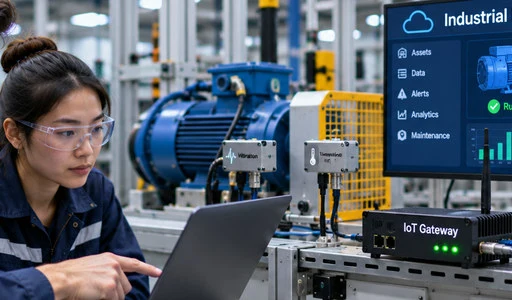
IoT Engineering Technology Architecture: From Devices to Enterprise Systems
The Perception Layer: Sensors and Identification
At the perception layer, sensors and ID tags turn what's going on in the real world into digital information. This is where all systems that work together start. Sensors detect things like distance, light, gas, temperature, sound, pressure, humidity, and the state of devices. Barcodes and RFID tags keep track of things as they move. This layer can't be fixed after the fact, so be careful about where you put your monitors and how you set them up. ISO/IEC 30141 and IEEE 2413 both set standards for how IoT devices should be built. And now engineers from different companies can talk to each other in the same language. You won't make the wrong assumptions that slow down integration if you know what words mean.
Gateways and Edge Computing
In the field, there are gateways that connect to the network. Readings are taken from both new and old sensors and machines. The protocols are changed, and the data is put in a way that everyone can understand. Adding processing close to or on the gateway is what edge computing does. This lets the system act quickly without having to go to and from the cloud. When the network goes down, edge devices can also save readings and send them back when the link is back up. This makes sure that records don't get lost. A gateway lets hardware from different companies connect to one site. Getting the data to the cloud is much easier now that this is part of the process.
Cloud Platforms and Enterprise Software
Whether they're in the cloud or on-premise, platforms can store data, give you APIs, do analytics, and keep track of your users. The last step is a link to business software. SCADA, ERP, MES (manufacturing execution systems), and CMMS (maintenance management systems) are all important systems. It tells teams how to choose which data should move between layers and how enterprise and control systems can share data. The ISA-95 standard is also known as IEC 62264. When a vibration alert from a pump triggers a CMMS work order, the IoT system does more than just monitor. It is now something that is done every day.
How IoT Devices Communicate and Join Existing Systems?
Choosing Protocols for Range, Power, and Data Rate
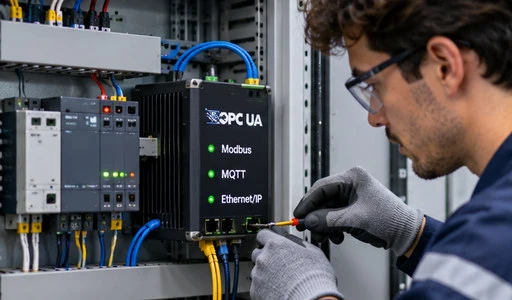
The choice of protocol affects both cost and speed. Wi-Fi is good for high-data uses inside, Bluetooth Low Energy is good for devices with short range, and Zigbee makes low-power mesh networks. LoRaWAN has small bits of data that can be sent over long distances. It is run by the LoRa Alliance. NB-IoT, on the other hand, uses cell phone networks that work with 3GPP. Even though it was made in 1979, Modbus is still used a lot in factories because many controllers still work with it. The publish-subscribe protocol MQTT, which is based on OASIS, moves data between platforms. The OPC UA standard (IEC 62541) makes it easy to send structured data in the industrial world. It also has a security model built right in. The first things I look at are range, power, latency, device density, and cost of operation. This is because there isn't a single protocol that always works best. Teams that test radios in the US should also read FCC Part 15 rules for devices that don't have one.
From Requirements to Pilot
You should have a problem that you can measure before you start an integration project. In this case, there might be less unexpected downtime, better overall equipment efficiency (OEE), or less energy use. Next, take a look at the IP cameras, PLCs, networks, data quality, and business software that are already in place. Next, pick how and how long to link tools, gateways, the edge, the cloud, and business systems. Before it's used on more than one production line or building, I think there should be a test run. Pilot tests make sure the data is right, the alerts are useful, and the way it connects works. They also guess how much it will cost. Things go more smoothly when they are set up in stages, and the results of each stage affect the next one.
Security Built Into Every Layer
Security shouldn't be an afterthought; it should be built in from the start. A lot of things can be dangerous, like open APIs, weak credentials, old firmware, and remote access that isn't protected. Device identity, secure boot, signed firmware updates, network segmentation, encryption, role-based access control, monitoring, and backups are all parts of a layered defense. Companies that make IoT products need to follow NIST IR 8259 and NIST SP 800-82 to keep their systems safe. In Revision 3, they are told how to keep their working technology safe. The IoT Cybersecurity Improvement Act of 2020 in the US tells NIST to make rules for government-owned IoT devices. If someone wants to buy something, they should ask the seller how they handle problems, updates, and access from afar.
Industrial IoT Applications and How to Measure Results
Smart Factories and Predictive Maintenance
Internet of things (IOT) engineering technology that are linked to each other report problems, cycles, and the number of items made in a smart factory. That data helps with analyzing OEE, keeping track of quality, and setting up alerts for downtime. In predictive maintenance, readings of vibration, temperature, pressure, and current are all used together to find machines that are acting strangely before they break. This can't be done by sensors alone. The alert needs to reach the maintenance staff so that a work order can be made. Integration makes this possible. Many people use it to keep an eye on the temperature and vibration of CNC machines at all times. It keeps the analysis close to the machine with edge computing.
Asset Visibility and Energy Monitoring
The use of RFID, GPS, Bluetooth, cellular, and LoRaWAN tools makes it easier to see in yards, buildings, and along roads. This is why cold chain planning is important: it shows how everything fits together. GPS and sensors that measure temperature and humidity help keep medicines and food that goes bad quickly safe. Even if the network goes down while the things are being sent, store-and-forward logging will still keep records. For the sake of energy and the environment, things like gas, water, electricity, emissions, and compressed air are all watched. Mesh networking and long-range sensors are used at utility sites to connect to equipment that is far away. The steps are the same for all of them: get the data, link it to a business system, clean it up, and link it to other systems.
Measuring Results
I look at both the technical and business sides of an IoT project when I judge it. Some examples of technical metrics are the rate of connectivity, the success of data transmission, the availability of the system, the latency of alerts, the accuracy of the data, and the costs of the cloud or network. As an operational measure, better equipment use, shorter inspection times, less unplanned downtime, and faster maintenance response are all things that can be done. Teams should look over pilot and post-deployment data on a regular basis to find false alarms, missing data, and places where work is taking too long. Moving sensors, changing alert rules, and redesigning dashboards are all ways that things get better over time before they are rolled out to more people.
Comparing Solutions, Costs, and Partners
Off-the-Shelf, Custom, or Hybrid
Different types of buildings don't always go well together. A ready-made platform can be set up faster for simple monitoring needs. Custom engineering can be useful when you need to manage data in a strict way, have workflows that are hard to understand, or have tasks that need to be done in more than one place. A mixed method lets you use both business devices and cloud services. It also lets you make your own interfaces or connections that work with the cloud services. Edge computing is good for keeping an eye on things close to home and with low lag. Cloud platforms, on the other hand, are better for putting data in one place and seeing what's happening on many sites. When looking for the best option, don't just look at prices. You should also think about how well it works with other apps, APIs, support, lifecycle management, and the total cost of ownership.
What Drives Project Cost
IoT costs more than just hardware. You need to set aside money for things like sensors, gateways, controllers, setup, connectivity, cloud hosting, software, engineering services, maintenance, security updates, and technical support. It depends on how many assets, sensors, facilities, data points, network conditions, how hard it is to integrate, and compliance requirements whether the amount goes up or down. Having one price for all systems doesn't help very often. I tell buyers to get a project-based quote that lays out the scope, assumptions, deliverables, and ongoing costs. This way, buyers can compare two suppliers fairly.
Selecting a Technical Partner
For a project, the right partner will depend on what it needs, like software, sensors, gateways, help, custom development, or a full solution. If you want to buy something, you should find out how much experience the company has with industrial protocols, old equipment, edge-cloud design, security, and deploying across multiple sites. These are some things you should look at: reference projects, service-level agreements, pilot plans, and security documentation. A strong partner helps add new devices, sites, protocols, and APIs as the system grows. As important as products are the people who work on them. This is because a team that knows how to integrate can keep a system running and add to it after it's out there.
Building Integration Skills Through E.C.R Academy's IoT Engineering Course
Curriculum, Standards, and Faculty
People build systems that work together, so training is important. Internet Of Things (IOT) Engineering Technology at E.C.R. The Perception, Connectivity, and Application model is used to teach sensor technology, embedded development, wireless sensor networks, and IoT identification at the academy. Before you start project-based learning, you need to decide what the product needs and how it will be put together. After that, you build modules, connect them to the system, and use them. People from the US and other countries who teach advanced subjects can take this class. Business engineers and college experts teach together, so students learn both theory and how things work in the real world. Every year, E.C.R. trains and tests about 500,000 people from China and 28 other countries. Academy since 2010.
A Browser-Based Learning Platform
In IoT training, getting hardware is often hard because fixing issues on real devices needs lab space and tools. Based on HTML5 and WebGL, the IoT Online Teaching and Development Platform is made up of a browser and a server. Students can use a web browser to design, test, and set up IoT systems. You can use the modules to simulate sensor data, set up a wireless network, program in embedded systems, create cloud access control logic, and make real-time changes to scenes and devices. With a built-in library of device models and communication protocols, hardware resources are turned into virtual ones. Since the platform is a SaaS cloud service, it can be used on PCs, tablets, and phones. You don't need a local development environment or hardware for learners to practice across the perception, network, and application layers.
Skills Learners Build and Career Paths
These things are done by learners in all three levels.
- Perception and control: Learners acquire and process data from temperature and humidity, photosensitive, gas-sensitive, ultrasonic, and infrared sensors, program high-frequency RFID readers, apply EPC coding, and write barcode and QR code programs. They also install data acquisition systems, develop, test, and maintain perception devices, analyze faults, and build multi-sensor fusion systems.
- Networking and communication: Learners develop with the Z-Stack protocol stack and apply ZigBee specifications, encapsulate and parse data packets, route and forward packets, and implement unicast, multicast, and broadcast communication. They also configure device access, build wireless bus communication applications, develop sensor network protocols, and set up network configurations for sensor networks.
- Application and integration: Learners build applications on IoT platforms, edge devices, and mobile terminals, process data for device control, and develop, test, and deploy IoT applications. The introductory module also covers IoT security technologies and system integration methods, and the embedded module covers I/O port and UART drivers, task management, and interrupt management.
Someone with these skills could work as an IoT deployment engineer, an IoT system integration engineer, an IoT technical support engineer, or an IoT embedded system development engineer.
Conclusion
System integration is made possible by Internet of things (IOT) engineering technology, which links sensors, gateways, networks, edge computing, cloud platforms, and business software using common data models and protocols. In order for integration to work, there must be a layered architecture, protocol choices based on range, power, and latency, a process that starts with requirements and has a pilot, and security built into every layer. In the business world, the same steps are used for things like predictive maintenance, keeping track of assets, and monitoring energy use. Technical metrics and operational metrics can both be used to confirm results. You can lower the risk of a project by looking at off-the-shelf, custom, and hybrid options, finding out what affects costs, and making sure that partners have the right credentials. Since skilled engineers do every step, it helps to know about sensing, networking, app development, and integration in order for the technology to work in real life.
FAQ
1. What does IoT engineering technology include?
Wireless networks, gateways, platforms, application development, sensors, embedded devices, security, and ways to connect systems are some of the things that are talked about.
2. Is there one best protocol for every IoT project?
We don't believe it. NB-IoT, MQTT, OPC UA, Wi-Fi, and Zigbee all have different range, power, latency, and data needs, so teams compare them to what the project needs.
3. How do edge and cloud computing differ?
It handles data close to the device so that responses are quick, and it stores readings in case the power goes out. You can manage users, do analytics, and see what's going on across multiple sites from one place with a cloud platform.
4. Can beginners learn IoT system integration online?
Yes. The class at E.C.R. It starts with the basics of IoT and moves on to each step one at a time. Without having to use real hardware, its browser-based simulation platform lets students work on the application, network, and perception layers.
5. How is the learning platform deployed?
It's a SaaS cloud service that works. Students learn to code, set up devices, and fix bugs in the browser.
Plan Your IoT System Integration Training with E.C.R Academy
The E.C.R. School can help you arrange IoT training for a team, a group, or a campus. When you take our courses on internet of things (IOT) engineering technology, you can learn through projects, lessons taught by senior enterprise engineers and college experts, and a browser-based platform for design, simulation, and deployment. You can email ecr2008@enteredu.com with your goals and due date, or you can visit enteredu.com to find out more.
References
1. ISO/IEC 30141, Internet of Things (IoT) — Reference Architecture, 2018
2. IEEE 2413, Standard for an Architectural Framework for the Internet of Things (IoT), 2019
3. NIST IR 8259, Foundational Cybersecurity Activities for IoT Device Manufacturers, 2020
4. NIST SP 800-82 Revision 3, Guide to Operational Technology (OT) Security, 2023
5. OASIS, MQTT Version 5.0, 2019
6. IEC 62541-1, OPC Unified Architecture — Part 1: Overview and Concepts, 2020