From Theory to Practice: NEV Three-Electric System Training
The world of automobiles is changing fast. The necessity for qualified personnel who understand New Energy Vehicle Electrical Technology has never been more essential with the replacement of traditional combustion engines by electric cars. Training programs that combine theory with practice are crucial for firms trying to enhance worker proficiency in this rapidly changing field. The three-electric system including the power battery, drive motor and electronic control unit is the core of any electric vehicle. With systematic, practical training, technicians, engineers and service people are able to master these technologies with confidence to tackle the real world issues. This all-encompassing training method gives learners the diagnostic, testing, and troubleshooting abilities they need to succeed in the new energy vehicle market.
Understanding the Fundamentals of NEV Three-Electric Systems
The three-electric architecture is a fantastic place to start with electric vehicle technology. The power battery stores and transmits energy quickly, while the drive motor converts electrical energy into mechanical motion. An electronic control system controls the interaction of various components to provide optimal safety and performance. Modern electric automobiles employ lithium-ion battery packs because they have a high energy density and a long operational life. New solid-state batteries have the potential of even greater safety and range, but are still in the development phase. BMS monitor individual cells voltage, temperature and status of charge. This prevents thermal runaway and extends battery life.
Core Components of the Power Battery System
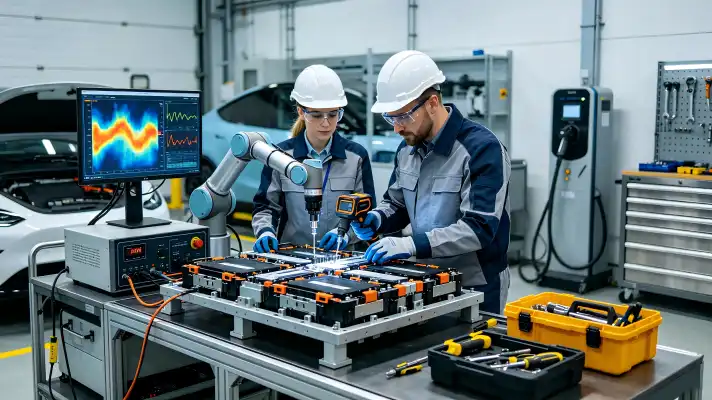
Individual cells are put together into modules in the power battery system, which are then put together into packs. High-voltage Contactors and fuses protect against damage, and thermal management systems keep operating temperatures at the right level. The design of a battery pack strikes a balance between safety needs, weight, and energy capacity. Professionals in charge of buying things have to judge battery providers based on their size, cycle life, and compliance with international safety standards like UL 2580 and ISO 26262. Knowing these factors makes sure that training programs cover the real technical issues that come up when making and maintaining vehicles.

Motor Technologies and Control Strategies
In new energy vehicles, electric motors such as brushless DC motors, permanent magnet synchronous motors and induction motors are employed. Permanent magnet motors are the most prevalent form of motor because they are highly efficient and powerful. Motor controllers adjust the waveforms of the current going to the motor windings to regulate torque and speed. Advanced control algorithms enable regenerative braking to recuperate energy when the vehicle slows down. This enhances the range of the vehicle. Training should include the ways of setting up the motor settings, monitoring the performance and discovering defects so that students are ready for what they will find in the real world.
The Role of Inverters and Power Conversion
The inverters convert the DC electricity from the battery to AC power for the motor. Silicon carbide (SiC) and gallium nitride (GaN) semiconductors are gradually displacing silicon-based components because of their efficiency and reduced switching losses. Wide bandgap semiconductors may make power systems smaller, lighter, and better at managing heat. To execute their tasks, electric car technicians have to know how to make inverters operate and how to correct issues with them. Students find hands-on experience valuable in training phases that simulate the operation of an inverter under various loads.
Comparison and Selection of NEV Electrical Components for Procurement
Key Evaluation Criteria and Supplier Benchmarking
In the selection of the proper parts, the technical specifications, the supplier's capabilities and the industry norms in New Energy Vehicle Electrical Technology need to be considered. Batteries are made by businesses like CATL, LG Chem and Panasonic, using cells of various shapes and sizes. Then the people who have to purchase items have to look at factors like cost per kilowatt-hour, charging speed, thermal stability and energy density. Motor providers may provide everything from cheap induction motors to high performance permanent magnet designs. Different kinds of inverter systems exist, ranging in their ability to manage heat and electromagnetic fields.
Training programs that include methods for comparing components teach procurement professionals how to make smart choices. Companies can make their supply lines work better by knowing the trade-offs between efficiency, cost, and reliability. Compatibility with charging infrastructure is another important thing to think about. To make sure that chargers can work with devices from different markets, they need to be able to handle a number of voltage levels and charging protocols. DC/DC converters control the energy for low-voltage systems and power extras like lights, entertainment systems, and air control. To evaluate these parts, you need to know about safety approvals, electrical standards, and the history of the seller.
Practical Training – From Theory to Application in NEV Three-Electric Systems
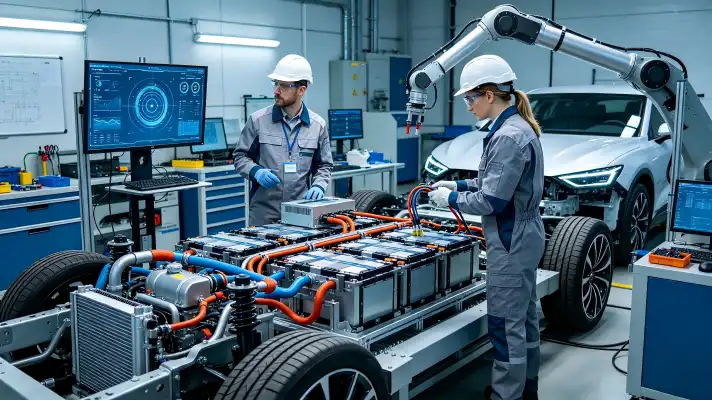
Theoretical information is turned into real skills through hands-on training. At E.C.R. Academy, we put a lot of emphasis on project-based learning. As part of this, students work with training tools for electrical diagnosis and testing. These platforms make it feel like the real world, so students can practice fault finding, system testing, and controller debugging in a safe setting. Fixing common problems like high-voltage insulation problems, controller transmission problems, and sensor problems makes you feel more confident and skilled.
Diagnostic Tools and Methodologies
Technicians can read trouble codes, watch data streams, and make live parameter changes with professional diagnostic tools. Oscilloscopes, multimeters, insulation testers, and CAN bus analyzers are all used in the training. For debugging to work, you need to know how to use diagnostic methods like Unified Diagnostic Services (UDS) and On-Board Diagnostics (OBD). Case studies from big names in the industry, like Tesla, BYD, and Bosch, show what works and what doesn't when it comes to integrating technologies. By looking at these cases, students can learn how the design of an electrical system affects the performance, dependability, and serviceability of a car.
Quality Assurance and Safety Certifications
Electrical parts have to meet very strict quality and safety standards. Compliance with rules like ISO 26262's ASIL-D functional safety requirements and ISO 21434's privacy standards is a big part of training programs. Safety rules for high electricity are very important for keeping people safe during upkeep and repair work. Learners use insulated safety gear to practice proper lockout-tagout procedures, voltage verification, and discharge protocols. Putting safety first makes sure that trained technicians can work with high-voltage systems without putting their own safety or the integrity of the car at risk.
Future Trends and Innovations in NEV Electrical Technology
Digital Intelligence and Predictive Ecosystem Advancements
The market for electric vehicles keeps changing quickly, driven by advances in New Energy Vehicle Electrical Technology. Smart Battery Management Systems now have advanced systems that can guess how much useful life a battery has left and figure out the best way to charge it. New ideas in thermal management, like liquid cooling and phase-change materials, make batteries work better and last longer. High-efficiency motors with built-in inverters make the system simpler and lighter. Wide bandgap semiconductors are used in next-generation power systems to reach levels of efficiency that have never been seen before.
By looking at sensor data and spotting possible problems before they happen, AI and IoT systems make predictive maintenance possible. Cloud-based fleet control tools let you see what's wrong with vehicles, how they're charging, and how much energy they're using in real time. These digital tools help procurement teams make the best use of their inventory, plan maintenance ahead of time, and cut down on downtime. Training programs that use new tools get students ready for the needs of the future. Professionals who know how AI, machine learning, and big data analytics work with the electrical systems in vehicles are at the cutting edge of new technology.
Optimizing Procurement Decisions for NEV Electrical Technologies
Beyond Price: Total Cost of Ownership and Strategic Supplier Partnerships
Strategic buying needs a methodical approach that is tailored to the needs of the business. OEMs, Tier 1 suppliers, and fleet operators all have their own problems and needs. The first step is to make clear technical requirements based on the platform specs, working conditions, and performance goals. To figure out what a supplier can do, you have to look at their product quality, production capacity, technical support, and financial stability. Building long-term relationships with dependable suppliers lowers the risk in the supply chain and makes sure that the quality of the parts stays the same.
Important things to think about are warranty terms, service after the sale, and technical training support. When suppliers offer full training programs for support staff, they add a lot of value beyond the sale itself. Sustainability and following the rules are becoming more and more important. Environmental standards like RoHS and REACH must be met by parts, and suppliers must show they are committed to using sustainable manufacturing methods. This type of research looks at more than just the buying price. It also looks at how much it costs to maintain, how much energy it uses, and how long it lasts. To help the competitive new energy car market grow in a way that lasts, a comprehensive procurement strategy combines performance, cost, and risk.
Conclusion
In New Energy Vehicle Electrical Technology training, going from theory to practice needs a structured, hands-on approach that takes into account problems that people face in the real world. Professionals can make a big difference in the electric car business if they know about electrical architectures, how to choose components, and how to do diagnostics. The most useful learning happens in training programs that blend classroom knowledge with real-world experience. As the industry changes, it's still important to keep learning and improving your skills to stay competitive. Companies that spend money on thorough training programs set themselves up for long-term success in this fast-paced market.
FAQ
1. What skills do participants gain from NEV three-electric system training?
Participants learn how to build electrical systems, stay safe around high power, use troubleshooting tools, and fix problems with controllers. The training covers the Battery Management System (BMS), the Motor Control Unit (MCU), the Vehicle Control Unit (VCU), DC/DC converters, and On-Board Chargers (OBC). Learners use professional diagnostic tools to practice finding problems and get hands-on experience with electrical platforms for vehicles.
2. How does practical training differ from traditional classroom education?
A big part of practical training is using real diagnostic tools and simulated fault situations to gain hands-on experience. As a result of working on projects that are based on real problems in the business, participants improve their technical trust and ability to solve problems. This method fills in the gaps between academic knowledge and being ready for work, so students can use their skills right away after finishing the school.
3. What career opportunities are available after completing the training?
Graduates can work as an R&D engineer, a NEV electrical system testing engineer, a vehicle control unit debugging engineer, a fault diagnosis specialist, a maintenance technician, or an after-sales service technician. The skills learned can be used in any company that makes cars, provides service networks, or provides expert help around the world.
Partner with E.C.R Academy for World-Class NEV Training Solutions
E.C.R Academy offers thorough training programs for businesses, schools, and industry groups that want to improve their employees' knowledge of electric vehicle technologies. Our project-based program mixes learning about basic ideas with using advanced platforms for diagnosing and setting up vehicles' electrical systems. In battery systems, motor control, and electrical diagnostics, our training prepares students for problems they might face in the real world. It is led by engineers from the business world and universities. We've successfully trained almost 500,000 people in 28 countries, and more than 300,000 of them have earned recognized certifications. Our huge library of resources has more than 60,000 learning materials that were made with the help of more than 500 business partners and more than 3,300 industry experts. Our customized programs get results that can be measured, whether you're a New Energy Vehicle Electrical Technology supplier seeking to upskill your technical team or a training institution wanting to add more courses to your list. Visit enteredu.com or email us at ecr2008@enteredu.com to talk about how our NEV three-electric system training can help your company reach its goals.
References
1. International Energy Agency. (2023). Global EV Outlook 2023: Understanding the Electric Vehicle Landscape.
2. Society of Automotive Engineers. (2022). Electric Vehicle Power Electronics and Motor Drives: Standards and Best Practices.
3. ISO 26262 Functional Safety Standard for Road Vehicles. (2018). International Organization for Standardization.
4. Zhang, L., & Wang, J. (2021). Advanced Battery Management Systems for New Energy Vehicles. Automotive Engineering Press.
5. Chen, M., Liu, Y., & Zhou, X. (2022). Electric Motor Control Technologies in Modern Electric Vehicles. Journal of Automotive Technology.
6. Li, H., & Wu, S. (2023). Practical Training Methods for NEV Three-Electric System Maintenance. Vocational Education Research Quarterly.


_1781601799781.webp)