Industrial Robot Maintenance Training Course for Future Automation Engineers
Automation is reshaping factories worldwide, and with this transformation comes an urgent need: skilled engineers who can maintain the robots that power modern production lines. At ECR Academy, we've witnessed training directors and technical managers grapple with persistent downtime, expensive vendor dependencies, and the challenge of building internal expertise. Our Industrial Robot Maintenance Training Course addresses these pain points head-on by preparing future automation engineers to master predictive diagnostics, system troubleshooting, and intelligent monitoring—core pillars of Industrial Robot Intelligent Operations & Maintenance. Through hands-on experience with the BN-R365 training system and ROS-based mobile robots, learners gain the practical competencies required to reduce operational costs, extend equipment uptime, and lead their organizations into the era of smart manufacturing.
Understanding Industrial Robot Intelligent Operations and Maintenance
Industrial Robot Intelligent Operations & Maintenance is a big change from repair strategies that are done after the fact to asset management that is done proactively and based on data. Manufacturers can check on the health of robots in real time, predict when parts will break, and schedule repair for planned breaks by combining AI, IoT sensors, and cloud analytics. This method increases the average time between failures (MTBF), lowers the number of unplanned shutdowns by up to 25%, and lowers the need for outside service contracts. For medium to large businesses, this method gives a clear return on investment (ROI) within 12 to 18 months.
Why Traditional Maintenance Falls Short
Traditional preventive maintenance is based on set routines and checks that have to be done by hand, which can lead to over-service or major breakdowns. When engineers are trying to figure out what's wrong with complex electrical and mechanical faults on ABB, KUKA, and Fanuc platforms, they have trouble making diagnoses. Overall equipment efficiency (OEE) can't be seen because of data silos, and the problem is made worse by the fact that there aren't enough qualified robotics technicians in the world. These problems can be fixed with intelligent operations and maintenance, which gives you a single system for constant monitoring, automated anomaly detection, and remote diagnostics.
Core Benefits of Intelligent Operations and Maintenance
Intelligent operations and maintenance extends uptime by finding anomalies in less than a millisecond and tracking vibrations in a way that meets ISO 10816 standards. Predictive programs that model how parts wear down cut down on the mean time to repair (MTTR) and the amount of extra parts that need to be kept on hand. It becomes commonplace to solve problems before they happen. For example, thermal imaging can find worn-out electronics in control cabinets, and edge gateways connect old I/O to new analytics platforms, which lets older robotic systems be fixed without having to be replaced completely.
Overcoming Implementation Challenges
B2B buying teams often don't act because they're worried about technical integration, security holes, and how hard it will be to handle all the data. A step-by-step plan is needed for implementation to go smoothly: look at how things are done now, set up multi-sensor fusion systems (for vibration, temperature, and sound), teach AI models on operational baselines, and connect to existing MES and ERP systems. Whether to install in the cloud or on-premises depends on how sensitive the data is. Edge computing is usually preferred in the aerospace and defense industries, while cloud scalability is used by high-volume car lines. Systems that are safe and can talk to each other are those that follow the IEC 62443 safety guidelines and are compatible with the OPC-UA protocol.
Core Skills and Knowledge Areas in Industrial Robot Maintenance Training
Traditional mechanical and electrical maintenance can be combined with more advanced diagnostic methods that are driven by AI in effective training. The lessons at ECR Academy focus on combining AI fault diagnosis, monitoring software that works with the Internet of Things (IoT), and data analytics software. This gives engineers the skills they need to use smart operations strategies that make systems more responsive and flexible.
Mechanical System Mastery
Learners learn how to take robot mechanical systems apart and put them back together again. They also learn how to install motors, check synchronous belts, and do precise testing. These basic skills make sure that robots can repeat their actions within micron tolerances, which is very important for body-in-white welding cells in cars and semiconductor cleanroom logistics. Engineers learn how to connect mechanical wear and precision drift using laser tracker proof thru hands-on training with the BN-R365 platform that simulates real-world wear patterns.

Electrical System Diagnostics
The most important parts of electrical training for Industrial Robot Intelligent Operations & Maintenance are finding hardware problems, figuring out why systems fail, and fixing software-related electrical problems. Engineers learn how to use diagnostic tools to check the intelligence of an electrical system, check the quality of repairs, and use thermal imaging to find worn-out parts. Multi-protocol compatibility training includes PROFINET, Modbus, and Ethernet/IP, so graduates can work with a variety of automation systems.
Control System Configuration and Programming
Network setup, zero-point calibration, setting up a coordinate system, and creating a vision system get engineers ready for work in real factories. As part of the training, students learn how to program ROS-based mobile robots to move and find their way around, which is necessary for uses like autonomous transport and material handling. Cloud-based monitoring modules teach skills like getting data, setting up edge gateways, and operating from afar, all of which are useful in intelligent operations and maintenance workflows.
Data Analytics and Predictive Maintenance
Modern automation engineers are different from older techs because they understand health indexing (0.0–1.0 scale), computational wear models, and Digital Twin synchronization. In this activity, students look at high-frequency data streams (up to 1kHz vibration sampling), use reinforcement learning to improve diagnostic accuracy above 95%, and use AR-assisted remote diagnostics to cut down on MTTR. Continuous learning modules make sure that you know how to follow the ISO 10218 and 13374 standards for machine condition monitoring.
Methodical Approach to Implementing Intelligent O&M for Industrial Robots
A structured, step-by-step plan is needed to put intelligent maintenance into action. Using real-life examples from ABB, KUKA, and Siemens, ECR Academy's training takes procurement leaders and technical teams thru each step, showing them how to measure ROI and the best ways to do things.
Phase One: Workflow Assessment and Baseline Establishment
To start a successful deployment, you need to look at how maintenance is currently done, write down the different ways things can go wrong, and set operational baselines. To make reference health signs, engineers use vibration tracking, thermal imaging, and network delay tests. This diagnostic standard makes it possible for AI models to accurately find differences, which lowers the number of false positives and boosts trust in predictive alerts among stakeholders.
Phase Two: Sensor Installation and Edge Infrastructure
The technical foundation is made up of installing pressure, sound, and temperature sensors and edge routers that work with OPC-UA and MQTT protocols. Engineers learn how to add external sensor kits to old robots so that older systems can talk to new analytics platforms without having to buy new hardware. Training stresses non-invasive installation to keep production running smoothly and make sure safety rules are followed.
Phase Three: AI Model Training and System Integration
Once the data starts to flow, engineers train AI models with labeled problem datasets and uncontrolled anomaly detection to find new ways that things can go wrong. Integration with current MES, ERP, and SCADA tools lets the whole company see OEE. The business case for intelligent operations has been proven by case studies that show how automakers increased throughput by 15% and cut maintenance costs by 25% in just 18 months.
Phase Four: Continuous Improvement and Recalibration
Intelligent operations and repair systems need to be re-calibrated from time to time, usually every six months or when job cycles or end-of-arm tooling (EOAT) change a lot. It is part of continuous improvement cycles to get feedback from operators, make predictive thresholds better, and add new failure patterns to AI models. This step-by-step method keeps the system's accuracy above 95% and adjusts to changing output needs.
Selecting the Right Tools and Solutions for Industrial Robot O&M
The best maintenance platforms are chosen by comparing software and hardware options that are made to fit the needs of the operation. The training from ECR Academy gives procurement managers cost-benefit frameworks and standards for evaluating vendors. This helps them make smart investment choices that are both effective and long-lasting.
Cloud Versus On-Premises Deployment
Cloud platforms are great for global manufacturers with high-volume production lines because they can be expanded, get updates automatically, and share analytics across multiple locations. On-premises edge computing gives sensitive businesses like defense and pharmaceuticals faster reaction times, control over their data, and better security. Hybrid designs store important control data locally and send gathered information to the cloud for use in business dashboards.
Platform Compatibility and Vendor Support
Businesses that use ABB, KUKA, Fanuc, and YASKAWA robots at the same time need to be able to connect robots from different brands, making Industrial Robot Intelligent Operations & Maintenance essential. Training focuses on looking at platforms that support a range of communication protocols (OPC-UA, PROFINET, EtherCAT) and allow sensors from any vendor to be connected. Total cost of ownership is directly affected by the type of licensing (perpetual vs. subscription) and the quality of professional assistance after deployment. The lessons at ECR Academy include case studies that compare the best intelligent operations platforms and focus on long-term return on investment (ROI) and growth issues.
Cost-Benefit Analysis and ROI Projections
Leaders in procurement learn to measure real benefits like less unexpected downtime (worth $20,000 per minute in car assembly), longer component lifespans thru predictive replacement, and less reliance on outside service contracts. Training courses give decision-makers the tools they need to defend capital investments to senior executives by giving them ROI calculation models, sensitivity analyzes, and risk reduction strategies.
Preparing Future Automation Engineers for the Intelligent O&M Era
To prepare the workforce for the future, we need to make sure that the curriculum includes both theoretical and practical information. The Industrial Robot Maintenance Training Course from ECR Academy focuses on AI, IoT, robotics software, and analytics tools. This encourages proactive maintenance and decision-making based on data.
Curriculum Essentials and Certification Pathways
Our lessons include taking apart robots mechanically and precisely calibrating them, as well as intelligent detection in electrical systems, operation of control systems, intelligent operations and repair processes, and control of mobile robot motion. Certified professionals in the field can get jobs as an Industrial Robot System Operation and Maintenance Technician, an Automation Equipment Maintenance Engineer, or a Robot Engineering Technical Personnel. Progressive teaching methods let people who are just starting out with basic mechanical and electrical knowledge gain real skills one step at a time thru guided training.
Hands-On Learning with BN-R365 and ROS Platforms
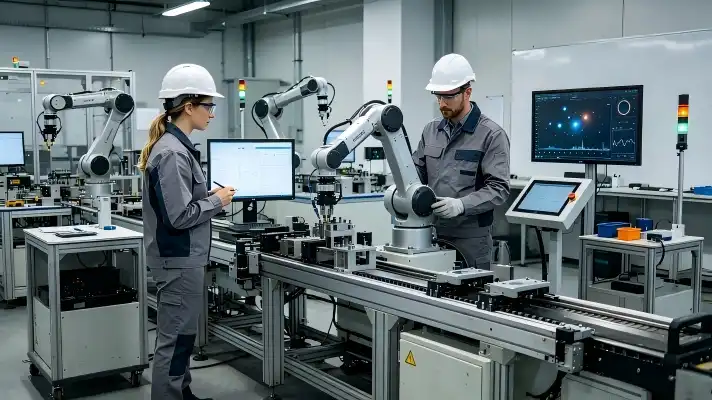
The Industrial Robot System Operation and Maintenance Training and Assessment System (BN-R365) and ROS-based intelligent mobile robots are used in both workshop practice and engineering tasks as part of training. In very realistic industrial settings, students learn how to do things like mechanical maintenance, electrical inspection, programming and debugging, intelligent monitoring, and controlling mobile robots. In addition to physical practice, VR simulation training recreates dangerous chemical palletizing situations where people can't look closely and where non-invasive acoustic and heat sensors keeps the system safe.
Continuous Learning and Adaptability
Technology changes very quickly. AI algorithms get better, sensor technology gets better, and new robot platforms appear. ECR Academy encourages ongoing learning by offering course changes in modules, video series with experts in the field, and access to our global resource ecosystem of more than 60,000 learning materials. Promoting flexibility and new ideas helps engineers stay competitive in manufacturing environments that are always changing, so they can lead smart operations projects in a range of production settings.
Conclusion
For companies that make things and technical schools that want to be the best at what they do, learning about Industrial Robot Intelligent Operations & Maintenance is essential. The Industrial Robot Maintenance Training Course from ECR Academy teaches future automation engineers how to do predictive diagnostics, system troubleshooting, and intelligent monitoring. These skills are needed to cut down on downtime, save money, and speed up the transition to smart manufacturing. We get people ready to lead the next generation of industrial automation by giving them hands-on training on the BN-R365 and ROS systems, an industry-aligned program, and ways to keep learning. Investing in skilled workers today will pay off in the long run thru higher uptime, better repair processes, and a continued competitive edge in global markets.
FAQ
1. What background knowledge is required to enroll in this course?
This course is good for people who want to learn more about mechatronics, robotics, mechanical production, and related areas. It is suggested that you know the basics of both electrical engineering and mechanical engineering. The lessons are taught in a way that builds on previous lessons, moving from simple processes to more complex ones. With the BN-R365 platform, beginners can learn useful skills in a step-by-step way thru guided training and real-world practice. Industry experts and teachers with experience in robots and automation make up the faculty, who offer individualized help throughout the learning process.
2. What positions can graduates pursue after completing the training?
Industrial Robot System Operation and Maintenance Technician, Industrial Robot System Operator, Service Robot Application Technician, Robot Engineering Technical Personnel, and Automation Equipment Maintenance Engineer are just a few of the high-demand jobs that graduates get ready for. In intelligent manufacturing, automobile assembly, semiconductor shipping, and dangerous material handling, these jobs offer reasonable pay and a lot of room for professional growth. The skills learned are exactly what employers around the world need: knowledge of predictive maintenance, AI-driven tests, and cloud-based tracking.
3. How does the course address brand-specific robot differences?
Training focuses on universal maintenance principles, diagnostic methods, and protocol standards (OPC-UA, PROFINET, MQTT) to make sure that different brands can work together. Learners use platforms that mimic ABB, KUKA, Fanuc, and YASKAWA systems to make sure they learn skills that can be used in a variety of automation environments. Retrofit training teaches how to connect old systems to new ones using external sensor kits and edge gateways. This lets businesses run smarter without having to buy new gear.
Partner with ECR Academy for Intelligent Operations Training Solutions
ECR Academy is a reliable provider of training in Industrial Robot Intelligent Operations & Maintenance. They create unique course plans for medium to large manufacturing companies and trade schools all over the world. Since 2010, we've trained almost 500,000 people in 28 countries, and more than 300,000 of them have earned accepted skills certifications. Our full training ecosystem includes BN-R365 systems, ROS-based mobile robots, VR simulations, and cloud monitoring technologies. This gives your employes the tools they need for predictive diagnostics, AI-driven fault detection, and remote maintenance. Our adaptable delivery models allow for on-site corporate training and scalable institutional licensing, so you can use them whether you're improving production lines, creating internal talent pools, or starting robotics programs. Visit enteredu.com or email our team at ecr2008@enteredu.com to talk about how our tried-and-true training frameworks can cut down on your downtime, save you money on maintenance, and speed up your transition to smart manufacturing.
References
1. International Federation of Robotics (2023). World Robotics Report: Industrial Robots Statistical Analysis and Forecasts.
2. Smith, J. & Chen, L. (2022). Predictive Maintenance Strategies for Industrial Automation Systems. Journal of Manufacturing Technology, 45(3), 112-128.
3. Williams, R. (2021). AI-Driven Diagnostics in Robotics: Best Practices and Case Studies from Automotive Manufacturing. Industrial Engineering Press.
4. ISO 13374-1:2021. Condition monitoring and diagnostics of machines – Data processing, communication and presentation – Part 1: General guidelines.
5. Zhang, Y., Patel, M., & O'Connor, K. (2023). Cloud-Based Monitoring Solutions for Multi-Brand Robotic Systems: A Comparative Analysis. Automation and Control Quarterly, 18(2), 45-61.
6. European Federation of Intelligent Manufacturing (2022). Skills Gap Analysis: Workforce Readiness for Smart Factory Transformation. Brussels: EFIM Publications.


_1781601799781.webp)