Digital Media Technology for E-Commerce Product Visualization
Digital media technology is the bedrock of how e-commerce enterprises are currently presenting their things, propelled by digital media technology. From 3D product renders to interactive visual configurators, technology and talents in this field immediately effect whether a consumer clicks “add to cart” or leaves the website. For procurement managers, training directors and institutional leaders building creative talent pipelines, understanding how visual design education connects to real business goals has never been more vital. This essay explores the relevance of product visualisation in modern e-commerce and how structured training in digital media skills enables learners to respond to this demand.
Understanding Digital Media Technology in E-Commerce Product Visualization
What Product Visualization Actually Means
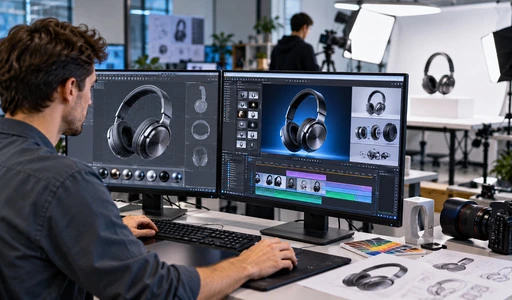
Product visualisation is how a product is exhibited on a computer screen before or instead of seeing it in real life. This can be images, 360 degree views, exploded models and short video clips generated for usage in e-commerce. Each format requires various production abilities, such as picture blending, 3D modelling, motion graphics and video editing. All these skills are taught in structured digital media training programs.
Why Buyers Respond to Visual Content
According to a 2023 Shopify survey, 94% more customers buy products with 3D and AR experience than those with only photos. Seeing textural details, spinning something or seeing an animated building process makes people more likely to buy. Because of this change in behavior, there is a direct demand for trained visual designers and 3D artists.
The Skills Gap in Visual Production
Demand is increasing, but there aren't enough pros on creative teams to quickly turn out photographs that are broadcast-worthy. Photoshop and Illustrator are well enough for basic picture processing, but e-commerce now often requires After Effects compositing, Cinema 4D rendering, and interaction design. They are abilities that require deliberate, planned teaching, not learning by trial and error.
Challenges with Traditional Product Visualization Methods
The Limits of Static Photography
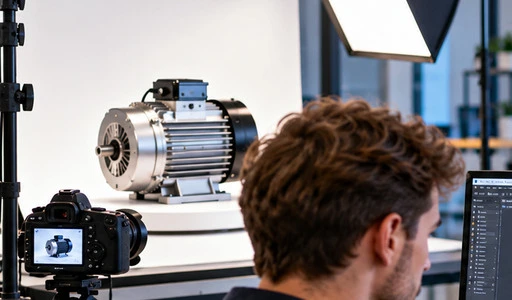
One picture of a product is one perspective, one lighting situation and there is nothing you can do about it. For big-ticket items such as industrial equipment, custom furniture or specialist electronics, a single snapshot will not provide a company with all it needs to know. According to Baymard Institute research from 2022, bad product images are one of the top reasons buyers abandon their shopping carts in B2B e-commerce.
How 3D and Motion Content Changes the Equation
Digital media technology may transform the visual material from flat to depth, which makes it possible for the consumers to understand things that can only be learned by touching the object. A picture is not as good as a 3D moving product presentation. It illustrates how the product works inside, the different materials that may be utilised and the size. And this is why corporations that make and sell things have ploughed cash into educating teams to create visual content that can handle it all: modelling, texturing, lighting, rendering and compositing.
The Shift in Required Talent
To address this need, we need people who can use more than one tool. A decent product visualisation professional today should know how to work in Photoshop, Premiere, After Effects and at least in one 3D platform like Maya or 3ds Max. The exposure during the course of their training and working on real world project scenarios makes them graduates who can immediately contribute to a team.
How to Choose the Right Digital Media Training Program for Visual Production
If you are the head of a department establishing the curriculum for a vocational program, or the director of a training base reviewing providers, there are a few factors that can always be used to discern the difference between good programs and those that are merely surface-level.
Here are the main things that you should look at:
- Software coverage: Is the curriculum teaching the techniques that employers are actually using? Adobe Photoshop, Adobe Illustrator, Adobe Premiere, Adobe After Effects, 3ds Max, Maya and Cinema 4D are the standard toolkit for product visualisation jobs in advertising, e-commerce and media creation.
- Project-based structure: Real projects – creating a product page, making a promotional film, 3D rendering for a commercial brief – mean more job-ready learners than lecture-only methods.
- Faculty with industry experience: Instructors who have worked on business initiatives can provide the context that textbooks cannot. A combined paradigm that pairs enterprise engineers with academic professors covers both theoretical underpinning and practical workflow.
- Platform access: Training platforms that replicate professional production environments allow learners to practice under conditions that mirror real work.
- Career alignment: Programs should explicitly relate the skill outcomes to the positions that use them: graphic designer, interaction designer, post-production specialist, 3D animator, visual effects artist. They should also connect those positions to the industries that are recruiting them: advertising, film and media, internet services, and game development.
- Coverage of software: Does the school teach the tools companies actually use? The typical arsenal for product visualisation projects in advertising, e-commerce, and media creation includes Photoshop, Illustrator, Premiere, After Effects, 3ds Max, Maya and Cinema 4D.
Implementation Strategies and Best Practices
Planning Phase
Before defining the program scope, determine the learner profile, the hardware environment, and the anticipated work results. To use programs for 3D modelling and visual effects, you need computers with specialised graphics cards and at least 16 GB of memory. If the lab is guarantyd sufficient space prior to its use, then teaching will not suffer.
Deployment and Integration
Ensure the digital media technology program deployment is in line with other institutions' goals. Summer deployment is a good idea for trade schools that make purchases once a year. Teachers can start teaching in August and new students can start in September. The modular deployment allows for smaller groups to begin government training camps while infrastructure is prepared.
Measuring Success
Learner completion rates, portfolio quality targets, software certification pass rates, and job placement numbers are all important signs of a training program that focuses on visualization. Programs that are linked to industry competitions give students more external validation. For example, students who place in national design contests have credentials that hiring teams in media and advertising companies look at.
Future Trends in Visual Content Production for E-Commerce
AI Tools in the Production Pipeline
AI tools are speeding up asset creation in Photoshop, After Effects and 3D rendering platforms, but they aren’t replacing the judgement of professional designers. Learners who grasp the design ideas below are better at using the AI tools than those who merely know the point-and-click workflow.
Cross-Platform Content Demands
E-commerce today includes online, mobile, social and upcoming AR interfaces. A short video made for one platform rarely works on another platform. The distribution channels will grow and demand for specialists in visual material who understand the format requirements, compression standards and platform-specific behaviours will continue.
Institutional Readiness
Training institutions that update curriculum regularly — rather than on three-year revision cycles — keep graduates aligned with industry expectations. This is an area where faculty with ongoing industry connections make a measurable difference.
Conclusion
One of the abilities that blends artistic talent with corporate value is digital media technology product visualisation. Expert online shoppers want more than images. Businesses require people who can create 3D visuals, create motion graphics and produce interactive visual assets. Employers want graduates of programs that teach a broad range of abilities, including image processing, 3D animation and visual effects creation. The programs should provide students with real-world tasks and the tools of the trade. When choosing a school look at the breadth of the curriculum, the quality of the software that comes with it, the calibre of professors, and the graduation rate.
FAQ
1. Can someone without a design background complete this type of program?
Yes. Structured programs in digital media production usually start with basic courses like introductory digital media ideas, basic picture processing, and 3D software orientation. After that, they move on to more advanced work. A well-spaced curriculum doesn't need you to have experience with design before.
2. What hardware does visual production training require?
Hardware needs to be able to handle 3D animation and visual effects software. Most people say to get a computer with at least 16 GB of RAM and a specialized graphics card. When schools offer lab-based training, they usually do it through shared computer labs instead of expecting each student to have their own high-end personal computer.
3. How does this training connect to employment?
Graduates can quickly find work as a visual designer, post-production specialist, 3D animator, interaction designer, or visual effects artist if their programs are aligned with job roles in the advertising, media, internet, and game development industries and are linked to employers in those fields. Using portfolios for evaluation, competing in industry competitions, and making connections through internships can all help you get a job.
Partner with E.C.R Academy — Your Digital Media Technology Supplier for Skills Education
Since 2010, E.C.R. Academy has helped over 300,000 certified grads and nearly 500,000 trainees in 28 countries. Our Digital media technology program teaches graphic processing, 3D animation, visual effects, and interaction design through hands-on projects. These are the exact tools and skills that are needed for visual content roles in e-commerce. The curriculum is based on real production workflows because enterprise engineers and academic experts teach together. To talk about program agreements, email us at ecr2008@enteredu.com or go to enteredu.com.
References
1. Baymard Institute. (2022). E-Commerce UX Research: Product Page Usability.
2. Shopify. (2023). Commerce Trends Report: The Future of Product Visualization.
3. Society of Motion Picture and Television Engineers. (2021). SMPTE Standards for Digital Media Workflows.
4. Nielsen Norman Group. (2022). Interaction Design Best Practices for Digital Interfaces.
5. Adobe Systems. (2023). Creative Cloud in Education: Outcomes and Workforce Alignment Report.
6. U.S. Bureau of Labor Statistics. (2023). Occupational Outlook Handbook: Multimedia Artists and Animators.