Can Renewable Energy Equipment Technology Prepare You for O&M?
Yes, specialized training in renewable energy equipment technology can thoroughly prepare you for operations and maintenance (O&M) roles. This field-focused education combines hands-on assembly experience, diagnostic troubleshooting, and real-world commissioning procedures that mirror the challenges faced daily by O&M engineers. By mastering the structural principles of photovoltaic modules, wind turbine drivetrains, and battery energy storage systems through project-driven curricula, technicians develop the precise skill sets required to maintain uptime, reduce failure rates, and optimize asset performance across utility-scale installations and industrial microgrids.
The renewable energy sector is rapidly expanding, creating thousands of high-value O&M positions worldwide. Training programs that integrate theory with practice—leveraging virtual simulation, big data analytics, and cloud-based monitoring platforms—build competence in predictive maintenance strategies, safety protocols, and regulatory compliance. This article explores how comprehensive education in renewable energy systems equips professionals to excel in O&M careers while addressing the operational challenges that institutions, enterprises, and training centers face in workforce development.
Understanding Renewable Energy Equipment Technology and Its Role in O&M
Advanced hardware is used in renewable energy systems to collect, change, and store power from natural sources. Solar photovoltaic arrays use semiconductor cells to turn sunlight into electricity. Wind turbines, on the other hand, use aerodynamic blades connected to generator assemblies to capture kinetic energy. Energy storage options, such as lithium-ion battery banks and flow batteries, keep the power grid stable and make sure that power is always on. When you combine different technologies in a hybrid setup, it can handle changes in load and weather.
Critical Components Influencing O&M Efficiency
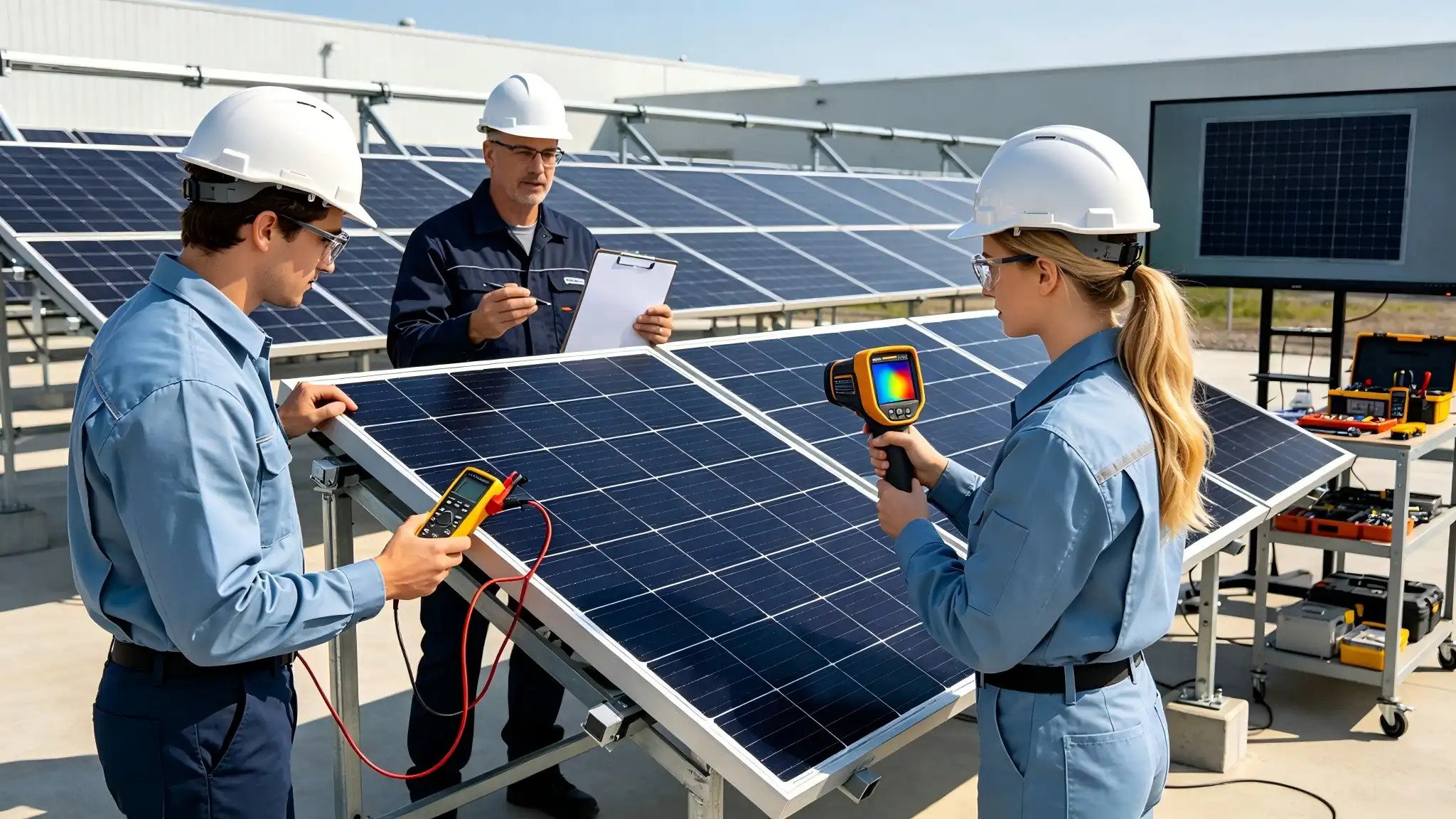
Each type of technology has its own specific maintenance needs. Photovoltaic systems need to be cleaned on a regular basis to avoid soiling losses, inspected with thermal imaging to find tiny cracks, and given inverter tests to make sure they are in sync with the grid. Wind turbines need to have their gearboxes oiled, their blade erosion checked, and their yaw systems calibrated. Tracking charge-discharge cycles, checking temperature management, and evaluating capacity fade are all things that battery systems need. Understanding these needs at the component level is the key to good O&M planning (U.S. Department of Energy, 2023).

Automation and Real-Time Monitoring Advancements
By connecting IoT devices to SCADA (Supervisory Control and Data Acquisition) systems, you can keep track of the performance of assets that are spread out. Technicians are warned of problems like electricity fluctuations, sound spikes, or changes in temperature by automated alerts, before they become problems. When compared to reactive methods, predictive analytics platforms look at trends in previous data to predict when maintenance windows will be. This cuts down on unplanned downtime by up to 30%. These digital tools are taught as part of O&M training classes so that teams are ready to use technology for strategic asset management.
Limitations of Traditional Maintenance Methods
Traditional maintenance schedules that are based on times often lead to actions that aren't needed or miss early warning signs. Manual inspections take a lot of time and effort, and mistakes can happen, especially when checking installations that are spread out geographically. Technicians who haven't had special training may find it hard to read complicated electrical schematics or figure out what's wrong with power electronics. To move toward condition-based and predictive maintenance methods, we need workers who are good at using sensors, figuring out what the data means, and fixing problems at the system level. These are all skills that can be learned in thorough green energy education programs.
Advances in Renewable Energy Equipment Technology That Enhance O&M
In 2024, progress in technology has made it much easier to maintain and more reliable for renewable installations. Smart sensors built into equipment collect detailed performance data, and machine learning algorithms find degrading trends that can't be seen by hand. These new ideas lower the cost of upkeep and make things last longer.
Smart Sensors and IoT Connectivity
Modern solar systems have power optimizers built into each module, along with sensors that check the output of each panel. Wireless communication protocols send data to centralized dashboards, which makes it easy to find where the problem is quickly. Fiber-optic strain gages are built into the blades of wind turbines to find structural stress before it causes the whole thing to fail. Battery management systems constantly check the voltage and temperature at the cell level to stop thermal runaway. O&M workers who are trained in these tracking tools can quickly fix new problems, keeping the system up and running more than 98% of the time.
AI-Driven Predictive Maintenance
Platforms that use artificial intelligence look at millions of data points to tell weeks before a part fails what will go wrong in renewable energy equipment technology. training algorithms on the performance histories of pieces of equipment find subtle patterns—like a slow loss of efficiency, strange sound signatures, or changes in temperature—that happen before things break down. because of this forethought, maintenance teams can schedule repairs for times when production is low, so the company doesn't lose money. ai modeling tools in educational programs teach students how to read predictive models and check the accuracy of computer suggestions using real-world data.
Durability Enhancements in Solar and Wind Systems
As a result of recent advances in material science, photovoltaic modules now have anti-reflective nanocoatings that clean themselves when it rains, so they don't need to be washed as often. Bifacial panel designs collect light that is reflected, which increases energy output by 10–15 percent without adding to the maintenance work. Manufacturers of wind turbines now use leading-edge tapes that don't wear away and automatic lubrication systems. This has cut the time between blade repair visits from six months to eighteen months. Using battery chemicals that are more stable over time, like lithium iron phosphate mixtures, can make them last longer and not need to be replaced as often.
Choosing the Right Renewable Energy Equipment Technology for Optimal O&M
Buying things has a big effect on how much they cost to maintain and how easy they are to use in the long run. Total cost of ownership goes down when you choose equipment that has been proven to be reliable, has easy access to extra parts networks, and comes with full expert support.
Efficiency, Reliability, and Maintainability Considerations
High-efficiency modules and generators make more money per installed unit, but they may use complicated technologies that need people with specific skills to work with them. When technologies are mature and have been installed a lot, technicians are more likely to know how to use them and need less training. Modular designs that let you replace parts one at a time, like hot-swappable inverters or segmented battery racks, cut down on downtime during repairs. Evaluating equipment against the availability of O&M resources makes sure that it works with the skills of the workforce.
Comparing Solar, Wind, and Hybrid Solutions
Installing solar panels is best in places with steady sunlight and simple sites. The operation and maintenance (O&M) tasks are mostly cleaning and checking the inverter. In the right places, wind systems can provide better capacity factors, but maintaining the motor and generator requires advanced mechanical and electrical knowledge. Hybrid plants that use both technologies and battery storage give you more options for handling loads, but they make O&M more difficult because they use more types of equipment. Training schools that serve a wide range of clients can benefit from courses that cover all three types of technology. This helps build a flexible workforce.
Supplier Evaluation and After-Sales Support
International safety and performance standards are met by photovoltaic modules certified by IEC 61215 and wind turbines certified by IEC 61400. Established dealer networks make it easy to get parts quickly, which is important for keeping fix lead times as low as possible. Asset owners are protected from the risk of rapid degradation by warranties that last between 10 and 25 years and clearly spell out performance guaranties. The O&M team's skills are improved by technical support services like online diagnostics, on-site commissioning help, and training classes. These things should be taken into account along with up-front capital costs when making B2B buying choices.
Cost-Benefit Analysis Framework
Comparing the initial investment to the costs over the product's lifetime requires figuring out how many maintenance hours are needed, how often parts need to be replaced, and how much downtime costs. Equipment that costs 15% more up front but 40% less each year in operations and maintenance (O&M) costs usually pays for itself in three to five years. Buyers can weigh the pros and cons of different technologies with the help of simulation tools that create operating scenarios for the next 25 years. Cost-benefit modeling is taught in schools so that professionals can help procurement teams make decisions that are both good for the organization and their budgets.
Practical Tips for Effective O&M of Renewable Energy Equipment
Structured care practices help assets work better and keep them from breaking down, which can be expensive. Scheduled checks and condition-based treatments work together to make sure full coverage.
Routine Maintenance Practices
Visual inspections of photovoltaic systems every three months are helpful for checking for physical damage, shading issues, and connection integrity. Every six months, thermographic scans find areas that show broken cells or bypass diode failures. In addition to torque checks on fixed connections, wind turbines need to have their oil analyzed once a month to look for metal particles that indicate gearbox wear. Battery systems need to be checked for voltage balance once a week and for capacity once a year to confirm state-of-health measurements. Keeping digital records of all upkeep tasks makes it easier to look for trends and report on compliance. Before they are used in the field, training programs that simulate these processes in virtual settings help people become fluent in them.
Predictive and Condition-Based Strategies
Instead of replacing parts at set times, predictive methods check real condition markers like vibration amplitudes, insulation resistance values, or capacity fade rates and only take action when certain levels are reached. This method cuts the number of parts needed by 25% and keeps things from breaking down without warning. Real-time string current tracking can find underperforming circuits within hours in utility-scale solar farms, allowing focused fixes instead of shutting down the whole array. Annual inspection costs for wind farms that use blade acoustic monitoring have been cut by 35% thanks to targeted drone surveys guided by anomaly alerts in renewable energy equipment technology.
Workforce Readiness and Skills Development
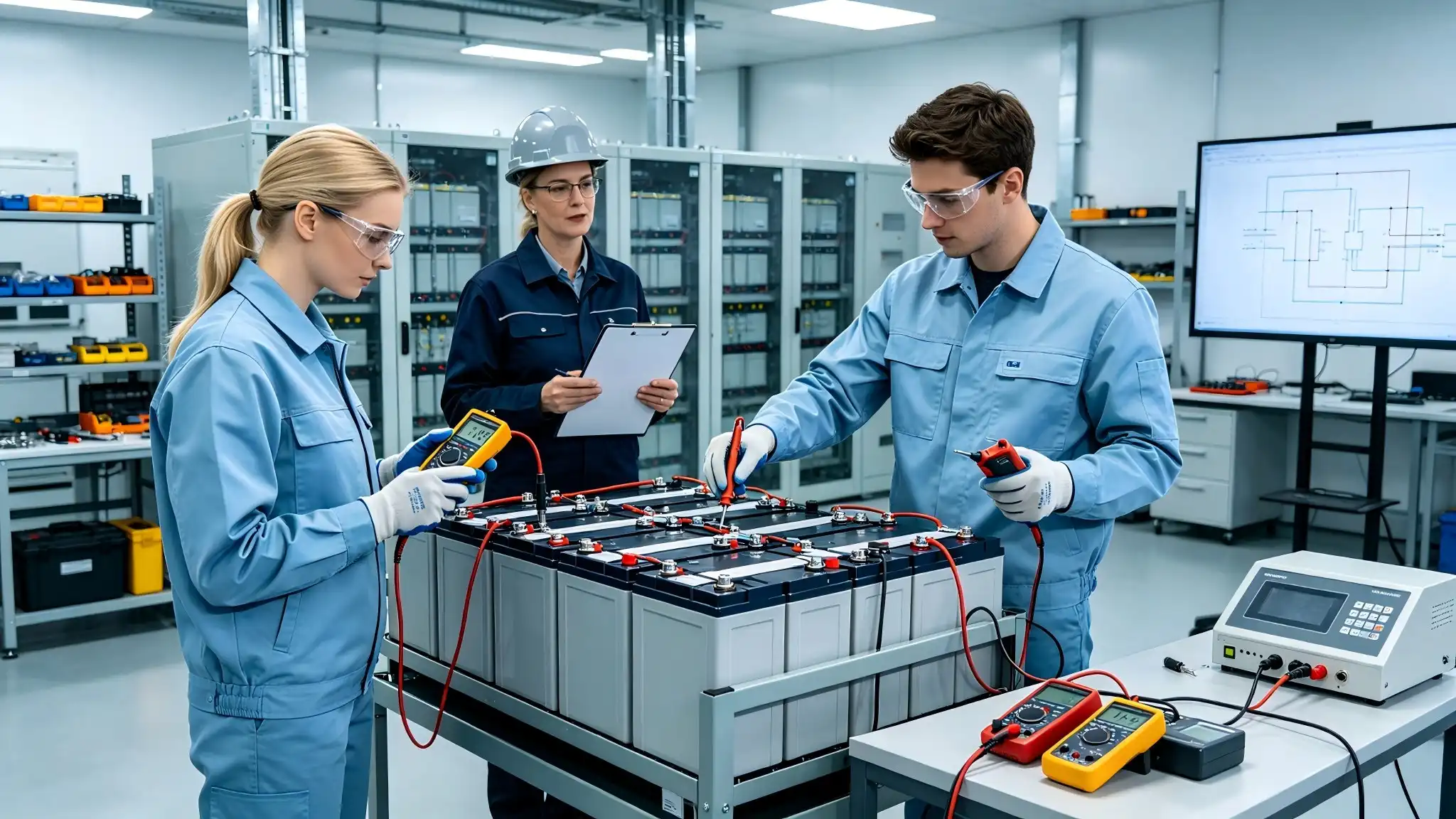
Today's O&M teams need to know how to do safety routines, electrical diagnostics, mechanical repair, and data analytics. Technicians need to be able to read power quality data, set up SCADA systems, and follow lockout-tagout processes for high-voltage equipment. Equipment providers and schools can work together to make sure that the lessons are relevant by forming training partnerships. The project-based learning method at ECR Academy mixes classroom theory with real turbine nacelles, inverter setups, and battery management systems in the labs. When enterprise engineers and academic experts teach together, they bridge the gap between theoretical knowledge and operational reality, creating professionals who are ready for work.
Future Trends in Renewable Energy Equipment Technology and O&M
New technologies are expected to change maintenance methods even more, making them more efficient and clear.
Autonomous Inspection Technologies
Thermal cameras and LIDAR sensors on drones allow for quick photovoltaic array surveys, which can take megapixel images of 50-megawatt installations in hours instead of days when done by hand. Robotic crawlers with sound sensors move along wind turbine blades and find internal delamination without taking them apart. Remotely controlled underwater vehicles check offshore wind foundations for biofouling and corrosion. Technicians are ready for this change in technology thanks to training programs that teach them how to operate autonomous systems and read data.
Blockchain for Maintenance Transparency
With distributed ledger technology, all maintenance tasks, part changes, and performance measures are recorded in a way that can't be changed. This openness helps structures where more than one person owns an asset, since developers, operators, and funders need proof that the rules are being followed. It also makes it easier to file a warranty claim because upkeep records can be checked. When equipment telemetry shows that a threshold has been exceeded, smart contracts instantly send out repair orders. This speeds up the response time.
Regulatory and Sustainability Drivers
Tougher rules on the environment require producers to take on more responsibility, which forces companies to make products that can be recycled and follow the principles of the circular economy. 95% of silicon, glass, and metals in solar modules can now be recycled, which lowers the cost of getting rid of them when they're no longer useful. More and more wind turbine blades are made of thermoplastic composites, which can be melted down and used again. O&M professionals will be in charge of dismantling processes that need to be handled and recorded in a certain way. Sustainability principles are taught in forward-thinking schools, which prepares students to deal with changing rules and regulations.
Strategic Procurement Alignment
Business-to-business buyers should give more weight to sellers who can show innovation roadmaps that are in line with industry trends. Companies that work with makers that invest in AI systems, self-driving maintenance tools, and circular design concepts put their businesses ahead of the competition. Equipment manufacturers and training centers can work together on research and development projects to help share information and make sure that workers' skills keep up with technology. Lifecycle value is higher for procurement strategies that focus on long-term relationships with suppliers over transactional pricing.
Conclusion
Professionals who get in-depth training in green energy systems are definitely ready for challenging O&M jobs. Through project-based learning that includes simulation technologies, techs can learn how to properly set up and operate complicated systems. They can do this by mastering equipment assembly, commissioning routines, diagnostic techniques, and predictive maintenance strategies in renewable energy equipment technology. As the sector moves toward AI-driven analytics, self-driving checks, and the cycle economy, it is still important to keep learning new skills. Combining academic rigor with industry experience through educational relationships helps create the flexible workforce that is needed to keep renewable energy's growth going while also improving asset performance and lowering costs.
FAQ
1.What specific skills does renewable energy training develop for O&M roles?
Electrical diagnostics, mechanical assembly, sensor calibration, SCADA system operation, and safety compliance are all things that are stressed in the programs. Students get practice reading control diagrams, figuring out what's wrong with inverters and converters, and following maintenance plans to keep things in good shape. Responding to turbine vibration alarms or diagnosing string-level photovoltaic failures are examples of real-life situations that are simulated in virtual labs. This helps students learn how to make decisions when they are under a lot of stress. Graduates get credentials that are known around the world in the green energy industry.
2.How long does it take to become proficient in renewable energy O&M?
Foundational competency usually takes between 6 and 12 months of intense study that includes both classroom work and lab work. If you specialize in certain technologies, like offshore wind, utility-scale solar, or grid-scale storage, your training could take an extra three to six months. Getting manufacturer-specific certifications and going to workshops on new technologies is a good way to keep your career moving forward while you're working. There are accelerated paths for people who already know a lot about electrical or mechanical systems.
3.Can training programs address geographically dispersed workforce needs?
Distributed teams can use hybrid delivery models that combine online academic classes with hands-on workshops in different regions. Cloud-based modeling platforms let you practice on virtual equipment setups from afar, so you don't have to travel as much. Mobile training units with modular display systems bring classrooms right to business parks or trade schools. This adaptability helps rural organizations and multinational companies run their businesses in different time zones and regulatory areas.
Elevate Your Organization's Renewable Energy Capabilities with ECR Academy
The practical success of green energy projects depends directly on how skilled the workforce is. ECR Academy creates custom training programs for vocational schools that want to create cutting edge programs, businesses that want to grow their O&M teams, and industry groups that accredit technical professionals. Our project-based lessons include making photovoltaic panels, starting up wind turbines, checking out battery systems, and learning how to change power. We do this through hands-on labs that are made better by virtual simulation platforms that use big data and cloud computing in renewable energy equipment technology.
Since 2010, we've helped over 3,300 expert instructors and 500+ manufacturers and suppliers give nearly 500,000 students in 28 countries skills that are relevant to their fields. Our delivery models are flexible enough to work with institutional budgets and operational schedules, whether you need bulk course licensing, customized on-site training programs, or joint professional development initiatives. Email us at ecr2008@enteredu.com to talk about how ECR Academy can help your green energy staff and set your company up for long-term success in this fast-paced field.
References
1. U.S. Department of Energy. (2023). Operations and Maintenance Best Practices for Solar Photovoltaic Systems.
2. International Renewable Energy Agency. (2024). Innovation Outlook: Smart Sensors for Renewable Energy Systems.
3. National Renewable Energy Laboratory. (2023). Advanced Materials for Renewable Energy Equipment Durability.
4. Renewable Energy World. (2024). Predictive Maintenance Reduces Wind Farm Costs by 35%.
5. IEEE Spectrum. (2023). Autonomous Drones Transform Solar and Wind Inspections.
6. International Energy Agency. (2024). Renewable Energy Market Update: Skills and Workforce Development.


_1781601799781.webp)